
As the next generation of consoles has firmly taken hold, the used market for last-gen powerhouses like the PS4 Pro and Xbox One X has become more active than ever. Gamers looking to stretch their budget or build a secondary setup often find themselves weighing these two high-end models. Both were marketed as \"premium\" versions of their respective base systems, promising enhanced performance and 4K capabilities. But now, with several years passed since their peak, how do they stack up in terms of resale value and game support? This comparison dives deep into real-world pricing trends, backward compatibility, exclusive titles, and overall longevity to help you make an informed decision when buying or selling.
Performance and Hardware: A Quick Recap
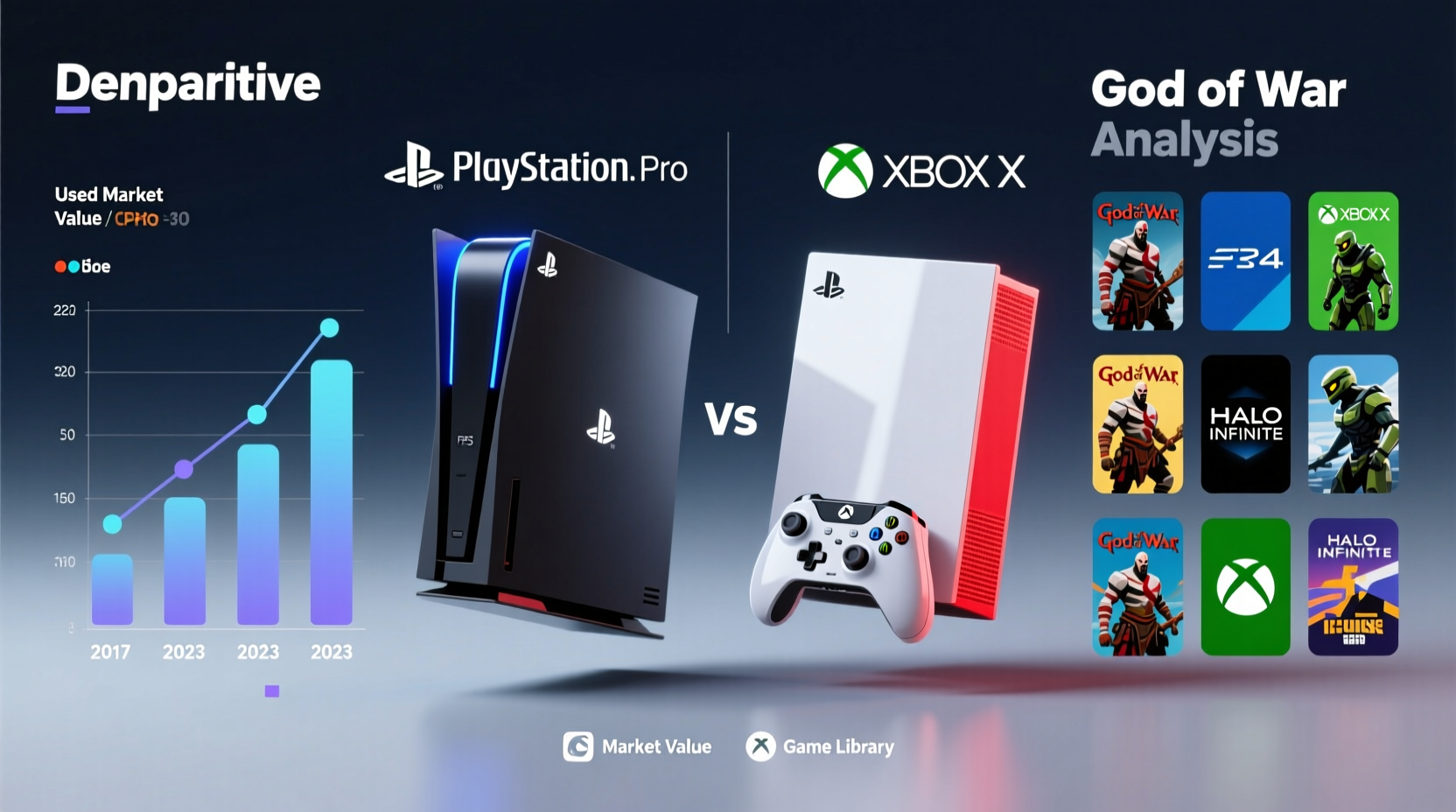
Before analyzing market value and libraries, it’s essential to understand what each console actually delivered at launch. The PlayStation 4 Pro, released in 2016, featured a boosted GPU (4.2 TFLOPs) and supported 4K rendering through checkerboard scaling, HDR, and improved frame rates in select games. It maintained full compatibility with the entire PS4 library while offering visual upgrades for supported titles.
The Xbox One X, launched in 2017, took things further with 6 TFLOPs of GPU power, making it the most powerful console of its generation. It emphasized native 4K output in many games, superior texture filtering, and a more consistent HDR implementation. Microsoft also introduced “Xbox One X Enhanced” branding to denote titles optimized for the hardware.
While both systems outperformed their standard counterparts, the Xbox One X had a technical edge. However, real-world impact on gameplay and visuals varied significantly depending on the title and TV setup.
Used Market Value Trends (2023–2024)
The depreciation curve for both consoles tells a story of shifting consumer priorities. As PS5 and Xbox Series X availability stabilized, demand for older models dropped—but not equally across platforms.
According to aggregated data from eBay, Facebook Marketplace, and Swappa (Q1 2024), the average resale price for a working, unopened PS4 Pro is between $130 and $170, depending on storage size and bundle contents. Used units in good condition typically sell for $90–$120. Refurbished models from certified sellers hover around $140.
In contrast, the Xbox One X sees slightly lower prices despite its superior specs. A used model averages $100–$130, with sealed units reaching $150–$180. This gap persists even though the One X was more expensive at launch ($499 vs. $399).
Why the discrepancy? Several factors explain this trend:
- Brand momentum: PlayStation maintains stronger brand recognition among casual and mid-core gamers.
- Bundling strategy: Sony frequently bundled PS4 Pros with popular games like Horizon Zero Dawn or God of War, increasing perceived value.
- Smaller form factor: The PS4 Pro’s later revisions are quieter and more compact than the bulky Xbox One X.
- Perceived relevance: Many consumers associate PS4 with current-gen continuity via PS5’s extensive backward compatibility.
“Hardware superiority doesn’t always translate to market value—ecosystem loyalty and software dominance play bigger roles.” — Marcus Tran, Console Market Analyst at GameData Insights
Game Library Comparison
A console’s lifespan is ultimately defined by its games. While both systems play nearly all titles released during their generation, the depth and exclusivity of their libraries differ dramatically.
PlayStation 4 Pro: Power Behind the Exclusives
The PS4 era was marked by critically acclaimed exclusives that pushed technical boundaries. The PS4 Pro enhanced many of these with higher resolutions, smoother framerates, and improved textures. Key titles include:
- Ghost of Tsushima: Director’s Cut – Runs at 4K upscaled with HDR
- Marvel’s Spider-Man – Offers Performance (60fps) and Resolution modes
- The Last of Us Part II – Enhanced lighting and detail on Pro
- Horizon Forbidden West – Native 4K on PS5, but Pro supports dynamic 1440p–1800p
- God of War (2018) – Steady 30fps with improved shadows and draw distance
Sony’s first-party studios consistently delivered visually rich experiences that leveraged the Pro’s capabilities. Even without native 4K, the visual fidelity felt premium, especially on 1080p and 1440p displays.
Xbox One X: The Ultimate Backward Compatibility Machine
Microsoft’s approach focused less on exclusives and more on universal access. The Xbox One X became the gold standard for backward compatibility, supporting over 600 Xbox 360 and original Xbox titles with enhancements. Over 100 of these run at 4x resolution, improved framerates, and faster load times.
For example:
- Halo: Reach – Native 4K, 60fps, supersampling
- Fallout 3: Game of the Year Edition – 4K textures, stable performance
- Red Dead Redemption – Enhanced draw distance and reduced pop-in
First-party Xbox titles like Forza Horizon 4, Sea of Thieves, and Gears 5 ran at native 4K on the One X, showcasing its raw power. However, the lack of major exclusives compared to Sony limited its appeal beyond tech enthusiasts and legacy collectors.
| Feature | PS4 Pro | Xbox One X |
|---|---|---|
| GPU Performance | 4.2 TFLOPs | 6.0 TFLOPs |
| Max Output | 4K upscaled (checkerboard) | Native 4K in many titles |
| Backward Compatibility | PS1/PS2/PS3 via streaming only | Xbox 360 & OG Xbox (physical + digital) |
| Key Exclusive Titles | God of War, TLOU2, Ghost of Tsushima | Forza Motorsport, Halo Infinite, Gears series |
| Avg. Used Price (2024) | $90–$120 | $100–$130 |
| Storage Upgrade Ease | SATA HDD/SSD (user-replaceable) | SATA HDD only (external SSD limited) |
Real-World Example: Choosing Based on Use Case
Consider Sarah, a college student looking to set up a budget-friendly entertainment system in her dorm. She wants something reliable, compact, and capable of playing modern games without breaking the bank. After researching, she found a lightly used PS4 Pro for $110, bundled with Uncharted: The Lost Legacy and a second controller.
She chose it over a cheaper Xbox One X listing ($95) because:
- Her roommate already owned PS Plus, allowing shared game access.
- She could easily connect it to her existing 1080p monitor without needing HDMI 2.0 or HDR support.
- The smaller size fit better on her desk.
- She planned to upgrade to a PS5 eventually, preserving save files and trophies.
In contrast, Mark, a retro gaming enthusiast, bought an Xbox One X for $125 specifically for its backward compatibility. He regularly plays remastered Halo campaigns and uses it to revisit classic RPGs like BioShock and Mass Effect with modern clarity. For him, the extra $20 over a PS4 Pro was justified by access to hundreds of legacy titles at near-4K quality.
Their choices reflect a broader truth: value depends on individual needs, not just specs.
Step-by-Step Guide: Evaluating a Used Purchase
If you're considering buying either console secondhand, follow this checklist to ensure reliability and long-term satisfaction:
- Determine your primary use: Are you chasing exclusives, retro games, or future-proofing?
- Check current market prices: Use completed listings on eBay to gauge fair value.
- Verify condition: Ask for photos of all ports, disc tray, and power test results.
- Test media playback: Confirm Blu-ray and game disc functionality upon receipt.
- Inspect storage: Check available space; consider upgrading to SSD if needed.
- Update firmware: Ensure the system is on the latest OS version before use.
- Evaluate online status: Confirm multiplayer services are still active (both remain fully supported).
Frequently Asked Questions
Will PS4 Pro or Xbox One X games stop working soon?
No. Both Sony and Microsoft continue to support online servers and storefronts for their previous-generation consoles. While new game development has shifted to PS5 and Xbox Series X/S, existing titles remain playable. Digital purchases are permanently linked to accounts.
Is the Xbox One X worth it just for backward compatibility?
Yes—if you own or want to explore a large catalog of Xbox 360 or original Xbox games. No other console offers physical disc support and visual enhancements for legacy titles. However, if you’re focused on PS4-era exclusives or plan to move to PS5, it’s less compelling.
Can I transfer my games and saves from PS4 Pro to PS5?
Yes. Most PS4 games are playable on PS5 via backward compatibility. Save data can be transferred using cloud storage (with PS Plus) or a direct Wi-Fi connection. Some titles even offer free upgrades to next-gen versions.
Final Verdict: Which Holds More Value Today?
The answer depends on what you value most. In pure hardware terms, the Xbox One X wins—it’s more powerful, delivers sharper 4K output, and offers unmatched backward compatibility. For collectors, retro fans, or those invested in Microsoft’s ecosystem, it remains a strong choice.
But in terms of overall market value, game library strength, and long-term relevance, the PS4 Pro comes out ahead. Its association with blockbuster exclusives, seamless transition to PS5, and broader consumer appeal keep its resale price surprisingly resilient. Even with weaker specs, the perception of being part of a vibrant, evolving platform adds intangible worth.
Ultimately, if you’re buying used for immediate enjoyment and don’t plan to upgrade soon, the PS4 Pro offers better bang for your buck. If you prioritize technical excellence and legacy support, the Xbox One X deserves consideration—especially at current bargain prices.
“The best console isn’t always the most powerful one—it’s the one that fits your library, lifestyle, and expectations.” — Lena Park, Senior Editor at GameFront Weekly
Take Action: Make Your Move
Whether you’re selling your old console or picking up a used deal, now is the time to act. Prices are stabilized, inventory is plentiful, and both systems deliver a premium last-gen experience. Assess your gaming habits, review your wishlist, and choose based on what truly matters to you—not just benchmark numbers. The right console isn’t the one with the highest TFLOPs; it’s the one that keeps you coming back to play.




 浙公网安备
33010002000092号
浙公网安备
33010002000092号 浙B2-20120091-4
Comments
No comments yet. Why don't you start the discussion?