
A cluttered desk. Piles of unopened mail. Clothes draped over chairs. These everyday scenes are more than just aesthetic nuisances—they’re silent disruptors of mental clarity. Research in environmental psychology consistently shows that disorganized spaces don’t just reflect inner chaos; they actively contribute to it. Clutter competes for your attention, increases stress hormones, and impairs decision-making. The good news? Small, intentional changes can reverse the damage. This article explores the psychological mechanisms behind clutter’s impact on the mind and offers practical, sustainable solutions to restore calm and cognitive function.
The Cognitive Cost of Clutter
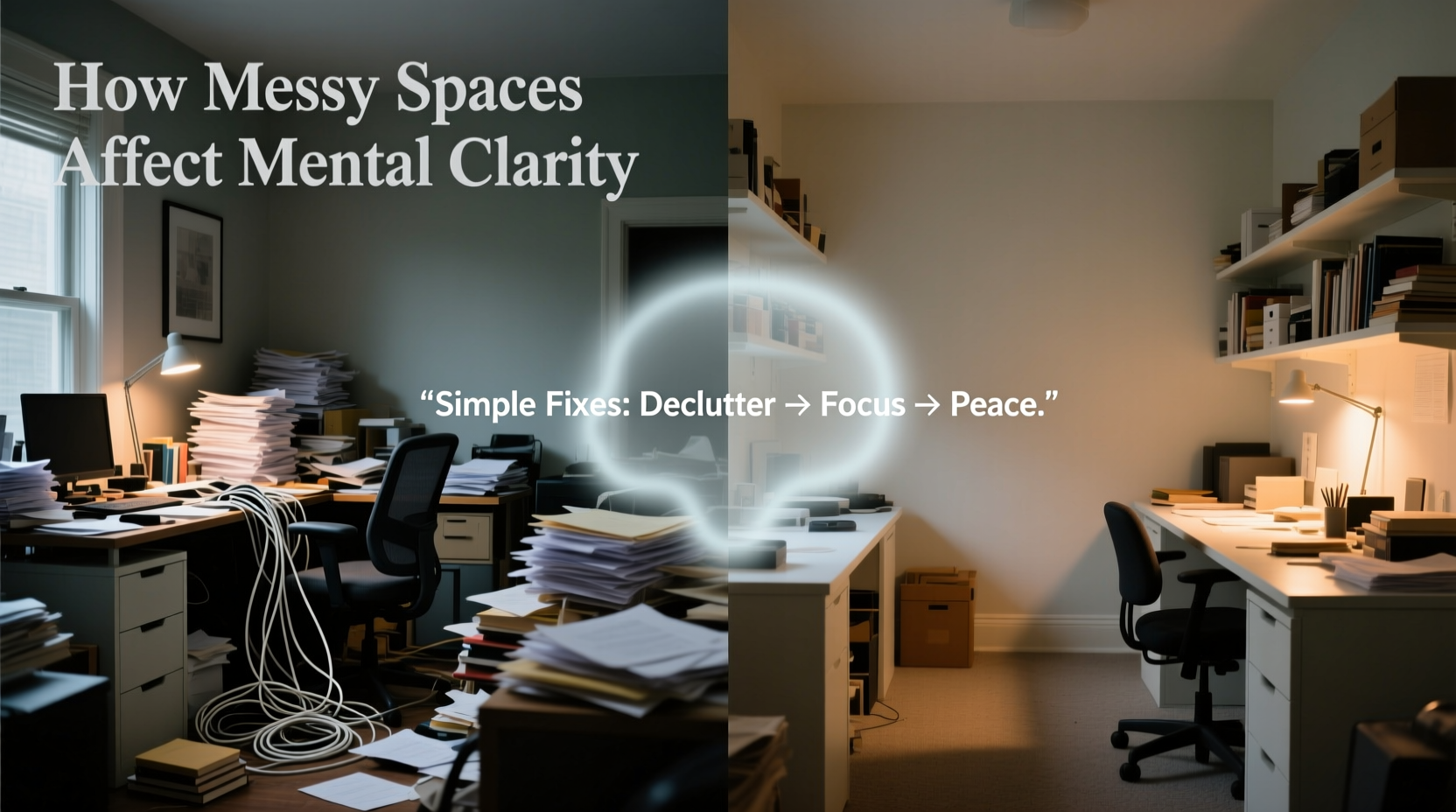
Our brains are wired to respond to visual stimuli. When surrounded by disorder, the sensory overload triggers low-grade but persistent stress. A landmark study from Princeton University Neuroscience Institute found that multiple visual stimuli—such as scattered papers, open drawers, or stacked dishes—compete for neural attention, reducing our ability to focus and process information efficiently. This phenomenon, known as “attentional residue,” means part of your brain is always preoccupied with what you’re seeing, even if you’re not consciously aware of it.
Clutter also activates the stress response. Elevated cortisol levels have been observed in individuals living in chronically disorganized environments. Over time, this contributes to fatigue, irritability, and difficulty concentrating. What many mistake for lack of motivation may actually be a biological reaction to environmental noise.
Emotional and Behavioral Impacts of Messy Spaces
Clutter doesn’t just impair cognition—it shapes behavior. People in cluttered environments report higher levels of procrastination, indecision, and emotional overwhelm. Psychologists refer to this as “decision fatigue.” Every object out of place presents an unconscious choice: “Should I deal with this now?” That constant micro-decision burden depletes mental energy.
Moreover, clutter often carries emotional weight. Unopened bills, old gifts, or clothing from past life stages can evoke guilt, regret, or avoidance. Dr. Sherrie Bourg Carter, a psychologist specializing in stress and burnout, explains:
“Clutter creates a low-level background hum of anxiety. It whispers, ‘You’re behind. You haven’t done enough.’ That chronic message wears down self-esteem and fuels feelings of inadequacy.”
This emotional toll is especially pronounced in shared spaces. A cluttered home can strain relationships, as family members interpret mess as disrespect or lack of care. In workspaces, clutter correlates with lower job satisfaction and reduced perceived competence—even when performance remains unchanged.
Do’s and Don’ts of Decluttering: A Practical Table
| Do | Don’t |
|---|---|
| Sort items into categories: keep, donate, discard, relocate | Try to declutter your entire home in one day |
| Use containers with clear labels for storage | Throw away sentimental items without reflection |
| Set a 10-minute daily decluttering routine | Keep things “just in case” without a real use |
| Designate a home for frequently used items | Ignore emotional attachments during sorting |
| Reassess systems monthly to prevent backsliding | Label boxes with vague terms like “miscellaneous” |
A Step-by-Step Guide to Sustainable Decluttering
Decluttering isn’t about achieving a magazine-perfect space overnight. It’s about creating a system that supports mental clarity long-term. Follow this six-step process to build lasting habits:
- Choose a Zone: Pick a small, manageable area—your kitchen counter, entryway table, or one drawer. Avoid starting with emotionally charged spaces like a childhood memorabilia box.
- Empty and Assess: Remove everything from the space. Lay items out so you can see them all at once. This forces conscious evaluation instead of habitual shuffling.
- Categorize Ruthlessly: Sort into four piles: Keep, Donate/Sell, Discard, Relocate. Ask: “Have I used this in the past year?” “Does it serve a current purpose?” “Does it bring me peace or joy?”
- Create Designated Homes: Assign a specific spot for every kept item. A pen belongs in a cup, keys hang on a hook, files go in labeled folders. If something lacks a home, it will likely become clutter again.
- Implement Daily Micro-Habits: Spend 5–10 minutes each evening resetting your key zones. Return items to their homes, wipe surfaces, and prepare for the next day. Consistency beats intensity.
- Review Weekly: Set a recurring reminder to scan your progress. Did clutter creep back? Adjust your system. Maybe the trash bin needs moving, or supplies need reorganizing.
Real-Life Example: From Overwhelm to Order
Sarah, a freelance graphic designer working from home, found herself increasingly anxious and unfocused. Her desk was buried under sketchbooks, coffee cups, unpaid invoices, and half-finished projects. She blamed her lack of motivation, but after reading about the psychology of clutter, she decided to experiment.
She started with a 10-minute nightly reset. Each evening, she cleared her desk surface completely, sorted papers into labeled trays (“To File,” “To Pay,” “To Review”), and returned tools to drawers. Within a week, she noticed she was falling asleep faster. By the third week, her morning focus improved significantly. Clients commented on her quicker turnaround times.
“I thought I needed better time management tools,” Sarah said. “But really, I just needed a clear desk. It’s like my brain finally had room to breathe.”
Expert-Backed Fixes for Lasting Mental Clarity
Psychologists and organizational experts agree: the goal isn’t perfection—it’s functionality. Here are three evidence-based strategies to maintain clarity:
- The “One In, One Out” Rule: For every new item brought into your space, remove one. This prevents accumulation and encourages mindful consumption.
- Visual Boundaries: Use trays, baskets, or shelves to define zones. A designated spot for mail reduces paper sprawl. A charging station keeps cords contained.
- Mindful Acquisition: Pause before buying. Ask: “Do I have space for this?” “Will I use it weekly?” Impulse purchases are major clutter contributors.
“The most organized people aren’t those who never make a mess. They’re the ones who’ve built simple systems to return to order quickly.” — Dr. Laura McDermott, Environmental Psychologist
Checklist: Your 7-Day Reset Plan
Follow this actionable checklist to begin reclaiming your mental space:
- ✅ Day 1: Clear and wipe down one primary surface (desk, kitchen counter, nightstand)
- ✅ Day 2: Sort through one drawer or shelf using the keep/donate/discard method
- ✅ Day 3: Create a home for five frequently misplaced items (keys, wallet, glasses, etc.)
- ✅ Day 4: Set up a command center for incoming paper (bills, mail, notes)
- ✅ Day 5: Take photos of sentimental items you want to let go of—then donate the physical objects
- ✅ Day 6: Implement a 10-minute evening reset routine
- ✅ Day 7: Reflect on mental shifts. Do you feel calmer? More focused? Note changes in a journal.
Frequently Asked Questions
Can minimalism help with anxiety caused by clutter?
Yes. Minimalism reduces decision fatigue and visual noise, both of which exacerbate anxiety. However, minimalism doesn’t mean empty spaces—it means keeping only what adds value. Even small reductions in clutter can yield noticeable mental health benefits.
What if I feel guilty throwing things away?
Guilt often stems from emotional associations, not the objects themselves. Try photographing items before donating them. This preserves memories without physical burden. Also, remind yourself that giving items to others extends their usefulness—hoarding does not honor the gift.
How do I maintain order with a busy schedule?
Build micro-habits into existing routines. Reset your workspace after finishing a task. Spend two minutes tidying before dinner. These tiny actions compound over time. Systems beat willpower—design your environment so organization happens naturally.
Conclusion: Reclaim Your Space, Reclaim Your Mind
Your environment is not a passive backdrop—it’s an active participant in your mental state. Clutter doesn’t just occupy space; it occupies your attention, drains your energy, and distorts your self-perception. But the inverse is equally true: a clear space fosters clarity of thought, emotional balance, and renewed agency.
You don’t need a complete overhaul. Begin with one surface. One drawer. One decision to put something where it belongs. Each small act sends a message to your brain: “I am in control. I am capable. This space serves me.” Over time, these messages reshape your mindset. The path to mental clarity isn’t found in grand gestures—it’s paved with consistent, compassionate choices.




 浙公网安备
33010002000092号
浙公网安备
33010002000092号 浙B2-20120091-4
Comments
No comments yet. Why don't you start the discussion?