
Fall is a season of transition—cool mornings, crisp afternoons, and unpredictable weather that demands smart layering. Among the most popular outerwear choices during this time are puffer vests and quilted jackets. Both offer insulation and visual appeal, but they serve different purposes and suit distinct styling needs. Choosing between them isn’t just about fashion; it’s about function, climate adaptability, and how well each piece integrates into your daily life.
Understanding the strengths and limitations of each garment allows you to build a more effective, comfortable, and stylish fall wardrobe. Whether you're commuting through city streets, hiking forest trails, or attending an outdoor event, knowing when and how to use these pieces can make all the difference.
Understanding the Basics: What Defines Each Piece?
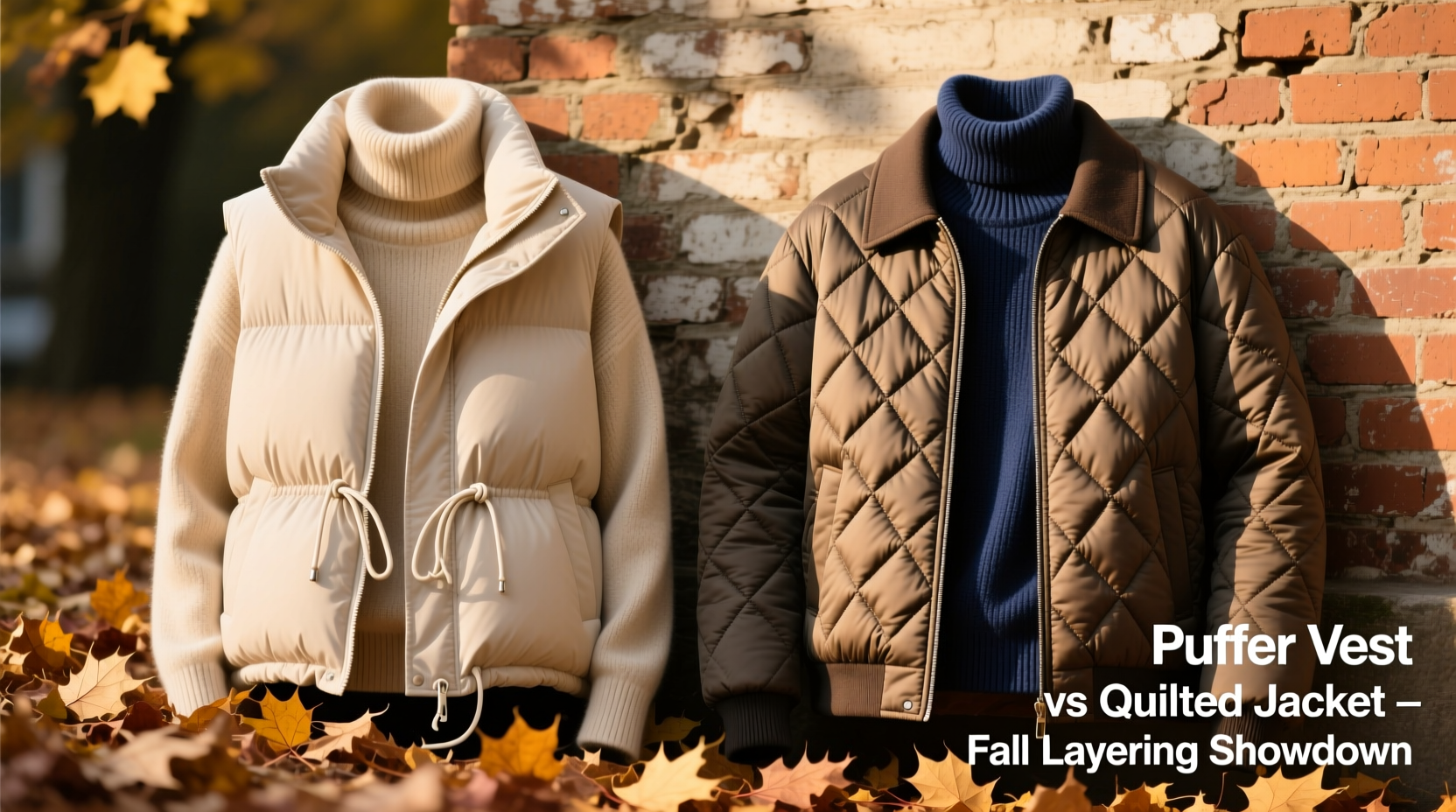
A puffer vest and a quilted jacket may appear similar at first glance—both often feature stitched patterns and synthetic or down insulation—but their design, coverage, and performance vary significantly.
Puffer vests are sleeveless, insulated garments typically filled with down or synthetic fibers. Their primary purpose is core warmth without restricting arm movement. Because they leave the arms exposed, they promote breathability while still protecting the torso—the body’s central heat zone.
Quilted jackets, on the other hand, are full-coverage outer layers with sleeves, constructed from fabric stitched in a repeating diamond or grid pattern to hold insulation evenly in place. While some quilted jackets are lightweight and unlined, others are designed as standalone coats with moderate warmth retention.
The structural differences lead to varied applications. A puffer vest excels in active scenarios where overheating is a concern, whereas a quilted jacket provides broader protection against wind and light rain, making it suitable for less dynamic environments.
Performance Comparison: Warmth, Mobility, and Weather Resistance
| Feature | Puffer Vest | Quilted Jacket |
|---|---|---|
| Core Warmth | Excellent – concentrates heat around chest and back | Good – distributes warmth across upper body |
| Arm Mobility & Venting | Superior – ideal for physical activity | Limited – arms enclosed, potential for overheating |
| Wind Protection | Moderate – open sides allow airflow | Better – full coverage reduces exposure |
| Rain Resistance | Poor to fair – depends on shell material | Fair to good – many include water-resistant finishes |
| Layering Flexibility | High – easily worn over hoodies or under coats | Moderate – bulkier, harder to fit under heavier outerwear |
When evaluating performance, consider not only temperature but also personal activity level. For instance, someone walking briskly to work might prefer a puffer vest because it prevents excessive sweating, while someone standing outdoors at a football game may benefit more from the full-arm coverage of a quilted jacket.
Styling Versatility: How Each Fits Into Your Wardrobe
One of the key advantages of both puffer vests and quilted jackets is their aesthetic flexibility. They bridge the gap between casual and polished looks, especially in transitional seasons.
Puffer vests have gained popularity in recent years due to their association with \"gorpcore\"—a fashion trend rooted in outdoor functionality. When layered over a button-down shirt or a turtleneck, a black or navy puffer vest adds urban edge without sacrificing warmth. It pairs seamlessly with chinos, jeans, or even tailored trousers, making it a go-to for smart-casual settings.
Quilted jackets, particularly those with corduroy collars or waxed cotton exteriors, lean toward heritage and rustic styles. Think British countryside aesthetics or preppy campus vibes. These jackets often come in earth tones like olive, burgundy, or tan, and work well with flannel shirts, knit sweaters, and rugged boots.
However, quilted jackets can sometimes appear dated if not styled carefully. Opt for minimalist stitching patterns and avoid overly shiny fabrics to maintain a modern silhouette.
“Layering isn’t just about staying warm—it’s about creating depth in your outfit. A puffer vest adds texture without overwhelming the look.” — Lena Park, Menswear Stylist & Fashion Consultant
Mini Case Study: Urban Commuter vs. Weekend Explorer
Consider two individuals navigating fall conditions in different ways:
- Sarah, the urban commuter: She walks 20 minutes to the subway each morning, rides underground, then walks another 10 minutes to her office. Temperatures range from 45°F to 55°F. Her challenge is avoiding sweat buildup during transit while staying warm outside. She opts for a slim-fit black puffer vest over a lightweight hoodie. The vest keeps her core warm during walks, and she removes it easily once indoors. Its sleek profile complements her minimalist wardrobe.
- James, the weekend explorer: He spends Saturdays hiking local trails where wind chill drops temperatures sharply near lakes. He needs consistent warmth and protection from brush and moisture. He chooses a mid-length olive quilted jacket made from water-resistant nylon with a soft fleece lining. The full sleeves shield his arms from wind, and the stand-up collar blocks drafts. On colder days, he layers a thermal shirt underneath.
Their choices reflect how context shapes functionality. Neither option is universally superior—each aligns with lifestyle demands.
When to Choose Which: A Practical Decision Framework
Selecting between a puffer vest and a quilted jacket shouldn’t be arbitrary. Use this step-by-step guide to determine the best fit for your needs.
- Assess your typical daily movement. Are you mostly sedentary (e.g., working at a desk), or do you walk, bike, or engage in frequent transitions between indoor and outdoor spaces? High mobility favors puffer vests.
- Evaluate average fall temperatures in your region. Below 50°F with wind exposure? Lean toward a quilted jacket. Mild swings between 50–65°F? A vest offers adaptable core warmth.
- Determine your layering strategy. Do you already own quality sweaters or mid-layers? A vest enhances them. If you rely on one outer layer, a quilted jacket serves better as a standalone piece.
- Consider formality requirements. Office environments may favor the clean lines of a dark puffer vest over a casual-looking quilted jacket. Conversely, creative industries may welcome the character of a textured quilted design.
- Check compatibility with existing outerwear. Planning to wear something over it? Puffer vests slip easily under trench coats or wool overcoats. Quilted jackets are usually outermost layers.
Care and Longevity: Maintaining Your Investment
Both puffer vests and quilted jackets require proper care to preserve insulation integrity and appearance. Down-filled items, in particular, can clump or lose loft if washed incorrectly.
Follow these guidelines:
- Wash on gentle cycle using a technical down cleaner (for down-filled pieces) or mild detergent.
- Use cold water and low spin settings to prevent damage.
- Tumble dry on low heat with clean tennis balls to restore puffiness.
- Avoid ironing or dry cleaning unless specified by the manufacturer.
- Store flat or hung—never compressed in tight spaces for extended periods.
Quilted jackets made from cotton or polyester blends tend to be more durable and easier to maintain than delicate puffers. However, newer puffer models often feature recycled ripstop nylon shells that resist abrasion and water, improving longevity.
Checklist: Fall Layering Readiness
Before finalizing your choice, ensure you’ve covered the essentials:
- ✓ Tested both options in real-world conditions
- ✓ Verified wash instructions and care feasibility
- ✓ Paired each with at least three core outfits
- ✓ Considered seasonal overlap (late fall/early winter)
- ✓ Evaluated color coordination with current wardrobe
- ✓ Determined storage space availability
FAQ: Common Questions About Puffer Vests and Quilted Jackets
Can I wear a puffer vest in the rain?
Light drizzle is manageable if the vest has a water-resistant shell (e.g., treated nylon). However, prolonged exposure will saturate the fabric and compromise insulation. It’s best used in dry conditions or as a mid-layer under a waterproof shell.
Are quilted jackets too bulky for layering?
Some are, especially older or heavily padded designs. Look for modern “slim-quilted” versions with lower-loft fill and tailored cuts. These maintain warmth while reducing volume, allowing them to fit comfortably under parkas or pea coats when needed.
Which is more sustainable?
Many puffer vests now use recycled down or synthetic insulation derived from plastic bottles, increasing their eco-credentials. Quilted jackets vary widely—cotton-based ones biodegrade more easily, but synthetic versions last longer. Ultimately, durability and repairability matter more than material alone. Choose well-made pieces from brands committed to transparency and ethical production.
Conclusion: Matching Function With Lifestyle
The debate between puffer vests and quilted jackets isn’t about declaring a winner—it’s about alignment. Each has unique strengths shaped by design intent. A puffer vest shines when you need intelligent warmth that moves with you, offering unmatched versatility in layering systems. A quilted jacket delivers reliable, classic protection for slower-paced days when comfort and coverage take priority.
Your ideal choice depends on how you live, where you go, and what you value in clothing: efficiency, aesthetics, resilience, or ease of care. By analyzing your environment, routine, and existing wardrobe, you can select the layering piece that doesn’t just survive fall—but enhances it.




 浙公网安备
33010002000092号
浙公网安备
33010002000092号 浙B2-20120091-4
Comments
No comments yet. Why don't you start the discussion?