
For most people, a pen is more than just a tool—it’s a companion through notes, signatures, to-do lists, and creative sketches. Yet few pause to consider one of the most subtle but impactful features: how quickly the ink dries. While quick-drying inks are often marketed as superior, is that speed truly essential for everyday writing? Or is it overhyped for niche users? The answer depends on how you write, what you write on, and what kind of smudging or delays you’re willing to tolerate.
Understanding the real-world implications of drying time can help you choose the right pen—not just based on marketing claims, but on actual performance in your daily routine.
The Science Behind Ink Drying Time
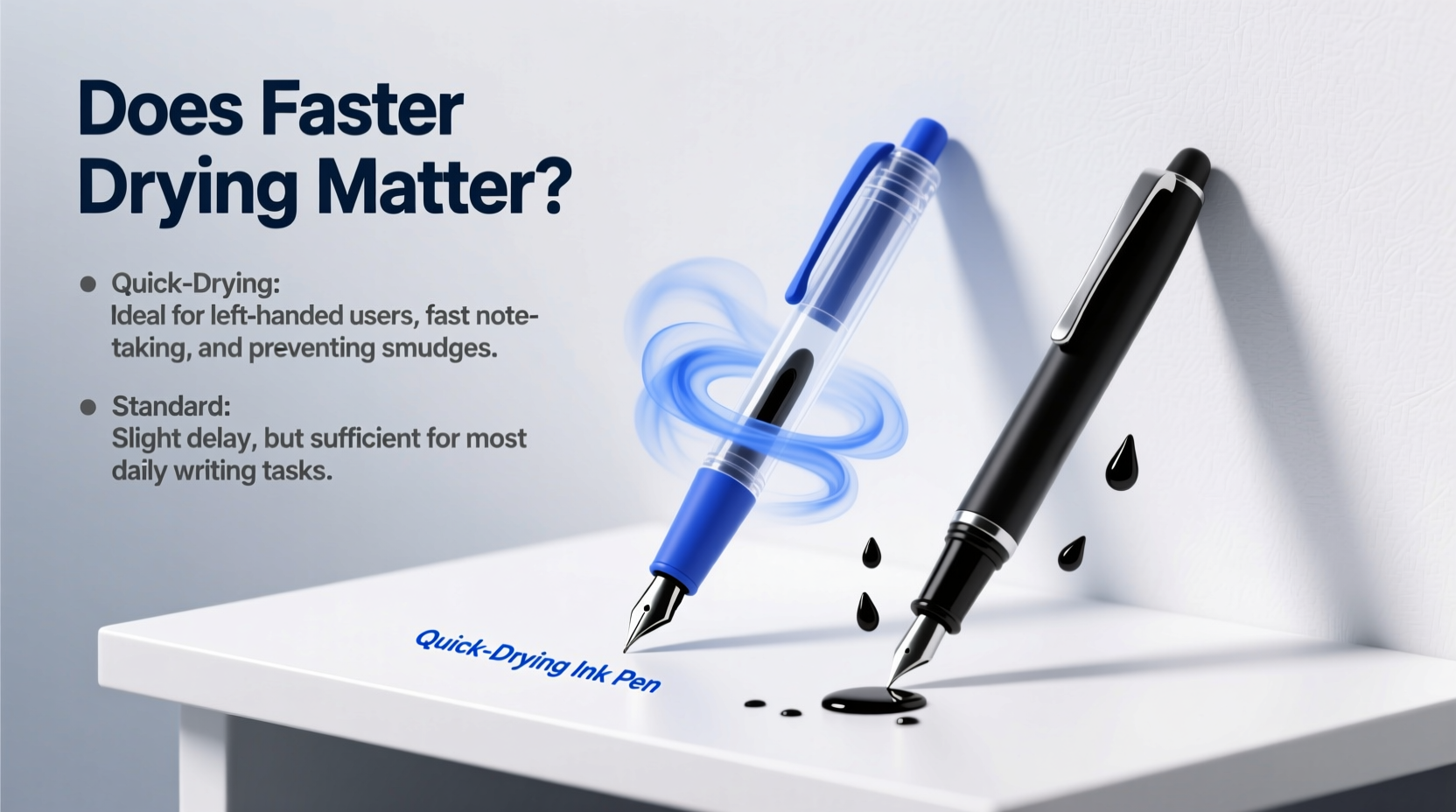
Ink drying isn’t magic; it’s chemistry. Most ballpoint and rollerball pens use either oil-based, water-based, or hybrid inks, each with different drying behaviors. Standard inks—especially water-based ones used in many gel or rollerball pens—take longer to dry because they rely on evaporation. As moisture leaves the ink, pigments set into the paper fibers.
Quick-drying inks, by contrast, often use alcohol-based solvents or fast-evaporating carriers that minimize wetness on the surface. Some incorporate chemical agents that accelerate oxidation or absorption. These formulations reduce smudge risk significantly, especially when left-handed writers or rapid note-takers are involved.
But speed comes with trade-offs. Fast-drying inks may feel less smooth, dry out faster in the pen, or be less vibrant. Slower inks, while potentially messier, often deliver richer color and buttery flow.
When Quick Drying Actually Matters
Drying time becomes critical in specific scenarios where contact with wet ink leads to frustration or damage:
- Left-handed writers: Smudging is a common issue since the hand drags across freshly written lines.
- Fast note-takers: Students or journalists flipping pages quickly may transfer wet ink onto adjacent sheets.
- Signing documents: A smudged signature on a contract or check can look unprofessional or even invalidate the document.
- Use of thin or low-quality paper: Porous or cheap paper holds moisture longer, increasing smudge potential.
A Real Example: The Student’s Dilemma
Consider Maya, a university student who takes dense lecture notes using a standard gel pen. She writes quickly, flips pages rapidly, and often rests her hand on fresh text. By the end of class, her palm is streaked with blue ink, and key terms on page three are blurred beyond recognition. After switching to a quick-drying pen with alcohol-based ink, she notices an immediate improvement: cleaner hands, legible notes, and no more accidental transfers. For her workflow, faster drying wasn’t a luxury—it was a necessity.
Where Standard Ink Performs Just Fine
Not every user faces these challenges. For many, standard drying times pose no practical issues. If you write slowly, use high-quality paper, or primarily jot down personal reminders, a slight delay in drying may not matter at all.
Many fountain pen enthusiasts, for example, embrace slower-drying inks for their aesthetic depth and shading effects. They pair them with absorbent paper and allow time for the ink to set—part of a deliberate, mindful writing experience. Similarly, artists using fineliners may prefer slightly wetter ink for smoother line consistency, accepting the need to wait a few seconds before touching the page.
In office environments where pens are used for occasional signatures or brief memos, standard ballpoints with moderate drying times perform reliably without any drawbacks.
“Drying time should match the task, not be maximized blindly. A surgeon doesn’t use a chainsaw—precision and context matter.” — Dr. Alan Reeves, Industrial Ink Formulation Specialist
Comparing Quick-Drying and Standard Inks: A Practical Breakdown
| Feature | Quick-Drying Pens | Standard Ink Pens |
|---|---|---|
| Smudge Resistance | High – ideal for left-handers and fast writers | Low to Moderate – prone to smearing if touched too soon |
| Drying Speed | 1–3 seconds | 5–15 seconds (or longer on glossy surfaces) |
| Ink Flow & Smoothness | Sometimes drier or scratchier feel | Often smoother, more fluid |
| Ink Longevity in Pen | May dry out faster if left uncapped | Generally longer shelf life in the barrel |
| Best Use Cases | Note-taking, signing, left-handed writing | Casual writing, journaling, artistic use |
| Common Examples | Pilot G-2 07 (Quick Dry), Uni-ball Jetstream | Parker Jotter, Pentel Energel (standard variant) |
How to Test Drying Time Yourself
You don’t need a lab to evaluate a pen’s drying performance. Try this simple test:
- Write a short sentence on regular printer paper.
- Immediately drag the back of your fingernail across the line.
- Observe: Does the ink smear? Is there residue?
- Repeat after 2, 5, and 10 seconds to determine safe touch time.
Also test on surfaces you commonly use—receipts, sticky notes, or notebooks with thin pages. This real-world assessment beats marketing claims every time.
Checklist: Choosing the Right Pen Based on Drying Needs
- ✅ Are you left-handed? → Prioritize quick-dry options.
- ✅ Do you write rapidly or flip pages often? → Choose fast-setting ink.
- ✅ Do you sign important documents regularly? → Opt for smear-proof formulas.
- ✅ Do you value smoothness and color vibrancy over speed? → Standard ink may suit you better.
- ✅ Do you store pens uncapped or in warm environments? → Avoid quick-dry inks that may clog.
Debunking Common Myths
Myth 1: All gel pens dry slowly.
False. Many modern gel pens, like the Uni-ball Jetstream or Pilot G-2 Quick Dry, use hybrid inks that combine gel smoothness with rapid drying.
Myth 2: Faster drying means better quality.
Not necessarily. A pen’s overall performance includes comfort, reliability, and longevity—drying time is just one factor.
Myth 3: Only expensive pens have quick-dry ink.
Incorrect. Affordable options like BIC Intensity or Zebra Sarasa Clip offer excellent drying performance under $2 per pen.
Frequently Asked Questions
Can I make a standard ink pen dry faster?
Not chemically, but you can reduce smudging by using thicker, more absorbent paper, writing with lighter pressure, or allowing a few extra seconds before handling the page. Some people also use blotting paper or quick-dry sprays designed for ink, though these are uncommon for everyday use.
Do quick-drying pens work on all paper types?
Most do, but results vary. On very porous paper, fast-drying ink may feather slightly due to rapid absorption. On glossy surfaces (like receipts), they excel because they don’t pool or spread as much as slower inks.
Are there downsides to quick-drying ink?
Yes. Some users report a slightly drier writing feel, and the ink may evaporate faster if the pen is left uncapped. Additionally, fewer color options exist in quick-dry formulas compared to traditional inks.
Final Verdict: Does Faster Drying Really Matter?
For the average person jotting down a grocery list or signing a birthday card, drying speed likely won’t impact daily life. But for students, professionals, left-handed writers, or anyone producing dense handwritten content, quick-drying ink offers tangible benefits: cleaner pages, neater appearance, and fewer frustrating smudges.
The key is alignment between your writing habits and your tool. A pen is only as good as its fit for your routine. If smudging slows you down or mars your work, upgrading to a quick-dry model could be one of the simplest productivity boosts you’ll ever make.




 浙公网安备
33010002000092号
浙公网安备
33010002000092号 浙B2-20120091-4
Comments
No comments yet. Why don't you start the discussion?