
Every driver knows the importance of a pleasant-smelling car. But beyond comfort, two popular solutions—rearview mirror pendants and traditional car air fresheners—raise an often-overlooked question: which one supports safer driving while delivering a genuinely satisfying fragrance? While both aim to improve your in-car experience, they differ significantly in how they affect visibility, distraction levels, scent quality, and longevity. Understanding these differences can help you make a smarter, safer choice for your daily commute or long drives.
The Visibility Factor: How Design Impacts Driver Safety
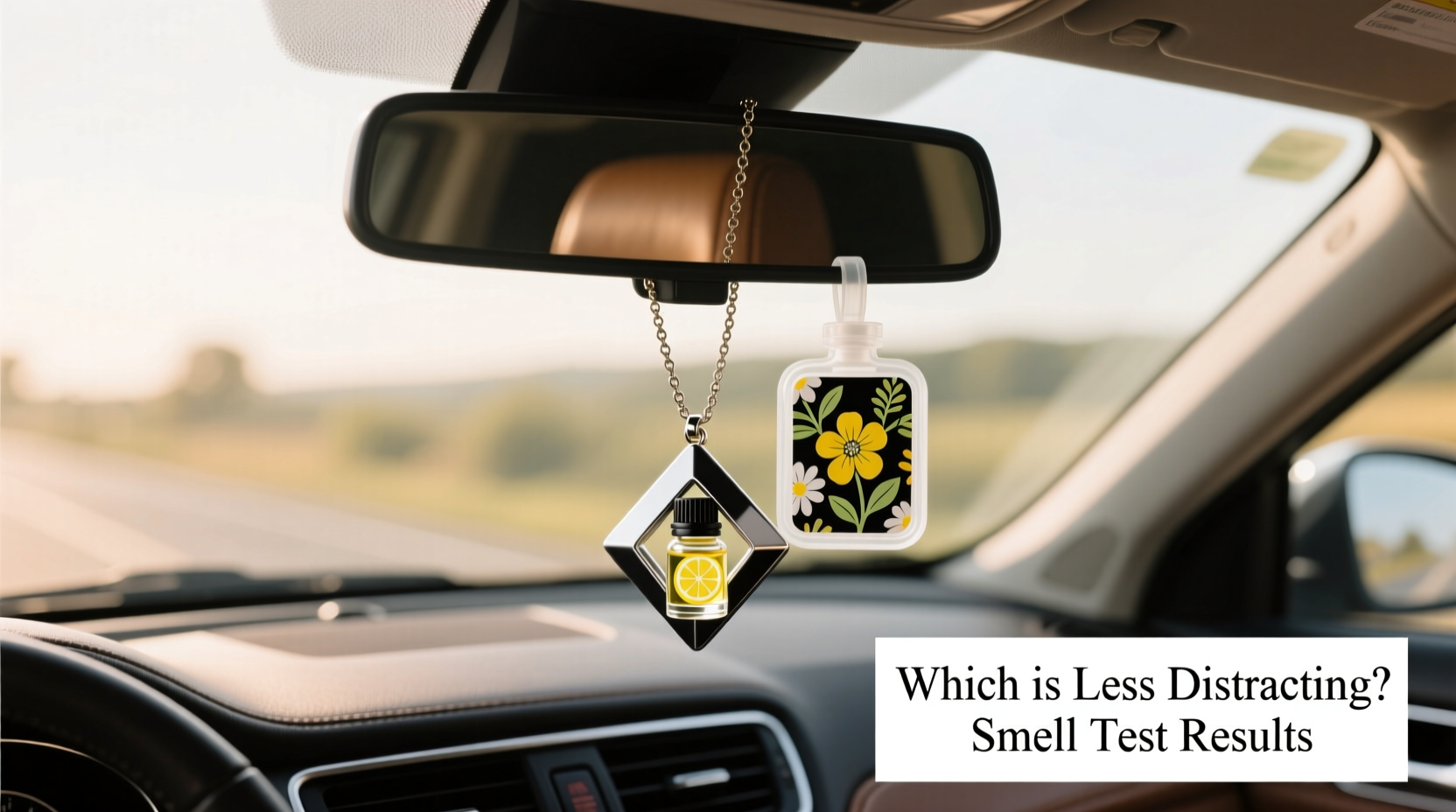
One of the most critical considerations when choosing a car scenting method is whether it obstructs your view. Rearview mirror pendants hang directly in the line of sight between the driver and the rear windshield. Even small accessories can create visual clutter, especially during low-light conditions or heavy traffic.
The National Highway Traffic Safety Administration (NHTSA) advises against hanging objects from the rearview mirror, noting that such items may interfere with clear vision and increase reaction time during emergencies. In some states, like California and New York, large or obstructive mirror hangings are explicitly prohibited by law due to safety concerns.
In contrast, most standard car air fresheners—whether vent clips, dashboard sprays, or gel dispensers—are mounted out of the primary field of vision. Vent clips attach to air conditioning vents along the dashboard edge, minimizing obstruction. This design inherently reduces visual interference, allowing drivers to maintain full awareness of their surroundings.
Scent Performance: Longevity, Strength, and Quality
Beyond safety, the actual effectiveness of a fragrance matters. Many consumers assume that because pendants are larger or more visible, they must offer stronger or longer-lasting scents. However, this isn't always true.
Rearview mirror pendants typically rely on absorbent materials like felt, cardboard, or porous plastic infused with fragrance oil. These materials release scent through passive diffusion, meaning the aroma spreads slowly without airflow assistance. As a result, the scent tends to fade within 2–4 weeks, depending on temperature and exposure.
Car air fresheners, particularly vent clips, benefit from active airflow. When the vehicle’s HVAC system is running, air passes over the scent cartridge, accelerating dispersion. This results in a more consistent and often stronger fragrance output. Some high-end models use encapsulated essential oils or time-release gels that last up to 30–45 days with minimal degradation in scent quality.
“Passive scent sources like pendants depend heavily on ambient movement, whereas vent-based systems leverage the car’s existing airflow—making them both more efficient and predictable.” — Dr. Lena Torres, Environmental Odor Specialist at AutoWell Labs
Distraction Analysis: Movement, Glare, and Cognitive Load
Distracted driving isn’t limited to mobile phones. Any moving object in the peripheral vision can trigger subconscious attention shifts, especially during monotonous highway driving. Rearview mirror pendants swing with vehicle motion, creating repetitive movement that draws the eye—even if only briefly.
This phenomenon, known as “motion capture,” is well-documented in cognitive psychology. Studies show that humans instinctively track moving objects in their visual periphery, which can delay reaction times by up to half a second. Over thousands of miles, those fractions add up.
Air fresheners, particularly static vent clips or non-moving diffusers, don’t exhibit this behavior. They remain fixed in place, blending into the dashboard environment. Without motion or reflective surfaces, they impose virtually no additional cognitive load.
Additionally, many pendants feature glossy finishes, metallic accents, or dangling elements that catch sunlight or streetlights at night, causing glare. This intermittent flashing can be disorienting, particularly during dawn or dusk driving.
Comparison Table: Key Features at a Glance
| Feature | Rearview Mirror Pendants | Car Air Fresheners (Vent Clip Type) |
|---|---|---|
| Visibility Obstruction | Moderate to High | Low |
| Scent Longevity | 2–4 weeks | 3–6 weeks |
| Scent Consistency | Inconsistent (passive diffusion) | Consistent (airflow-enhanced) |
| Motion Distraction | Yes (pendulum effect) | No |
| Glare Risk | Moderate to High | Low |
| Ease of Replacement | Easy | Very Easy |
Real-World Example: The Daily Commuter’s Dilemma
Sarah, a 34-year-old paralegal from Denver, used a lavender-scented rearview mirror pendant for over a year. She loved its calming aroma and sentimental value—it was a gift from her daughter. But after two near-misses during evening rush hour, she began questioning its role in her reduced situational awareness.
During a routine check-up with her optometrist, she learned that her peripheral reaction time had slightly declined. Her doctor noted that “repetitive visual stimuli, even subtle ones, can fatigue the brain’s attention filters.” Sarah switched to a charcoal-infused vent clip with a light eucalyptus scent. Not only did her sense of mental clarity improve, but she also found the new freshener lasted longer and didn’t require constant readjustment after every drive.
Her experience reflects a growing trend among safety-conscious drivers who prioritize function without sacrificing comfort.
Actionable Checklist: Choosing the Right Car Scent Solution
- ✅ Assess your current mirror for obstructions—can you see clearly through the rear window?
- ✅ Measure the size of any hanging item; if it’s wider than 3 inches or hangs below the mirror base, consider removing it.
- ✅ Test vent placement: ensure the air freshener doesn’t block airflow or rattle when the fan is on.
- ✅ Opt for natural or essential oil-based fragrances to avoid synthetic headaches or nausea.
- ✅ Replace scent units proactively—don’t wait until the smell fades completely, as odor saturation diminishes effectiveness.
- ✅ Avoid strongly sweet or musky scents that may become overwhelming in enclosed spaces.
Frequently Asked Questions
Are all rearview mirror pendants illegal?
No, not all are illegal, but many jurisdictions restrict objects that impair visibility. For example, California Vehicle Code Section 26708(a) prohibits hanging items that obscure the driver’s view. Small, discreet pendants may be permissible, but enforcement varies by location.
Do car air fresheners damage dashboard surfaces?
Poorly designed gel-based fresheners can leak and leave residue, potentially staining or degrading plastic over time. To prevent this, choose vent-mounted types without liquid components and inspect regularly for leaks.
Can I still use a pendant if I care about scent quality?
You can, but consider pairing it with a secondary, non-obstructive air freshening method—like a vent clip or ozone-safe spray—for better overall performance without compromising safety.
Final Recommendation: Prioritize Safety Without Sacrificing Scent
While rearview mirror pendants carry emotional or decorative appeal, they come with measurable trade-offs in visibility, distraction, and scent efficiency. Modern car air fresheners, particularly vent-activated models, offer superior fragrance delivery with negligible impact on driver attention.
If you value both a clean-smelling cabin and safe driving habits, the evidence leans clearly toward non-hanging solutions. You don’t have to give up personalization—many vent clips come in customizable colors, scents, and designs that reflect your style—just without the swing, glare, or risk.




 浙公网安备
33010002000092号
浙公网安备
33010002000092号 浙B2-20120091-4
Comments
No comments yet. Why don't you start the discussion?