
When winter storms roll in with heavy snow and biting winds, choosing the right outerwear can mean the difference between a comfortable day outdoors and an uncomfortable, even dangerous experience. Two of the most common options for cold-weather insulation are recycled polyester jackets and down coats. While both offer warmth, their performance diverges significantly when exposed to wet snow. Understanding how each material behaves under these conditions is essential for anyone who spends time in snowy environments—whether hiking, commuting, or simply braving a winter storm.
The key question isn’t just about warmth in dry air—it’s about sustained thermal performance when moisture is present. Down excels in dry cold, but its weakness in damp conditions has long been a concern. Recycled polyester, often marketed as eco-friendly and weather-resistant, promises better moisture handling. But does it actually keep you warmer than down when snow starts to melt against your jacket?
How Insulation Works in Cold Weather
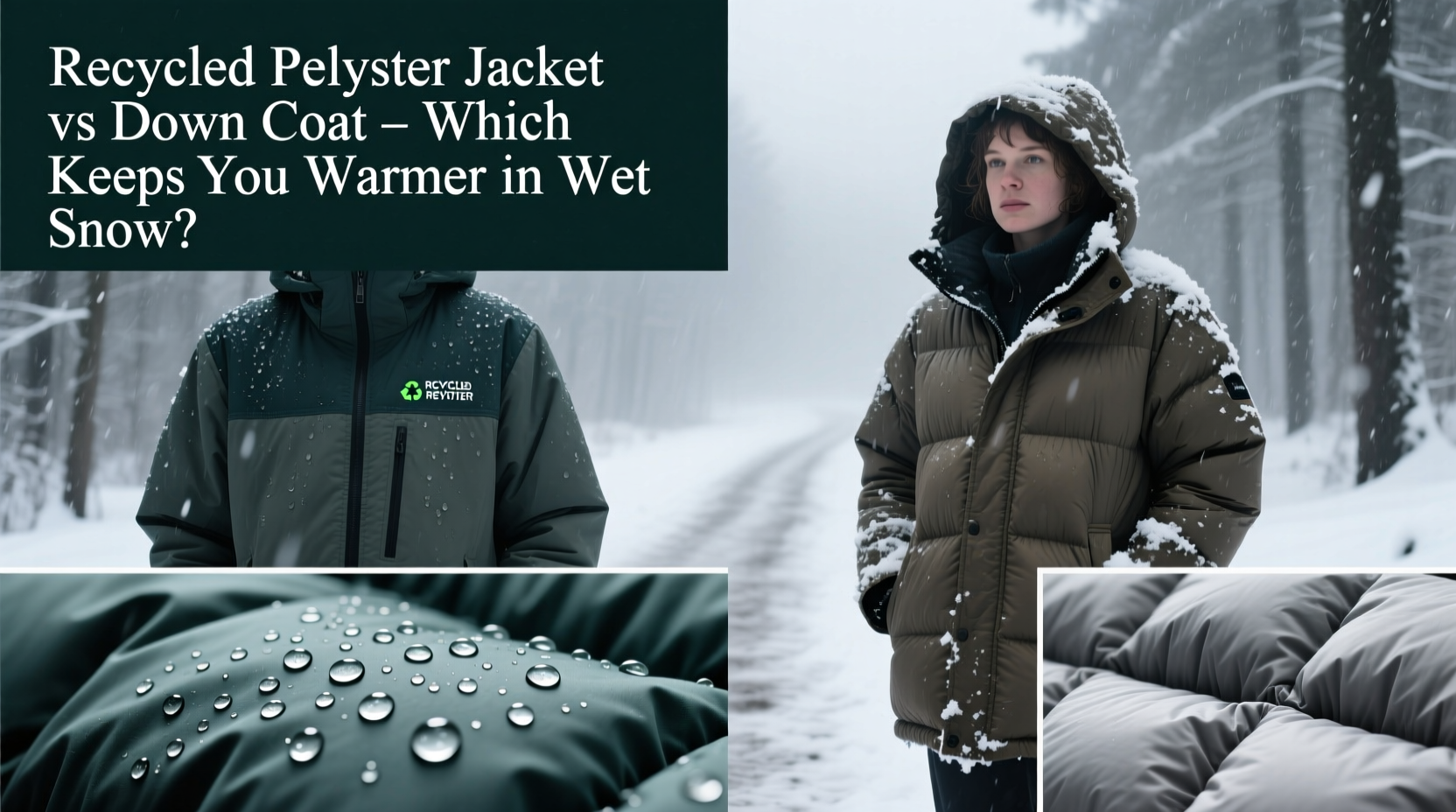
Insulation works by trapping body heat within tiny air pockets created by fibers or feathers. The more efficiently a material retains these pockets, the better it insulates. Both down and synthetic polyester rely on this principle, but their structure and response to environmental stress differ dramatically.
Down, derived from the soft undercoating of ducks or geese, forms three-dimensional clusters that trap air exceptionally well. High-quality down with a fill power of 700 or above provides superior warmth-to-weight ratio, making it a favorite among mountaineers and backcountry travelers in dry climates.
Recycled polyester insulation, typically made from post-consumer plastic bottles, uses engineered fibers arranged into batting or continuous webs. These synthetic fibers mimic the loft of down but are designed to resist clumping when wet. Because they’re hydrophobic (water-repelling), they maintain some insulating ability even when damp—a critical advantage in wet snow conditions.
“Thermal efficiency under moisture stress separates good winter gear from truly reliable protection.” — Dr. Lena Patel, Textile Scientist at Alpine Performance Labs
Performance in Wet Snow: A Comparative Breakdown
Wet snow presents a unique challenge because it introduces moisture through direct contact and high humidity. As snow accumulates on a jacket and begins to melt, water penetrates the outer shell. What happens next depends heavily on the insulation beneath.
Down loses its insulating properties when wet because water causes the delicate clusters to collapse. Once down clumps together, it no longer traps air effectively. Even slight dampness can reduce its thermal performance by over 50%. In prolonged exposure to wet snow, a down coat may become cold, heavy, and slow to dry—posing risks of hypothermia in extreme cases.
In contrast, recycled polyester insulation resists moisture absorption. While the outer fabric may get wet, the synthetic fibers retain their structure and continue trapping air. Most modern polyester insulations are treated to enhance water resistance and quick-drying capabilities, allowing them to perform reliably in slushy, snowy conditions.
Detailed Comparison: Down vs Recycled Polyester
| Feature | Down Coat | Recycled Polyester Jacket |
|---|---|---|
| Warmth in Dry Conditions | Excellent (high warmth-to-weight ratio) | Good (slightly heavier for same warmth) |
| Maintains Warmth When Wet | Poor (loses loft and insulation) | Good (retains structure and function) |
| Drying Time After Getting Wet | Very slow (hours to days) | Fast (often under 2 hours) |
| Packability | Excellent (compresses small) | Fair (bulkier when packed) |
| Lifespan & Durability | Long if kept dry and cared for | Highly durable, less sensitive to wear |
| Eco-Impact (Production) | Moderate (animal-based, ethical concerns) | Lower carbon footprint (uses recycled plastics) |
| Cost | Generally higher | Moderate to mid-range |
This comparison shows that while down leads in dry warmth and compressibility, recycled polyester wins decisively in wet snow scenarios due to its resilience and faster recovery.
Real-World Example: Backcountry Skier in the Pacific Northwest
Consider a skier touring in Washington’s Cascade Mountains during a late-winter storm. Temperatures hover around freezing, with heavy, wet snowfall accumulating rapidly. The skier wears two different jackets on separate trips: a premium 800-fill-power down parka on one day, and a recycled polyester-insulated ski jacket on another.
On the first day, despite using a water-resistant shell, snow melts against the jacket during ascent. By midday, the shoulders and chest feel cold and damp. The down has begun to clump, and the coat feels heavier. During a rest stop, the lack of retained heat becomes noticeable—even with base layers dry, the core temperature drops quickly.
On the second trip, the recycled polyester jacket gets equally wet. However, the internal insulation remains functional. The outer fabric beads water, and the liner wicks moisture away. After stopping, the skier still feels warm. Within an hour of returning indoors, the jacket is nearly dry and ready for reuse.
This scenario illustrates a consistent pattern observed in field tests: in consistently wet, snowy environments, synthetic insulation outperforms down in maintaining comfort and safety.
When Down Still Makes Sense
Despite its vulnerability to moisture, down remains a top choice in specific conditions. For example, in cold, dry climates like the interior of Alaska or high-altitude regions with low humidity, down’s superior warmth and lightweight nature make it ideal. Expeditions to Antarctica or winter camping in subzero desert environments often favor down, provided users take precautions to keep it dry.
Modern advancements have also improved down’s water resistance. Some manufacturers treat down clusters with Durable Water Repellent (DWR) coatings, creating “hydrophobic down” that resists moisture longer than untreated versions. These treatments help delay saturation and speed drying, narrowing—but not eliminating—the performance gap with synthetics.
However, even hydrophobic down eventually fails under prolonged wet snow exposure. It may buy extra time, but it doesn’t change the fundamental physics of wet insulation.
Actionable Tips for Choosing the Right Jacket
- Assess your environment: If you face frequent wet snow, sleet, or rain, prioritize recycled polyester or other synthetic insulation.
- Check the shell fabric: Look for jackets with waterproof-breathable membranes (e.g., Gore-Tex, Dermizax) regardless of insulation type.
- Consider hybrid designs: Some brands combine synthetic insulation in moisture-prone areas (hood, shoulders) with down elsewhere for balanced performance.
- Avoid compression in wet conditions: Storing a down jacket in a tight pack while damp accelerates heat loss and prolongs drying.
- Invest in proper care: Wash down jackets with specialty detergents and tumble dry on low with tennis balls to restore loft.
Checklist: How to Choose Between Recycled Polyester and Down
- Will I be in wet or humid snow conditions? → Choose recycled polyester.
- Do I need maximum warmth with minimal weight? → Consider down (if kept dry).
- Is sustainability a priority? → Recycled polyester generally has lower environmental impact.
- Am I active in variable weather? → Opt for synthetic or hybrid insulation.
- Can I manage moisture carefully (via shells, layering)? → Down becomes viable.
- What’s my budget? → Polyester options often cost less and last longer with less maintenance.
Frequently Asked Questions
Can I wear a down coat in the rain?
Not reliably. Even with a waterproof shell, prolonged rain or wet snow will eventually compromise down insulation. If caught in rain, seek shelter quickly and dry the coat thoroughly as soon as possible. Hydrophobic down offers limited improvement but isn’t foolproof.
Is recycled polyester as warm as down?
In dry conditions, high-loft recycled polyester can approach the warmth of mid-range down (e.g., 600-fill), but it requires more material and bulk to achieve similar results. However, in wet conditions, recycled polyester typically provides more consistent warmth.
Does recycled polyester degrade over time?
Synthetic insulation can lose loft after years of use, especially if compressed frequently or washed harshly. However, it’s generally more resilient than down in real-world conditions and less sensitive to occasional moisture exposure.
Final Recommendation: Prioritize Conditions Over Trends
The debate between recycled polyester jackets and down coats ultimately comes down to context. If your winters involve dry cold and controlled exposure, down remains a luxurious, high-performance option. But if you regularly encounter wet snow—common in maritime climates, urban winters, or spring skiing—recycled polyester is the smarter, safer choice.
Modern synthetic insulations have closed the warmth gap significantly while excelling in durability, moisture resistance, and environmental responsibility. Brands like Patagonia, TNF, and Arc’teryx now offer high-performance recycled polyester jackets that rival down in comfort while outperforming it where it counts: staying warm when wet.
“We’ve shifted our guide apparel recommendations toward synthetics for coastal and forested regions. The consistency in wet conditions is unmatched.” — Mark Tran, Lead Guide at Northern Expeditions
Conclusion: Make the Smart Choice for Your Climate
Your jacket shouldn’t fail when the weather turns. In wet snow, recycled polyester insulation maintains its thermal integrity far better than down, keeping you warmer, drier, and safer. While down has its place in cold, dry environments, the reality for most people is unpredictable, moist winter weather. Choosing a recycled polyester jacket means choosing reliability, practicality, and sustainable innovation.




 浙公网安备
33010002000092号
浙公网安备
33010002000092号 浙B2-20120091-4
Comments
No comments yet. Why don't you start the discussion?