
When the weather turns damp and frigid, choosing the right outerwear becomes critical. Two popular insulation types dominate cold-weather gear: recycled polyester (often labeled as synthetic insulation) and down. While both offer warmth, their behavior under wet, cold conditions varies significantly. Understanding these differences helps outdoor enthusiasts, urban commuters, and eco-conscious consumers make informed decisions—especially when staying dry is just as important as staying warm.
Down has long been revered for its superior warmth-to-weight ratio and compressibility. Recycled polyester, on the other hand, has surged in popularity due to its durability in moisture and alignment with sustainable practices. But when faced with a rainy hike or a sleet-laden city commute, which material truly outperforms the other?
How Insulation Works in Cold, Wet Conditions
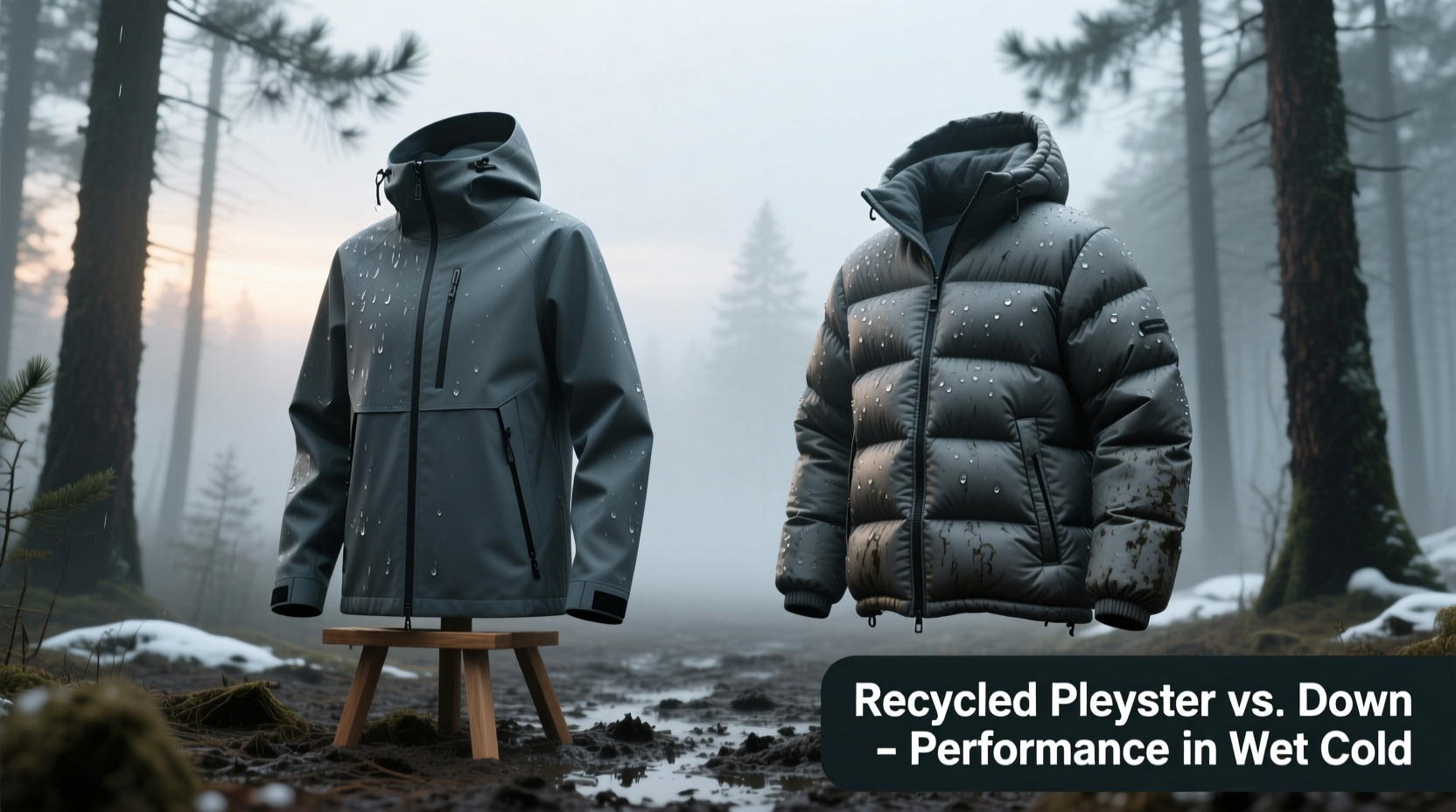
All insulation functions by trapping air within fibers or clusters, creating a thermal barrier between your body and the environment. The effectiveness of this barrier depends on how well the material retains loft—the fluffiness that holds air—even when exposed to moisture.
In wet conditions, water compromises insulation in two ways: it conducts heat away from the body up to 25 times faster than air, and it collapses the structure of insulating materials, reducing their ability to trap warm air. This is where the fundamental difference between down and recycled polyester becomes apparent.
Down feathers, derived from geese or ducks, rely on intricate clusters that interlock to form pockets of still air. When these clusters get wet, they collapse, clump together, and lose their loft. Once flattened, down dries slowly and offers minimal insulation until fully restored. In contrast, recycled polyester fibers are engineered to resist moisture absorption. They retain their structure even when damp, maintaining a consistent level of thermal protection.
“Moisture is the Achilles’ heel of down insulation. If you’re in a consistently damp environment, synthetic insulation like recycled polyester isn’t just practical—it’s safer.” — Dr. Lena Torres, Outdoor Gear Materials Scientist, University of Colorado
Performance Comparison: Down vs Recycled Polyester
To assess real-world performance, consider four key factors: thermal efficiency when wet, drying time, breathability, and weight.
| Factor | Down Filled Jacket | Recycled Polyester Jacket |
|---|---|---|
| Warmth When Dry | Excellent – high warmth-to-weight ratio | Good – slightly heavier for equivalent warmth |
| Warmth When Wet | Poor – loses up to 90% of insulating ability | Fair to Good – retains 60–80% of warmth |
| Drying Time | Slow – can take hours to days depending on conditions | Fast – typically dries in 1–3 hours |
| Breathability | Moderate – prone to condensation if not vented | High – engineered for moisture wicking |
| Weight & Packability | Lightweight and highly compressible | Bulkier and heavier for same warmth level |
| Water Resistance | Low – unless treated with DWR or hydrophobic coating | High – inherently water-resistant fibers |
The data shows a clear trade-off: down excels in dry, extreme cold but falters dramatically in wet environments. Recycled polyester may not match down’s loft or compressibility, but it provides more predictable performance when precipitation is expected.
Sustainability and Environmental Impact
For many buyers, environmental ethics play a crucial role in selecting outerwear. Recycled polyester is made from post-consumer plastic bottles or industrial waste, diverting waste from landfills and oceans. Its production consumes less energy than virgin polyester and reduces reliance on petroleum-based resources.
However, recycled polyester is not without drawbacks. It sheds microplastics during washing, contributing to water pollution. Some brands now incorporate filters or recommend using microfiber-catching laundry bags to mitigate this issue.
Down, while biodegradable and renewable, raises ethical concerns. Conventional down sourcing has been linked to live-plucking and force-feeding practices. To address this, many manufacturers use certified responsible down, such as that from the Responsible Down Standard (RDS) or Global Traceable Down Standard (TDS). These certifications ensure humane treatment of birds and traceability throughout the supply chain.
Still, down requires extensive processing—including cleaning, sorting, and chemical treatments—that can be resource-intensive. Additionally, once contaminated with oil or moisture, down is difficult to recycle efficiently.
“We’re seeing a shift toward hybrid designs—using responsibly sourced down in dry zones and recycled synthetics in moisture-prone areas like shoulders and cuffs.” — Mark Fenwick, Sustainable Apparel Coalition Advisor
Real-World Scenario: Hiking the Pacific Northwest Trail
Consider a multi-day trek through Washington’s Cascade Mountains in late autumn. Temperatures hover around freezing, and light rain falls intermittently. A hiker wearing a premium 800-fill-power down jacket begins to feel cold after just 30 minutes on a misty trail. Despite the jacket’s high rating, moisture from the air and light drizzle soaks into the fabric. The down clusters begin to mat, and core warmth drops noticeably.
In contrast, another hiker wears a jacket insulated with 100% recycled polyester. Though slightly bulkier, the jacket feels consistently warm. Even after crossing a stream and brushing against wet foliage, the insulation remains effective. By evening, both hikers set up camp. The down jacket takes over six hours to dry near a fire, while the recycled polyester version is nearly dry after two.
This scenario illustrates that performance isn’t just about peak warmth—it’s about reliability across changing conditions. In persistently damp environments, recycled polyester proves more dependable.
Choosing the Right Jacket: A Step-by-Step Guide
Selecting between a recycled polyester jacket and a down-filled one shouldn’t be arbitrary. Follow this decision framework based on your typical use case:
- Assess Your Climate: Do you frequently encounter rain, snowmelt, or high humidity? If yes, prioritize moisture resistance—choose recycled polyester or a hybrid model.
- Evaluate Activity Level: High-exertion activities (e.g., skiing, backpacking) generate sweat. Synthetic insulation handles internal moisture better than down.
- Check Layering Needs: Down works best as a mid-layer under a waterproof shell. Recycled polyester can function as both insulation and breathable outer layer in mild storms.
- Review Care Requirements: Down requires specialized detergents and careful drying to maintain loft. Recycled polyester is machine-washable and low-maintenance.
- Verify Certifications: For down, confirm RDS or TDS certification. For recycled polyester, check for proof of post-consumer content (e.g., Bluesign, GRS).
Hybrid Jackets: The Best of Both Worlds?
Some modern jackets combine recycled polyester and down in strategic zones. For example, down might be placed on the torso for maximum warmth, while recycled polyester lines the shoulders, hood, and sleeves—areas most likely to contact snow or rain. These hybrids aim to balance weight, warmth, and weather resilience.
Brands like Patagonia, Arc’teryx, and The North Face have introduced such models, often labeled “thermo-regulated” or “zone-mapped insulation.” While they offer improved versatility, they come at a higher price point and still require cautious use in sustained wet conditions.
Hybrids work well for transitional seasons or variable mountain weather but may not replace dedicated synthetic jackets in consistently damp regions like the UK, Pacific Northwest, or coastal Scandinavia.
Frequently Asked Questions
Can I wear a down jacket in the rain?
You can, but only if it has a robust waterproof shell and hydrophobic down treatment. Even then, prolonged exposure will compromise warmth. For heavy rain, a recycled polyester jacket or hardshell system is safer.
Is recycled polyester as warm as down?
Not quite. For the same weight, down provides more warmth. However, recycled polyester maintains its insulating properties when wet—making it effectively warmer in rainy or snowy conditions.
How do I care for a recycled polyester jacket?
Machine wash in cold water with mild detergent. Avoid fabric softeners, which can coat fibers and reduce breathability. Tumble dry on low to restore loft. Wash less frequently than cotton garments—once every 10–15 wears is usually sufficient.
Final Verdict: Which Performs Better in Wet Cold?
In wet cold conditions, recycled polyester insulation outperforms down-filled jackets in overall reliability and safety. While down reigns supreme in dry, sub-zero environments, its vulnerability to moisture makes it a risky choice when dampness is expected. Recycled polyester may be heavier and less compressible, but it delivers consistent warmth, faster drying, and greater resilience to the elements.
Moreover, advancements in synthetic insulation technology have narrowed the warmth gap. Modern recycled polyester fills like PrimaLoft® Eco, Thermore® Ecodown, and Polartec® Alpha are engineered to mimic down’s softness and loft while improving moisture management.
If sustainability is a priority, recycled polyester also holds an edge—provided proper laundering practices are followed to minimize microplastic shedding. That said, ethically sourced down remains a viable option for those who primarily operate in dry climates and value ultra-lightweight warmth.




 浙公网安备
33010002000092号
浙公网安备
33010002000092号 浙B2-20120091-4
Comments
No comments yet. Why don't you start the discussion?