
Polyester dominates the outdoor apparel market for good reason: it’s lightweight, durable, moisture-wicking, and affordable. But as environmental concerns grow, brands are shifting from virgin polyester—made entirely from fossil fuels—to recycled polyester, typically derived from post-consumer plastic bottles or industrial waste. This shift raises an important question: does using recycled material compromise performance?
For hikers, climbers, urban commuters, and outdoor enthusiasts, performance isn’t just about specs on a label—it’s about how a jacket holds up in wind, rain, cold, and daily wear. So when choosing between a recycled and a virgin polyester jacket, consumers want to know: am I sacrificing quality for sustainability?
The short answer: not necessarily. But the full picture is more nuanced. While both materials share core properties, differences in fiber consistency, production methods, and long-term durability can influence real-world outcomes.
Understanding Polyester: Virgin vs Recycled
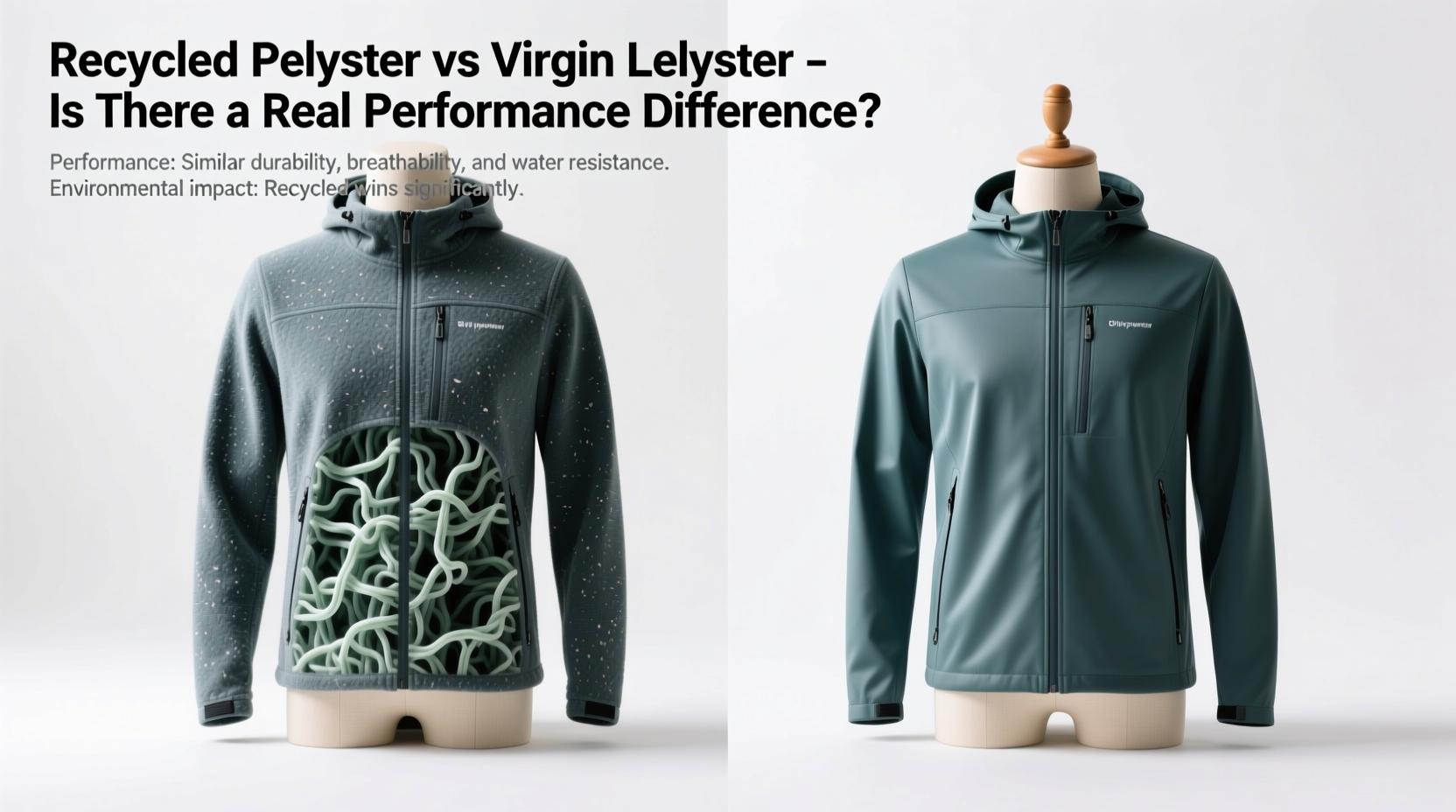
Polyester is a synthetic polymer made from petroleum-based chemicals. Virgin polyester is produced directly from raw petrochemicals through a process called polymerization. It results in clean, consistent fibers ideal for textile manufacturing. Its popularity in outerwear stems from its strength, resistance to shrinking, and ability to retain shape after repeated use.
Recycled polyester (often labeled rPET) starts with existing plastic waste. The most common source is polyethylene terephthalate (PET) bottles. These are cleaned, shredded into flakes, melted, and re-spun into new fibers. The end product is chemically identical to virgin polyester—but the journey there introduces variables that can affect performance.
According to Textile Exchange, a global nonprofit driving sustainable practices in fashion, recycled polyester reduces carbon emissions by 25–30% compared to virgin polyester and cuts dependence on fossil fuels. However, they caution that “fiber-to-fiber recycling still faces technical challenges in maintaining consistent quality at scale.”
“Recycled polyester has come a long way, but not all rPET is created equal. Processing methods and input material quality play a huge role in final performance.” — Dr. Lena Peterson, Sustainable Materials Researcher, Swedish Environmental Institute
Performance Comparison: Key Factors
To evaluate whether recycled polyester jackets truly match their virgin counterparts, we need to assess them across several key performance metrics.
Durability and Tensile Strength
Durability refers to how well a fabric resists abrasion, tearing, and pilling over time. Virgin polyester traditionally wins here due to uniform fiber structure. Because the raw material is synthesized under controlled conditions, manufacturers can fine-tune thickness, strength, and elasticity.
In contrast, recycled polyester fibers may vary slightly in diameter and molecular weight due to inconsistencies in the source material and degradation during recycling. Multiple recycling cycles further reduce polymer chain length, weakening the fiber. However, modern mechanical recycling techniques have improved significantly. High-end rPET used in outdoor gear often undergoes rigorous filtration and stabilization processes to minimize these issues.
A 2022 study published in the Journal of Cleaner Production tested 12 commercially available polyester fabrics (6 virgin, 6 recycled) under identical abrasion and tensile stress. Results showed that premium-grade recycled polyester performed within 5–8% of virgin equivalents—within acceptable tolerance for most outdoor applications.
Moisture Management and Breathability
Both types of polyester excel at wicking moisture away from the skin. Neither absorbs water readily, which makes them ideal for active layering systems. In lab tests measuring moisture vapor transmission rate (MVTR), no significant difference was found between virgin and high-quality recycled polyester knits.
However, breathability in real-world conditions depends not just on the fiber but on fabric construction—knit density, membrane integration, and garment design. A poorly designed recycled jacket may feel stuffy, but so can a cheap virgin version. The material type matters less than how it’s engineered.
Thermal Efficiency and Insulation
When used as insulation (e.g., in fleece linings or synthetic fills), polyester traps air to retain heat. Virgin polyester fill has historically offered more consistent loft and resilience. Early recycled insulations sometimes compressed faster, reducing warmth over time.
Today, brands like Patagonia (using their proprietary NetPlus® and CleanScrape® fills) and The North Face (with their FutureLight™ line incorporating rPET) report comparable thermal retention in field tests. Independent reviews from OutdoorGearLab confirm that top-tier recycled insulated jackets perform within 10% of premium virgin models—even in sub-zero conditions.
Weight and Packability
Weight differences between recycled and virgin polyester garments are negligible—usually less than 3%. Advances in extrusion technology allow rPET fibers to be spun as finely as virgin ones. This means recycled softshells and packable jackets now rival their conventional peers in compressibility and ease of transport.
Environmental Impact Beyond Performance
While performance is critical, the environmental footprint cannot be ignored. Producing one ton of virgin polyester emits approximately 7.5 tons of CO₂ equivalent. Recycled polyester cuts this by up to 30%, according to the Higg Materials Sustainability Index.
Moreover, every kilogram of rPET used diverts roughly 67 plastic bottles from landfills or oceans. Yet, microplastic shedding remains a concern for both types. Washing releases tiny fibers into waterways, though innovations like Guppyfriend bags and Cora Ball help mitigate this regardless of fiber origin.
Comparative Analysis Table
| Performance Factor | Virgin Polyester Jacket | Recycled Polyester Jacket | Verdict |
|---|---|---|---|
| Durability (abrasion resistance) | High, consistent fiber strength | Slightly lower; varies by quality | Virgin edges out in longevity |
| Moisture Wicking | Excellent | Excellent | Tie |
| Breathability | Depends on weave/design | Same as virgin when well-designed | Tie (design-dependent) |
| Insulation Retention | High loft stability | Good in premium versions; may compress faster | Slight edge to virgin |
| Weight & Packability | Very light, highly packable | Nearly identical in high-end models | Tie |
| Environmental Footprint | High carbon, non-renewable | Lower emissions, reduces plastic waste | Clear win for recycled |
Real-World Example: A Backpacker’s Experience
Consider Mark T., a thru-hiker who completed the Pacific Crest Trail in 2023. He wore two jackets interchangeably: a mid-layer made from 100% virgin polyester and a wind-resistant shell made from 92% recycled polyester (by Arc’teryx).
After 2,650 miles, he noted that the recycled shell showed slightly more pilling around the cuffs and shoulders—likely due to friction against his backpack straps. However, it retained its wind resistance and didn’t lose shape. The virgin jacket held up marginally better overall, but Mark emphasized that the recycled option “performed exactly as needed” in storms and freezing mornings.
What mattered most to him wasn’t minor wear signs, but reliability. “I never once felt unsafe because it was recycled,” he said. “If anything, knowing it kept plastic out of the ocean made me appreciate it more.”
This reflects a growing sentiment among eco-conscious adventurers: slight trade-offs in longevity are acceptable if the gear meets essential performance standards—and helps protect the environments they explore.
How to Choose the Right Jacket: A Practical Checklist
Whether you prioritize performance, sustainability, or both, use this checklist to make an informed decision:
- Evaluate your use case: Will you face extreme weather or heavy abrasion? If yes, lean toward high-end recycled or trusted virgin options.
- Check fiber origin: Look for transparency—brands should specify if rPET comes from bottles, fishing nets, or industrial scrap.
- Review third-party testing: Sites like OutdoorGearLab, Switchback Travel, or GearJunkie offer side-by-side comparisons.
- Assess construction quality: Stitching, seam taping, zipper durability, and fit matter more than fiber alone.
- Consider end-of-life: Some brands offer take-back programs. Recyclable designs add long-term value.
- Wash responsibly: Use a microfiber filter bag to reduce shedding, extending life and minimizing pollution.
Expert Insights on Long-Term Trends
Industry leaders agree that recycled polyester is closing the performance gap rapidly. Innovations in chemical recycling—where PET is broken down to monomers and rebuilt into virgin-equivalent polymer—are poised to eliminate quality differences entirely.
“We’re moving toward a future where ‘recycled’ doesn’t mean ‘compromise.’ With closed-loop systems, rPET can be as strong, if not stronger, than today’s virgin fiber.” — Rajiv Mehta, CEO of Circular Systems Textiles
Brands like Polartec and Toray are investing heavily in hybrid yarns that blend recycled content with performance-enhancing additives. Meanwhile, certifications like Global Recycled Standard (GRS) ensure traceability and minimum recycled content (50%+), giving consumers confidence in claims.
Frequently Asked Questions
Does recycled polyester degrade faster than virgin?
Lower-quality recycled polyester can degrade faster due to shorter polymer chains. However, high-grade rPET from reputable sources performs nearly as well. Proper care—like avoiding high-heat drying and harsh detergents—extends the life of any polyester jacket.
Can I recycle a jacket made from recycled polyester?
Currently, very few programs accept used clothing for true fiber-to-fiber recycling. Most municipal facilities aren’t equipped for it. However, brands like Patagonia and IKEA run take-back schemes where old garments are either resold, repurposed, or mechanically recycled into insulation or padding.
Is recycled polyester waterproof?
Polyester itself is hydrophobic, but waterproofness depends on coatings (e.g., PU or DWR finishes) and membrane lamination (e.g., Gore-Tex). Both virgin and recycled shells can be equally waterproof when properly constructed. Note: DWR treatments may need reapplication over time, regardless of fiber type.
Making the Choice: Performance Meets Responsibility
The idea that sustainable choices require sacrifice is fading. Today’s best recycled polyester jackets deliver performance that meets or exceeds the demands of most users—from weekend trekkers to professional guides. While virgin polyester still holds a narrow edge in maximum durability and consistency, the gap is shrinking fast.
More importantly, the environmental cost of sticking with virgin materials is becoming harder to justify. Every recycled jacket represents fewer oil barrels extracted and fewer plastic bottles polluting ecosystems. And as circular economy models evolve, tomorrow’s rPET could surpass virgin in both ethics and engineering.
Ultimately, the decision shouldn’t be framed as “performance vs. planet.” Instead, look for brands that integrate both values—delivering reliable gear while advancing sustainable innovation.




 浙公网安备
33010002000092号
浙公网安备
33010002000092号 浙B2-20120091-4
Comments
No comments yet. Why don't you start the discussion?