
Running without distractions starts with what you carry — or don’t carry. For many runners, the smartphone is non-negotiable: it tracks pace, plays music, logs routes, and keeps them connected. But stuffing it in a shorts pocket often leads to bouncing, discomfort, or worse — dropping it mid-stride. That’s where a well-chosen running fanny pack comes in. The right one secures your phone comfortably, stays put during movement, and enhances your run instead of hindering it. Yet not all packs are created equal. Finding the perfect one requires understanding fit, material, storage layout, and functional details most reviews overlook.
Why Fit Matters More Than You Think
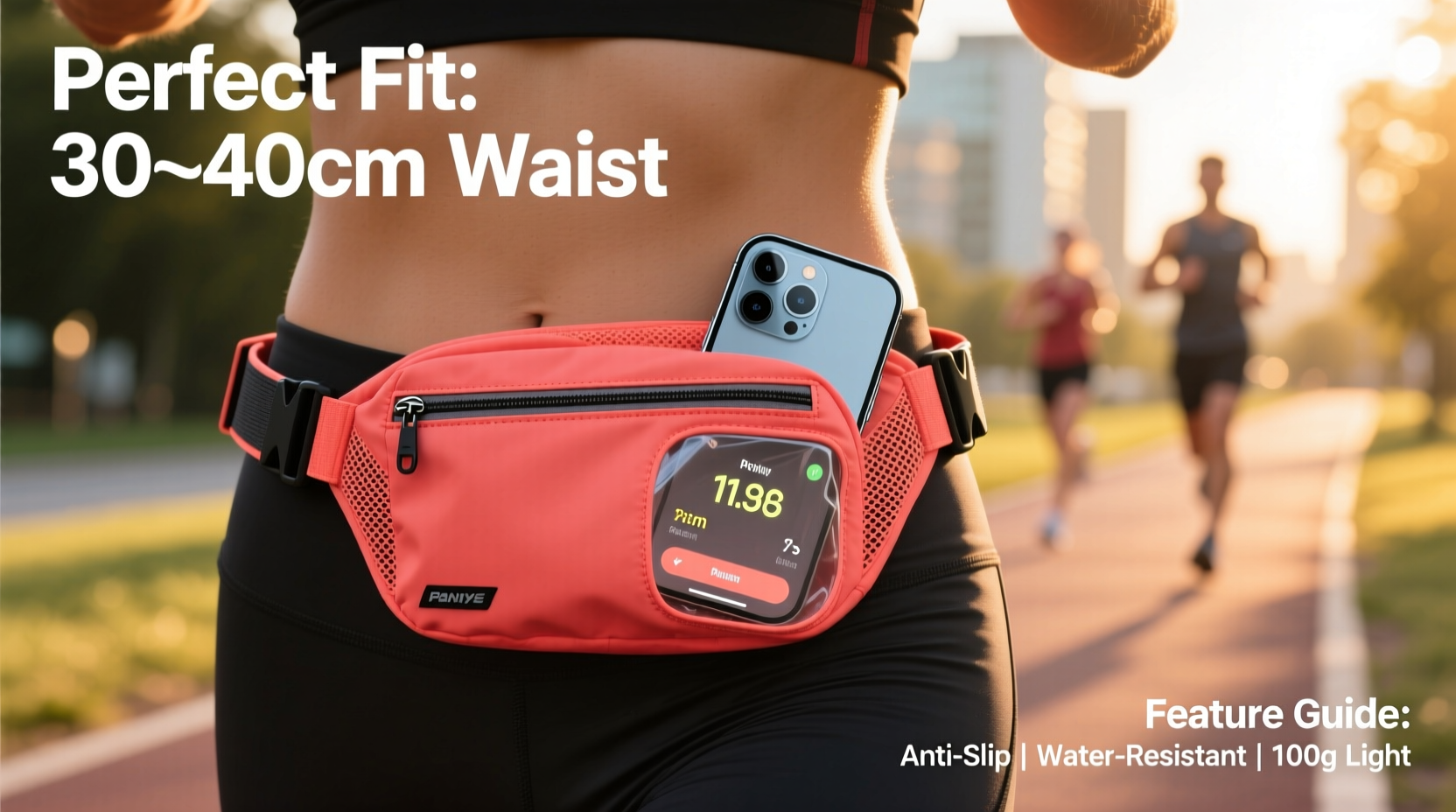
A poorly fitted fanny pack shifts, bounces, or pinches with every stride. What feels secure while standing may become unbearable after a mile. The key is achieving a snug but breathable fit around the hips, not the waist. Most performance-oriented runners benefit from wearing the pack across the hips, just above the iliac crest, where movement is minimized.
Adjustability is critical. Look for packs with wide, stretchable belts that use hook-and-loop or slider buckles for micro-adjustments. Narrow bands may dig into skin, especially during longer runs or in hot weather when sweat increases friction. A good rule: once fastened, you should be able to slide two fingers under the belt comfortably. Any tighter risks restricting blood flow; any looser invites bounce.
Essential Features for Phone-Centric Runners
Your phone isn’t just cargo — it’s your coach, navigator, and safety net. The ideal fanny pack must protect it, keep it accessible, and prevent damage from sweat or impact.
- Dedicated phone sleeve: Look for a padded or lined interior compartment sized for modern smartphones (up to 6.7 inches). It should allow screen access through a clear, waterproof window if possible.
- Water resistance: Not all “water-resistant” materials are equal. Packs made with TPU-coated nylon or ripstop polyester offer better protection against rain and sweat.
- Touchscreen compatibility: Some packs include a transparent front panel that lets you swipe or tap without removing the phone — a game-changer during interval training.
- Secure zipper pulls: Long zippers with silicone or rubberized pulls are easier to operate with sweaty fingers and less likely to snag fabric.
- Reflective accents: For early morning or evening runs, reflective stitching or logos improve visibility.
“Runners overestimate how much they need to carry, but underestimate how much discomfort poor weight distribution causes.” — Dr. Lena Torres, Sports Ergonomics Researcher at Boulder Human Performance Lab
Choosing the Right Size and Layout
Size affects both comfort and functionality. Too small, and your phone won’t fit with a case; too large, and the pack flaps excessively. Most runners benefit from a medium-sized pack (5–7 liters) with multiple compartments.
| Capacity | Ideal For | Limits |
|---|---|---|
| 3–4L | Phone + keys + gel | No room for layers or water bottle |
| 5–7L | Phone, wallet, light jacket, nutrition | Slight bulk if minimally loaded |
| 8L+ | Long trail runs, hydration systems | Overkill for short road runs |
Internal organization matters. A single open cavity forces you to dig blindly. Instead, opt for a zippered main section with internal elastic loops for gels, a key clip, and a mesh pocket for cards or cash. Side pockets for soft flasks (up to 6 oz) add versatility without compromising balance.
Real Runner, Real Results: A Mini Case Study
Maya, a 32-year-old marathon trainee from Portland, struggled with her phone slipping out of her shorts during tempo runs. She tried armbands, but found them restrictive and prone to sliding down. After testing three different fanny packs, she settled on a 6-liter model with a diagonal strap design and a fleece-lined phone sleeve.
What made the difference? The pack distributed weight evenly across her hips and stayed level even during downhill sprints. The side compression straps kept contents stable, and the external headphone port let her route cables cleanly. After six weeks of daily use, she reported no chafing, improved focus, and zero drop incidents. “It felt invisible after mile two,” she said. “I forgot I was wearing it — which is exactly what I wanted.”
Step-by-Step Guide to Testing Your Fanny Pack
Don’t buy based on specs alone. Follow this sequence to ensure long-term satisfaction:
- Load it realistically: Insert your phone (in its usual case), keys, ID, and a gel or two.
- Wear it around the house: Walk up stairs, bend over, sit down. Check for tugging or pressure points.
- Test range of motion: Do high knees, butt kicks, and lunges. Observe if the pack lifts or rotates.
- Simulate a run: Jog in place or take a 10-minute outdoor test. Pay attention to bounce and heat buildup.
- Check accessibility: Can you retrieve your phone one-handed? Is the zipper easy to pull?
- Evaluate breathability: After 15 minutes, feel the back panel. Does it trap excessive sweat?
Top 5 Don'ts When Choosing a Running Fanny Pack
| Don’t | Do Instead |
|---|---|
| Prioritize style over function | Choose ergonomics first, aesthetics second |
| Ignore material thickness | Opt for abrasion-resistant fabrics like 210D ripstop |
| Assume one size fits all | Check sizing charts and return policies |
| Forget about ventilation | Select packs with mesh backing or airflow channels |
| Overload with unnecessary items | Stick to essentials: phone, keys, ID, emergency cash |
Frequently Asked Questions
Can I wear a fanny pack during a race?
Yes, most races allow small fanny packs, especially for holding phones, gels, or medical info. However, larger packs may be restricted in elite corrals or competitive events. Always check race guidelines beforehand.
Will a fanny pack bounce if I’m a bouncy runner?
Bounce depends more on fit than body type. A properly adjusted pack with a wide, grippy belt and balanced load will stay stable regardless of stride intensity. Compression straps and lower center-of-gravity designs also reduce movement.
How do I clean my running fanny pack?
Spot-clean with mild soap and a damp cloth. Avoid submerging it, especially if it has foam padding or electronic ports. Air dry away from direct sunlight to prevent material degradation.
Final Checklist Before Buying
- ✅ Fits securely on hips (not waist)
- ✅ Holds your phone with case
- ✅ Allows touchscreen use without removal
- ✅ Made from sweat- and water-resistant fabric
- ✅ Has reflective elements for low-light visibility
- ✅ Includes secure internal organization
- ✅ Offers a trial period or return option
Conclusion: Run Light, Run Free
The perfect running fanny pack isn’t about minimalism for its own sake — it’s about freedom. Freedom from pocket bulges, dropped phones, and constant readjustment. When fit, function, and durability align, your gear fades into the background, letting you focus on rhythm, breathing, and the road ahead. Take the time to assess your needs, test options rigorously, and choose a pack that works as hard as you do. Once you find it, you might wonder how you ever ran without one.




 浙公网安备
33010002000092号
浙公网安备
33010002000092号 浙B2-20120091-4
Comments
No comments yet. Why don't you start the discussion?