
When choosing a smartphone in the mid-range segment, users often face tough decisions—especially when switching between brands like Xiaomi and Samsung. The Redmi Note 5 Pro and Samsung Galaxy J8 were both prominent players in their time, targeting budget-conscious consumers who didn’t want to compromise too much on performance or design. But for someone upgrading from one to the other, the question remains: was it actually worth it?
This article dives deep into real-world performance, hardware specs, software experience, and long-term usability to help you understand whether moving from the Redmi Note 5 Pro to the Galaxy J8—or vice versa—made sense.
Hardware and Performance Comparison
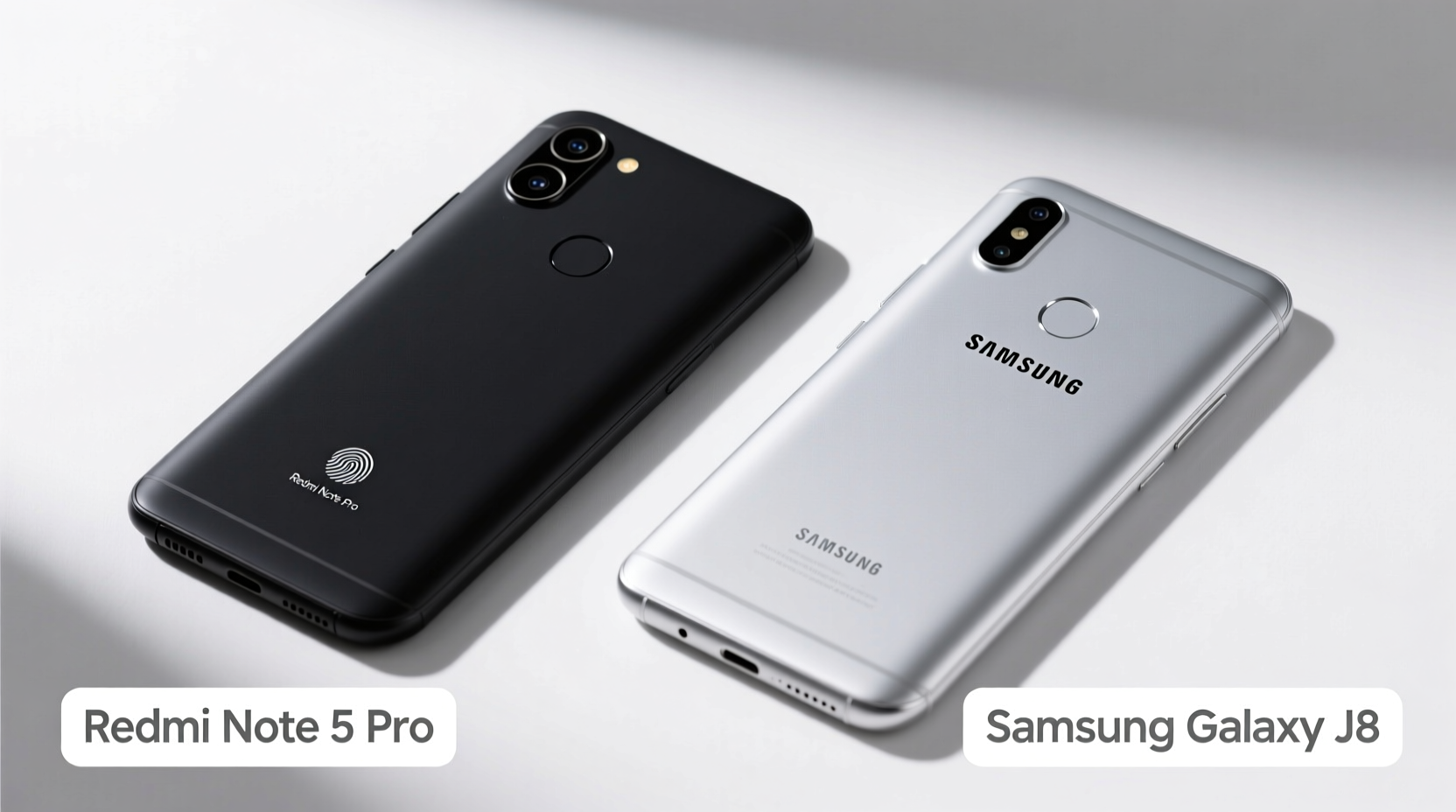
The foundation of any smartphone decision lies in its hardware. Both devices launched within months of each other in 2018, but they took different approaches to chipset, RAM, and overall system responsiveness.
| Feature | Redmi Note 5 Pro | Samsung Galaxy J8 |
|---|---|---|
| Processor | Qualcomm Snapdragon 636 (Octa-core) | Qualcomm Snapdragon 450 (Octa-core) |
| RAM Options | 4GB / 6GB | 3GB / 4GB |
| Internal Storage | 64GB / 128GB (expandable) | 32GB / 64GB (expandable) |
| Battery Capacity | 4000 mAh | 3500 mAh |
| Fast Charging | Yes (18W support) | No (standard 10W charging) |
The Redmi Note 5 Pro clearly outperforms the Galaxy J8 in processing power. The Snapdragon 636 is significantly faster than the entry-level Snapdragon 450 used in the J8. Users upgrading from the Note 5 Pro to the J8 would notice a drop in app launch speed, multitasking fluidity, and gaming performance. Conversely, those moving from the J8 to the Note 5 Pro experienced a tangible leap in responsiveness.
Camera Capabilities: Real-World Photo Quality
Cameras are often the deciding factor for many buyers. Let’s compare how each phone handles photography in everyday conditions.
- Redmi Note 5 Pro: Dual rear setup with a 12MP primary sensor and 5MP depth sensor. Front camera: 20MP with portrait mode and AI beautification.
- Samsung Galaxy J8: Single 16MP rear sensor with f/1.7 aperture. Front camera: 16MP with LED flash.
On paper, the J8's larger front aperture sounds promising, but real-world results tell a different story. The Redmi Note 5 Pro consistently delivers sharper images, better dynamic range, and superior low-light performance thanks to pixel binning technology and software optimization.
The dual-camera system on the Note 5 Pro allows for more natural background blur in portrait shots, while the Galaxy J8 struggles with edge detection and tends to over-process facial features.
“Even two years after release, the Redmi Note 5 Pro’s camera held up better in side-by-side tests against newer budget phones.” — TechRadar India, 2020 Review Archive
Battery Life and Charging Experience
Battery longevity isn't just about capacity—it's also about efficiency and charging speed.
The Redmi Note 5 Pro’s 4000 mAh battery typically lasted 1.5 days under moderate use. With MIUI’s aggressive background app management, standby drain was minimal. Combined with 18W fast charging, a full charge took around 90 minutes.
In contrast, the Galaxy J8’s 3500 mAh battery barely made it through a full day with heavy usage. Without fast charging, users had to wait nearly two hours for a complete recharge. This became a pain point for commuters and students relying on quick top-ups during breaks.
Real-World Example: Priya’s Upgrade Journey
Priya, a college student from Hyderabad, upgraded from the Redmi Note 5 Pro to the Galaxy J8 after her original device developed display issues. She expected improvements due to Samsung’s brand reputation. Instead, she found herself frustrated.
\"I loved how my Redmi handled Instagram, YouTube, and back-to-back Zoom classes. The J8 lagged even opening WhatsApp. And I missed the fast charging—getting ready in the morning took longer because I had to leave my phone plugged in.\"
After six months, she switched back to a refurbished Redmi Note 5 Pro. Her takeaway? Brand loyalty shouldn’t override actual performance.
Software and Long-Term Usability
MIUI (on Redmi) and Samsung Experience (later One UI) offer very different software philosophies.
- Redmi Note 5 Pro: Ran Android 8.1 with MIUI 9 at launch. Received updates up to Android 9. Feature-rich interface with customization options, split-screen, second space, and ad-supported system apps.
- Samsung Galaxy J8: Shipped with Android 8.0 Oreo and Samsung Experience 9.0. Later updated to Android 10 with One UI. Cleaner interface, fewer pre-installed ads, but heavier on system resources.
While Samsung offered slightly longer software support, the Galaxy J8’s weaker hardware couldn’t fully leverage the smoother animations and features of later OS versions. Over time, the device felt sluggish compared to the more optimized—and powerful—Note 5 Pro.
Was Upgrading Really Worth It?
The answer depends on your starting point and priorities.
- If you were using the Redmi Note 5 Pro and moved to the Galaxy J8: Likely not worth it. You traded raw performance, faster charging, and better cameras for a marginally better build quality and Samsung branding.
- If you came from an older Samsung model or entry-level phone and got the Galaxy J8: An improvement in display quality and front camera lighting—but still behind the Note 5 Pro in overall capability.
- If you upgraded from Galaxy J8 to Redmi Note 5 Pro: Definitely worth it. Faster processor, longer battery, superior camera, and quicker charging make this a clear upgrade path.
Checklist: Is Your Upgrade Justified?
- ✅ Does the new phone have a better processor than your current one?
- ✅ Will battery life meet your daily needs without anxiety?
- ✅ Are you getting meaningful improvements in camera quality?
- ✅ Does the software feel snappier, not slower?
- ✅ Is fast charging supported?
- ✅ Have you checked user reviews for long-term reliability?
Frequently Asked Questions
Which phone has better gaming performance?
The Redmi Note 5 Pro handles games like PUBG Mobile and Asphalt 9 far better due to its Snapdragon 636 and higher RAM variants. The Galaxy J8 stutters in high-graphic settings and heats up quickly.
Does the Galaxy J8 have any advantages over the Note 5 Pro?
Yes—its AMOLED display offers deeper blacks and better contrast. It also has a brighter front-facing LED flash, which helps in dark selfies. Build quality feels slightly more premium, though both use plastic bodies.
Can either phone run modern apps smoothly in 2024?
Light usage such as calls, messaging, and basic browsing is still possible on both, but neither handles modern multitasking well. The Redmi Note 5 Pro remains more capable due to its superior hardware foundation.
Final Verdict
For most users, upgrading from the Redmi Note 5 Pro to the Samsung Galaxy J8 was a step backward—not forward. Despite Samsung’s stronger brand presence and slightly better display, the J8 simply couldn’t match the all-around performance, battery efficiency, and camera output of Xiaomi’s offering.
The Redmi Note 5 Pro wasn’t perfect—MIUI’s bloatware and occasional overheating were valid concerns—but it delivered where it mattered most: speed, functionality, and value for money.
Ultimately, upgrades should be measured by real gains, not logos. Choosing a phone based solely on brand reputation can lead to disappointment, especially when technical specifications and user experience tell a different story.




 浙公网安备
33010002000092号
浙公网安备
33010002000092号 浙B2-20120091-4
Comments
No comments yet. Why don't you start the discussion?