
Creating a welcoming atmosphere in your home often starts with scent. A well-scented space can influence mood, reduce stress, and even make guests feel instantly at ease. Two of the most popular methods for dispersing fragrance—reed diffusers and oil burners—offer distinct advantages and trade-offs. But when it comes to which one truly makes your home smell better, the answer isn’t straightforward. It depends on your priorities: longevity, intensity, safety, or ambiance.
This guide compares reed diffusers and oil burners across key factors like scent throw, maintenance, cost, and health impact. By the end, you’ll know exactly which option suits your lifestyle—and how to get the best results from either.
How Reed Diffusers Work
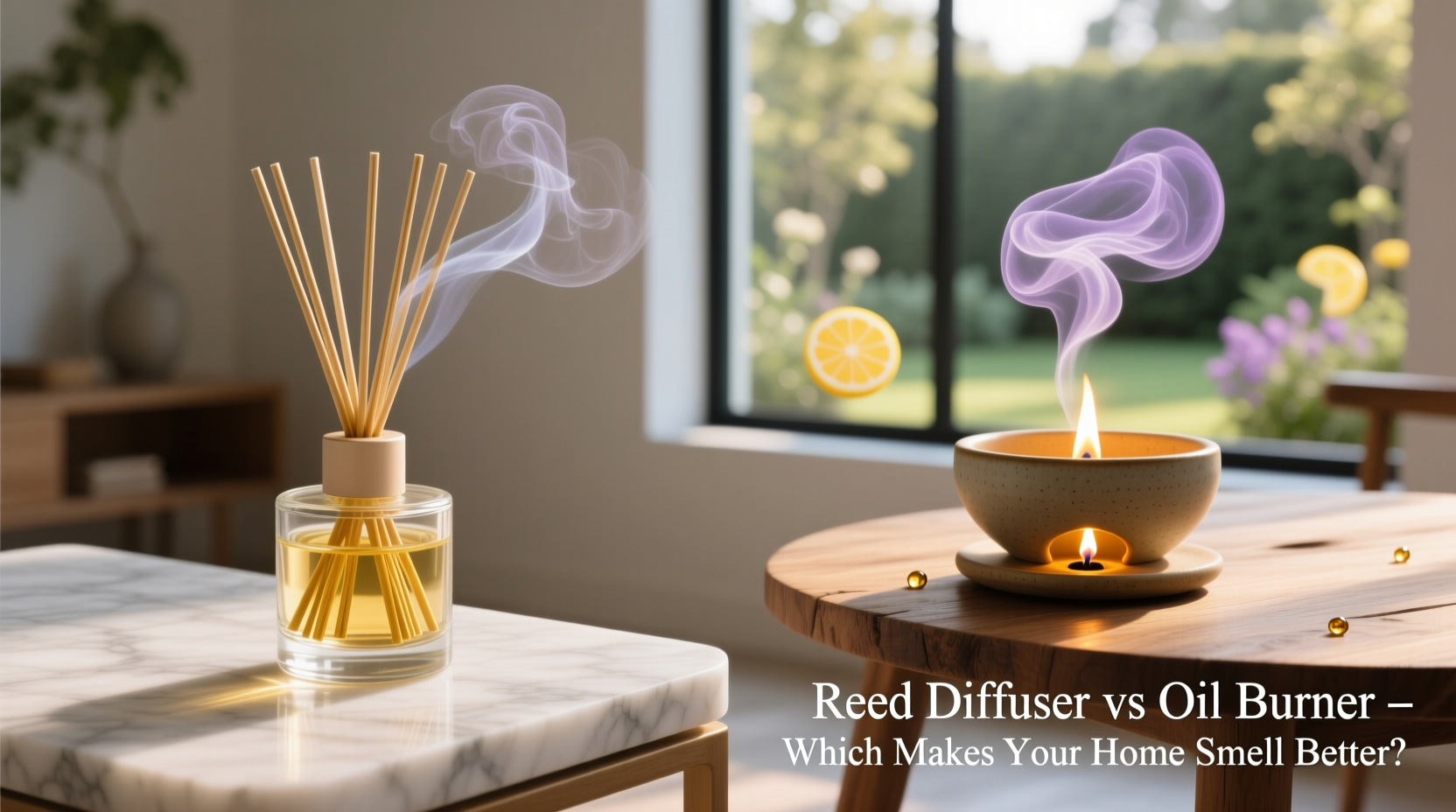
Reed diffusers operate through capillary action. Scented essential or perfume oils are poured into a decorative bottle, and porous reeds (often made of rattan) are inserted into the liquid. The reeds absorb the oil and slowly release the fragrance into the air as it evaporates from the surface of the reeds.
The process is entirely passive—no heat, flame, or electricity required. This makes reed diffusers ideal for continuous, low-maintenance scenting in entryways, bathrooms, or bedrooms where consistent background fragrance is preferred over strong bursts.
Pros and Cons of Reed Diffusers
- Pros: Flame-free, child- and pet-safe, constant scent, minimal upkeep, stylish design element
- Cons: Subtle fragrance output, slower to scent large rooms, oils can degrade over time if exposed to sunlight
How Oil Burners Work
Oil burners use heat to volatilize fragrance. There are two main types: electric warmers and tea-light burners. Both hold a small dish of scented oil above a heat source—either a lightbulb or candle flame—which gently warms the oil and releases its aroma into the air.
Because heat accelerates evaporation, oil burners deliver a stronger, more immediate scent. They’re particularly effective in larger spaces or when you want to change the mood of a room quickly—like freshening up before guests arrive.
“Warmth unlocks the top notes in essential oils faster, giving a more dynamic olfactory experience.” — Dr. Lena Patel, Aromatherapy Researcher
Pros and Cons of Oil Burners
- Pros: Stronger scent throw, customizable intensity, works fast, affordable initial cost
- Cons: Requires supervision (fire risk with candles), not suitable for unattended use, needs regular monitoring
Direct Comparison: Reed Diffuser vs Oil Burner
| Feature | Reed Diffuser | Oil Burner |
|---|---|---|
| Scent Strength | Low to moderate, gradual release | Strong, immediate dispersion |
| Safety | Very high—no heat or flame | Moderate—open flame or hot surfaces |
| Maintenance | Flip reeds monthly; refill every 8–12 weeks | Add oil as needed; monitor heat source |
| Cost Over Time | Higher (premium oils, replacement reeds) | Lower (inexpensive oils, reusable burner) |
| Best For | Bedrooms, offices, hallways | Kitchens, living rooms, entertaining areas |
| Lifespan of Fragrance | 2–4 months per bottle | Hours to days, depending on use |
Real-Life Scenario: Choosing Based on Lifestyle
Sarah lives in a small apartment with a cat and works long hours. She wants her home to always smell clean and calming but doesn’t want to worry about fire hazards or refilling devices daily. She chooses a reed diffuser with linen-and-lavender oil for her living area. It provides a soft, consistent scent she notices when she walks in the door—exactly the peaceful welcome she wants.
In contrast, Mark hosts weekly dinner parties and loves dramatic sensory experiences. He uses an oil burner with citrus and rosemary essential oils during gatherings. The warmth intensifies the bright, energizing notes, filling his open-concept kitchen and dining area within minutes. He turns it on an hour before guests arrive and turns it off after dessert—controlled, impactful, and temporary.
Their choices aren’t about which device is “better,” but which aligns with their routines and expectations.
Maximizing Scent Performance: Tips for Both Methods
Regardless of which method you choose, technique matters. Poor placement or low-quality oils can undermine even the best-designed system.
For Reed Diffusers:
- Use 6–8 reeds for optimal absorption; fewer reeds mean weaker scent.
- Rotate reeds weekly by flipping them—this exposes fresh oil to the air.
- Top up with new oil when levels drop below halfway to maintain consistency.
- Choose diffuser bases with high carrier oil quality (like dipropylene glycol) for longer-lasting performance.
For Oil Burners:
- Never leave a tea-light burner unattended; switch to electric models for safety.
- Use 5–10 drops of essential oil per session—too much can overwhelm and waste product.
- Turn off electric warmers after 2–3 hours to preserve oil integrity and prevent overheating.
- Clean the dish regularly to avoid residue buildup that dulls future scents.
Frequently Asked Questions
Can I use essential oils in both reed diffusers and oil burners?
Not interchangeably. Essential oils alone don’t work well in reed diffusers because they lack a carrier base to wick up the reeds. Use pre-diluted diffuser oil or mix essential oils with a carrier like safflower or almond oil. In oil burners, pure essential oils work perfectly when used in moderation.
Which is safer around pets?
Reed diffusers are generally safer. Many essential oils (like tea tree, eucalyptus, or citrus) can be toxic to cats and dogs when heated and inhaled in high concentrations. Oil burners increase volatility, raising risks. If you have pets, stick to pet-safe oils and use reed diffusers in well-ventilated areas.
Why does my reed diffuser stop smelling after a few weeks?
This usually happens when the oil level gets too low, or the reeds become saturated and clogged. Try flipping the reeds and topping up with fresh oil. If that doesn’t help, replace the reeds—rattan loses effectiveness after 2–3 months.
Action Checklist: Choosing & Using Your Scent System
- ✅ Assess your space: Large room? Consider an oil burner for stronger diffusion.
- ✅ Evaluate safety needs: Kids or pets? Opt for flameless reed diffusers or electric warmers.
- ✅ Decide on scent goals: Background freshness (diffuser) vs. bold aroma (burner).
- ✅ Buy quality oils: Look for phthalate-free, naturally derived fragrances.
- ✅ Maintain consistently: Flip reeds, clean burners, and store oils away from heat.
Final Verdict: Which Actually Makes Your Home Smell Better?
“Better” depends on what you value. If you want a subtle, always-on fragrance with zero effort and maximum safety, a reed diffuser wins. It integrates seamlessly into daily life, offering a quiet elegance that enhances rather than overwhelms.
If you crave intensity, immediacy, and the ritual of lighting a warmer to set the mood, an oil burner delivers. It’s especially effective for short-term use, seasonal scents, or homes with open layouts where fragrance needs to travel.
Many people find the best solution is using both: reed diffusers in private spaces like bedrooms for all-day comfort, and oil burners in social areas for moments that call for sensory impact.




 浙公网安备
33010002000092号
浙公网安备
33010002000092号 浙B2-20120091-4
Comments
No comments yet. Why don't you start the discussion?