
In the post-pandemic era, the way we work has fundamentally shifted. No longer is the 9-to-5 office grind the default. Companies now face a critical decision: should they go fully remote, return to the office, or adopt a hybrid model? While productivity and cost savings often dominate these conversations, one factor is increasingly shaping long-term success—employee happiness. After all, happy employees are more engaged, loyal, and innovative. But which work model truly delivers on well-being? The answer isn’t as straightforward as it seems.
Recent studies from Gallup, McKinsey, and the Harvard Business Review reveal that while both remote and hybrid models outperform traditional office setups in terms of job satisfaction, the nuances matter. Autonomy, social connection, work-life boundaries, and managerial support all play pivotal roles. To understand what really drives happiness, we need to look beyond surface-level preferences and examine how each model impacts mental health, relationships, and daily routines.
The Remote Work Advantage: Freedom and Flexibility
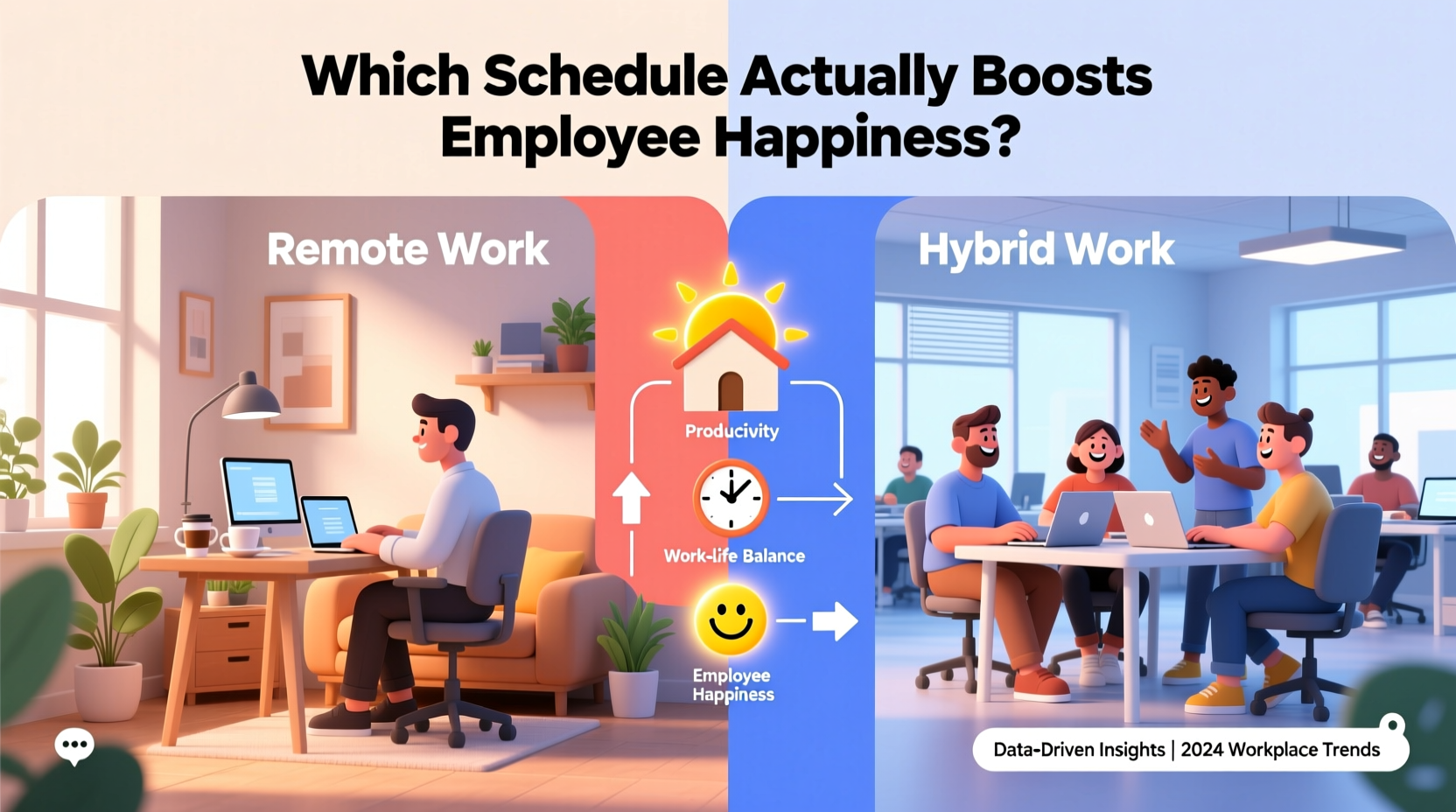
Remote work offers unparalleled flexibility. Employees can design their days around personal rhythms, avoid stressful commutes, and integrate caregiving responsibilities more seamlessly. For many, this autonomy translates directly into higher life satisfaction. A 2023 Stanford study found that remote workers reported 24% lower stress levels and a 35% increase in perceived work-life balance compared to their in-office peers.
This freedom also enables geographic mobility. Employees can live where they choose—closer to family, in lower-cost areas, or in environments better suited to their lifestyle. This control over environment and time fosters a sense of ownership over one’s life, a key driver of psychological well-being.
However, remote work isn’t without its downsides. Isolation is a persistent issue. Without casual watercooler conversations or spontaneous collaboration, some employees report feeling disconnected from team culture. Over time, this can erode belonging and lead to burnout—even when workload is manageable. Additionally, the blurring of work-life boundaries can result in longer hours, with employees checking emails late into the night simply because “the office” is always accessible.
The Hybrid Model: Balancing Structure and Autonomy
The hybrid model attempts to offer the best of both worlds: the flexibility of remote work combined with the structure and social benefits of in-person interaction. Typically, employees split their time between home and office—commonly two to three days per week in the office, though policies vary widely.
What makes hybrid appealing is its adaptability. It allows teams to preserve collaboration and mentorship opportunities while giving individuals control over when and where they focus on deep work. According to a 2024 Gartner survey, 68% of employees prefer hybrid arrangements, citing improved morale and reduced fatigue compared to full-time office attendance.
Yet, hybrid models come with logistical and cultural challenges. Poorly designed schedules—such as inconsistent office days or lack of team coordination—can lead to frustration. Employees may feel they’re commuting for meetings that could have been virtual, or miss key interactions because teammates aren’t present on the same days. This inconsistency can breed inequity, especially if leadership remains office-centric while frontline staff work remotely.
“Hybrid only works when it’s equitable. If some people get flexibility and others don’t, resentment builds fast.” — Dr. Laura Nguyen, Organizational Psychologist at MIT Sloan
Comparing Impact on Employee Happiness
To determine which model supports greater happiness, we must consider multiple dimensions: autonomy, social connection, work-life integration, and organizational trust. Below is a comparative analysis based on aggregated data from workforce studies conducted between 2021 and 2024.
| Factor | Remote Work | Hybrid Model | Traditional Office |
|---|---|---|---|
| Work-Life Balance | High – No commute, flexible scheduling | Moderate to High – Depends on office frequency | Low – Fixed hours, travel time |
| Social Connection | Low – Limited spontaneous interaction | Moderate to High – Structured in-person days | High – Constant proximity |
| Autonomy | Very High – Full control over environment | High – Partial control | Low – Rigid structure |
| Burnout Risk | Moderate – Boundary erosion, overwork | Low to Moderate – Clearer separation | High – Commute fatigue, inflexible hours |
| Job Satisfaction | High – Especially among parents and caregivers | Very High – When well-implemented | Low – Declining across industries |
The data suggests that while remote work excels in autonomy and convenience, hybrid models—when thoughtfully structured—tend to score highest in overall job satisfaction. The reason? They balance independence with human connection, offering enough office presence to sustain culture without sacrificing flexibility.
Real-World Example: How TechCorp Improved Retention with Hybrid Design
TechCorp, a mid-sized software company with 1,200 employees, initially shifted to full remote work in 2020. While productivity held steady, HR noticed a troubling trend: rising turnover among junior engineers and declining engagement scores. Exit interviews revealed a common theme—new hires felt isolated and struggled to build relationships or receive mentorship.
In response, TechCorp piloted a new hybrid model in 2023. Instead of mandating arbitrary office days, they introduced “team anchor days”—each department selected two fixed days per week when all members came into the office. Leadership committed to being present on those days as well. They also launched monthly learning lunches and redesigned office spaces to prioritize collaboration over individual desks.
Within nine months, employee satisfaction rose by 27%, and voluntary turnover dropped by 18%. Crucially, happiness gains were most pronounced among early-career staff and working parents, who appreciated the predictability and intentional social structure. As one engineer noted: “Knowing my team is here on Tuesdays and Thursdays gives me something to look forward to—and I still get three quiet days at home to focus.”
Actionable Strategies to Maximize Happiness in Any Model
Whether your organization opts for remote or hybrid work, certain practices consistently enhance employee well-being. These aren’t just perks—they’re foundational elements of a sustainable work culture.
1. Prioritize Predictability
Employees thrive on consistency. In hybrid settings, rotating office schedules create confusion. Fix team in-office days so people can plan childcare, transportation, and collaborative work effectively.
2. Train Managers for Distributed Leadership
Managing remote or hybrid teams requires different skills. Focus on outcomes, not visibility. Avoid “presenteeism” bias—rewarding those who are seen online rather than those delivering results.
3. Invest in Virtual Social Capital
Create space for non-work interaction. Virtual coffee chats, interest-based Slack channels, or online game sessions help replicate informal bonding.
4. Normalize Flexible Hours
Happiness increases when people can align work with energy peaks. Allow employees to start early or late as long as core collaboration windows are respected.
5. Audit for Equity
Ensure all employees—regardless of location—have equal access to promotions, projects, and leadership attention. Track participation in meetings and advancement rates by work mode.
Step-by-Step Guide to Designing a Happiness-First Work Policy
Transitioning to a new work model shouldn’t be arbitrary. Follow this timeline to ensure your approach is inclusive, data-driven, and sustainable.
- Month 1: Conduct Employee Surveys
Gather input on current pain points, preferred schedules, and barriers to well-being. Ask open-ended questions about what “a good workday” looks like. - Month 2: Analyze Departmental Needs
Not all teams function the same. Sales may benefit from regular client-facing office days, while developers may prefer deep-focus remote weeks. - Month 3: Pilot Two Models
Test a fully remote track and a structured hybrid option with volunteer teams. Measure productivity, satisfaction, and retention over 90 days. - Month 4: Refine Based on Feedback
Host listening sessions. Adjust office frequency, meeting norms, and support resources based on real usage patterns. - Month 5: Scale and Standardize
Roll out the refined model company-wide with clear guidelines, training, and KPIs for manager accountability. - Ongoing: Quarterly Check-Ins
Monitor sentiment through pulse surveys and stay agile. Work preferences evolve—your policy should too.
Frequently Asked Questions
Does remote work lead to faster burnout?
It can, but not inevitably. Burnout in remote settings often stems from poor boundaries, not the location itself. Employees who set clear start/end times, take breaks, and communicate availability tend to fare better. Employers can help by modeling healthy behavior—such as not sending late-night messages—and encouraging time-off.
Is the hybrid model more expensive for companies?
Initially, yes—maintaining office space while supporting remote infrastructure involves dual costs. However, many organizations downsize physical footprints and repurpose offices as collaboration hubs, reducing long-term overhead. The retention benefits often outweigh expenses; replacing an employee can cost 50–200% of their annual salary.
Can introverts thrive in hybrid environments?
Absolutely. Introverts often appreciate the ability to recharge at home while choosing when to engage socially. The key is avoiding mandatory “fun” events and allowing opt-in participation. Quiet rooms in offices and asynchronous feedback options also support diverse personalities.
Conclusion: Happiness Isn’t About Location—It’s About Design
The debate between remote and hybrid work misses a deeper truth: employee happiness doesn’t depend solely on where people work, but on how the work is structured. Autonomy, connection, fairness, and purpose matter more than square footage or internet speed.
Remote work empowers individuals but risks isolation. Hybrid models offer balance but require careful orchestration to avoid fragmentation. The most successful organizations aren’t wedded to a label—they’re committed to listening, iterating, and designing work around human needs.
If you're leading a team or shaping company policy, start with empathy. Ask your employees what would make their work lives better—not just more productive. Then build a model that reflects those answers. Because ultimately, the schedule that boosts happiness is the one that respects both the person and the professional.




 浙公网安备
33010002000092号
浙公网安备
33010002000092号 浙B2-20120091-4
Comments
No comments yet. Why don't you start the discussion?