
The crackle of the power switch, the pixelated startup chime, the greenish glow of the LCD—few experiences in gaming history carry the emotional weight of turning on an original Nintendo Game Boy. More than three decades after its 1989 debut, the device still evokes a powerful sense of nostalgia. Today, however, many players access those same classic games through retro handheld emulators—compact devices or software that simulate vintage systems with modern enhancements. But when it comes to authenticity, which experience truly delivers the real feel of retro gaming?
This isn’t just about graphics or performance. Authenticity in gaming spans tactile feedback, audio fidelity, visual imperfections, and even the limitations that once defined gameplay. Whether you're reliving childhood memories or discovering retro titles for the first time, understanding the differences between emulation and original hardware is essential.
The Physical Experience: Weight, Buttons, and Screen
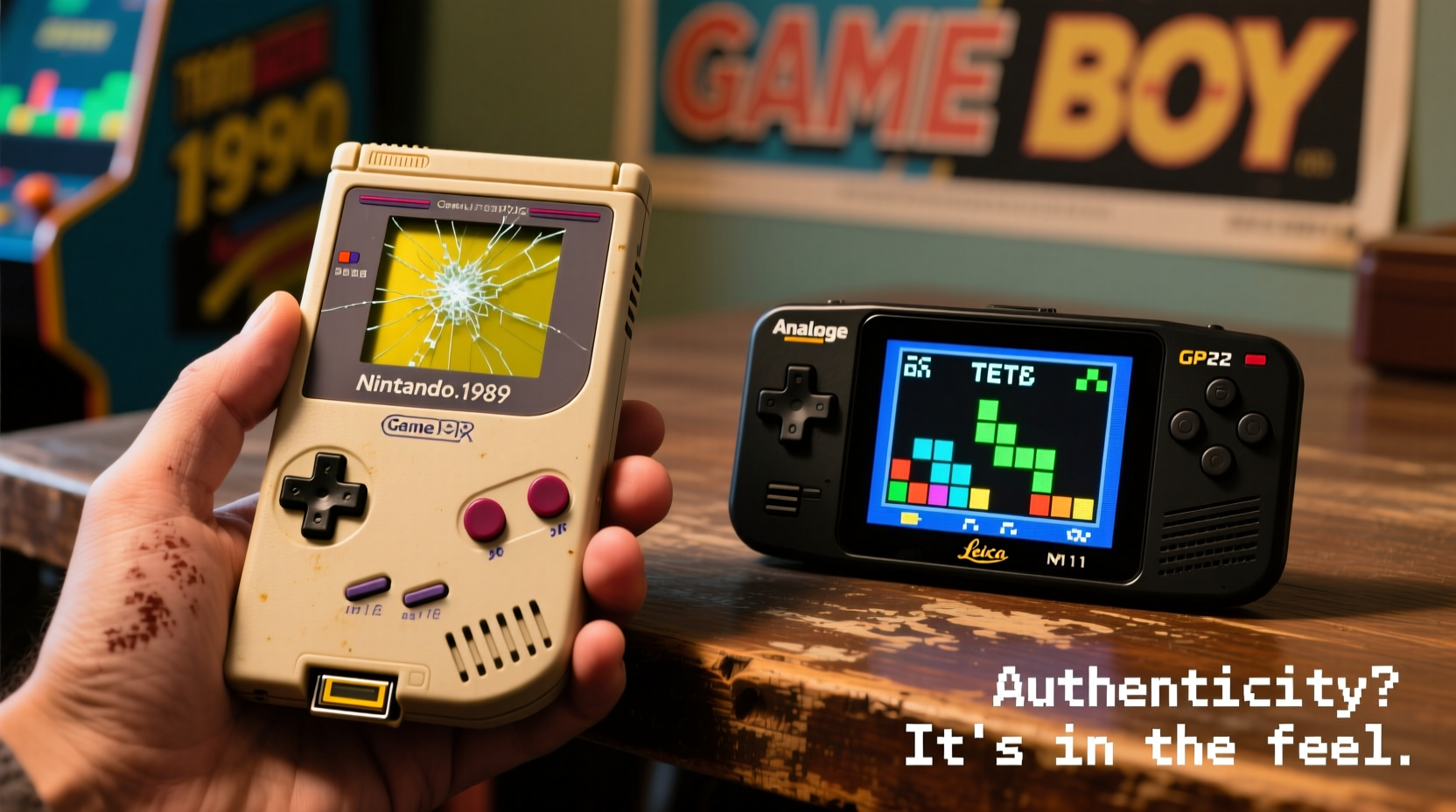
No discussion of authenticity can ignore the physicality of the device. The original Game Boy weighs approximately 220 grams with batteries, has a rigid plastic shell, and features a non-backlit, pea-soup-green LCD screen with visible scan lines and ghosting. Its D-pad is stiff but precise; the A and B buttons require a firm press. These aren’t flaws—they’re characteristics that shaped how people played.
In contrast, most retro handheld emulators are sleeker, lighter, and equipped with full-color, backlit screens. Devices like the Anbernic RG35XX or Retroid Pocket 2 offer high-resolution displays and responsive touch controls, often mimicking multiple console designs in one unit. While technically superior, they lack the heft and resistance that made the Game Boy feel like a tool built for endurance.
The screen is perhaps the most divisive difference. The Game Boy’s monochrome display forced developers to design with clarity and contrast in mind. Movement was often slower, sprites larger, and backgrounds minimal—all to compensate for the poor refresh rate and lack of backlight. Emulators, especially those running on modern IPS screens, render these games with perfect clarity, removing flicker and enhancing visibility. But in doing so, they also strip away the atmospheric haze that once defined the experience.
“Playing Tetris on the original Game Boy wasn’t just about the game—it was about the environment it created. The dim lighting, the squinting, the shared silence during long trips. That’s part of the memory.” — Jason Koerner, Retro Gaming Historian and Curator at the Video Game History Foundation
Audio Fidelity and System Sound
The Game Boy’s audio chip produces a distinctive square-wave sound that’s both primitive and expressive. Games like *Super Mario Land* or *The Legend of Zelda: Link’s Awakening* used this limited palette creatively, crafting memorable tunes that resonated despite technical constraints. When played through the original speaker—a small, tinny grille above the screen—the sound is muffled, slightly distorted, and intimately close.
Emulators typically route audio through modern codecs and stereo speakers or headphones. The result is cleaner, louder, and often richer—but also less raw. Some emulators allow users to apply audio filters that mimic the Game Boy’s frequency response, but few replicate the subtle clipping and resonance of the original hardware under battery strain.
Battery level also affected sound quality on the original device. As power dipped, the pitch could waver slightly, and the speaker would distort during intense audio sequences. These quirks were unintentional, yet they contributed to the organic feel of playing on original hardware. Emulation smooths over such inconsistencies, trading character for precision.
Game Performance and Input Lag
Original hardware runs games at their intended speed, governed by the Game Boy’s 4.19 MHz CPU. While some later titles pushed the system to its limits—causing slowdown or flicker—these moments were consistent across all units. Emulators, on the other hand, must interpret and translate old code into modern environments. Even high-end models can introduce micro-stutters or input lag if not optimized properly.
Well-coded emulators like those based on the mGBA or VisualBoyAdvance-M cores can achieve near-perfect accuracy, but only when configured correctly. Features like frame skipping, shader effects, or overclocking may improve visuals but alter timing. For purists, even a 1% deviation in speed can disrupt rhythm-based gameplay in titles like *Dr. Mario* or *Kirby’s Dream Land*.
Comparison Table: Original Game Boy vs Modern Emulator
| Feature | Original Game Boy | Retro Handheld Emulator |
|---|---|---|
| Screen Type | Monochrome LCD (green tint, no backlight) | Full-color IPS, backlit, high resolution |
| Button Feel | Stiff, tactile, durable plastic | Varies—some use mechanical switches, others rubber domes |
| Audio Output | Tinny internal speaker, mono | Clean stereo, headphone jack, customizable EQ |
| Battery Life | 10–30 hours (4x AA) | 3–8 hours (rechargeable lithium) |
| Game Library Access | Physical cartridges only | Thousands of ROMs via SD card |
| Portability | Bulky but rugged | Compact, lightweight, multi-system support |
| Authenticity Score | ⭐⭐⭐⭐⭐ | ⭐⭐⭐☆☆ |
Case Study: Sarah’s Cross-Country Train Ride Revisited
Sarah, a 38-year-old graphic designer, bought a Game Boy Color as a child to play during long Amtrak trips between Chicago and Detroit. She remembers the ritual: loading two games, inserting fresh batteries, adjusting the contrast wheel until the screen was just readable through the window glare. Her copy of *Tetris* became a meditation—a way to pass hours with focus and calm.
Last year, she purchased a retro handheld emulator to revisit those games. While impressed by the crisp screen and save states, she found herself distracted. “It felt too easy,” she said. “I could pause, rewind, brighten the screen—none of the friction was there. I missed having to hunch forward to see the blocks fall. I missed the low battery warning beeping halfway through a session.”
Eventually, Sarah bought a refurbished original Game Boy Pocket. She keeps the emulator for travel convenience, but reserves the original for evenings when she wants to truly reconnect with the past. “It’s not about winning more lines in Tetris,” she explained. “It’s about feeling the same way I did at thirteen.”
Preservation vs. Accessibility: Two Valid Paths
Authenticity and accessibility serve different purposes. The original Game Boy offers an unfiltered, historically accurate experience. It’s a time capsule—imperfect, fragile, and irreplaceable. Every scratch on the casing, every sticky button, tells a story.
Emulators, meanwhile, democratize access. They preserve games that might otherwise decay with aging cartridges and consoles. They enable features like save states, fast-forward, and cheat codes—tools that make retro gaming inclusive for modern audiences with limited time or dexterity.
As preservation expert Lita Ford notes: “We can’t expect everyone to maintain a collection of aging hardware. Emulation ensures that future generations can experience these games, even if not exactly as we did.”
Step-by-Step Guide: How to Maximize Authenticity on an Emulator
If you’re using a retro handheld emulator but want a more authentic Game Boy experience, follow these steps:
- Choose an accurate emulator core: Use mGBA or SameBoy for high compatibility and cycle-accurate rendering.
- Enable Game Boy-specific shaders: Apply CRT or LCD filter effects that mimic screen blur and scanlines.
- Disable save states: Force yourself to play through without interruptions, just like the original.
- Use monochrome palette: Set the color scheme to green-on-black or gray-scale to match the original display.
- Lower screen brightness: Reduce backlight intensity to recreate the need for external light sources.
- Limit audio output: Disable stereo enhancement and use mono audio through a single earbud if possible.
- Play with original controls: Avoid touch-screen overlays; rely solely on physical buttons mapped to standard layout.
Checklist: Are You Getting the Most Authentic Experience?
- ☑ Playing on original hardware or using an accurate emulator core
- ☑ Using monochrome or green-tinted display settings
- ☑ Avoiding save states and unlimited continues
- ☑ Listening to audio in mono, ideally through a small speaker or single earbud
- ☑ Playing in suboptimal lighting to mimic real-world conditions
- ☑ Respecting the original game’s difficulty curve and pacing
- ☑ Handling physical cartridges (if available) before playing
Frequently Asked Questions
Is emulation legal?
Emulation itself is legal. However, downloading copyrighted ROMs without owning the original cartridge is a violation of intellectual property laws. For ethical use, back up your own cartridges or support re-releases from official sources like Nintendo Switch Online.
Can emulators perfectly replicate the original Game Boy?
No emulator can fully replicate the physical experience—weight, button resistance, screen texture, and ambient sound. While software accuracy has improved dramatically, the sensory context remains unique to original hardware.
Why does the original Game Boy feel more “real” even when it’s technically inferior?
Human memory ties emotion to sensory detail. The limitations of the Game Boy—its dim screen, button clicks, and battery anxiety—are not bugs but features of the lived experience. These elements create a cohesive atmosphere that modern convenience cannot reproduce.
Conclusion: Choosing Your Path to the Past
The question of authenticity ultimately depends on what you’re seeking. If your goal is historical fidelity—if you want to feel the same tension, focus, and occasional frustration that defined gaming in the early '90s—then the original Game Boy remains unmatched. It is the definitive vessel for its era.
But if your aim is accessibility, convenience, or introducing retro games to new players, emulators are invaluable. They keep the library alive, adaptable, and resilient against time.
You don’t have to choose one forever. Many collectors and enthusiasts use both: emulators for discovery and experimentation, original hardware for reverence and reflection. The magic of retro gaming isn’t locked to one format—it lives in the act of playing, remembering, and passing on the experience.




 浙公网安备
33010002000092号
浙公网安备
33010002000092号 浙B2-20120091-4
Comments
No comments yet. Why don't you start the discussion?