
In an era where digital theft happens in seconds and personal data is more vulnerable than ever, the idea of someone stealing your credit card information without even touching your wallet sounds like science fiction. Yet, with the rise of contactless payments and RFID-enabled cards, that scenario is technically possible. Enter the RFID wallet — a product marketed as a shield against electronic pickpocketing. But is the added protection worth the price, or is it just another case of tech-driven fear selling? Let’s separate fact from fiction.
How RFID Technology Works (And How It Can Be Exploited)
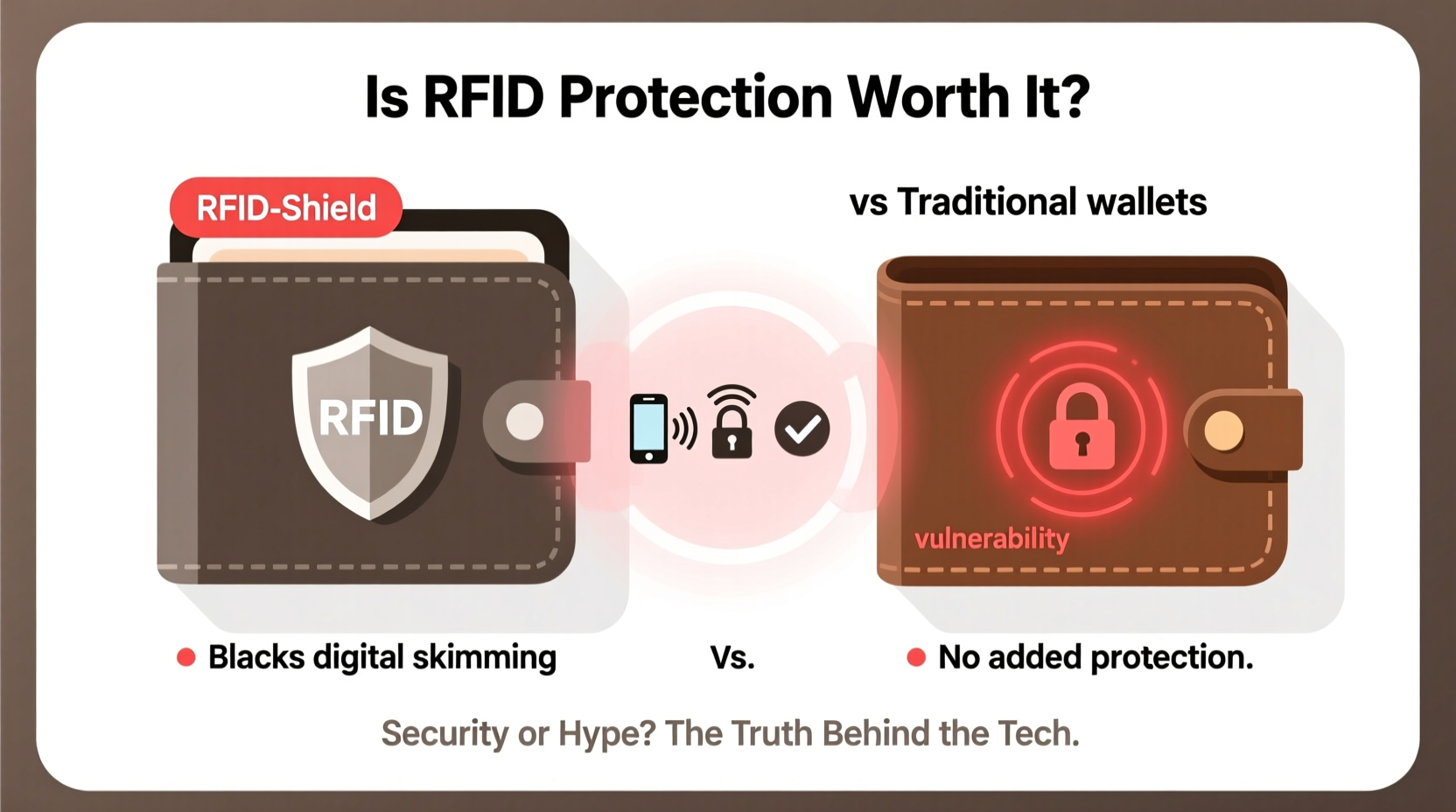
RFID stands for Radio-Frequency Identification. Many modern credit cards, passports, and access cards use embedded RFID chips to enable quick, contactless transactions. These chips emit a signal when near a compatible reader — think tapping your card at a grocery checkout or sliding through a secure door.
The concern arises because these signals can be intercepted. A malicious actor equipped with a portable RFID scanner — devices that can be purchased online for under $50 — could theoretically stand close to you in a crowded place and read your card information without your knowledge. This is known as \"skimming\" or \"electronic pickpocketing.\"
However, real-world risk depends on several factors: the range of the RFID signal (typically less than 4 inches), encryption standards used by the card issuer, and whether stolen data can actually be used to make fraudulent purchases.
“While RFID skimming is technically possible, widespread incidents are rare. Most financial institutions now use tokenization, meaning even if data is captured, it’s useless for making unauthorized transactions.” — Dr. Alan Reed, Cybersecurity Analyst at SecureEdge Labs
RFID Wallets: What They Actually Do
An RFID-blocking wallet incorporates a thin layer of metal or metallic fabric — often aluminum, copper, or nickel — that creates a Faraday cage around your cards. This cage blocks electromagnetic fields, preventing external scanners from reading the RFID signals.
These wallets don’t disable your cards; they simply prevent unauthorized access when the cards are stored inside. Once removed, the cards function normally at legitimate terminals.
It’s important to note: not all wallets labeled as “RFID blocking” are equally effective. Some low-cost models use inadequate shielding or only protect one side of the card slot, leaving data exposed.
RFID Wallet vs Regular Wallet: A Practical Comparison
| Feature | RFID Wallet | Regular Wallet |
|---|---|---|
| Security Against Skimming | High — blocks unauthorized RFID scans | None — cards are exposed to potential scanning |
| Cost | $25–$100+ depending on material and brand | $10–$50 for comparable quality |
| Durability | Varies — metal lining may wear over time | Generally high, especially with leather |
| Card Signal Interference | Possible — some users report issues tapping for transit or payments while cards are still inside | None — full signal accessibility |
| Peace of Mind | High — especially for frequent travelers or urban commuters | Depends on user awareness and habits |
A Real-World Scenario: Could You Be a Target?
Consider Maria, a business traveler who commutes daily through a busy subway station in Tokyo. She uses a contactless credit card and carries her passport in her front pocket. One morning, she notices unfamiliar small charges on her bank statement — $12 here, $8 there — all from gas stations and convenience stores far from her location.
After reporting the fraud, her bank investigates and suspects RFID skimming. While no direct evidence confirms it, the pattern matches known skimming behavior in high-density areas. Maria switches to an RFID-blocking wallet and sees no further suspicious activity.
This isn’t a common story, but it illustrates a plausible risk. High-traffic environments — airports, subways, festivals — increase exposure. For people in such settings regularly, the added protection may be justified.
Are You Overpaying for Peace of Mind?
Many consumers pay a 50% to 100% premium for RFID protection, but the actual threat level remains low for most. According to the Federal Trade Commission (FTC), cases of confirmed RFID skimming account for less than 0.1% of identity theft reports annually.
Meanwhile, traditional theft — lost or stolen wallets — remains a far more common issue. In 2023, over 2 million Americans reported losing wallets containing IDs and payment cards, leading to significantly higher rates of fraud than electronic skimming.
This suggests that for many users, focusing on physical security — using a slim wallet, keeping it in a secure pocket, enabling transaction alerts — may offer greater protection than RFID blocking alone.
When an RFID Wallet Makes Sense: A Checklist
Not everyone needs RFID protection. Use this checklist to determine if it’s right for you:
- You frequently travel internationally, especially to high-density urban areas
- Your wallet contains multiple contactless cards or an e-passport
- You’ve experienced unexplained small fraudulent charges before
- You value proactive security measures, even for low-probability risks
- You’re willing to potentially deal with minor signal interference during legitimate taps
If three or more apply, an RFID wallet is likely a worthwhile investment.
Step-by-Step: How to Test Your Wallet’s RFID Protection
If you already own an RFID wallet or are considering one, verify its effectiveness:
- Obtain an RFID-enabled card (credit card, transit pass, or access badge).
- Try tapping it at a compatible reader to confirm it works.
- Place the card inside the wallet and attempt to tap again.
- If the reader fails to detect the card, the shielding is functional.
- Repeat with each card slot — some wallets only shield specific compartments.
Note: Never test this on live payment systems. Use a public transit gate, library book scanner, or purchase a low-cost RFID tester online.
Frequently Asked Questions
Can my phone scan my credit card through an RFID wallet?
No. NFC (Near Field Communication) used by smartphones requires close proximity and cooperation from both devices. An RFID wallet will block passive scanning, including by phones attempting to read card data.
Do all credit cards have RFID chips?
No. Look for the contactless symbol (four curved lines resembling a Wi-Fi icon) on your card. If it’s present, the card uses RFID. Many banks issue them by default, but you can request non-RFID versions.
Does an RFID wallet stop all types of digital theft?
No. It only protects against close-range RFID skimming. It does not prevent phishing, data breaches, or malware-based theft. Comprehensive security requires layered defenses.
Final Verdict: Worth It or Hype?
The truth lies in the middle. RFID wallets are not a magic bullet, nor are they pure marketing hype. For the average person in a low-risk environment, the threat of electronic pickpocketing is minimal — especially with modern encryption and zero-liability fraud policies from banks.
However, for frequent travelers, urban professionals, or those carrying sensitive credentials, the modest cost and slight inconvenience of an RFID wallet can provide meaningful protection. Think of it like insurance: you hope you never need it, but it’s reassuring to have.
Ultimately, the decision should be based on your lifestyle, risk tolerance, and where you spend your time. Security isn’t one-size-fits-all. The best approach combines smart habits — monitoring accounts, minimizing carried cards, using digital wallets — with tools that fit your personal threat model.




 浙公网安备
33010002000092号
浙公网安备
33010002000092号 浙B2-20120091-4
Comments
No comments yet. Why don't you start the discussion?