
In the world of fashion accessories, few items have sparked as much debate in recent years as the rhinestone keychain. Once a staple of boutique displays and influencer wishlists, these glittering trinkets now share shelf space with sleeker, more subdued enamel alternatives. Social media timelines show a shift—minimalist aesthetics dominate, pastel palettes give way to monochrome designs, and fans of sparkle are beginning to wonder: are rhinestones officially out, or is this just another cyclical trend waiting to rebound?
The answer isn’t binary. To understand whether rhinestones are fading into obscurity or simply evolving, we need to examine their practicality, cultural relevance, production costs, and how they compare to rising alternatives like enamel keychains. This isn’t just about what looks good—it’s about what lasts, what sells, and what resonates with consumers today.
The Rise and Fall (or Pause?) of Rhinestone Keychains
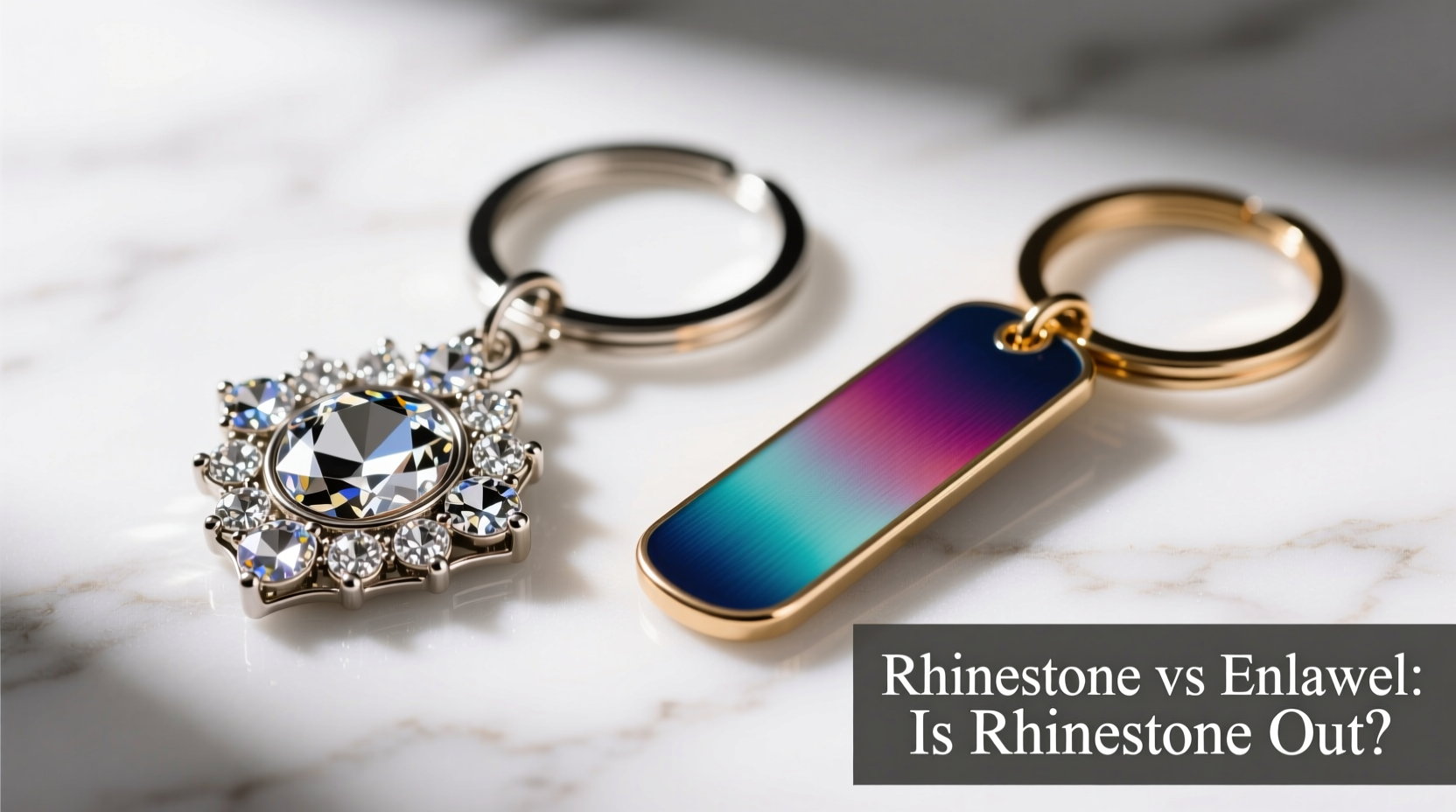
Rhinestone keychains surged in popularity during the late 2010s, fueled by Instagram aesthetics, celebrity endorsements, and the “maximalist” trend that celebrated bold colors, textures, and embellishments. From heart-shaped crystals dangling from designer bags to custom names spelled out in Swarovski-style stones, these accessories became symbols of personal expression and luxury flair.
But around 2022, a noticeable shift occurred. Platforms like TikTok began favoring clean lines, quiet luxury, and understated elegance. The hashtag #QuietLuxury amassed over 300 million views, while searches for “minimalist keychains” increased by 67% year-over-year according to Google Trends data. Suddenly, rhinestones were labeled “tacky” or “dated” by some corners of the internet—a stark contrast to their former status as must-have accessories.
Still, declaring rhinestones “dead” may be premature. In niche markets—such as bridal parties, LGBTQ+ pride collections, and K-pop fan merchandise—they remain highly sought after. Their emotional appeal lies in their ability to convey joy, celebration, and individuality. As stylist and accessory curator Lena Tran observes:
“Trends don’t die—they migrate. Rhinestones haven’t disappeared; they’ve found new homes where sparkle still matters.” — Lena Tran, Fashion Accessory Curator at StyleEdit Collective
Enamel Keychains: The Quiet Competitor
Enter the enamel keychain: durable, refined, and perfectly aligned with contemporary tastes. Unlike rhinestones, which rely on adhesive-backed crystals applied to metal or fabric bases, enamel keychains are made by filling recessed metal molds with colored glass paste, then firing them at high temperatures. The result is a smooth, glossy finish that resists chipping and fading far better than glued-on stones.
Brands like Maison Margiela, Ader Error, and even Apple (with its limited-edition enamel badges) have embraced this format, reinforcing its association with modern minimalism and craftsmanship. Enamel pieces often feature subtle branding, abstract shapes, or symbolic icons—designed to be noticed upon closer inspection rather than shouting for attention.
From a manufacturing standpoint, enamel offers consistency. Each piece can be mass-produced with precision, whereas rhinestone application requires meticulous hand-setting or specialized machinery, increasing labor costs and defect rates.
Rhinestone vs Enamel: A Practical Comparison
| Feature | Rhinestone Keychains | Enamel Keychains |
|---|---|---|
| Durability | Moderate – stones can fall off with impact or moisture exposure | High – resistant to scratches, water, and UV fading |
| Cost (per unit, bulk) | $$ – higher due to material and labor intensity | $ – more scalable production |
| Aesthetic Impact | High – immediate visual pop, great for gifting | Subtle – appeals to minimalist and mature audiences |
| Lifespan | 1–3 years with regular use (depending on care) | 5+ years under normal conditions |
| Eco-Friendliness | Low – plastic-based adhesives, non-recyclable components | Moderate – metal base recyclable, but glass coating complicates processing |
| Trend Relevance (2024) | Niche – strong in celebratory and identity-driven markets | Mainstream – favored in streetwear, corporate swag, and fashion |
Real Example: How One Brand Adapted to the Shift
Consider the case of Glint & Co., a small accessory brand based in Portland, Oregon. In 2020, 80% of their sales came from rhinestone keychains—custom initials, zodiac signs, and holiday-themed designs. By 2023, customer reviews began citing issues: “lost three stones in two months,” “looks cheap after washing hands,” “too flashy for work.”
Responding to feedback, Glint & Co. launched a dual-line strategy. They retained their rhinestone collection for special occasions but introduced a new enamel series featuring matte metal frames and soft gradients. Within six months, enamel accounted for 65% of revenue. More importantly, return customers increased by 40%, suggesting higher satisfaction and product longevity.
“We didn’t abandon rhinestones—we repositioned them,” said founder Maya Patel. “Now they’re sold as ‘celebration pieces’—perfect for birthdays, bachelorettes, or confidence boosts. The enamel line is our everyday wear. It’s not one replacing the other; it’s knowing when each belongs.”
Step-by-Step Guide: Choosing the Right Keychain for Your Needs
- Define the purpose: Is this for daily use, gifting, or event branding? Everyday carry favors durability (enamel), while gifts may prioritize emotional impact (rhinestones).
- Assess your audience: Younger demographics might love sparkle, but professionals or minimalist enthusiasts may prefer subtlety.
- Budget for longevity: While rhinestones may seem cheaper upfront, frequent replacements add hidden costs. Enamel pays off over time.
- Consider customization options: Enamel allows for intricate color blending and fine lines; rhinestones excel at texture and dimension.
- Test real-world performance: Carry both types for a week. Note which gets compliments, which chips, and which feels excessive.
Checklist: Should You Still Buy Rhinestone Keychains?
- ✅ You want a standout gift for a birthday, wedding, or graduation
- ✅ Sparkle aligns with your personal brand or aesthetic (e.g., glam, Y2K revival)
- ✅ You plan to use it occasionally, not daily
- ✅ You're part of a fandom or community where bling signals belonging
- ❌ You prioritize low maintenance and long-term value
- ❌ You work in environments where jewelry is restricted or impractical
Frequently Asked Questions
Are rhinestone keychains coming back in 2025?
Predictions suggest a partial resurgence within niche revivals—particularly in Y2K and retro-inspired fashion. However, mainstream dominance is unlikely. Expect rhinestones to appear in limited drops, artist collabs, or seasonal collections rather than as everyday staples.
Can I repair a rhinestone keychain if stones fall off?
Yes, but with caveats. Use E6000 industrial glue or UV-resin adhesive and apply in a dust-free environment. Match stone size and color carefully. However, repaired pieces rarely regain original strength or appearance. Prevention—avoiding water, impact, and friction—is more effective.
Is enamel better than rhinestone overall?
It depends on priorities. For durability, sustainability, and timeless design, enamel wins. But for emotional resonance, visual drama, and personalization, rhinestones still hold unique value. Neither is universally superior—they serve different roles.
Conclusion: Trends Evolve, Choices Expand
Rhinestones aren’t officially out—they’ve simply been recontextualized. What was once a dominant trend has matured into a specialized tool for expression, celebration, and identity. Meanwhile, enamel keychains have stepped into the spotlight as the go-to for functional elegance and lasting design.
The real takeaway isn’t about choosing sides, but about understanding context. Fashion doesn’t move in straight lines; it cycles, fragments, and adapts. Today’s “outdated” detail could be tomorrow’s vintage treasure. The smartest approach is to build a rotation: keep the rhinestone piece for nights out and milestones, and let enamel handle the daily grind.




 浙公网安备
33010002000092号
浙公网安备
33010002000092号 浙B2-20120091-4
Comments
No comments yet. Why don't you start the discussion?