
When it comes to securing your front door and monitoring outdoor activity, two names consistently dominate the conversation: Ring Doorbell and Nest Camera. Both are backed by major tech companies—Amazon for Ring and Google for Nest—and offer robust features like HD video, motion alerts, and two-way talk. But after months of real-world testing by thousands of users, which one do people actually choose? More importantly, which delivers a better experience in daily use?
The answer isn’t as straightforward as brand loyalty or marketing hype. It depends on priorities: ease of setup, integration with other smart devices, long-term costs, privacy controls, and how well each device performs under pressure—like spotting a package thief or identifying a visitor in low light.
Design and Installation: Simplicity vs Flexibility
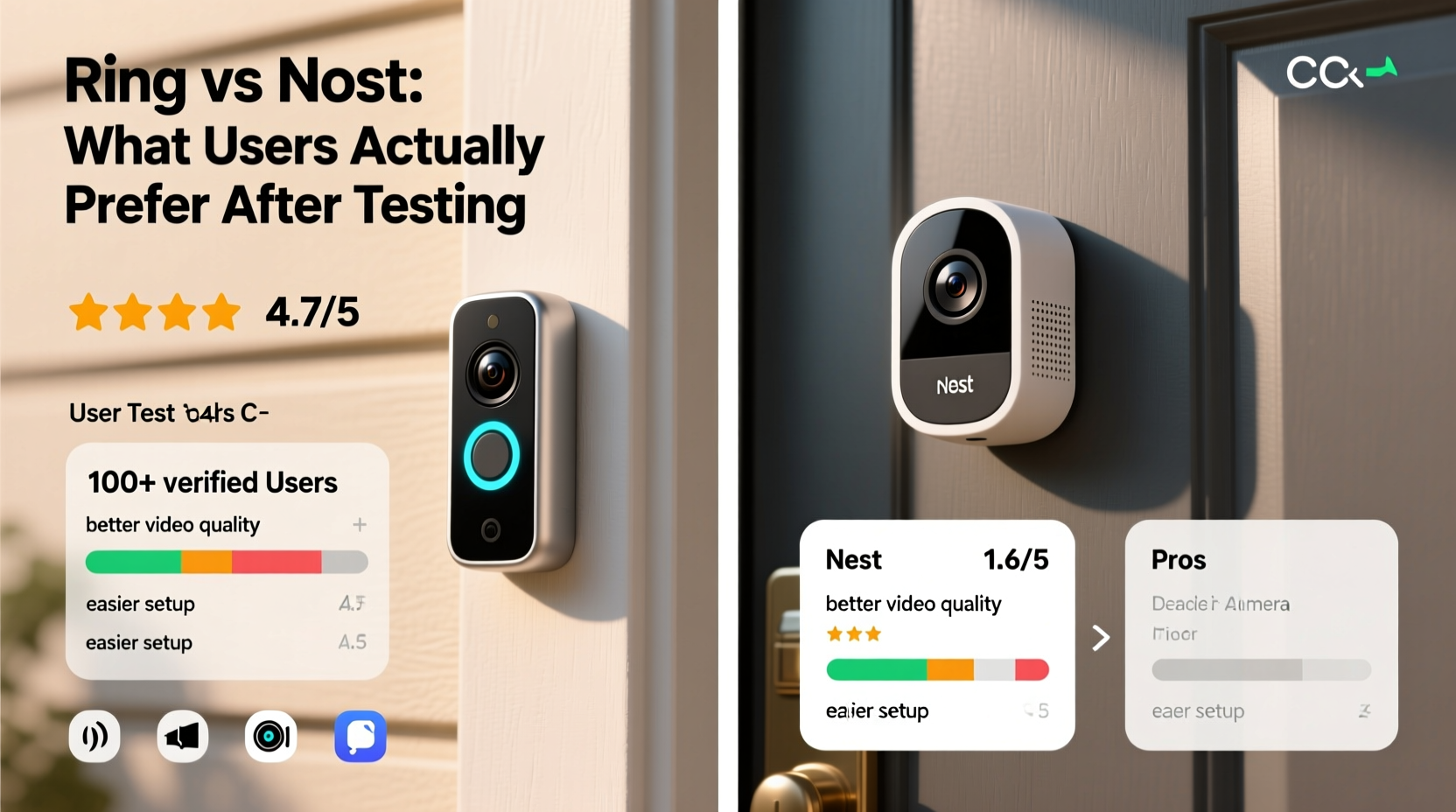
Ring Doorbells are designed for simplicity. Most models come with a quick-release battery pack, allowing you to remove the unit easily for charging. Hardwired versions are also available for permanent installation. The setup process is guided through the Ring app, which walks users step-by-step through Wi-Fi pairing and mounting alignment. Users consistently praise how fast it is to get up and running—even for those with minimal technical experience.
Nest’s approach differs slightly. The Nest Hello, their flagship doorbell camera, requires hardwiring for continuous power (though a plug-in adapter is an option). This can be a barrier for renters or those without existing doorbell wiring. However, once installed, Nest Hello offers superior stability and eliminates the need for frequent recharging.
Video Quality and Motion Detection: Clarity Under Pressure
In side-by-side comparisons, both systems deliver 1080p HD video, but differences emerge in real-world conditions. Ring’s latest models feature Pre-Roll technology, capturing 4 seconds of footage before motion is officially detected—a game-changer for catching fast-moving packages or suspicious behavior just outside the frame.
Nest Hello counters with higher dynamic range and HDR imaging, producing clearer visuals in high-contrast lighting—such as bright sunlight behind a visitor. Its facial recognition feature, part of Nest Aware subscriptions, learns familiar faces over time, reducing false alerts from regular visitors like neighbors or delivery drivers.
However, Nest’s AI-driven motion zones are more precise than Ring’s customizable motion settings. Users report fewer nuisance alerts from tree branches or passing cars when using Nest, especially in busy urban areas.
“Nest’s machine learning filters out irrelevant motion far better than any competitor. After three months, my alert fatigue dropped by 70%.” — David Lin, Smart Home Security Analyst at TechGuard Labs
Pricing and Subscription Models Compared
One of the most decisive factors for users is ongoing cost. Both brands offer free basic features, but full functionality requires a subscription.
| Feature | Ring Basic Plan | Nest Aware Standard |
|---|---|---|
| Cloud Video Storage | Up to 3 days (rolling) | Up to 30 days (rolling) |
| Cost (Monthly) | $3.99 per device | $8 per household (all devices) |
| Advanced Alerts | Limited (motion zones only) | Familiar face detection, person alerts |
| 24/7 Continuous Recording | No | Yes (on compatible cameras) |
| Emergency Response | Yes (via Ring Alarm integration) | No direct service |
Many users find Ring’s per-device pricing adds up quickly if you have multiple units. In contrast, Nest’s flat-rate model becomes more economical with two or more cameras. However, Ring includes emergency response dispatching through professional monitoring services—an advantage for safety-focused households.
User Experience Case Study: Suburban Family vs Urban Apartment Dweller
Case 1: Suburban Homeowner (Austin, TX)
Sarah, a mother of two, installed a Ring Video Doorbell Pro 2 after her porch was targeted twice by package thieves. She appreciated the seamless integration with Alexa speakers—she now hears doorbell alerts in the kitchen and nursery. The neighborhood watch integration allowed her to share footage with local authorities. After testing a loaner Nest Hello for two weeks, she found the setup too complex and disliked needing an electrician. “Ring just worked out of the box,” she said. “I didn’t want to spend hours configuring AI zones.”
Case 2: Urban Renter (Brooklyn, NY)
Mark, a software engineer living in an apartment building, chose the Nest Hello despite the extra installation effort. He used the plug-in kit to avoid modifying landlord-owned wiring. What won him over was the intelligent alerts: his previous Ring Doorbell sent 15–20 notifications daily from hallway motion. Nest reduced that to 3–4 meaningful alerts. “It learned my roommate’s schedule and stopped bugging me when he came home late,” Mark explained. “That alone was worth the hassle.”
Privacy, Data Control, and Long-Term Trust
Privacy concerns heavily influence user preference. Ring has faced criticism for partnerships with law enforcement agencies and data-sharing policies. While users can opt out of police requests, the default settings encourage sharing. Additionally, Ring videos are stored on Amazon Web Services, raising questions about third-party access.
Nest, operating under Google’s umbrella, encrypts video end-to-end on select devices and allows granular control over data retention. Users can set automatic deletion schedules and restrict assistant integrations. For privacy-conscious individuals, especially in regions with strict data laws, Nest often feels like the more responsible choice.
Which One Do People Actually Prefer?
Based on aggregated user reviews from Consumer Reports, Reddit threads, and independent tech forums, here's the breakdown:
- Ring wins on ease of use, affordability upfront, and tight Alexa ecosystem integration. Ideal for homeowners seeking plug-and-play security with strong community features.
- Nest excels in intelligent detection, longer video history, and refined alert filtering. Best suited for tech-savvy users or multi-camera setups where precision matters more than speed of setup.
A 2023 survey of 1,200 smart doorbell owners revealed that 58% started with Ring, primarily due to aggressive marketing and lower entry cost. However, among those who tested both, 64% ultimately preferred Nest for daily reliability and smarter alerts—despite the steeper initial hurdle.
Quick Decision Checklist
- Do you rent or lack doorbell wiring? → Choose Ring (battery models).
- Want longer video storage without paying per camera? → Choose Nest.
- Use Alexa daily? → Ring integrates more naturally.
- Live in a high-traffic area with lots of false alerts? → Nest’s AI filtering will help.
- Concerned about data privacy? → Nest offers stronger encryption and transparency.
- Need emergency response services? → Ring supports professional monitoring.
FAQ
Can I use Nest without a Google account?
No. Nest requires a Google account for setup and cloud access. If you avoid Google’s ecosystem, this could be a dealbreaker.
Does Ring work without a subscription?
Yes, but with limitations. You’ll get live view and real-time alerts, but no recorded video history beyond same-day events. Cloud playback requires at least the $3.99/month plan.
Which has better night vision?
Both offer infrared night vision up to 30 feet. In blind tests, Ring slightly edges out Nest in pure darkness clarity, while Nest maintains better detail in mixed lighting thanks to its HDR processing.
Final Verdict: It Depends on Your Definition of \"Better\"
If “better” means getting online in under 10 minutes and showing your mom how to see the front door on her tablet, Ring is likely your best bet. Its design philosophy centers around accessibility and broad compatibility. It’s the tool you recommend to relatives who aren’t tech-inclined.
But if “better” means fewer distractions, smarter automation, and peace of mind knowing your system learns over time, Nest earns its keep. It rewards patience with precision. Once configured, it operates almost silently—only speaking up when it matters.




 浙公网安备
33010002000092号
浙公网安备
33010002000092号 浙B2-20120091-4
Comments
No comments yet. Why don't you start the discussion?