
Maintaining a lush, healthy lawn has long been a point of pride for homeowners. But as technology advances, the traditional method of pushing a mower around the yard is being challenged by sleek, autonomous alternatives. Robot lawn mowers promise hands-free grass cutting with minimal effort—just set it and forget it. Meanwhile, manual push mowers remain a low-cost, reliable option that’s stood the test of time. So, when deciding between a robot lawn mower and a manual push model, which one truly offers better value? The answer depends on your priorities: time, budget, lawn size, and lifestyle.
The Rise of the Robot Lawn Mower
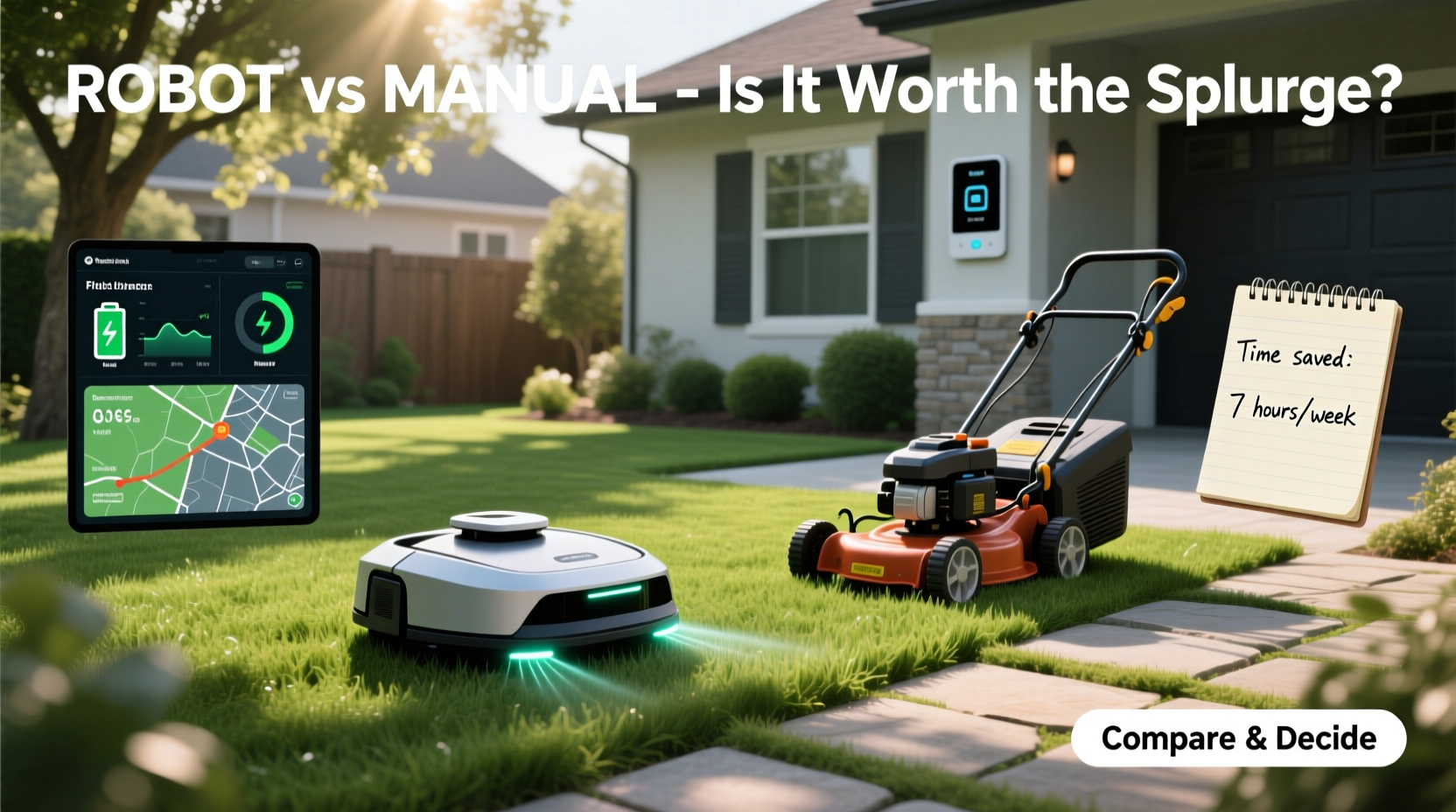
Robot lawn mowers have evolved from niche gadgets into mainstream tools for modern landscaping. These compact, battery-powered machines operate autonomously, following pre-programmed routes or boundary wires to cut grass at scheduled intervals. Brands like Husqvarna, Worx, and Robomow offer models that integrate smart features such as weather sensors, app control, theft protection, and even mulching capabilities.
Unlike traditional mowers, robots don’t aim to clear the entire lawn in one session. Instead, they operate frequently—often daily—trimming small amounts of grass each time. This “little and often” approach promotes healthier turf by reducing stress on the grass and returning fine clippings as natural fertilizer.
Manual Push Mowers: Simplicity That Still Works
Manual push mowers come in two main types: gas-powered self-propelled models and non-motorized reel mowers. While gas mowers require fuel and regular engine maintenance, reel mowers are entirely mechanical, relying on human power to rotate a series of blades beneath the deck. They’re quiet, eco-friendly, and ideal for small to medium-sized lawns.
Despite their simplicity, manual mowers demand physical effort. On uneven terrain or thick grass, pushing can become tiring. However, many users appreciate the exercise, the lack of emissions, and the immediate feedback of seeing a cleanly cut path behind them. There's also a sense of satisfaction in completing a task through direct labor.
“Manual mowing connects you with your yard in a way automation can’t replicate. You notice changes in growth patterns, soil moisture, and weed emergence more acutely.” — Daniel Reyes, Landscape Horticulturist
Cost Comparison Over Time
At first glance, the price difference is stark. A quality reel push mower ranges from $150 to $300. Gas-powered push mowers cost between $300 and $600. In contrast, robot lawn mowers start around $700 and can exceed $3,000 for high-end models designed for large or complex yards.
However, evaluating worth isn't just about upfront cost—it's about total ownership expense over five to ten years. Consider this breakdown:
| Factor | Manual Push Mower (Reel) | Gas Push Mower | Robot Lawn Mower |
|---|---|---|---|
| Initial Cost | $150–$300 | $300–$600 | $700–$3,000+ |
| Fuel/Oil | $0 | $100–$200/year | $0 (electric) |
| Blade Replacement | $20 every 2–3 years | $30 every year | $50 every 1–2 years |
| Battery Replacement (robot only) | N/A | N/A | $150–$250 every 3–5 years |
| Repairs & Maintenance | Minimal | Moderate ($100+/year) | Low to moderate ($50–$150/year) |
| Lifespan | 10–15 years | 6–10 years | 5–8 years |
While robot mowers carry a steep initial investment, they eliminate fuel costs and reduce long-term physical strain. For those who value convenience and time, the return on investment may justify the splurge—especially if it means avoiding missed cuts during busy weeks.
Time and Effort: The Hidden Currency
Time is often the most overlooked factor in lawn care decisions. A typical suburban lawn of 0.25 acres takes about 45 minutes to mow with a push mower. Do that weekly for six months, and you’ve spent nearly 20 hours per year on mowing alone. Add trimming, edging, and cleanup, and it’s closer to 30.
A robot mower operates independently. Most models run for a few hours each day, usually during off-peak times like early morning or late evening. You don’t need to be present. The machine returns to its charging station automatically and waits until the next scheduled cycle. For professionals, retirees, or anyone with limited mobility, this autonomy is transformative.
Real-Life Example: The Johnson Family’s Switch
The Johnsons live in a three-bedroom home with a quarter-acre yard in Portland, Oregon. For years, Mark Johnson used a gas-powered push mower every Saturday morning. Between his job in IT and weekend family activities, mowing often felt like a chore he resented.
Last spring, after missing two consecutive cuts due to work travel, he invested $1,400 in a mid-range robot mower. Installation took one afternoon—he laid the boundary wire and set up the charging dock. Since then, the mower runs nightly from 8 PM to 10 PM, keeping the lawn consistently trimmed.
“I didn’t realize how much mental load mowing added until it was gone,” Mark said. “Now I spend weekends with my kids instead of pushing a mower in the heat.”
The trade-offs? He occasionally finds the robot stuck near a toy left on the lawn, and he replaced the battery after three years. But overall, he considers it one of his best home investments.
Performance and Lawn Health
Both robot and manual mowers can deliver excellent cut quality when properly maintained—but they do so differently.
Manual mowers, especially reel models, provide a clean, scissor-like cut that minimizes tearing. This is gentler on grass and reduces browning. However, inconsistent mowing schedules—common with manual use—can lead to scalping when grass grows too tall before cutting.
Robot mowers maintain a consistent height thanks to frequent operation. Their smaller blades clip tiny amounts daily, promoting dense, even growth. Mulching is automatic, enriching the soil over time. However, some users report slightly less precision along edges, requiring occasional touch-ups with a trimmer.
When Robots Struggle
- Uneven terrain: Steep slopes or bumpy lawns can challenge traction and navigation.
- Obstacle-heavy yards: Play equipment, garden gnomes, or fallen branches increase the risk of collisions or jams.
- Large areas: Many entry-level robots max out at half an acre; larger lawns may require multiple units or higher-end models.
Manual mowers, while physically demanding, handle irregular landscapes better. You can easily adjust speed, direction, and pressure based on conditions.
Step-by-Step: Choosing What’s Right for You
Deciding between a robot and a manual mower doesn’t have to be overwhelming. Follow this practical guide to determine the best fit:
- Assess your lawn size and layout. Under 0.25 acres with few obstacles? A robot is likely viable. Larger or complex yards may need high-end models or hybrid approaches.
- Evaluate your schedule. If weekends are packed or you travel often, automation ensures consistent care.
- Consider physical ability. Arthritis, back pain, or age-related fatigue make pushing difficult. Robots remove this barrier.
- Calculate long-term costs. Factor in fuel, maintenance, time, and replacement parts—not just sticker price.
- Test both options if possible. Rent a robot mower for a month or borrow a reel mower to experience the effort firsthand.
Checklist: Robot vs Manual Decision Guide
Use this checklist to clarify your needs:
- ✅ Lawn under 0.5 acres? → Robot feasible
- ✅ Willing to install boundary wire? → Required for most robots
- ✅ Value free time over upfront cost? → Robot advantage
- ✅ Prefer zero emissions and quiet operation? → Robot or reel mower
- ✅ Enjoy physical activity and outdoor work? → Manual may suit you
- ✅ Need precise edge control without trimming? → Manual excels
- ✅ Travel frequently or have unpredictable weekends? → Robot recommended
Frequently Asked Questions
Can a robot mower handle thick or wet grass?
Most robot mowers struggle with very tall or damp grass. They’re designed for frequent, light cuts. If your lawn goes uncut for over a week, manually trim it first to avoid overloading the robot.
Are robot mowers safe around pets and children?
Yes, modern models include multiple safety features: lift sensors that stop the blades if lifted, tilt detection, and slow-moving wheels. However, it’s still wise to supervise initial runs and ensure pets aren’t playing nearby during operation.
Do I still need to edge and trim with a robot mower?
Yes. While robots cover open areas well, they typically don’t cut right up to edges, fences, or flower beds. Most users still edge every 2–4 weeks depending on growth rate.
Final Verdict: Is the Splurge Worth It?
The question isn’t whether robot mowers are better than manual ones across the board—it’s whether they’re better for you.
If you prioritize time, consistency, and ease of use, and your lawn fits within the operational limits of available models, a robot mower is absolutely worth the splurge. The daily micro-cutting improves lawn health, eliminates scheduling stress, and frees up hours each year. For busy families, remote workers, or those with mobility concerns, the benefits are tangible and lasting.
On the other hand, if you enjoy gardening as a form of relaxation, have a small, simple yard, or are on a tight budget, a manual push mower—especially a high-quality reel model—remains a smart, sustainable choice. It requires no setup, uses no electricity, and offers immediate, tactile feedback.
Ultimately, the decision reflects your lifestyle more than your lawn. Technology shouldn’t replace effort just because it can—it should enhance life where effort becomes burden.
“The best mower is the one that gets used consistently. Whether it’s powered by batteries or biceps, reliability beats novelty every time.” — Sarah Lin, Urban Landscaping Consultant
Take Action Today
Don’t let indecision keep you stuck in the same mowing routine. Evaluate your current system: How many times last season did you delay mowing because of time or energy? Could those hours be better spent? Try calculating the true cost of your time versus the investment in automation.
If a robot mower aligns with your needs, research models suited to your yard size and terrain. Many brands offer configurators to help match products to your space. For the cautious, consider starting with a rental or entry-level model.
If you prefer to stick with manual mowing, invest in a durable, well-balanced reel mower and establish a consistent schedule. Either way, the goal is a healthy lawn and a satisfied homeowner.




 浙公网安备
33010002000092号
浙公网安备
33010002000092号 浙B2-20120091-4
Comments
No comments yet. Why don't you start the discussion?