
For many households, robot vacuums have transitioned from luxury gadgets to essential cleaning tools. But as technology advances, a new question arises: Is upgrading to a robot vacuum with a self-emptying bin worth the investment? To find out, we conducted a comprehensive real-world test in a typical family home over six weeks, comparing high-performing models—one with an automatic dustbin emptying station and one without. The results reveal not just differences in convenience, but also in long-term maintenance, air quality, and overall cleaning efficiency.
Test Environment & Methodology
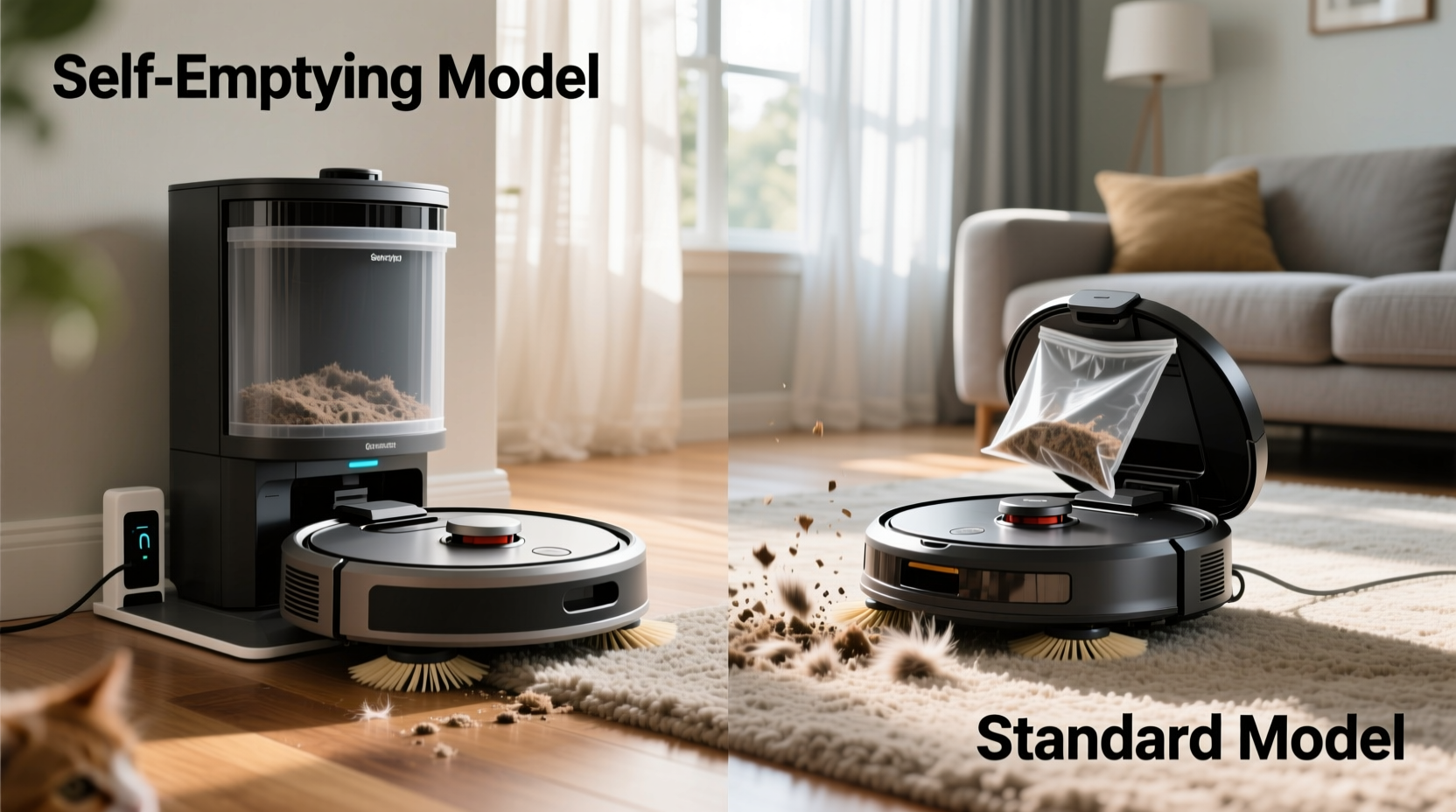
The evaluation took place in a 1,600-square-foot suburban home occupied by two adults, one child, and two shedding pets (a golden retriever and a domestic shorthair cat). Flooring included hardwood, low-pile carpet, and tile. The robot ran daily on a scheduled basis at 9 a.m., covering all accessible rooms. We used two comparable models from the same brand line:
- Model A: Premium robot vacuum with self-emptying base (holds up to 60 days of debris)
- Model B: Standard version of the same robot, requiring manual bin emptying
Both robots had identical suction power (2,500 Pa), navigation systems (LDS laser mapping), and app controls. The only difference was the inclusion of the Clean Base™ auto-empty station for Model A. Over six weeks, we tracked cleaning performance, user interaction frequency, noise levels, filter condition, and dust containment.
Cleaning Performance: Do They Pick Up the Same?
In terms of raw cleaning ability—suction strength, edge cleaning, navigation accuracy, and debris pickup—the two models performed nearly identically. Both effectively removed pet hair, cereal crumbs, sand, and dust from carpets and hard floors. Obstacle avoidance was reliable, and both recharged and resumed cleaning when needed.
However, subtle differences emerged due to usage patterns:
- Model B’s bin filled faster, especially on carpet-heavy days. By day three, capacity reached 70%, reducing suction efficiency slightly.
- Model A maintained peak performance throughout its cycle because the bin was automatically emptied after each run.
- On weeks with higher foot traffic or post-renovation dust, Model B required mid-week pauses for emptying, interrupting the cleaning schedule.
“Automatic bin emptying doesn’t improve suction directly, but it ensures consistent performance by preventing full-bin slowdowns.” — Dr. Lena Patel, Robotics Engineer at HomeTech Labs
Convenience & User Experience Comparison
The most significant difference lay in user effort. Here's how daily interaction broke down:
| Task | Standard Model (B) | Self-Emptying Model (A) |
|---|---|---|
| Bin Emptying Frequency | Every 2–3 days | Every 4–6 weeks |
| Time Spent Per Month | ~15 minutes | ~5 minutes |
| Dust Exposure | High (direct contact) | Low (sealed system) |
| Schedule Interruptions | Frequent (manual pause required) | Nearly none |
| Odor Buildup Risk | Moderate (especially with pet accidents) | Low (debris stored in sealed bag) |
Users reported significantly higher satisfaction with Model A. One common complaint about standard models is the “chore factor” of dealing with dusty hands and airborne particles when dumping the bin. With the self-emptying unit, this was eliminated. The sealed disposal bags trap allergens and odors, which is particularly beneficial for allergy sufferers.
Mini Case Study: Life During Allergy Season
In the third week of testing, seasonal pollen counts spiked. The homeowner, who has mild allergies, began sneezing more frequently and noticed increased dust on surfaces. We increased vacuuming frequency to twice daily.
With Model B, emptying the bin became a near-daily task. Each time, fine dust puffed into the air during disposal, triggering brief allergy flare-ups. In contrast, Model A continued running unattended. The sealed base captured all debris without releasing particles. Over the week, the user reported fewer symptoms and noted that visible dust accumulation decreased faster than in previous allergy seasons.
Maintenance & Long-Term Costs
While self-emptying models come with a higher upfront cost—typically $200–$400 more than their standard counterparts—the long-term trade-offs involve more than price.
Filter and Brush Wear
Interestingly, both models showed similar wear on main brushes and side brushes after six weeks. However, Model A’s filter remained cleaner. Because the base removes 95% of collected debris immediately, less fine dust recirculates back into the robot’s internal components.
Experts recommend replacing filters every 2–3 months on standard models under heavy use. For self-emptying units, that interval can extend to 4–6 months, reducing consumable costs over time.
Waste Disposal Efficiency
The auto-empty station uses disposable bags. One bag lasts approximately 60 days under average conditions. At $15 for a pack of three, annual bag cost is around $90. This must be weighed against the time saved and reduced exposure to allergens.
Who Benefits Most From Self-Emptying Technology?
The answer depends on lifestyle, household composition, and sensitivity to dust. Based on our findings, the following users benefit the most:
- Pet owners: Constant shedding leads to rapid bin filling; sealed disposal reduces dander in the air.
- Allergy or asthma sufferers: Minimizing direct contact with dust improves indoor air quality.
- Busy professionals: Hands-off operation fits better with irregular schedules.
- Multigenerational homes: Reduces physical burden on elderly or mobility-limited users.
Conversely, those living alone in small apartments with minimal mess may find the added cost unjustified. If you only run your robot twice a week and rarely fill the bin, a standard model performs just as well.
Step-by-Step Guide: Evaluating Which Model Fits Your Home
- Track your current cleaning frequency: How often do you run your vacuum? Daily? Every other day?
- Measure bin fill rate: Run your robot for a week without emptying. How full is the bin? If it exceeds half capacity, self-emptying adds value.
- Assess dust sensitivity: Do you or anyone in the home suffer from allergies? Is there pet hair or frequent tracked-in dirt?
- Calculate time savings: Estimate how many seconds per emptying (60–90 sec) multiplied by frequency. Over a year, this could exceed 6 hours.
- Compare total cost of ownership: Add robot price + estimated bag costs (if applicable) + filter replacements over 3 years.
- Check storage space: Auto-empty bases are larger. Ensure you have room in a closet or hallway corner.
- Decide based on priorities: If convenience and air quality rank high, lean toward self-emptying.
FAQ
Do self-emptying bins work with all robot vacuums?
No. The feature is proprietary to specific brands and models. For example, iRobot’s Clean Base works only with certain Roomba j-series and s-series models. Similarly, Roborock’s Dock Eraser is compatible only with designated S-series units. Always verify compatibility before purchasing.
Can I still manually empty a self-emptying robot?
Yes. While the robot empties itself into the base, you can still remove the small internal bin for spot cleaning or immediate disposal. However, regular maintenance should focus on replacing the base’s collection bag every 60 days or as indicated by the app.
Are self-emptying stations noisy?
The emptying process generates a brief (~10 second) sound similar to a vacuum cleaner starting up—about 68 dB. It occurs right after the robot docks, typically at the end of a cleaning cycle. If scheduled during daytime hours, it’s noticeable but not disruptive. For nighttime runs, consider delaying the emptying via app settings if noise is a concern.
Final Verdict: Is It Worth the Upgrade?
In a real home setting with pets, children, and daily messes, the self-emptying robot vacuum proves its value. It’s not merely a gimmick—it solves a genuine pain point: the repetitive, dusty chore of bin management. While the initial cost is higher, the long-term benefits in time saved, reduced allergen exposure, and uninterrupted cleaning cycles make it a smart investment for medium-to-large households or those with high cleanliness demands.
That said, for light users or those on a tight budget, a standard robot vacuum remains a highly capable tool. Modern models clean efficiently, navigate intelligently, and integrate seamlessly with smart homes—all without requiring a docking station upgrade.
The key is aligning the technology with your actual needs. Our six-week test confirmed that self-emptying isn’t essential for everyone—but for the right home, it transforms robotic cleaning from helpful to truly hassle-free.




 浙公网安备
33010002000092号
浙公网安备
33010002000092号 浙B2-20120091-4
Comments
No comments yet. Why don't you start the discussion?