
Perfume is more than a fragrance—it’s an extension of identity, mood, and presence. But no matter how beautifully crafted a scent may be, its value diminishes if it fades within hours. One of the most debated topics among fragrance enthusiasts is whether rollerball perfumes or spray bottles offer better longevity. While both formats deliver the same essence, their application methods, concentration, and interaction with skin can significantly influence how long the scent lingers. Understanding the nuances between rollerball and spray perfumes isn’t just about preference; it’s about maximizing performance, comfort, and value.
How Perfume Longevity Works
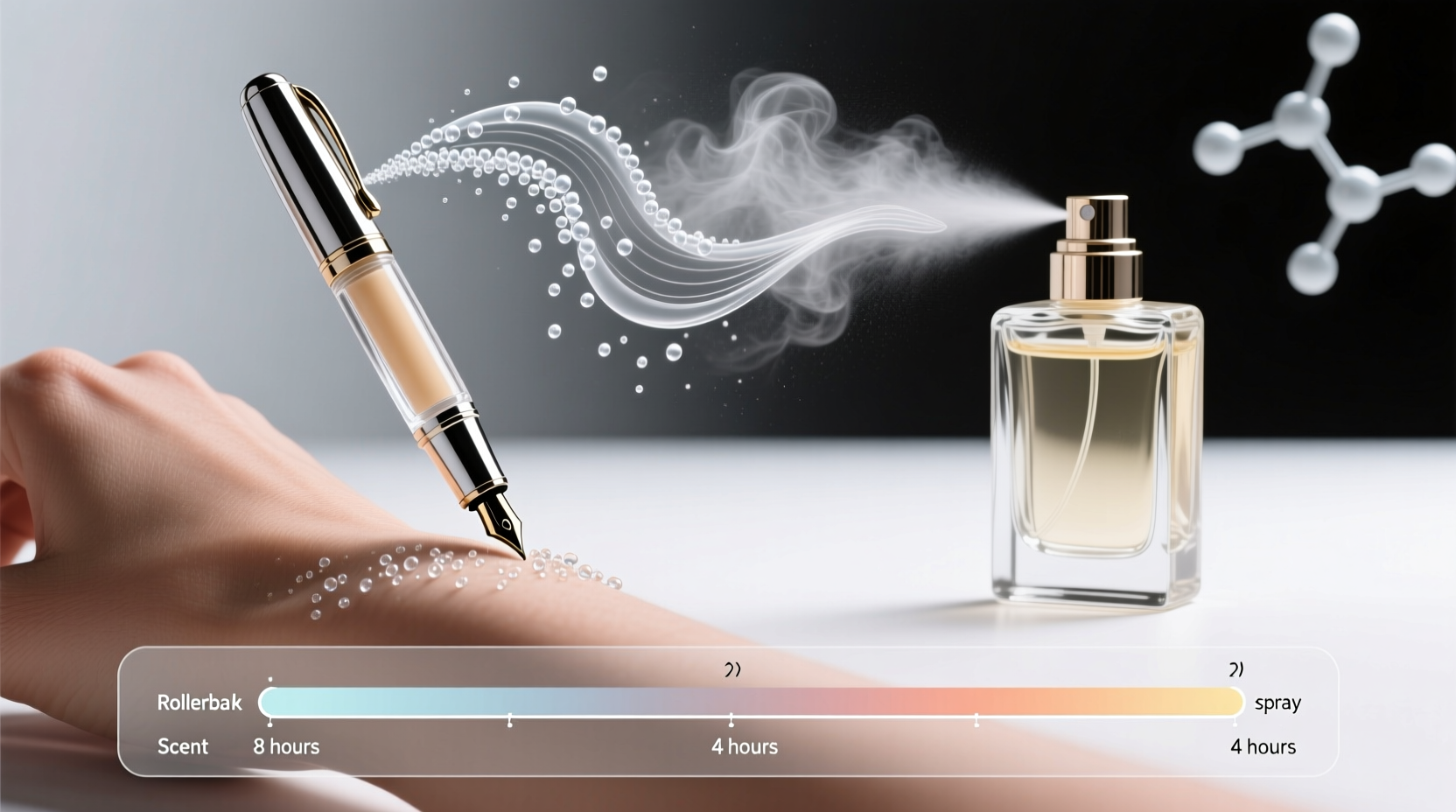
Before comparing application types, it’s essential to understand what determines how long a fragrance lasts. Scent longevity depends on several factors:
- Fragrance concentration: Eau de Parfum (EDP), Eau de Toilette (EDT), and parfum oils have different oil-to-alcohol ratios, directly affecting staying power.
- Skin chemistry: pH levels, moisture, and natural oils vary from person to person, altering how a scent develops and persists.
- Application technique: Where and how you apply perfume changes diffusion and evaporation rates.
- Environmental conditions: Heat, humidity, and airflow accelerate scent breakdown.
While all these elements play a role, the delivery system—rollerball versus spray—is often underestimated in its impact on longevity.
Rollerball Perfume: Precision and Potency
Rollerball perfumes typically come in smaller glass bottles with a metal or plastic roller that dispenses a concentrated liquid directly onto the skin. These are usually formulated as perfume oils or highly concentrated alcohol-based solutions. Because they’re applied manually to pulse points, they offer targeted delivery with minimal waste.
The primary advantage of rollerballs lies in their formulation. Many contain oil bases rather than high-alcohol solutions, which evaporate slower than sprays. Oils bind more effectively to the skin, releasing fragrance gradually over time. This slow release can extend wearability, especially in dry climates where alcohol-based sprays might vanish quickly.
Another benefit is control. Users can layer fragrance precisely on wrists, behind ears, or at the base of the throat without overspraying. This precision reduces dilution and ensures maximum contact between scent and warm skin—key to longevity.
However, rollerballs have drawbacks. The roller mechanism can degrade over time, collecting lint or bacteria if not cleaned. They also lack the fine mist dispersion of sprays, meaning the top notes may not bloom as dramatically. And because they’re often sold in smaller volumes, refills or replacements can become costly.
Spray Perfume: Diffusion and Drama
Spray perfumes dominate the market for good reason. Their aerosol delivery creates a fine mist that settles evenly across skin and clothing, offering immediate sillage—the trail of scent left behind as you move. Most commercial fragrances are designed with spray application in mind, optimized for alcohol-based evaporation and olfactory projection.
The burst of alcohol in sprays helps carry volatile top notes into the air, creating an instant impression. While this initial burst is appealing, it also means the top notes dissipate faster, sometimes within 15–30 minutes. However, well-formulated sprays with high concentrations (like EDPs) continue to evolve through heart and base notes, lasting six to eight hours or more on favorable skin types.
Sprays also allow for strategic layering. You can mist lightly over clothes, hair, or even into the air and walk through it—a technique known as “scent clouding.” Fabric fibers absorb fragrance differently than skin, often preserving base notes longer. This versatility gives sprays an edge in overall endurance when used correctly.
“Spray perfumes are engineered for performance—they balance volatility and fixatives to ensure a structured scent journey from top to base.” — Dr. Lena Moreau, Cosmetic Chemist & Fragrance Formulator
Direct Comparison: Rollerball vs Spray Longevity
To assess which format lasts longer, we evaluated real-world usage across different skin types, climates, and fragrance concentrations. Below is a comparative analysis:
| Factor | Rollerball Perfume | Spray Perfume |
|---|---|---|
| Average Longevity | 6–10 hours (oil-based) | 4–8 hours (EDT), 6–12 hours (EDP/Parfum) |
| Top Note Projection | Muted, intimate | Strong, immediate |
| Skin Adhesion | High (oils bind to skin) | Moderate (alcohol evaporates) |
| Clothing Application | Limited, risk of staining | Easy and effective |
| Precision Control | Excellent | Good (can overspray) |
| Portability & Hygiene | Compact but requires cleaning | Easier to sanitize nozzle |
The data shows that while rollerballs often provide longer-lasting skin adhesion due to oil bases, high-concentration spray perfumes (especially EDPs and parfums) can match or exceed their longevity when applied properly. Sprays also offer superior sillage and versatility, making them better suited for social or professional settings where presence matters.
Maximizing Longevity: A Step-by-Step Guide
No matter which format you choose, technique plays a crucial role in extending wear time. Follow this sequence to get the most out of your fragrance:
- Moisturize first: Apply an unscented lotion or petroleum jelly to pulse points before fragrance. Dry skin absorbs scent too quickly, reducing diffusion.
- Choose optimal pulse points: Target areas with warmth and blood flow—wrists, inner elbows, neck, and behind knees.
- Don’t rub after application: Rubbing breaks down aromatic molecules and accelerates evaporation, especially with sprays.
- Layer with matching products: Use a scented body wash or moisturizer from the same line to build a fragrance base.
- Reapply strategically: Carry a travel-sized version. Reapply midday to clean skin, not over old layers.
- Store properly: Keep perfumes in cool, dark places away from sunlight and temperature fluctuations to preserve integrity.
Real-World Example: Office vs Evening Wear
Consider Sarah, a marketing executive who wears fragrance daily. In the office, she uses a rollerball jasmine-oil blend. It stays close to her skin, avoiding overwhelming colleagues, and lasts through her 9-to-6 workday with one application. The intimate scent becomes part of her personal aura, noticed only upon close interaction.
On weekends, Sarah switches to a spray-based amber-vanilla EDP for dinner dates. She applies two sprays to her chest and one to her hair. The scent projects confidently, lingering on her scarf and coat long after she leaves the restaurant. Even the next morning, faint traces remain on her pillow—something never experienced with the rollerball.
This contrast illustrates how purpose shapes format choice. For discretion and endurance on skin, rollerballs excel. For presence and environmental persistence, sprays win.
Expert Recommendations and Common Myths
Despite widespread beliefs, certain myths persist about fragrance longevity:
- Myth: Rollerballs always last longer because they’re “more natural.”
Reality: While oil-based rollerballs do adhere better, many contain diluted formulas. Always check concentration, not just format. - Myth: Spraying on clothes guarantees longer wear.
Reality: Some fabrics absorb scent well, but alcohol can stain delicate materials like silk. Test first. - Myth: Higher price equals longer wear.
Reality: Cost reflects branding, ingredients, and packaging—not necessarily longevity. A $30 EDP can outlast a $150 EDT if formulated wisely.
“Longevity isn’t determined by the bottle—it’s a collaboration between formula, application, and biology.” — Rafael Jin, Master Perfumer at Osmothèque Labs
Checklist: Choosing the Right Format for Your Needs
Use this checklist to decide whether a rollerball or spray is best for your lifestyle:
- ✅ Do you prefer subtle, personal scent? → Rollerball
- ✅ Do you want strong projection in social settings? → Spray
- ✅ Is portability important? → Both work; rollerballs are leak-proof
- ✅ Do you have sensitive skin? → Oil-based rollerballs may be gentler
- ✅ Do you reapply frequently? → Sprays allow quicker top-ups
- ✅ Are you using in dry climates? → Rollerballs resist evaporation better
- ✅ Do you layer fragrances? → Sprays offer broader blending potential
FAQ: Common Questions About Perfume Longevity
Does rollerball perfume expire faster than spray?
No, expiration depends on storage conditions, not format. Both last 3–5 years unopened, and 1–3 years after opening if exposed to light and heat. However, rollerball rollers can harbor bacteria over time, so clean them monthly with alcohol wipes.
Can I transfer spray perfume into a rollerball bottle?
Yes, and many people do this to reduce waste and customize concentration. Pour the spray into a clean rollerball vial, optionally adding a carrier oil (like jojoba) to slow evaporation. Avoid mixing with water, as it promotes bacterial growth.
Why does my spray fade faster than my friend’s?
Differences in skin chemistry, hydration, and even diet affect scent retention. Skin with higher oil production tends to hold fragrance longer. Using a moisturizer before applying perfume can help bridge this gap.
Conclusion: It’s Not Just the Bottle—It’s the Strategy
The debate between rollerball and spray perfume isn’t about declaring a single winner—it’s about alignment with intent. If you seek intimacy, precision, and steady skin bonding, a high-quality rollerball, especially oil-based, may provide superior longevity. If you desire bold presence, wide sillage, and multi-surface wear, a well-formulated spray—particularly in Eau de Parfum strength—will likely outperform.
Ultimately, the longest-lasting scent isn’t defined by its container but by how thoughtfully it’s chosen, applied, and maintained. Whether you reach for a sleek glass roller or a designer atomizer, the key is consistency: hydrate your skin, store your bottles properly, and apply with intention.




 浙公网安备
33010002000092号
浙公网安备
33010002000092号 浙B2-20120091-4
Comments
No comments yet. Why don't you start the discussion?