
Choosing the right rug isn't just about color or texture—it's about how its shape interacts with your room’s architecture and purpose. Among the most debated choices in interior design is whether a round or rectangular rug defines a space more effectively. While both have merits, their impact on spatial perception, furniture arrangement, and visual flow varies significantly. Understanding these differences allows homeowners and designers to make intentional decisions that enhance both aesthetics and functionality.
How Rug Shape Influences Spatial Perception
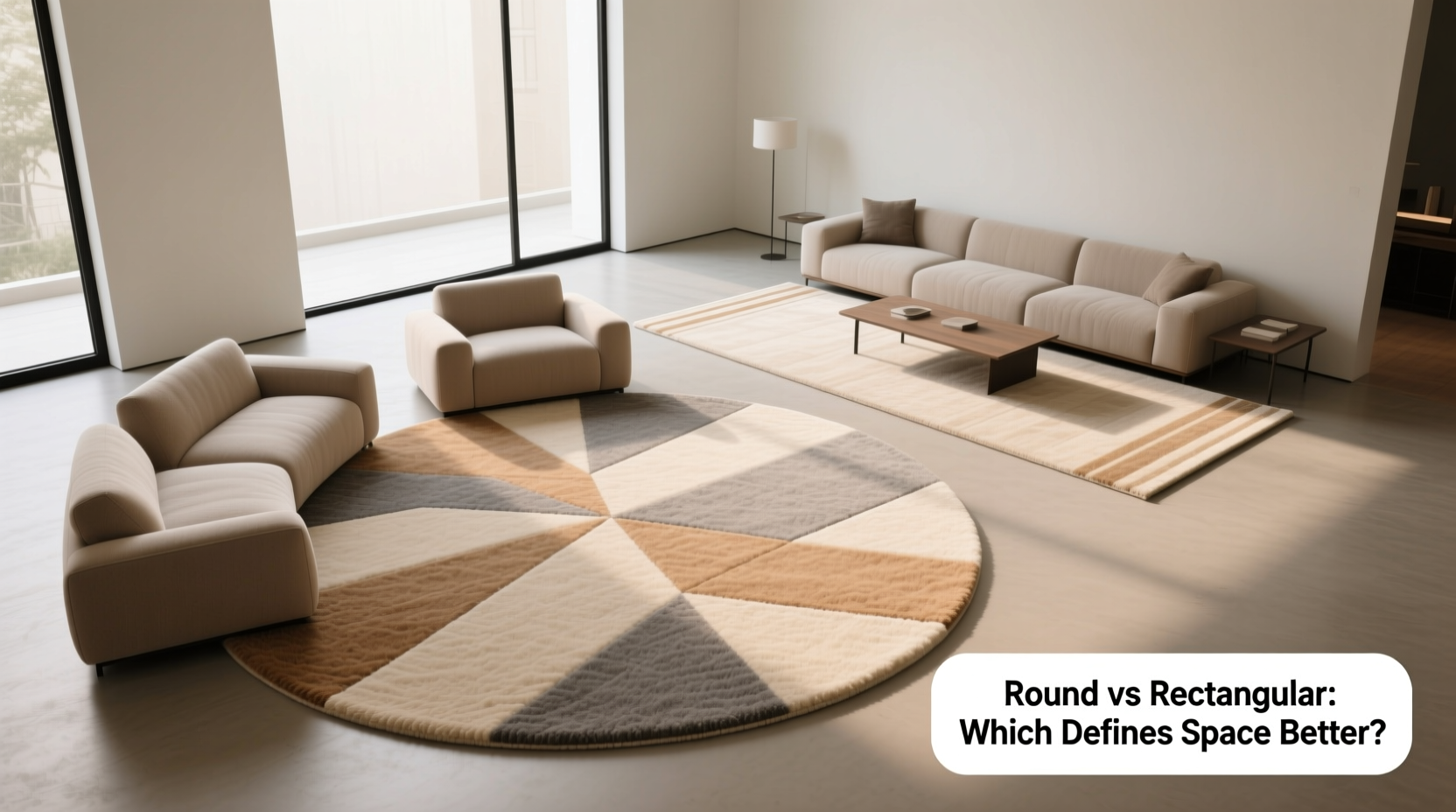
Rugs act as visual anchors, helping the eye understand where one functional zone ends and another begins. The shape of a rug directly affects this perception. Rectangular rugs are inherently aligned with the architectural geometry of most rooms—walls, doorways, and built-in furniture follow straight lines and right angles. A rectangular rug reinforces this order, creating a sense of balance and predictability.
In contrast, round rugs introduce a dynamic counterpoint. Their curved edges soften angular environments, drawing attention inward and creating a focal point. This makes them especially effective in spaces dominated by linear elements, such as long hallways or boxy living rooms. However, because they don’t align with standard furniture dimensions, round rugs can sometimes appear disconnected from the overall layout if not placed thoughtfully.
“Shape is a silent communicator in design. A rectangle says stability; a circle says gathering.” — Lena Torres, Interior Architect
The psychological effect of shapes plays a subtle but powerful role. Rectangles suggest structure and efficiency, ideal for task-oriented areas like dining rooms or offices. Circles evoke inclusivity and conversation, making them well-suited for social zones like seating arrangements or reading nooks.
Functional Performance: Where Each Rug Excels
To determine which rug defines space better, consider the room’s primary function. In formal living rooms or dining areas, where furniture is arranged symmetrically, rectangular rugs provide clear spatial boundaries. Placing all front legs of a sofa and chairs on a large area rug creates a unified grouping, reinforcing the idea of a dedicated zone.
Round rugs, on the other hand, excel in irregularly shaped rooms or transitional spaces. For example, in an open-concept layout, a round rug under a conversational seating group can carve out a distinct lounge area without visually dividing the floor plan. They also work well beneath circular tables or in corners where a rectangular rug might extend awkwardly into walkways.
Dining Rooms: The Case for Rectangular Rugs
In dining rooms, defining space is critical for both comfort and practicality. A rectangular rug should extend at least 24 inches beyond the table on all sides to allow chairs to remain fully on the rug when pulled out. This ensures smooth movement and prevents tripping hazards. Because dining sets are typically rectangular or oval, a matching rug shape maintains visual harmony.
A round rug in a dining setting only works with a round table—and even then, it must be large enough to accommodate chair movement. Too small, and diners’ chairs will catch on bare floor when they stand, disrupting both safety and flow.
Living Rooms: Balancing Form and Function
Living rooms offer more flexibility. In a traditional layout with a sofa facing a television, a large rectangular rug under the front legs of the sofa and coffee table clearly marks the entertainment zone. It aligns with the room’s natural axis and supports a grounded, cohesive look.
But in modern or eclectic designs, particularly those favoring asymmetry or multifunctional use, a round rug can redefine the space creatively. Placed under a pair of armchairs angled toward each other, it forms an intimate conversation pit within a larger room. This approach is especially effective in lofts or studios where hard zoning isn’t possible.
Architectural Compatibility: Matching Rug Shape to Room Layout
The proportions and shape of your room should guide your choice. Long, narrow rooms benefit from rectangular rugs that run parallel to the longest walls, emphasizing length and continuity. In square rooms, either shape can work, but a round rug adds visual interest by breaking symmetry.
Consider doorway placement. A rectangular rug aligned with a central entryway creates a welcoming path, while a round rug centered in the room may feel misaligned if it doesn’t relate to any architectural feature. Conversely, in a room with off-center windows or a fireplace, a round rug can center attention on the focal point rather than the room’s perimeter.
| Room Type | Best Rug Shape | Why |
|---|---|---|
| Dining Room | Rectangular | Aligns with table and chairs; accommodates movement |
| Bedroom (under bed) | Rectangular | Fits bed frame; extends evenly on sides |
| Studio Apartment | Round | Creates soft zones without blocking sightlines |
| Entryway | Runner (rectangular) | Follows traffic flow; protects high-wear path |
| Reading Nook | Round | Encircles chair and ottoman; feels enclosed |
Real-World Example: Redefining a Small Living Room
Jamie, a designer in Portland, worked with a client who had a 12x14-foot living room with a fireplace on the shorter wall. Initially, the client used a 9x12 rectangular rug oriented horizontally. While functional, the rug made the room feel wider and stubbier than it was. Furniture felt “stuck” against the walls.
Jamie replaced it with a 10-foot diameter round rug centered on the fireplace. She arranged the sofa and two armchairs so their front legs rested on the rug, forming a radial layout. The change was immediate: the space felt more intimate, the seating group appeared intentional, and the room’s vertical height seemed accentuated by the upward curve of the rug’s edge. Though the round rug covered slightly less floor area, it defined the space more effectively by focusing attention inward.
This case illustrates that defining space isn’t just about coverage—it’s about intentionality. The round rug didn’t outline the zone with straight borders, but it created a psychological boundary through shape and placement.
Step-by-Step Guide: Choosing the Right Rug for Your Space
Follow this process to determine whether a round or rectangular rug will define your space better:
- Assess the room’s primary function. Is it for dining, lounging, working, or multi-use? High-traffic, structured activities favor rectangles.
- Measure the available floor space. Note clearance around furniture and walking paths. Leave at least 18 inches of bare floor around a round rug unless it’s meant to fill the room.
- Identify the focal point. Is it a TV, fireplace, window, or piece of art? A round rug works best when centered on a singular feature.
- Map furniture placement. Sketch your layout. If pieces form a straight line or rectangle, match with a rectangular rug. If they form a circle or semi-circle, consider round.
- Test with painter’s tape. Outline both rug shapes on the floor to visualize impact before purchasing.
- Consider existing lines. If the room has strong horizontal or vertical elements (bookshelves, beams, tiles), a rectangular rug will harmonize. If the space feels rigid, a round rug adds soft contrast.
Common Misconceptions About Round Rugs
One widespread myth is that round rugs are only for small spaces. In reality, oversized round rugs (9 feet and up) can anchor large rooms just as effectively as rectangular ones. The key is scale: a small round rug in a big room looks like an afterthought, while a properly sized one becomes a centerpiece.
Another misconception is that round rugs are harder to clean or maintain. While some vacuum attachments struggle at the edges, modern models handle curves well. The real challenge lies in fitting them under furniture—this requires thoughtful placement, not maintenance difficulty.
Some believe round rugs “waste” floor coverage. But definition isn’t about maximizing square footage—it’s about directing attention. A strategically placed round rug can define a space more efficiently than a poorly fitted rectangle that bunches under doors or cuts off at awkward angles.
Expert Checklist: Rug Selection Criteria
- ✅ Rug size allows for at least 6–12 inches of bare floor around the edges (unless wall-to-wall)
- ✅ Front legs of major furniture rest on the rug (or all legs in dining areas)
- ✅ Shape complements the dominant lines in the room
- ✅ Centered on a focal point or architectural feature
- ✅ Does not obstruct door swing or foot traffic
- ✅ Matches the room’s function (e.g., durable weave for high-traffic areas)
- ✅ Color and pattern support the overall design scheme
Frequently Asked Questions
Can I mix round and rectangular rugs in the same room?
Yes, layering different shapes can add depth and dimension. For example, place a round rug over a larger jute or sisal rectangular base in a living room. This combines the grounding effect of a rectangle with the focal clarity of a circle. Just ensure the layers are proportional and anchored to the same design center.
Do round rugs make a room look bigger?
They can, but not in the way people assume. Round rugs don’t expand perceived square footage like mirrors or light colors do. Instead, they create a sense of openness by eliminating harsh edges and encouraging circular movement. In small, boxy rooms, this fluidity can make the space feel less confined.
What size round rug do I need for a king-size bed?
A 9-foot diameter round rug works well for a king bed if placed at the foot, allowing nightstands to remain on hardwood. For a more luxurious look with the rug extending under the bed, custom sizes (10–12 feet) are recommended. However, rectangular rugs (9x12 or 10x14) are more practical for full under-bed coverage.
Final Considerations: Design Intent Over Trends
The question isn’t which shape is universally better, but which one serves your space more effectively. Rectangular rugs define through alignment and extension—they mirror the logic of architecture. Round rugs define through focus and containment—they operate like a spotlight on a stage.
In traditional or formal interiors, the precision of a rectangular rug often wins. In contemporary, minimalist, or eclectic settings, a round rug can be the element that brings warmth and human scale to an otherwise rigid environment.
The most successful spaces use rug shape intentionally, not decoratively. Whether you choose round or rectangular, ensure it supports how you live, move, and interact within the room.
“A rug isn’t just floor covering—it’s a silent zone marker. Choose its shape like you’d choose a frame for a painting.” — Marcus Reed, Spatial Designer
Take Action: Define Your Space with Purpose
Next time you’re selecting a rug, pause and ask: What experience do I want this room to create? Do I need structure or softness? Clarity or surprise? Measure twice, visualize the furniture layout, and let the room’s purpose—not trends—guide your choice. Whether round or rectangular, the right rug won’t just cover the floor; it will define the heart of your home.




 浙公网安备
33010002000092号
浙公网安备
33010002000092号 浙B2-20120091-4
Comments
No comments yet. Why don't you start the discussion?