
For runners who split their time between outdoor terrain and indoor treadmills, the choice of footwear can significantly affect comfort, efficiency, and injury risk. While running shoes are designed with road and track surfaces in mind, trail shoes are built to handle rugged, uneven landscapes. But when it comes to treadmill workouts—smooth, consistent, and predictable surfaces—does it really matter which type you wear? The answer isn't as straightforward as it seems. Understanding the structural differences, performance characteristics, and long-term implications of using each shoe type on a treadmill can help you make an informed decision that supports your fitness goals.
Key Differences Between Running Shoes and Trail Shoes
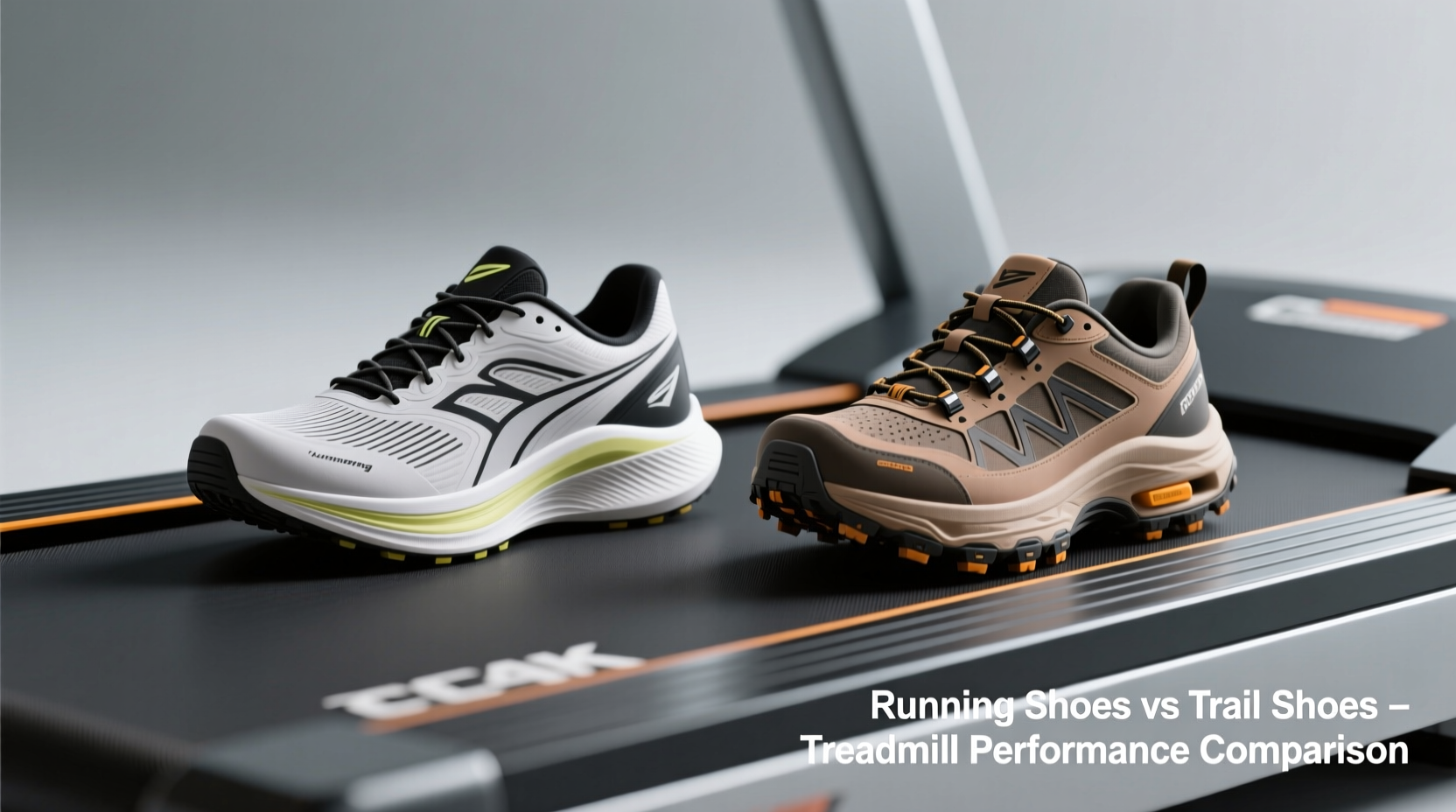
The primary distinction between running and trail shoes lies in their design philosophy. Road running shoes prioritize lightweight construction, responsive cushioning, and smooth heel-to-toe transitions. They’re optimized for flat, even pavement or indoor belts, where grip is less critical than energy return and impact absorption.
In contrast, trail shoes emphasize protection, stability, and aggressive outsoles. Features like rock plates, reinforced uppers, deep lugs, and enhanced torsional support are engineered to handle mud, roots, rocks, and unpredictable footfalls. These attributes are essential off-road but may introduce trade-offs when used on a controlled surface like a treadmill.
One of the most significant misconceptions is that trail shoes offer superior comfort due to their rugged appearance. In reality, excessive stiffness or overbuilt midsoles can reduce natural foot motion and increase fatigue during repetitive indoor strides. Meanwhile, the aggressive lug patterns common on trail shoes serve no functional purpose on a rubberized belt and may even accelerate wear on both the shoe and machine.
Cushioning and Midsole Technology
Running shoes typically use advanced foam compounds—such as EVA, PU, or proprietary blends like Nike React, Adidas Boost, or Brooks DNA Loft—to deliver soft landings and efficient propulsion. These materials compress smoothly under load and rebound quickly, making them ideal for the rhythmic, high-repetition nature of treadmill running.
Trail shoes often feature denser foams or firmer midsoles to provide ground feel and protect against sharp objects. This reduces compression depth, which can translate into a harsher ride on a forgiving treadmill belt. Over time, this increased impact transmission may contribute to joint discomfort, especially during longer sessions.
Traction and Outsole Design: Does Grip Matter Indoors?
Treadmill belts are made of high-friction rubber or composite materials designed to prevent slippage. As a result, the aggressive, multi-directional lugs found on trail shoes are functionally redundant. In fact, these deep treads can create unnecessary resistance, altering your gait slightly and increasing energy expenditure without benefit.
Running shoe outsoles, by comparison, use shallower, segmented patterns focused on forward motion. This allows for smoother transitions through the gait cycle and reduces drag during push-off. On a treadmill, where backward belt movement simulates forward travel, reduced friction actually enhances efficiency.
Another consideration is noise. Thick, knobby outsoles tend to produce louder thuds with each step, which can be disruptive in shared gym spaces or home setups. Running shoes generally operate more quietly, contributing to a less jarring auditory experience.
“On a treadmill, the best shoe isn’t the one with the most grip—it’s the one that lets your foot move naturally with minimal interference.” — Dr. Lena Torres, Biomechanics Researcher at Sports Motion Lab
Durability and Wear Patterns
While trail shoes are built to last in harsh conditions, their durability doesn’t necessarily transfer well to indoor use. The hard rubber compounds used in trail outsoles are abrasion-resistant but stiffer than those in road shoes. When paired with the continuous friction of a moving belt, this can lead to premature breakdown of the tread pattern or delamination at stress points.
Conversely, running shoes are designed for thousands of cycles on uniform surfaces. Their outsoles wear evenly across the forefoot and heel, matching typical treadmill strike zones. Many models also incorporate carbon rubber in high-wear areas (like the lateral heel) to extend lifespan.
An overlooked factor is how shoe choice affects the treadmill itself. Deep lugs can trap debris and cause micro-abrasions on the belt surface over time. Some gym maintenance staff report faster belt degradation when users consistently wear trail or hiking footwear. For home owners, preserving equipment longevity should be part of the footwear equation.
Weight and Energy Efficiency
Trail shoes are inherently heavier due to added reinforcements: thicker uppers, toe guards, water-resistant membranes, and robust midsole stacks. An average trail shoe weighs between 9–12 ounces per foot, while comparable road runners range from 7–9 ounces.
That extra weight becomes magnified over time. During a 30-minute treadmill session at a moderate pace (around 6 mph), a runner takes approximately 4,000 steps. Carrying just two additional ounces per foot equates to lifting over 500 pounds of extra mass throughout the workout. While not directly harmful, this increased effort can reduce endurance and alter pacing strategy.
Lighter running shoes allow for quicker cadence and improved aerobic economy. For interval training, tempo runs, or speed work on a treadmill, this responsiveness makes a measurable difference in performance outcomes.
When Might Trail Shoes Be Acceptable on a Treadmill?
There are niche scenarios where wearing trail shoes on a treadmill isn’t only acceptable—it may be beneficial.
- Transition Periods: Runners preparing for trail races may use treadmills to simulate elevation changes via incline settings. Wearing race-day trail shoes during these sessions helps condition the feet and build muscle memory.
- Injury Prevention: Those with weak ankles or previous sprains might benefit from the lateral support offered by trail models, especially when running at steep inclines.
- Weather Constraints: In regions with prolonged winter months, trail runners may have no alternative but to train indoors. Continuing to wear familiar trail shoes maintains consistency in foot positioning and stride mechanics.
Even in these cases, moderation is key. Long-term reliance on overly rigid or heavy footwear indoors can hinder neuromuscular adaptation and slow recovery times.
Mini Case Study: Sarah’s Indoor Training Shift
Sarah, a recreational marathoner based in Colorado, primarily trained on mountain trails. When winter snow closed access to her favorite routes, she moved to a gym treadmill for eight weeks. Initially, she wore her regular trail shoes—durable, supportive, and comfortable outdoors.
After three weeks, she began experiencing tightness in her calves and mild knee soreness. A sports physiotherapist reviewed her setup and noted that the firm midsole and aggressive heel lug were causing an unnatural braking motion with each step. She switched to a lightweight running shoe with moderate cushioning and immediately noticed smoother strides and reduced fatigue.
By week six, her discomfort had resolved, and her VO₂ max test showed improved running economy. “I didn’t realize my shoes were working against me,” she said. “Switching to a proper road model made the treadmill feel less punishing.”
Comparison Table: Running Shoes vs Trail Shoes on Treadmills
| Feature | Running Shoes | Trail Shoes |
|---|---|---|
| Cushioning | Soft, responsive, energy-returning | Firm, protective, less rebound |
| Outsole Traction | Optimized for smooth surfaces; low drag | Overbuilt for indoor use; potential excess friction |
| Weight | Lighter (7–9 oz) | Heavier (9–12 oz) |
| Durability on Belt | Even wear; compatible with treadmill material | Potential for accelerated breakdown or belt damage |
| Best Use Case | Daily treadmill runs, speed work, endurance | Incline training, pre-trail prep, short-term transition |
Checklist: Choosing the Right Shoe for Treadmill Workouts
- Evaluate your weekly mileage split: if more than 70% is indoors, prioritize road shoes.
- Assess cushioning needs based on body weight and joint sensitivity.
- Avoid shoes with deep lugs or rock plates unless training for specific trail events.
- Try on shoes later in the day when feet are slightly swollen, mimicking workout conditions.
- Test them on a treadmill if possible—pay attention to heel slip, arch support, and toe box space.
- Replace every 300–500 miles, regardless of visible wear, to maintain shock absorption.
- Consider having separate pairs: one dedicated to indoor use, another for outdoor runs.
Frequently Asked Questions
Can I wear trail shoes on a treadmill occasionally?
Yes, occasional use is fine—especially if you're transitioning between seasons or maintaining familiarity with your trail gear. However, avoid relying on them for daily treadmill sessions, as their design isn’t optimized for the surface and may lead to inefficiencies or discomfort over time.
Do trail shoes damage treadmills?
Potentially. Aggressive lugs can scratch or abrade the belt surface, particularly if dirt or grit is tracked in. While modern treadmills are durable, repeated use of heavily lugged soles may shorten belt life and increase maintenance costs, especially in commercial gyms.
Is there a hybrid option for runners who do both?
Absolutely. Some brands offer \"trail-to-road\" or \"all-terrain\" models that blend moderate cushioning with light protection and versatile outsoles. Examples include the Hoka Challenger series, Saucony Peregrine Shield, and Altra Lone Peak TR. These can be excellent middle-ground choices for mixed-surface athletes.
Conclusion: Match Your Footwear to Your Environment
The debate between running shoes and trail shoes for treadmill workouts ultimately comes down to alignment: are your shoes matched to the surface you're actually running on? Treadmills replicate road-like conditions—not rocky paths or muddy switchbacks. Using specialized gear beyond its intended environment often sacrifices performance, comfort, and longevity.
If your primary training ground is indoors, invest in a quality pair of running shoes tailored to your gait and goals. Reserve trail shoes for where they shine: rugged outdoor adventures. By making intentional footwear choices, you’ll run more efficiently, reduce injury risk, and get the most out of every mile—whether powered by motorized belt or mountain trail.




 浙公网安备
33010002000092号
浙公网安备
33010002000092号 浙B2-20120091-4
Comments
No comments yet. Why don't you start the discussion?