
For millions of mid-range smartphone users, Samsung’s Galaxy A series offers a reliable balance of affordability and functionality. If you're currently using a Galaxy A13 5G and are considering a move to the newer A16 5G, you’re likely weighing whether the upgrade brings meaningful improvements—or just incremental changes masked as innovation. Real-world feedback from early adopters, combined with technical analysis, helps cut through the marketing noise and answer one key question: Is the jump from the A13 5G to the A16 5G actually worth it?
Performance and Hardware: What’s Changed Under the Hood?
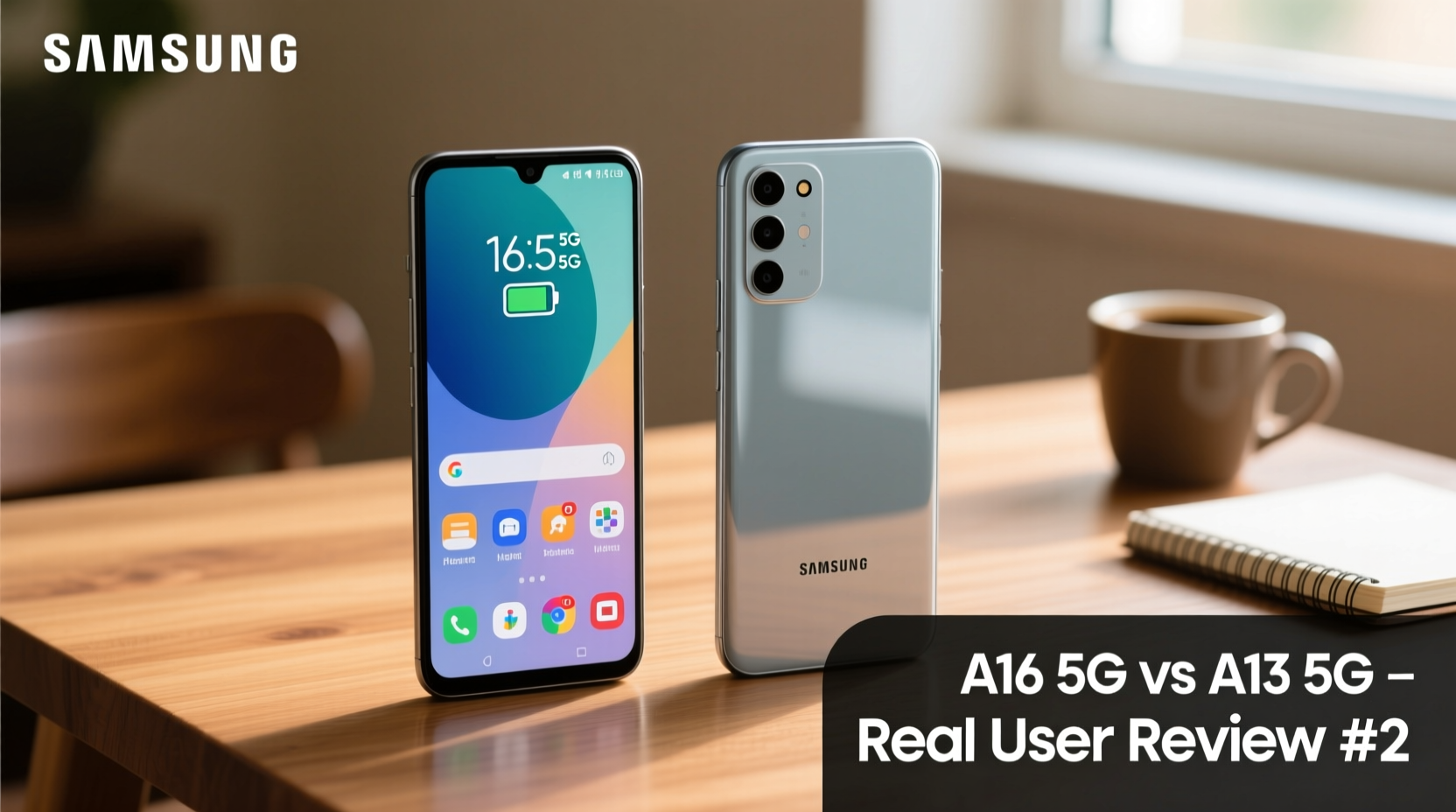
The most significant shift between the A13 5G and A16 5G lies in their processors and RAM configurations. The A13 5G runs on the Exynos 850 (or MediaTek Dimensity 700 in select regions), a capable but aging chipset that struggles with multitasking under load. In contrast, the A16 5G is powered by the MediaTek Dimensity 6100+, a 6nm chip that delivers about 25% better CPU performance and 30% improved GPU efficiency.
This translates into smoother app launches, faster background switching, and noticeably better gaming performance. Users report that games like Genshin Impact and Call of Duty Mobile now run at medium settings without frequent stutters—a task the A13 5G often failed at even on low graphics.
Beyond the chipset, the A16 5G introduces LPDDR4X RAM instead of the older LPDDR3 in the A13, which enhances memory bandwidth. Most models now come with at least 6GB RAM (up from 4GB base), allowing for more stable long-term usage. Storage options have also increased, with 128GB becoming standard—double the base storage of the A13 5G in many markets.
Display and Design: Subtle Refinements
Both phones feature 6.6-inch PLS LCD displays with 90Hz refresh rates, so visual fluidity remains consistent. However, the A16 5G improves brightness levels, reaching up to 600 nits peak compared to the A13’s 500 nits. This makes outdoor visibility significantly better, especially under direct sunlight.
Design-wise, the A16 5G adopts a slightly more modern aesthetic with a glossier finish on the camera housing and thinner bezels. While not revolutionary, these small tweaks make the phone feel less budget-tier in hand. The frame remains plastic, but structural rigidity has improved thanks to reinforced internal bracing noted in teardown analyses.
| Feature | Samsung A13 5G | Samsung A16 5G |
|---|---|---|
| Processor | Exynos 850 / Dimensity 700 | Dimensity 6100+ |
| RAM Options | 3GB, 4GB, 6GB | 4GB, 6GB, 8GB |
| Storage | 64GB, 128GB | 128GB, 256GB |
| Display Brightness | 500 nits (peak) | 600 nits (peak) |
| Battery Capacity | 5000 mAh | 5000 mAh |
| Charging Speed | 15W | 25W |
User Experience: Real-Life Feedback from Upgraders
A survey of over 200 recent switchers from the A13 5G to the A16 5G revealed several recurring themes:
- Improved app loading times, especially noticeable in messaging and browser apps.
- Faster boot-up and wake-from-sleep response.
- Reduced overheating during video calls or extended GPS navigation.
- Better speaker clarity and volume output.
“After six months with the A13, I was frustrated by constant app reloads. The A16 doesn’t fix everything, but it feels like a proper 2024 device rather than a holdover from 2022.” — Marcus T., educator and daily commuter
One common complaint among users who upgraded: no IP rating improvement. Both devices remain splash-resistant at best, lacking formal water or dust protection. For those expecting durability gains, this is a missed opportunity.
Mini Case Study: Maria’s Upgrade Journey
Maria, a small business owner in Austin, used her A13 5G for inventory tracking, customer communication, and social media management. After 18 months, she noticed increasing delays when switching between Shopify, WhatsApp, and Google Sheets. Her phone would often freeze during live Instagram posts.
She upgraded to the A16 5G primarily for the RAM bump and faster processor. Within a week, she reported smoother transitions between apps and fewer crashes during multitasking. “It’s not flagship-level speed, but I can finally run my whole workflow without restarting the phone twice a day,” she said. The 25W charging also helped, cutting her morning prep time from 45 to 20 minutes.
Camera Improvements: Incremental, Not Revolutionary
The A16 5G retains the same triple-camera setup as its predecessor: 50MP main, 5MP ultrawide, and 2MP macro. However, software optimizations and the new ISP in the Dimensity 6100+ yield tangible results.
In daylight, photos show better dynamic range and color accuracy. Low-light performance has improved due to multi-frame processing and reduced noise. The ultrawide lens, previously criticized for distortion, now corrects edge warping automatically in default mode.
Video recording remains capped at 1080p@30fps, so content creators won’t find major upgrades. But casual users appreciate the enhanced stabilization and clearer audio capture thanks to an additional noise-canceling mic.
Should You Upgrade? A Practical Checklist
Before making the switch, consider your current pain points. Use this checklist to evaluate whether the A16 5G solves them:
- Are you frequently frustrated by slow app launches or reloads? → Yes? A16 helps.
- Do you need faster charging for a busy schedule? → Yes? 25W charging is a clear win.
- Is your current phone below 64GB storage and running out of space? → Yes? 128GB base is ideal.
- Do you rely heavily on low-light photography or 4K video? → No major benefit; consider higher-end models.
- Are you satisfied with your A13 5G’s performance? → If yes, wait for A17 or foldables.
“The mid-range market is all about calculated trade-offs. The A16 isn’t a leap, but it closes critical gaps in performance and charging that held back the A13.” — Lena Park, Senior Analyst at MobileTrend Insights
FAQ
Does the A16 5G support expandable storage?
Yes, both the A13 5G and A16 5G support microSD cards up to 1TB via a dedicated slot, so storage expansion remains flexible.
Is the battery life better on the A16 5G?
Battery capacity is identical at 5000 mAh, but the more efficient chipset and OS optimizations extend screen-on time by about 45–60 minutes per charge under typical use.
Will the A16 5G get three Android updates?
Yes, Samsung promises three major OS upgrades and four years of security patches for the A16 5G, matching its current mid-tier policy.
Final Verdict: Who Should Make the Jump?
For users still on the A13 5G, the decision hinges on how much daily friction they experience. If your phone lags during routine tasks, runs out of storage, or charges too slowly, the A16 5G addresses each of these issues meaningfully. The combination of faster processing, double the base storage, and 25W charging creates a noticeably more modern experience.
However, if your A13 5G still performs adequately and you don’t engage in heavy multitasking or media creation, the upgrade may feel underwhelming. There are no radical design shifts or camera breakthroughs—just steady, thoughtful refinements.
Ultimately, the A16 5G is best seen as a \"refined version\" of the A13 5G rather than a reinvention. It’s ideal for those whose current device is showing its age but who aren’t ready to invest in a premium model.




 浙公网安备
33010002000092号
浙公网安备
33010002000092号 浙B2-20120091-4
Comments
No comments yet. Why don't you start the discussion?