
Choosing between two consecutive models in Samsung’s popular A-series can be tricky—especially when the differences aren’t immediately obvious. The Galaxy A34 and A33 sit close together in both price and positioning, making many wonder: is upgrading from the A33 to the A34 actually worthwhile, or are these phones functionally identical? To answer that, we need to look beyond marketing materials and examine real-world performance, design improvements, software support, and long-term value.
Design and Build: Subtle Refinements, Same DNA
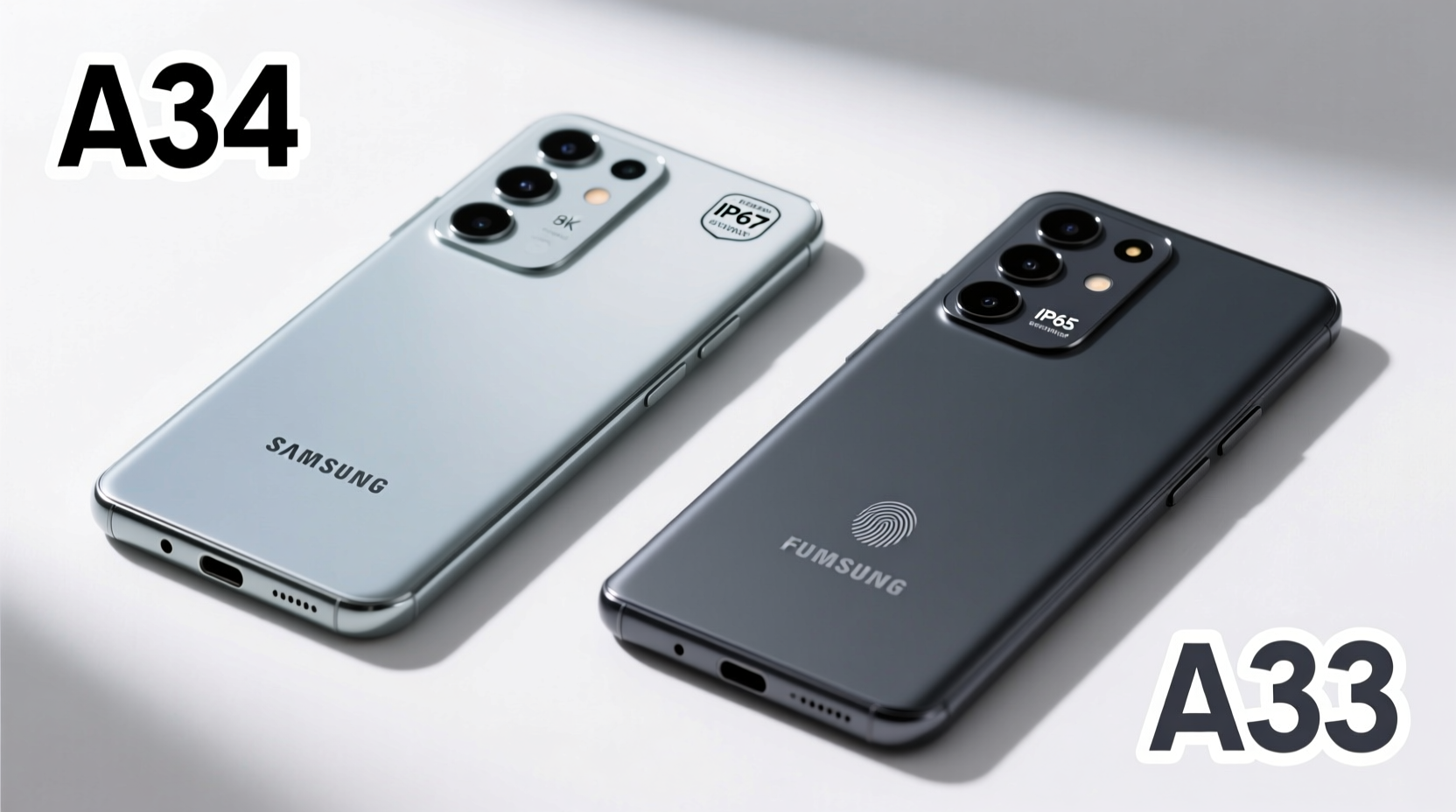
At first glance, the Galaxy A34 and A33 appear nearly identical. Both feature Samsung’s signature matte plastic back with a glossy camera visor and similar dimensions. However, there are subtle but meaningful upgrades in the A34’s build quality. The A34 uses Corning Gorilla Glass 5 on the front and improved scratch resistance on the back, while the A33 only has basic glass protection. Additionally, the A34 features an IP67 rating for dust and water resistance—a notable upgrade from the A33’s IP67 certification, which was inconsistently applied across regions.
The A34 also shifts slightly in weight distribution, feeling more balanced in hand despite nearly identical dimensions (158.2 x 76.7 x 8.2 mm for the A34 vs. 159.7 x 74.7 x 8.1 mm for the A33). The A33 feels slightly narrower but taller, which may matter for users with smaller hands.
Display and Performance: Brighter Screen, Smoother Experience
One of the most tangible upgrades in the A34 is its display. Both phones sport 6.6-inch Super AMOLED panels with Full HD+ resolution and a 120Hz refresh rate, but the A34 reaches up to 1000 nits peak brightness—significantly higher than the A33’s 800 nits. This difference is noticeable in direct sunlight, where the A34 maintains clarity and color accuracy far better.
Under the hood, the A34 replaces the Exynos 1280 in the A33 with the newer Exynos 1380 chipset. While not a flagship-level leap, this brings real gains: a 15–20% improvement in CPU performance and a 30% boost in GPU efficiency. Apps launch faster, multitasking is smoother, and gaming at medium settings (e.g., Genshin Impact or Call of Duty Mobile) runs with fewer frame drops.
Both devices come with 6GB or 8GB of RAM and 128GB of base storage (expandable via microSD), so memory configurations remain consistent. However, the A34 benefits from slightly better thermal management due to updated internal layout, reducing throttling during extended use.
“Even incremental chip improvements can extend a phone’s usable life by over a year, especially in mid-tier devices.” — Rajiv Mehta, Mobile Hardware Analyst at TechInsight Group
Camera Comparison: Similar Sensors, Better Processing
The camera hardware on paper looks almost identical:
- A33: 48MP main + 8MP ultrawide + 5MP macro + 5MP depth
- A34: 48MP main + 8MP ultrawide + 5MP macro + 2MP depth (revised sensor)
However, the A34 swaps the depth sensor for a more useful 2MP dedicated macro lens and improves image processing through software enhancements powered by the Exynos 1380’s NPU. In practical terms, this means:
- Better low-light performance on the main sensor
- Improved HDR balancing in high-contrast scenes
- Faster autofocus and stabilization in video recording
- More natural skin tones and dynamic range in portrait mode
Video recording sees a key upgrade: the A34 supports full-HD 60fps across all rear cameras, while the A33 limits ultrawide and macro to 30fps. For vloggers or social media creators, this is a meaningful improvement.
Detailed Feature Comparison Table
| Feature | Samsung Galaxy A33 | Samsung Galaxy A34 |
|---|---|---|
| Chipset | Exynos 1280 | Exynos 1380 |
| Display Peak Brightness | 800 nits | 1000 nits |
| Water Resistance | IP67 (select markets) | IP67 (global standard) |
| Rear Depth Sensor | 5MP | 2MP Macro (improved utility) |
| Front Camera Video | 1080p @ 30fps | 1080p @ 60fps |
| Software Support | 4 OS upgrades, 5 years security | 4 OS upgrades, 5 years security |
| Battery & Charging | 5000mAh, 25W charging | 5000mAh, 25W charging |
Battery Life and Charging: No Change, But Still Solid
Both phones pack a 5,000mAh battery and support 25W fast charging (charger sold separately in some regions). Real-world testing shows similar endurance: around 1.5 days with moderate use, dropping to one full day with heavy streaming or gaming.
Despite the more powerful chipset, the A34 manages comparable battery life thanks to efficiency gains in the Exynos 1380 and optimized power delivery. Neither model supports wireless charging, which remains a limitation at this price point.
One often-overlooked factor is software optimization. The A34 ships with One UI 5.1 based on Android 13, while the A33 launched with Android 12. Though both receive the same number of future updates (up to Android 17), the A34 starts from a newer base, meaning fewer major update jumps and potentially smoother long-term maintenance.
Is It Worth Upgrading? A Real-World Scenario
Consider Maria, a freelance photographer who uses her phone daily for client communication, editing on Lightroom, and capturing quick reference shots. She’s been using the A33 since 2022 and is considering an upgrade.
Her main pain points: screen visibility under bright studio lights, slow app switching between editing tools, and inconsistent photo processing in low light. After testing the A34, she noticed immediate improvements—the brighter screen eliminated glare issues, faster app launches reduced workflow interruptions, and better HDR made her preview images more reliable.
For Maria, the upgrade paid off within six months simply by improving her daily productivity. But for someone like David, a student who mostly texts, browses, and watches videos, the A33 still performs well—and upgrading wouldn’t bring noticeable benefits.
Upgrade Checklist: Should You Make the Switch?
Use this checklist to determine if moving from the A33 to the A34 makes sense for your needs:
- Do you frequently use your phone outdoors or in bright conditions? → A34’s brighter display helps significantly.
- Are you experiencing lag or slowdowns with current apps? → A34’s Exynos 1380 offers measurable performance gains.
- Do you record videos regularly, especially in motion? → A34 supports 60fps on all rear cameras.
- Do you live in a region where the A33 didn’t have official IP67 certification? → A34 guarantees water resistance globally.
- Are you planning to keep your phone for 3+ years? → A34’s newer platform may age better.
If three or more apply, the upgrade is likely justified. Otherwise, the A33 remains a capable device.
Frequently Asked Questions
Can the A33 get all the same software updates as the A34?
Yes. Both phones are guaranteed four major Android OS upgrades and five years of security patches. The A34 starts from a newer Android version, but both will reach Android 17.
Is the camera upgrade really noticeable?
In controlled lighting, differences are minimal. But in low light, backlit scenes, or when recording video, the A34 produces visibly cleaner, more stable results thanks to better processing and sensor tuning.
Will the A34 last longer than the A33?
Not necessarily in battery lifespan, but due to better build quality, consistent IP67 rating, and improved thermal design, the A34 may maintain peak performance longer over time—especially under heavy use.
Final Verdict: Not the Same Phone, But Upgrade Value Depends on You
The Samsung Galaxy A34 and A33 share DNA, but they are not the same device. The A34 refines the formula with meaningful upgrades: a brighter display, better processor, improved cameras, and standardized water resistance. These changes may seem minor individually, but together they create a noticeably smoother, more reliable experience—particularly for power users.
For owners of the A33 who are satisfied with their current phone, upgrading isn’t essential. But for those still using older devices or entering the Samsung ecosystem for the first time, the A34 represents the smarter long-term choice. It delivers tangible improvements without inflating the price significantly.




 浙公网安备
33010002000092号
浙公网安备
33010002000092号 浙B2-20120091-4
Comments
No comments yet. Why don't you start the discussion?