
Choosing between Samsung’s mid-range smartphones can be tricky, especially when the models are just one letter apart. The Samsung Galaxy A35 and A23 represent two different tiers of Samsung’s 2023–2024 lineup, each targeting slightly different users. If you're currently on an A23 or considering buying one, but have heard about the A35’s improvements, you’re likely asking: is upgrading really worth it? More importantly, what are you actually gaining beyond the price bump?
This isn’t just about specs on paper. It's about real-world usability, longevity, camera quality, and whether the upgrade translates into tangible benefits in daily life. Let’s break down the key differences and help you decide if stepping up to the A35 delivers meaningful value.
Design and Build: A Noticeable Step Up
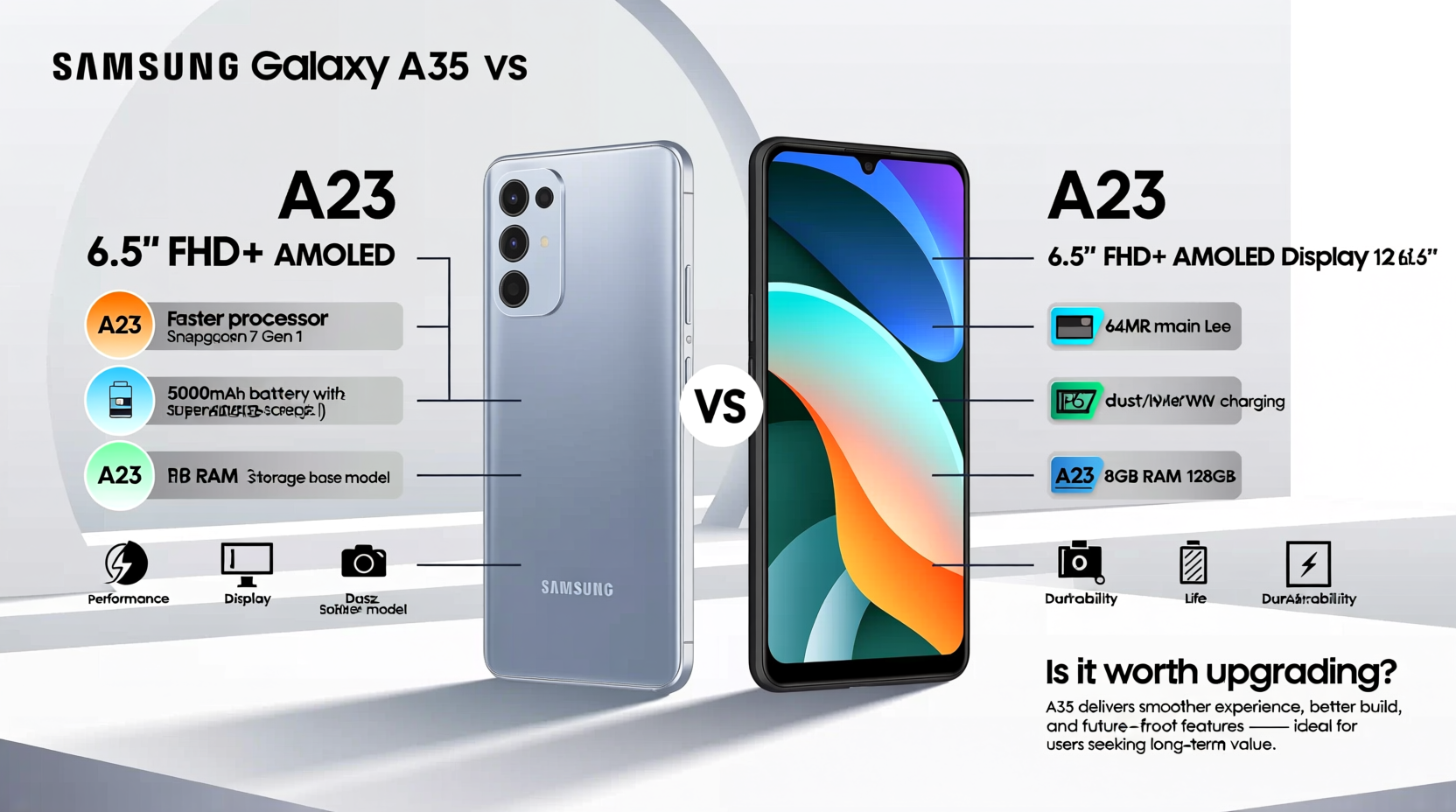
The first thing you’ll notice when holding both phones is the difference in build quality. The Galaxy A23 uses a plastic frame and back, which keeps costs low but feels less premium. In contrast, the A35 features a frosted glass-like back with a metal frame—giving it a much more refined, flagship-inspired feel.
Additionally, the A35 brings IP67 water and dust resistance, a feature absent on the A23. This means you can confidently use the phone in light rain or near sinks without worry—a small but significant improvement for durability.
The A35 also has a flatter display design and narrower bezels, contributing to a more modern aesthetic. While the A23 isn’t outdated, the A35 clearly targets users who want something that feels closer to a Galaxy S-series device without the premium price.
Display Quality: Brighter, Smoother, Better
The display is where the A35 pulls ahead decisively. Both phones feature 6.6-inch Full HD+ screens, but the similarities end there.
The A23 uses a standard 90Hz LCD panel, which performs adequately indoors but struggles in sunlight due to lower peak brightness and poorer color reproduction. The A35, however, comes with a Super AMOLED display with a 120Hz refresh rate and significantly higher brightness (up to 1000 nits). This results in deeper blacks, more vibrant colors, and much better outdoor visibility.
For anyone who streams videos, scrolls social media, or plays mobile games, the smoother 120Hz experience on the A35 is immediately noticeable. It simply feels more responsive and fluid compared to the A23’s 90Hz LCD.
“Display quality directly impacts user satisfaction—even more than raw processing power.” — David Kim, Mobile UX Analyst at TechInsight Group
Performance: Under the Hood Comparison
Under the hood, the performance gap reflects the intended audience for each device. The A23 runs on Qualcomm’s Snapdragon 680, a capable chip for basic tasks like browsing, messaging, and video playback. However, multitasking and heavier apps can cause noticeable lag.
The A35, on the other hand, uses Samsung’s Exynos 1380 processor—built on a 5nm process, supporting faster CPU and GPU speeds. Paired with at least 6GB of RAM (often 8GB), the A35 handles gaming, photo editing, and app switching far more smoothly.
If you use your phone for productivity tools, moderate gaming, or plan to keep it for three years or more, the A35’s hardware will age much better. It also supports longer software updates—up to four generations of Android OS upgrades versus two on the A23.
| Feature | Samsung A35 | Samsung A23 |
|---|---|---|
| Processor | Exynos 1380 (5nm) | Snapdragon 680 (6nm) |
| RAM Options | 6GB / 8GB | 4GB / 6GB / 8GB |
| Storage | 128GB / 256GB (expandable) | 64GB / 128GB (expandable) |
| Software Support | 4 OS Upgrades + 5 Years Security | 2 OS Upgrades + 4 Years Security |
| Battery | 5000mAh | 5000mAh |
| Charging Speed | 25W Fast Charging | 25W Fast Charging |
Camera Capabilities: Beyond Megapixels
On paper, both phones boast quad-camera setups, but real-world performance differs significantly. The A23 features a 50MP main sensor, but due to software tuning and lower-light processing, images often appear soft or overly processed.
The A35’s 50MP main camera uses optical image stabilization (OIS) and larger pixel size (1.0µm vs 0.64µm), resulting in sharper photos, especially in low light. The ultrawide and macro sensors are also improved, and the front-facing 13MP selfie cam captures more natural skin tones and better detail.
Video recording sees a major leap too—the A35 supports 4K at 30fps, while the A23 is limited to 1080p. If you create content or value high-quality video calls, this is a meaningful upgrade.
Mini Case Study: Maria’s Upgrade Experience
Maria had used her Galaxy A23 for nearly two years. She loved its battery life but grew frustrated with slow app launches and blurry indoor photos. After upgrading to the A35, she noticed immediate improvements: apps opened faster, her social media photos looked sharper, and the screen felt more immersive during evening streaming.
“I didn’t think $150 would make such a difference,” she said. “But now I see it’s not just about speed—it’s how the whole experience feels more polished.”
Battery and Charging: Similar Capacity, Different Efficiency
Both phones pack a 5000mAh battery, so total capacity is identical. However, the A35’s more efficient Exynos 1380 chip and AMOLED display (which turns off pixels for black content) lead to better real-world endurance. Users report up to half a day more screen-on time under similar usage.
Fast charging remains at 25W for both, meaning a full charge takes about 70 minutes. Neither includes a charger in the box, so you’ll need to reuse or purchase one separately.
Is the Upgrade Worth It? A Practical Checklist
Before spending extra on the A35, ask yourself the following. Check off what applies:
- Do you want a more premium, durable build with water resistance?
- Do you value a smoother, brighter display for outdoor use or media consumption?
- Are you planning to keep your phone for 3+ years and want longer software support?
- Do you take frequent photos, especially in low light?
- Do you play mobile games or use multiple apps at once?
If you checked three or more, the A35 is likely worth the investment. But if your needs are basic—calls, messaging, light browsing—the A23 still offers excellent value.
Frequently Asked Questions
Can the A23 still handle everyday tasks in 2024?
Absolutely. The A23 runs Android 13 (upgradable to 14) and handles social media, YouTube, WhatsApp, and email without issues. It’s ideal for users who don’t demand high performance.
Does the A35 have a headphone jack?
No, unlike the A23, the A35 omits the 3.5mm headphone jack. If you rely on wired headphones, this could be a downside.
Is the price difference justified?
The A35 typically costs $100–$150 more than the A23. That premium buys you better materials, display, camera, processor, and longer software support. For many, that’s a fair trade-off for a device that feels future-proof.
Final Verdict: What You’re Really Getting
Upgrading from the A23 to the A35 isn’t just about checking boxes—it’s about upgrading your daily interaction with your phone. You’re getting:
- A more durable, stylish design with IP67 rating
- A vastly superior 120Hz AMOLED display
- Better long-term performance and software support
- Sharper, more reliable camera results, especially in challenging lighting
- Improved efficiency and slightly longer battery life
The A23 remains a strong budget option, particularly for secondary users or those on tight budgets. But if you want a phone that feels more advanced, lasts longer, and delivers a consistently smooth experience, the A35 earns its higher price tag.
“The real value in a smartphone isn’t just what it does today—but how well it holds up tomorrow.” — Lena Park, Senior Editor at MobileTrend Weekly




 浙公网安备
33010002000092号
浙公网安备
33010002000092号 浙B2-20120091-4
Comments
No comments yet. Why don't you start the discussion?