
Choosing between Samsung’s Galaxy A53 and A16 isn’t just about price—it’s about balancing performance, longevity, and real-world usability. The A53 sits in the mid-range sweet spot, while the A16 targets budget-conscious buyers. But does that mean you’re missing out by sticking with the A16? Or is the jump to the A53 overkill for everyday use? Let’s break down the key differences and help you decide whether an upgrade makes sense.
Performance and Hardware: Real-World Impact
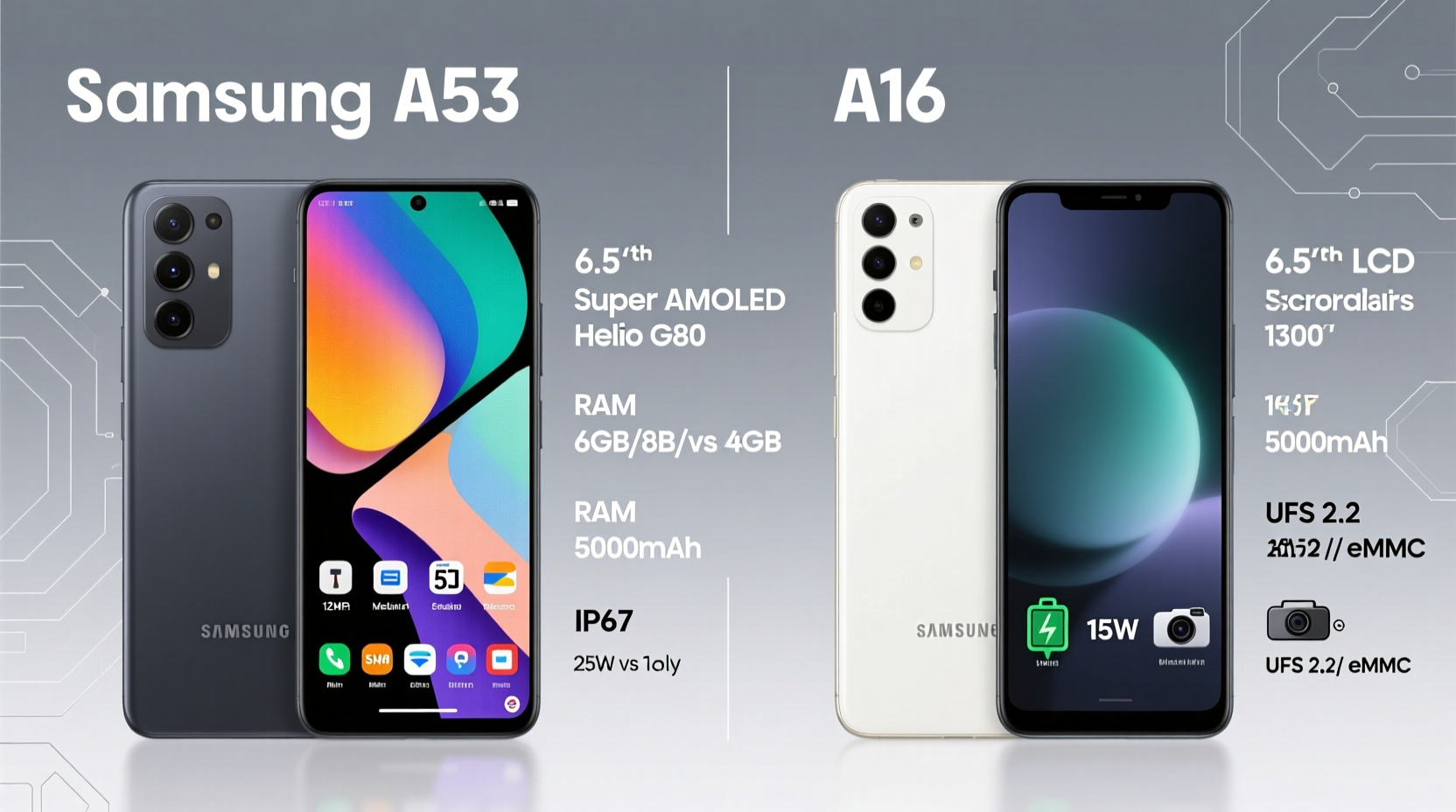
The core of any smartphone decision lies in its internal hardware. The Galaxy A53 runs on the Exynos 1280 (or Snapdragon 778G in some regions), an octa-core processor built on a 5nm process. It’s paired with 6GB or 8GB of RAM and offers noticeably smoother multitasking, app launches, and gaming performance—even under sustained loads.
In contrast, the A16 uses the older Exynos 850, a 1.9GHz octa-core chip manufactured on an 8nm process. While adequate for basic tasks like calling, messaging, and light browsing, it struggles with heavier apps, multitasking, and newer games. Users often report lag when switching between social media apps or using navigation alongside music streaming.
One real-world example: Maria, a teacher from Austin, upgraded from an A16 to an A53 after experiencing constant app reloads and slow response times during virtual classes. “I was constantly waiting for my browser to catch up,” she said. “With the A53, everything opens instantly. It feels like I finally have a phone that keeps up with me.”
Display and Build Quality: More Than Just Looks
Both phones feature 6.5-inch displays, but the differences are stark. The A53 sports a Super AMOLED panel with a 120Hz refresh rate, offering vibrant colors, deep blacks, and buttery-smooth scrolling. This is especially noticeable when browsing social feeds, reading articles, or watching videos.
The A16, meanwhile, uses a PLS LCD screen with a standard 60Hz refresh rate. Colors appear flatter, viewing angles are narrower, and motion looks less fluid. For users who spend hours on their phones, this can lead to eye strain and a less immersive experience.
In terms of build, the A53 features a glass front and plastic back with an IP67 rating—meaning it can survive brief submersion in water and resists dust. The A16 has a plastic build with no official water resistance, making it more vulnerable to spills and outdoor use.
“Display quality and durability aren’t luxuries—they’re essentials for daily comfort and device longevity.” — David Lin, Mobile Tech Analyst at GadgetInsight
Camera Comparison: Photos That Reflect Your Life
Cameras are where the gap widens. The A53 comes with a quad-camera setup: 64MP main, 12MP ultra-wide, 5MP macro, and 5MP depth sensor. The primary sensor captures sharp, detailed images even in low light, thanks to improved pixel binning and software processing. Night mode is functional and produces usable results without excessive noise.
The A16, on the other hand, has a triple rear setup: 50MP main, 2MP macro, and 2MP depth. Despite the high megapixel count, the smaller sensor and lack of advanced processing result in inconsistent photos—especially in dim lighting. Images often look washed out, lack detail, and struggle with dynamic range.
Front cameras follow the same trend. The A53’s 32MP selfie shooter delivers crisp, natural-looking portraits with good skin tone reproduction. The A16’s 5MP front camera produces grainy selfies, particularly indoors.
Photo Performance Checklist
- ✅ Use A53 for night photography, social media content, or family memories
- ✅ Choose A16 only if you rarely take photos or share them digitally
- ✅ Consider external lighting if relying on A16’s camera
- ✅ Enable HDR and avoid zooming on A16 for best results
Battery Life and Charging: Longevity vs. Convenience
Both devices pack a 5,000mAh battery, which should last a full day under moderate use. However, efficiency plays a big role. The A53’s 120Hz display and stronger processor consume more power, but Samsung’s optimized software and adaptive refresh rate help balance this. Most users report 1.2 to 1.5 days of battery life.
The A16, despite its weaker hardware, doesn’t outperform the A53 due to less efficient power management and background app behavior. Many users find themselves charging by late evening, especially with GPS or video use.
Charging speed is another differentiator. The A53 supports 25W fast charging (charger sold separately), allowing a 0–50% charge in about 30 minutes. The A16 maxes out at 15W, taking nearly twice as long to reach the same level.
Software and Updates: Future-Proofing Your Device
This is one of the most overlooked yet critical factors. The Galaxy A53 launched with Android 12 and is guaranteed four major OS upgrades and five years of security patches—meaning it will receive updates until at least 2027.
The A16, released with Android 13, is only eligible for two OS upgrades and three years of security updates, ending around 2025. Given how quickly apps evolve and security threats grow, this shorter support window could leave the A16 feeling outdated sooner.
Long-term usability matters. Apps like banking platforms, productivity tools, and even WhatsApp may drop support for older Android versions. Being stuck on Android 14 or 15 in 2026 could limit functionality or block access entirely.
Detailed Feature Comparison Table
| Feature | Samsung Galaxy A53 | Samsung Galaxy A16 |
|---|---|---|
| Processor | Exynos 1280 / Snapdragon 778G | Exynos 850 |
| RAM Options | 6GB / 8GB | 4GB / 6GB |
| Display | 6.5” Super AMOLED, 120Hz | 6.5” PLS LCD, 60Hz |
| Rear Camera | 64MP + 12MP + 5MP + 5MP | 50MP + 2MP + 2MP |
| Front Camera | 32MP | 5MP |
| Battery | 5,000mAh | 5,000mAh |
| Fast Charging | 25W | 15W |
| Water Resistance | IP67 rated | None |
| OS Upgrade Support | 4 major updates | 2 major updates |
| Security Updates | 5 years | 3 years |
| Starting Price (USD) | $350–$400 (used/refurbished) | $200–$230 (new) |
Frequently Asked Questions
Is the Samsung A16 good enough for everyday use?
Yes, if your usage is limited to calls, texts, social media, and occasional photos. It handles basic tasks adequately, but don’t expect smooth performance with multitasking or modern apps over time.
Should I upgrade from the A16 to the A53?
If you value faster performance, better photos, longer software support, and a smoother overall experience, then yes—the upgrade is worthwhile. The difference is especially noticeable if you use your phone for work, content creation, or entertainment.
Can the A16 run apps like Instagram, TikTok, or Zoom smoothly?
It can run them, but not always smoothly. Heavy filters, live streaming, or video calls may cause stuttering or overheating. Closing background apps helps, but the hardware limitation remains.
Final Verdict: Is the Upgrade Worth It?
The answer depends on your priorities. If you're on a tight budget and only need a phone for essentials, the A16 is a functional entry point. But if you plan to keep your phone for two years or more, value reliability, and want a device that won’t feel sluggish by year two, the A53 is the smarter investment.
The extra cost—typically $150–$200 more—is justified by better performance, a superior display, enhanced cameras, and critically, longer software support. These aren't just \"nice-to-haves\"; they directly impact how enjoyable and functional your phone remains over time.
Think of it this way: spending a little more now could save you from frustration—and another upgrade—sooner than expected.




 浙公网安备
33010002000092号
浙公网安备
33010002000092号 浙B2-20120091-4
Comments
No comments yet. Why don't you start the discussion?