
When shopping for a premium TV that doubles as home decor, two models consistently rise to the top: the Samsung Frame and the LG Gallery. Both are designed to blend into your living space when not in use, displaying artwork or personal photos like a digital canvas. But with price tags often exceeding $2,000—and sometimes reaching $4,000—the question becomes unavoidable: is the extra cost really worth it?
This isn’t just about picture quality. It’s about aesthetics, integration with interior design, smart features, and long-term satisfaction. While both TVs deliver on the promise of “art when off,” they approach it differently. Understanding these differences can help you decide whether the premium is justified—or if you’re better off choosing function over form.
Design and Aesthetic Integration
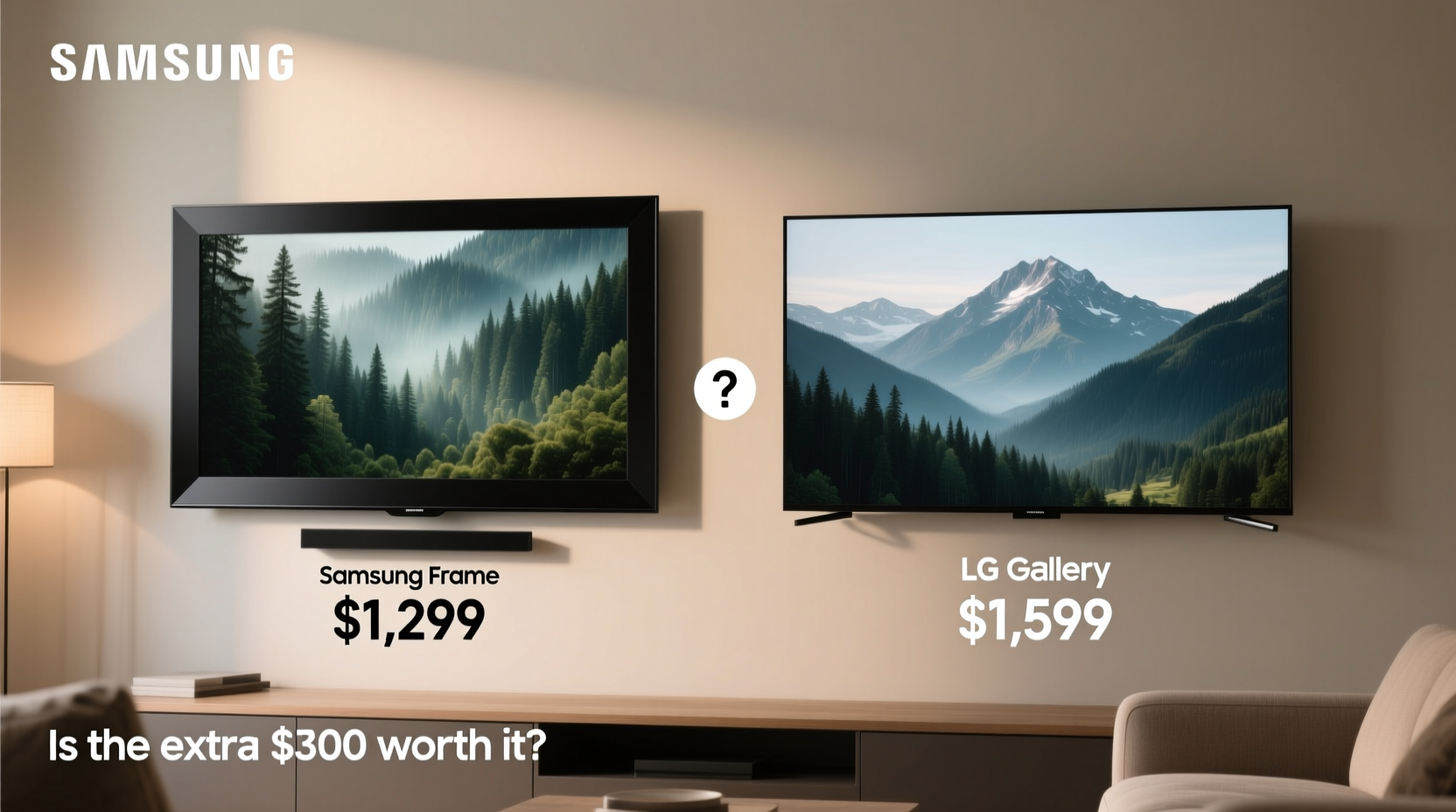
The core appeal of both the Samsung Frame and LG Gallery lies in their minimalist design. They’re engineered to look like framed art rather than electronics. However, their structural philosophies differ.
The **Samsung Frame** uses a customizable bezel system. You can swap out the default black bezel for wooden finishes (oak, walnut, beige linen) to match your room’s style. The TV sits flush against the wall with a slim profile and includes an invisible cable solution—One Connect Box—that routes all cords through a single transparent cable, minimizing visual clutter.
The **LG Gallery**, on the other hand, takes minimalism further. It has no visible bezel; instead, the screen itself appears to float on the wall, with only a narrow edge separating the display from the mount. It attaches via a nearly invisible magnetic bracket, giving it a true \"floating\" effect. There’s no external box, so cables must be managed manually unless concealed during installation.
Picture Quality and Display Technology
Both TVs use different panel technologies, which affects performance in various lighting conditions.
- Samsung Frame: Uses a matte anti-reflective panel with QLED technology. This reduces glare significantly, making it ideal for bright rooms. Colors are vibrant, contrast is strong, and brightness levels are high—especially beneficial if your TV faces a window.
- LG Gallery: Features an OLED panel, known for perfect blacks, infinite contrast, and superior viewing angles. However, it has a glossy finish, which can reflect ambient light and detract from the art-mode experience in sunny spaces.
In everyday TV viewing, OLED generally wins for cinematic content due to deeper blacks and pixel-level dimming. But in well-lit environments, the Frame’s matte screen maintains clarity and reduces reflections, preserving the illusion of a real painting.
“OLED delivers the best black levels in the industry, but only if your room can control ambient light.” — David Wong, Senior Editor at FlatPanelHD
Art Mode and Customization
This is where both brands shine—but with distinct approaches.
Samsung’s **Art Mode** integrates with the Samsung Art Store, offering thousands of curated artworks from museums and contemporary artists. You can adjust brightness and color tone based on time of day, and even upload personal photos via the SmartThings app. The interface is intuitive, and transitions between art pieces feel natural.
LG’s **Gallery Mode** also connects to an art library, though it’s slightly smaller. What sets it apart is the ability to stretch a single image across multiple LG displays in your home—a feature useful in open-concept homes or galleries. LG also allows for greater customization of metadata (artist info, title cards), enhancing the museum-like feel.
| Feature | Samsung Frame | LG Gallery |
|---|---|---|
| Display Type | QLED (matte) | OLED (glossy) |
| Bezel Options | 3+ interchangeable | None (floating design) |
| Cable Management | One Connect Box + clear cable | Manual concealment required |
| Art Library Size | Over 2,000 works | ~1,500 works |
| Brightness (Peak) | ~1,000 nits | ~800 nits |
| Wall Mounting | Flush with spacer options | Magnetic, ultra-slim |
Real-World Use Case: A Designer’s Living Room
Jenna Park, an interior designer in Portland, installed a Samsung Frame in her client’s sunlit loft. The room had large east-facing windows, and previous flat-panel TVs created distracting reflections. She chose the Frame specifically for its matte finish and oak bezel, which matched the reclaimed wood shelving.
“When the TV is off, guests assume it’s a landscape print,” she said. “Even when it’s on, the reduced glare keeps the focus on the content, not the reflection of the chandelier.”
In contrast, another client opted for the LG Gallery in a dimmer, mood-lit basement lounge. The OLED’s deep blacks made movie nights immersive, and the floating design complemented the modern concrete-and-steel aesthetic. “It disappears into the wall when off,” Jenna noted. “But we had to install recessed cable channels to hide the power cord.”
This illustrates a key insight: the best choice depends on environment, not just specs.
Is the Premium Worth It? A Value Breakdown
Let’s address the elephant in the room: both TVs cost significantly more than standard 4K models. A 65-inch Samsung Frame starts around $1,700, while the LG Gallery begins at $2,300—nearly double the price of a comparable non-decor TV.
So what are you paying for?
- Aesthetic engineering: Custom bezels, flush mounting, and art-first UI.
- Niche functionality: Seamless art rotation, ambient mode intelligence, and lifestyle integration.
- Premium materials: Metal frames, specialized mounts, and high-end finishes.
If you value a TV that enhances your space even when powered down, the investment may be justified. But if you watch TV daily and prioritize performance over presentation, a high-end standard OLED (like the LG C3 or Sony A80L) might offer better value.
FAQ
Can I use my own photos in Art Mode?
Yes, both TVs allow you to upload personal photos via their respective apps—Samsung SmartThings and LG Content Store. You can curate custom collections and schedule rotations.
Do either of these TVs support HDR gaming?
The Samsung Frame supports HDR10+ and has decent input lag for casual gaming, but lacks HDMI 2.1 full bandwidth. The LG Gallery, being OLED, supports full HDMI 2.1, VRR, and G-Sync, making it far better suited for next-gen consoles and PC gaming.
Which one lasts longer as art?
The Samsung Frame’s matte screen resists burn-in more effectively during prolonged static image display. LG includes pixel-shifting and logo dimming to prevent burn-in, but extended use of the same artwork increases risk over time.
Final Verdict: Who Should Buy Which?
The decision ultimately hinges on your priorities:
- Choose the Samsung Frame if you have a bright room, want interchangeable bezels, prefer hassle-free cable management, and value glare reduction.
- Choose the LG Gallery if you prioritize cinematic picture quality, love the floating design, have controlled lighting, and want superior gaming features.
Neither is objectively “better.” But the extra cost is only worth it if you’ll genuinely appreciate the art-mode experience daily. For many, the emotional payoff of walking into a room where the TV looks like a masterpiece outweighs the price difference. For others, it’s a luxury they can live without.
“The best TV is the one you forget is a TV.” — Mark Johnson, Home Theater Consultant
Conclusion: Make It Work for Your Lifestyle
The Samsung Frame and LG Gallery represent the pinnacle of lifestyle-focused television design. They blur the line between technology and decor, offering a solution for those who dislike the “black mirror” effect of traditional screens. But this sophistication comes at a premium—one that demands thoughtful consideration.
Ask yourself: Will I use the art mode regularly? Does the design elevate my space? Am I willing to pay more for subtlety and elegance over raw specs?




 浙公网安备
33010002000092号
浙公网安备
33010002000092号 浙B2-20120091-4
Comments
No comments yet. Why don't you start the discussion?