
For Samsung users invested in the Galaxy ecosystem, choosing the right smartwatch can significantly impact daily convenience, fitness motivation, and overall digital wellness. The Galaxy Watch 3 represented a high point in Samsung’s wearable design—offering premium materials, advanced health sensors, and robust software. Now, with newer models like the Galaxy Watch (often referring to the Galaxy Watch6 or Watch7), consumers face a critical question: is upgrading from the Galaxy Watch 3 truly worthwhile, or are they already getting most of what matters?
This comparison dives deep into hardware, software, health features, and real-world usability to help you determine whether staying put makes sense—or if you’re genuinely missing out by not upgrading.
Design and Build Quality: Evolution, Not Revolution
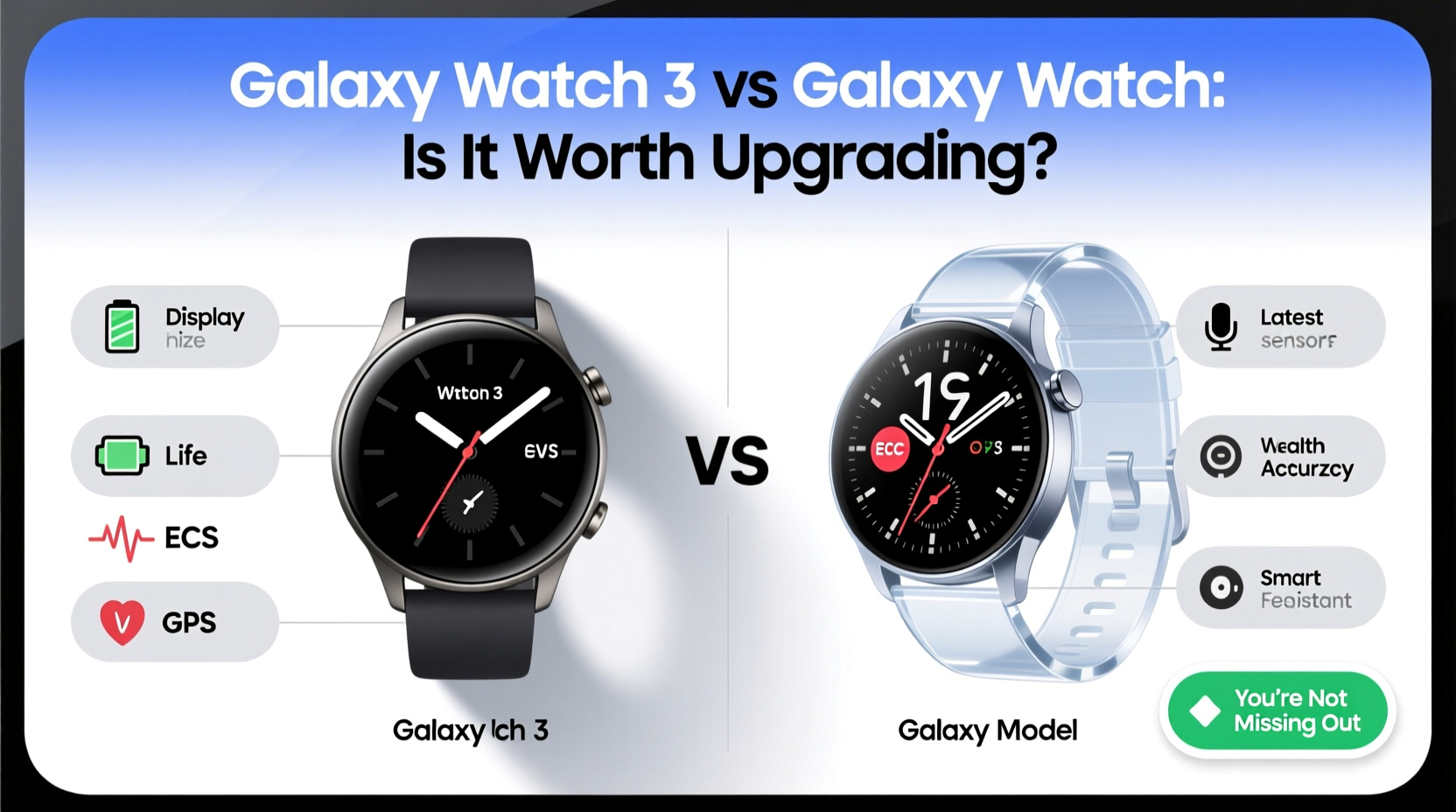
The Galaxy Watch 3 stood out for its classic circular design, stainless steel case, and rotating bezel—a tactile interface many users still prefer over touch-only navigation. It was available in 41mm and 45mm sizes and felt substantial without being bulky. Its IP68 and 5ATM water resistance made it suitable for swimming and everyday exposure to moisture.
The newer Galaxy Watch models maintain that same elegant aesthetic but introduce subtle refinements. The latest iterations feature slightly slimmer profiles, brighter OLED displays (up to 2,000 nits peak brightness), and improved scratch resistance thanks to stronger Gorilla Glass DX+. While the rotating bezel remains on some models, others have transitioned to haptic feedback rings, which mimic the physical rotation sensation.
From a durability standpoint, both watches perform well under normal use. However, the newer models benefit from better screen protection and more modern materials, making them slightly more resilient against drops and scratches.
Performance and Software: A Noticeable Leap
Under the hood, the differences become more pronounced. The Galaxy Watch 3 runs on Exynos 9110 dual-core processor with 1GB RAM and 8GB storage—an aging chip by today’s standards. While it handled Wear OS (via Samsung’s One UI Watch) competently at launch, performance has slowed over time, especially when multitasking or using third-party apps.
In contrast, the current Galaxy Watch series uses faster processors—such as the Exynos W920 or newer—with double the RAM (2GB) and expanded storage (16GB). This translates to smoother animations, quicker app launches, and better responsiveness overall. More importantly, newer watches run updated versions of Wear OS powered by Samsung, ensuring longer software support, regular security patches, and access to the latest Google integrations (like Google Wallet, Assistant, and Maps).
“Hardware longevity isn’t just about build—it’s about sustained software relevance. Watches with older SoCs often miss out on key updates within two years.” — David Kim, Senior Wearables Analyst at TechPulse Asia
Health and Fitness Tracking: Where the New Model Pulls Ahead
Samsung has steadily enhanced its health monitoring suite across generations. The Galaxy Watch 3 already offered strong capabilities: ECG, heart rate variability, blood pressure estimation (calibration required), sleep tracking, and SpO2 monitoring. These features were accurate and clinically validated in several studies.
However, the newer Galaxy Watch models go further. They include:
- Advanced Sleep Coaching: Provides personalized insights based on sleep stages, snoring detection (via phone mic), and recovery recommendations.
- Bioelectrical Impedance Analysis (BIA): Measures body composition including skeletal muscle and body fat percentage.
- Temperature Sensing: Enables cycle tracking improvements and early illness detection trends.
- Faster GPS Locking: Improved antenna design reduces time-to-fix, crucial for runners and cyclists.
If you're serious about fitness or long-term health monitoring, these upgrades matter. For example, tracking changes in body composition over time offers far more insight than weight alone. Similarly, temperature data adds context to menstrual cycle predictions and potential fever onset.
Detailed Feature Comparison
| Feature | Galaxy Watch 3 | Galaxy Watch (Latest Gen) |
|---|---|---|
| Processor | Exynos 9110 (Dual-core) | Exynos W920/W930 (Dual-core, 5nm) |
| RAM / Storage | 1GB / 8GB | 2GB / 16GB |
| Display Brightness | ~1000 nits peak | Up to 2000 nits peak |
| Operating System | Wear OS + One UI Watch 2–4 | Wear OS 4 + One UI Watch 5–6 |
| Battery Life | 2–3 days (typical use) | 2–3 days (with faster charging) |
| Charging Speed | ~2 hours (full charge) | ~1 hour (fast charging supported) |
| Body Composition (BIA) | No | Yes |
| Skin Temperature Sensor | No | Yes |
| Sleep Coaching | Basic sleep staging | Advanced coaching & snore detection |
| Rotating Bezel | Physical | Haptic (on some models) |
Real-World Example: A Runner’s Perspective
Consider Mark, a 38-year-old marathon enthusiast who’s used his Galaxy Watch 3 since 2021. He tracks long runs weekly, monitors recovery via heart rate variability, and logs sleep quality. Recently, he noticed his watch struggles to maintain GPS lock during forest trail runs and takes nearly 15 seconds longer to start recording than his friend’s new Galaxy Watch6.
After testing the newer model, Mark found the faster GPS acquisition, improved route accuracy, and post-run body stress analysis particularly valuable. The ability to see estimated dehydration risk based on temperature and exertion helped him adjust hydration strategies mid-race. Although his Watch 3 still functions, the incremental gains in reliability and insight justified the upgrade for his active lifestyle.
When Upgrading Makes Sense: A Practical Checklist
Ask yourself the following before deciding:
- Is your current watch lagging or crashing frequently? Older processors struggle with newer app demands.
- Do you want more accurate or detailed health metrics? BIA and temperature sensing offer deeper insights.
- Are you missing fast charging? Going from 0% to 80% in 30 minutes is a game-changer.
- Do you rely on Google services? Newer watches integrate better with Google Wallet, Maps, and Assistant.
- Has software support ended? The Galaxy Watch 3 receives limited updates; newer models promise 4+ years of OS upgrades.
Frequently Asked Questions
Can I still use my Galaxy Watch 3 in 2024?
Absolutely. If it meets your needs—tracking workouts, receiving notifications, monitoring heart rate—it remains functional. However, expect diminishing app compatibility and no future major OS upgrades.
Is the battery life better on the new Galaxy Watch?
Not dramatically longer, but faster charging improves usability. You can top up during a shower or coffee break, reducing downtime.
Will my old bands fit the new watch?
Yes. Samsung maintains consistent lug spacing across recent models. Any 20mm or 22mm band will fit both the Watch 3 and current models.
Final Verdict: To Upgrade or Not?
The decision hinges on your priorities. If you're satisfied with basic fitness tracking, call and message alerts, and occasional ECG checks, the Galaxy Watch 3 continues to deliver. Its core functionality remains intact, and Samsung’s ecosystem ensures continued app support for essential services.
But if you value precision health data, faster performance, modern software longevity, and seamless integration with Google services, upgrading is a smart move. The newer Galaxy Watch models aren’t just incremental—they represent meaningful advancements in sensor technology, user experience, and long-term usability.
Moreover, consider the cost-benefit over time. Spending $300–$400 on a new watch may seem steep, but spreading that over four years of reliable, feature-rich service makes it comparable to maintaining an aging device that slowly loses relevance.
“The best wearable isn’t always the newest—it’s the one that evolves with your needs.” — Lena Park, Digital Wellness Coach
Conclusion
You’re not necessarily missing out by holding onto your Galaxy Watch 3—especially if it serves your daily routine well. But know this: the latest Galaxy Watches offer tangible improvements in speed, health intelligence, and software support that enhance both immediate usability and long-term value.
If you’ve been on the fence, now is a good time to evaluate not just what your watch does today, but what it will do two years from now. Technology waits for no one. Make the choice that aligns with how you want to live, move, and stay informed—today and beyond.




 浙公网安备
33010002000092号
浙公网安备
33010002000092号 浙B2-20120091-4
Comments
No comments yet. Why don't you start the discussion?