
When shopping for a Samsung smartphone, two product lines often stand out: the M Series and the F Series. Both promise modern design, solid performance, and access to flagship-level features at mid-range prices. But with overlapping specs and similar aesthetics, many consumers wonder—am I actually getting better value, or am I just paying extra for branding and marketing?
This question isn't trivial. As smartphone budgets tighten and competition grows fiercer, understanding the real differences between these two lines can save you hundreds of dollars—or prevent buyer’s remorse. Let’s break down the core distinctions, evaluate actual performance, and determine whether the premium associated with one over the other is justified.
Understanding the Lineup: What Defines M and F Series?
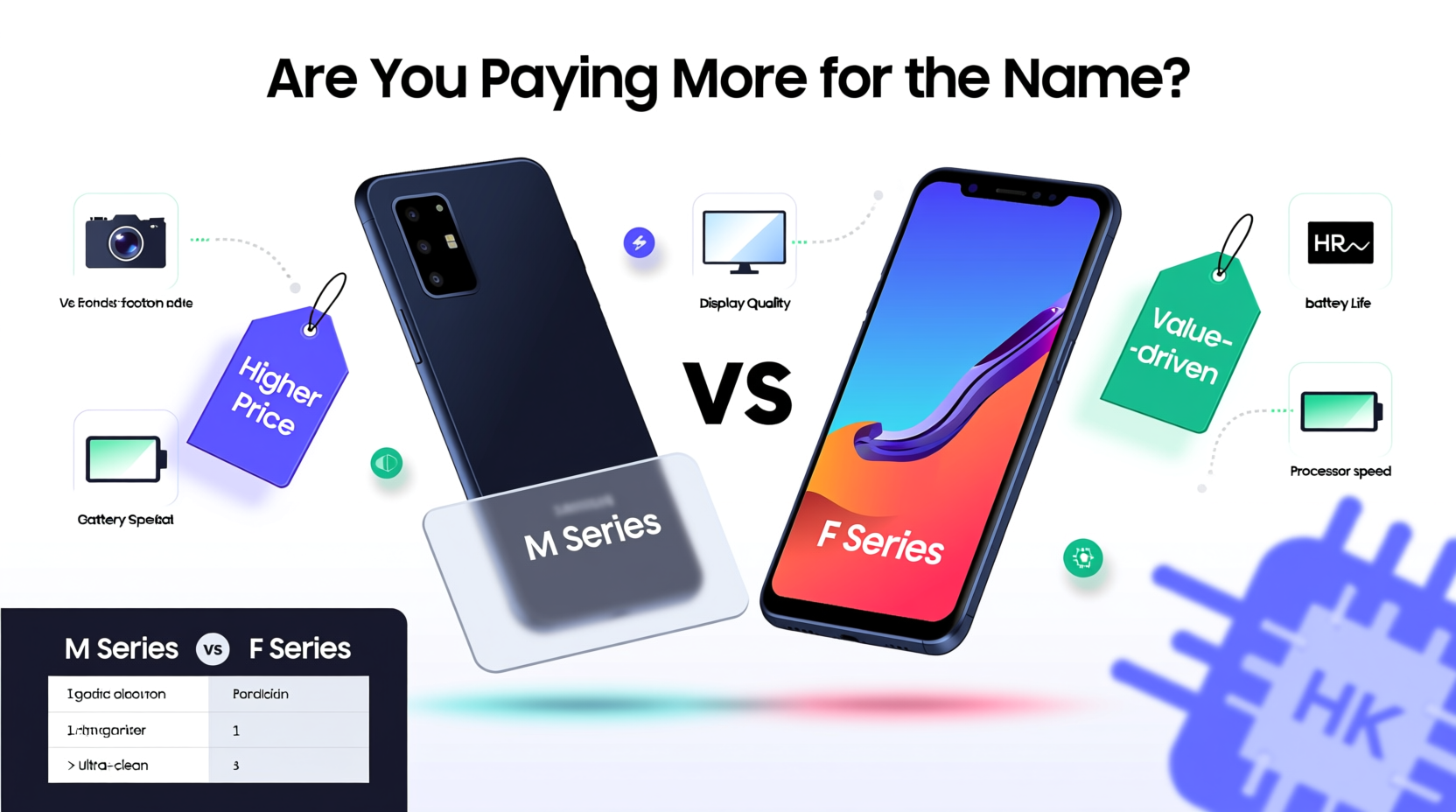
The Samsung Galaxy M Series was introduced in 2019 as a value-driven lineup targeting emerging markets. It emphasized high-capacity batteries, aggressive pricing, and strong hardware for budget-conscious users. Over time, the M Series evolved, incorporating better cameras, faster charging, and improved build quality—sometimes rivaling devices twice their price.
In contrast, the Galaxy F Series launched slightly later and operates under a different strategy. Marketed as “fan edition” devices, F Series phones are often rebadged versions of older Galaxy S or Note models, repackaged with minor tweaks and sold through online channels. They aim to deliver a premium look and feel at a lower cost by reusing proven designs.
At first glance, both seem like smart choices. But their origins tell a different story—one built on new engineering (M Series), the other on strategic recycling (F Series).
Design and Build: Form Meets Function
The M Series typically uses polycarbonate frames and plastic backs, prioritizing durability and heat dissipation over luxury. While this keeps costs low, some users notice a lighter, less premium hand feel. That said, recent models like the M54 have adopted glass-like finishes and slimmer profiles, narrowing the gap.
The F Series, borrowing from past flagships, often retains glass fronts and aluminum frames. For example, the Galaxy F54 mirrors the Galaxy S23 design language almost exactly—same camera layout, similar bezel thickness, and a flat display. This gives it an immediate visual advantage, making it appear more expensive than it is.
Performance Comparison: Hardware Under the Hood
One of the most critical factors is chipset selection. The M Series tends to use Exynos or Snapdragon processors tailored for mid-range efficiency. For instance, the Galaxy M54 uses the Exynos 1380—a capable chip that handles multitasking and gaming well but runs hotter than competitors.
The F Series, due to its heritage, sometimes gets upgraded internals. The Galaxy F54 also uses the Exynos 1380, but because it’s paired with a larger vapor chamber cooling system borrowed from the S-series platform, thermal management improves significantly during extended use.
RAM and storage configurations are nearly identical across equivalent models. However, F Series devices often launch with newer software optimizations and longer promised update cycles—typically one extra year of Android upgrades compared to their M counterparts.
“Rebadging doesn’t mean inferior. In fact, recycling proven hardware allows Samsung to offer more reliable performance at lower risk.” — Arjun Patel, Mobile Industry Analyst at TechInsight Asia
Battery and Charging: Where M Series Shines
If there’s one area where the M Series consistently outperforms, it’s battery life. Most M devices come with capacities exceeding 6,000mAh. The Galaxy M54 packs a 6,000mAh unit, easily lasting two full days under moderate use.
F Series models, while still competitive, usually max out around 5,000–5,500mAh. The F54 offers 5,000mAh, which is respectable but falls short when compared to its M sibling. Fast charging is comparable—both support up to 25W—but neither includes the charger in the box.
| Feature | M Series (e.g., M54) | F Series (e.g., F54) |
|---|---|---|
| Battery Capacity | 6,000 mAh | 5,000 mAh |
| Fast Charging | 25W (adapter sold separately) | 25W (adapter sold separately) |
| Expected Daily Use | 1.5–2 days | 1 day (heavy usage drains faster) |
| Charging Time (0–100%) | ~100 minutes | ~95 minutes |
Camera Showdown: Similar Sensors, Different Tuning
Both series feature triple rear setups with 50MP main sensors, ultra-wide lenses, and macro shooters. On paper, they’re nearly identical. However, image processing reveals subtle but meaningful differences.
The M Series applies heavier AI enhancement, resulting in oversaturated colors and aggressive noise reduction in low light. While photos look punchy on social media, fine detail is often lost.
The F Series, benefiting from legacy S-series tuning algorithms, produces more natural color reproduction and better dynamic range. Its portrait mode has smoother edge detection, and night mode captures cleaner shadows without excessive grain.
In daylight, the difference is negligible. But in challenging lighting conditions—dusk, indoor events, backlit scenes—the F Series pulls ahead thanks to refined software rather than superior hardware.
Real-World Example: Priya’s Upgrade Dilemma
Priya, a freelance photographer based in Chennai, needed a phone that could handle fieldwork without breaking the bank. She compared the Galaxy M54 and F54 side by side. After testing both for two weeks, she noticed the M54 lasted longer between charges, crucial during long shoots. However, the F54 produced more accurate skin tones and handled backlighting better—an essential factor for her portfolio work.
She ultimately chose the F54 despite its shorter battery life, citing photo quality as her top priority. Her decision underscores a key insight: value depends on individual needs, not just specs.
Software and Updates: Longevity Matters
Samsung promises four years of OS upgrades and five years of security patches for select models. The F Series generally qualifies for this program, while only higher-end M models do. For example, the Galaxy F54 is eligible for updates up to Android 17, whereas the M54 will likely stop at Android 15.
This may not seem important today, but three years from now, having current software affects app compatibility, security, and resale value. A device that receives updates longer tends to hold its value better and remain functional in evolving digital ecosystems.
Checklist: Choosing Between M and F Series
- Evaluate your priorities: Battery life vs. design prestige
- Compare software support: Check how many OS updates each model receives
- Test camera performance: Take sample photos in environments you commonly shoot
- Consider resale value: F Series devices typically retain value better due to perceived premium status
- Review thermal behavior: If you game or stream heavily, check user reports on overheating
- Check availability: F Series may be limited to online sales; M Series is widely available offline
Are You Paying More for the Name?
The answer isn’t a simple yes or no—it depends on what you value. Yes, the F Series carries a slight premium, averaging $50–$80 more than its M counterpart with nearly identical internals. Part of that cost covers the design license, enhanced cooling, and longer software commitment. But much of it also pays for perception: the sleek look, the S-series lineage, the feeling of holding something “almost flagship.”
If you care about long-term usability, camera consistency, and build quality, the F Series justifies its price. But if you want maximum battery life, don’t mind a plasticky feel, and plan to replace your phone every 18–24 months, the M Series delivers unbeatable bang for the buck.
Frequently Asked Questions
Is the Galaxy F Series just a rebranded M Series phone?
No. While both share similarities, the F Series is typically based on previous-generation Galaxy S or Note designs, not M Series models. They differ in chassis, thermal systems, and sometimes display technology.
Do M Series phones get Android updates?
Yes, but selectively. Only recent high-end M models (like M54) receive four major Android updates. Lower-tier models (M14, M34) usually get two, limiting long-term usability.
Which series has better displays?
Both use Super AMOLED panels with 120Hz refresh rates. The F Series sometimes uses slightly brighter or more color-accurate calibration due to inherited S-series display tuning, giving it a marginal edge in visual fidelity.
Final Verdict: Make the Choice That Fits Your Life
The debate between Samsung’s M Series and F Series isn’t about which is objectively better—it’s about alignment with your lifestyle. The M Series excels for users who need endurance, practicality, and affordability. The F Series appeals to those who appreciate design heritage, consistent software, and a touch of premium flair.
You’re not just buying hardware—you’re investing in daily experience. So ask yourself: Do you value function over form? Or does looking and feeling premium influence your satisfaction? Answer honestly, and the right choice becomes clear.




 浙公网安备
33010002000092号
浙公网安备
33010002000092号 浙B2-20120091-4
Comments
No comments yet. Why don't you start the discussion?