
When Samsung released the Galaxy S21 as the successor to the popular S20 Fan Edition, many owners of the S20 FE 5G were left wondering: is upgrading really worth it? The S21 arrived with a sleeker design, improved internals, and a new camera layout, but at a higher price point. For users already satisfied with their S20 FE, the decision isn’t as straightforward as it seems. This comparison dives deep into performance, camera quality, display, battery life, software support, and real-world usability to determine whether the S21 justifies the jump.
Design and Build: Subtle Refinements, Not Revolution
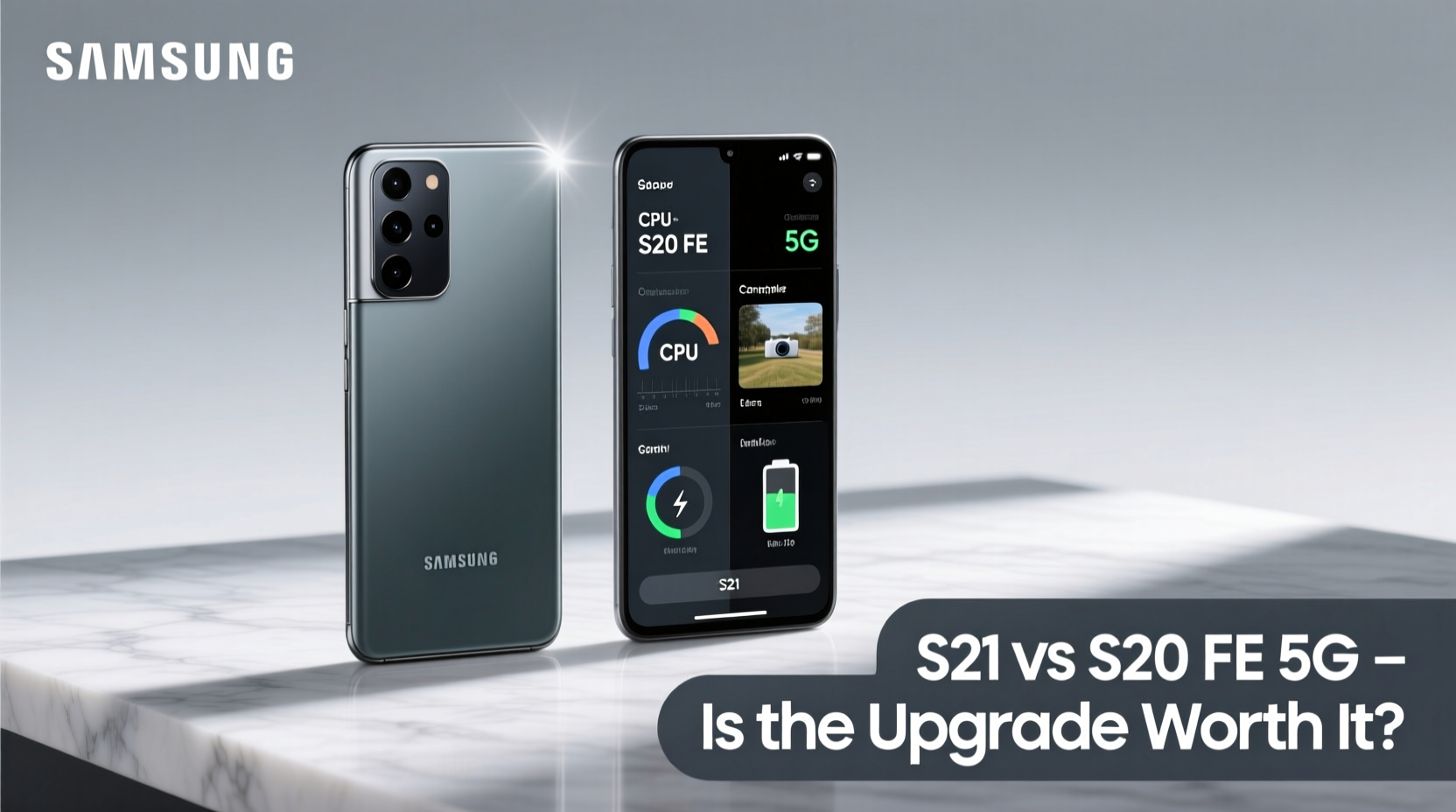
The Galaxy S20 FE 5G launched with a playful, colorful design—available in vibrant shades like Cloud Blue, Mist Silver, and Coral. It featured a plastic back panel and a polycarbonate frame, which kept costs down while maintaining durability. The S21, by contrast, introduced a more minimalist aesthetic with a matte finish and a signature camera housing that blends into the metal frame. While both devices are IP68-rated for dust and water resistance, the S21 uses a glass back (Gorilla Glass Victus), giving it a more premium feel.
Despite the material upgrades, the S21 is slightly lighter (171g vs 190g) and marginally thinner than the S20 FE. However, the difference in hand is minimal. The S20 FE’s larger 6.5-inch display offers a more immersive viewing experience, while the S21’s 6.2-inch screen feels more compact and easier to handle one-handed.
Performance: A Noticeable, But Not Game-Changing, Leap
Under the hood, the S21 packs the Exynos 2100 (or Snapdragon 888 depending on region), compared to the S20 FE’s Snapdragon 865. Both are flagship-tier chips from their respective generations, but the S21’s processor delivers about 20–25% better CPU performance and up to 30% better GPU performance in benchmarks.
In daily use, this translates to smoother multitasking, faster app launches, and better gaming performance—especially in graphics-heavy titles like Genshin Impact or Call of Duty Mobile. However, for most users, the S20 FE still handles everyday tasks flawlessly. Social media, streaming, web browsing, and even moderate gaming remain fluid.
The S21 also comes with 8GB of RAM standard (vs 6GB/8GB options on the S20 FE), improving background app retention. Both phones run One UI over Android, so the software experience is nearly identical.
“While the S21 offers a generational leap in processing power, the S20 FE remains highly capable for average users. The upgrade matters most for power users and mobile gamers.” — David Kim, Senior Mobile Analyst at TechPulse Asia
Camera Comparison: Refined, Not Revolutionary
On paper, both phones feature triple-camera setups, but the execution differs. The S20 FE uses a 12MP main sensor (f/1.8), a 12MP ultra-wide (f/2.2), and an 8MP telephoto (3x optical zoom). The S21 upgrades the main sensor to a 12MP unit with slightly better low-light tuning and introduces a 64MP telephoto lens with up to 30x digital zoom (though not optical).
In practice, daylight photos from both devices are very similar in quality. The S21 edges ahead in dynamic range and color accuracy, especially when using HDR. Low-light photography sees a modest improvement thanks to better multi-frame processing and AI enhancements. The S21’s Night Mode produces cleaner images with less noise, though the S20 FE still performs respectably.
Video recording is where the gap widens. The S21 supports 8K at 24fps (a feature few use), while the S20 FE maxes out at 4K/60fps. Both offer excellent stabilization and HDR10+ recording, but the S21’s video processing is more refined, particularly in challenging lighting.
| Feature | S20 FE 5G | S21 |
|---|---|---|
| Main Camera | 12MP, f/1.8 | 12MP, f/1.8 (improved processing) |
| Telephoto | 8MP, 3x optical zoom | 64MP, hybrid 3x, up to 30x digital |
| Ultra-Wide | 12MP, f/2.2 | 12MP, f/2.2 |
| Video Recording | 4K @ 60fps | 8K @ 24fps, 4K @ 60fps |
| Front Camera | 32MP, f/2.2 | 10MP, f/2.2 |
Note: Despite the higher megapixel count, the S21’s front camera actually captures less detail than the S20 FE’s 32MP shooter, opting for smaller pixels and heavier processing. Selfie enthusiasts may find the S20 FE produces sharper results in good light.
Battery and Charging: Similar Endurance, Same Speeds
The S20 FE boasts a 4,500mAh battery, while the S21 carries a slightly smaller 4,000mAh unit. However, due to the S21’s more efficient display and processor optimizations, real-world battery life is surprisingly close. In mixed usage—browsing, messaging, streaming, and calls—both phones last a full day, with the S20 FE edging ahead by about 1–2 hours under heavy load.
Charging speeds are identical: 25W wired fast charging (charger not included), 15W wireless charging, and reverse wireless charging. Neither device supports faster charging tiers available on other Samsung flagships. Battery longevity and thermal management are better on the S21 thanks to improved power efficiency, meaning it may degrade slower over time.
Display and Software: Brightness vs Efficiency
The S20 FE features a 6.5-inch Super AMOLED display with a 120Hz refresh rate and FHD+ resolution. The S21 also has a 120Hz Dynamic AMOLED 2X panel, but at a slightly higher peak brightness (1,300 nits vs 1,000 nits) and adaptive refresh rate (10–120Hz), which helps conserve battery.
The S21’s display is technically superior: smoother auto-brightness, better outdoor visibility, and reduced blue light emission. However, the difference is subtle in everyday use. Both screens are vibrant, accurate, and responsive.
Software-wise, both phones launched with Android 10 (S20 FE) and Android 11 (S21), but now support Android 13/14. Samsung promises four years of OS updates and five years of security patches for both models, ensuring long-term support through at least 2025.
Real-World Decision: Who Should Upgrade?
To illustrate the upgrade dilemma, consider Maria, a graphic designer who bought the S20 FE in early 2021. She uses her phone for editing mockups, video calls, and social media. Her device still runs smoothly, but she’s intrigued by the S21’s improved camera and slimmer profile.
After testing a friend’s S21, she noticed faster app transitions in Adobe apps and slightly better photo quality in dimly lit cafes—useful, but not transformative. The smaller battery concerned her, given her all-day workflow. Ultimately, she decided to wait another year, investing in a rugged case and external battery instead.
Maria’s story reflects a common reality: unless you’re pushing your phone to its limits, the S21’s improvements are incremental, not essential.
Upgrade Checklist: Is the S21 Right for You?
- ✅ You want a more premium build with glass and metal
- ✅ You frequently shoot videos or need 8K recording
- ✅ You play high-end mobile games and want max FPS stability
- ✅ You value slightly better low-light photos and zoom flexibility
- ✅ You prefer a more compact, one-handed form factor
- ❌ You’re happy with your S20 FE’s performance and battery
- ❌ You rely on a high-resolution front camera for selfies
- ❌ You don’t want to pay resale value loss or extra for minor gains
Frequently Asked Questions
Is the S21 significantly faster than the S20 FE?
Yes, in benchmark tests and intensive tasks like gaming or video editing. But for everyday use—messaging, browsing, streaming—the difference is barely noticeable. The S20 FE remains very capable.
Does the S21 have better battery life despite a smaller battery?
In theory, yes—thanks to the adaptive 120Hz display and more efficient chipset. In practice, the S20 FE often lasts longer due to its larger capacity. Real-world usage shows only a small gap, usually within one hour.
Can I expect the same software updates on both phones?
Yes. Samsung committed to four major Android upgrades and five years of security patches for both models. Both will receive updates until at least 2025, so neither has a longevity advantage.
Final Verdict: Upgrade Only If You Value Premium Feel and Future-Proofing
The Galaxy S21 is undeniably a better phone on paper—superior materials, slightly faster performance, improved cameras, and a more refined display. But for owners of the S20 FE 5G, the upgrade is hard to justify purely on functionality. The differences are refinements, not revolutions.
If you're still within the first two years of owning your S20 FE, keep it. It’s a well-rounded device that ages gracefully. If you’re experiencing slowdowns, battery degradation, or simply crave a more compact, premium-feeling phone, the S21 makes sense—especially if found at a discounted price.
For everyone else, the real question isn’t whether the S21 is better, but whether it’s worth it. In most cases, the answer is no. Save your money, extend your device’s lifespan with a protective case and battery care, and consider waiting for a more significant leap in future models.




 浙公网安备
33010002000092号
浙公网安备
33010002000092号 浙B2-20120091-4
Comments
No comments yet. Why don't you start the discussion?