
Waking up should feel like a natural transition, not a sudden shock. For light sleepers, partners with different schedules, or those sensitive to loud sounds, traditional alarm clocks can be disruptive and stressful. Silent alarm clocks and vibrating watches offer quieter, more considerate alternatives. But which one actually helps you wake up more gently—and effectively? The answer depends on your lifestyle, sleep habits, and personal sensitivity to stimuli.
Both options use non-auditory cues—light or vibration—to ease you out of deep sleep. While they serve the same purpose, their design, placement, and method of stimulation vary significantly. Understanding these differences is key to choosing the right tool for a peaceful morning routine.
How Non-Auditory Alarms Work
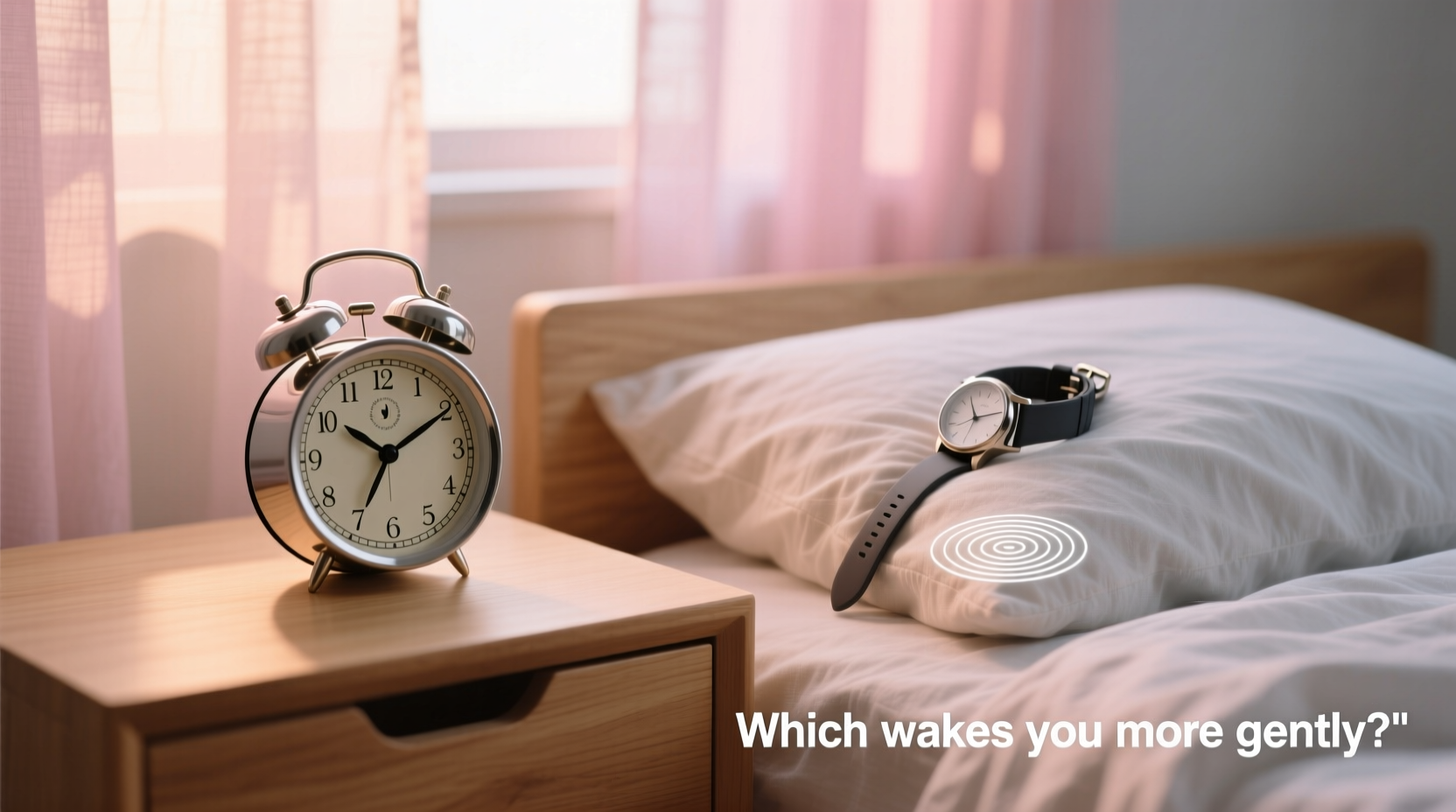
The science behind waking up gently lies in how our bodies respond to stimuli during the final stages of sleep. Abrupt noises trigger the release of cortisol and adrenaline, creating a stress response that can leave you feeling anxious or groggy. In contrast, gradual or tactile signals allow the brain to process the wake-up cue more smoothly, especially when timed with lighter sleep phases.
Silent alarms typically rely on two mechanisms:
- Vibration: Physical pulses that stimulate the nervous system through touch.
- Light simulation: Gradual increases in brightness that mimic sunrise, encouraging melatonin reduction.
Some devices combine both. However, the effectiveness of each depends heavily on where the stimulus is delivered and how it integrates into your sleep environment.
Understanding Silent Alarm Clocks
Silent alarm clocks are bedside devices designed to wake you without sound. Most use vibration, light, or a combination of both. They’re ideal for shared bedrooms because they don’t disturb others. Some models even slide under the mattress to deliver stronger vibrations directly to the sleeper.
Common features include:
- Adjustable vibration intensity
- Gradual sunrise simulation (10–30 minutes)
- Backup sound alarms (optional)
- Bluetooth connectivity for smart routines
These clocks work best when placed within arm’s reach or under the pillow/mattress. Their larger size allows for bigger batteries and more powerful motors than wearable options. However, their stationary nature means they only work if you're in bed when the alarm triggers.
“Light-based wake-up systems can reduce morning grogginess by aligning with circadian rhythms.” — Dr. Lena Torres, Sleep Neurologist at Boston Circadian Research Institute
Exploring Vibrating Watches as Morning Alarms
Vibrating watches take a different approach: they’re worn on the wrist, delivering targeted tactile alerts directly to the skin. Originally developed for the hearing-impaired, these watches have gained popularity among travelers, shift workers, and couples with mismatched schedules.
Unlike bedside units, vibrating watches move with you. If you tend to read in bed, get up briefly during the night, or fall asleep on the couch, a wearable alarm ensures you won’t miss your wake-up signal. Many modern versions also sync with smartphones, offering customizable vibration patterns and multiple alarm settings.
Key advantages include:
- Mobility: Works whether you're in bed, on the sofa, or napping elsewhere
- Precision: Vibration is localized and often more noticeable than distant bed shakers
- Discretion: Completely silent and invisible under clothing
- Durability: Often water-resistant and built for daily wear
However, some users report discomfort from prolonged wear or find the vibration too weak if they’re a deep sleeper. Battery life can also be a concern with frequent use.
Direct Comparison: Silent Alarm Clock vs Vibrating Watch
| Feature | Silent Alarm Clock | Vibrating Watch |
|---|---|---|
| Wake-Up Method | Vibration (bed/pillow), light simulation | Vibration (wrist) |
| Mobility | Stationary – requires being in bed | Portable – works anywhere |
| Effectiveness for Deep Sleepers | High (especially with under-mattress shakers) | Moderate to high (depends on sensitivity) |
| Partner-Friendly | Yes (no sound) | Yes (completely silent) |
| Comfort | No wear required | Must be worn overnight; may cause irritation |
| Additional Features | Sunrise simulation, FM radio, white noise | Smart notifications, fitness tracking |
| Battery Life | Months (with replaceable batteries) | Days to weeks (rechargeable) |
| Best For | Couples, home users, light sleepers | Travelers, shift workers, active individuals |
Which One Wakes You More Gently?
Gentleness isn’t just about volume—it’s about how naturally your body transitions from sleep to wakefulness. Based on user feedback and sleep research, here’s how the two compare:
Silent alarm clocks with light simulation provide the most gentle awakening experience. The gradual increase in light mimics dawn, signaling your brain to reduce melatonin production naturally. When paired with subtle vibration, this creates a layered wake-up process that feels organic rather than intrusive.
Vibrating watches, while effective, deliver a more abrupt tactile cue. Even with soft pulsing patterns, the sensation is localized and immediate. This makes them excellent for reliability but slightly less smooth in terms of physiological gentleness.
That said, individual sensitivity plays a major role. People who are highly responsive to touch may find a vibrating watch perfectly gentle, especially if it uses escalating pulses instead of a constant buzz.
Real-Life Example: Sarah’s Shift Work Challenge
Sarah, a nurse working rotating night shifts, struggled to wake up quietly without disturbing her partner, who worked daytime hours. She first tried a standard silent alarm clock with under-mattress vibration. It worked well at home but failed during short afternoon naps on the living room couch.
After switching to a vibrating smartwatch, she found she could set discreet alarms regardless of location. The watch also tracked her sleep quality, helping her identify optimal nap durations. Though the initial vibration startled her at first, she adjusted the pattern to a slow pulse sequence and began waking up more alert and less disoriented.
For Sarah, the vibrating watch wasn’t the gentlest option initially—but with customization, it became the most practical and ultimately the gentler choice due to improved consistency and reduced sleep inertia.
Choosing the Right Option for Your Lifestyle
Your ideal silent alarm depends on your daily routine, sleeping environment, and physical sensitivity. Consider the following factors before deciding:
- Sleep Location Consistency: If you always sleep in the same bed, a silent alarm clock is sufficient. If you nap in different rooms or travel frequently, a vibrating watch offers unmatched flexibility.
- Sensitivity to Touch: Test how easily you notice vibrations. Some people barely feel wrist pulses, while others wake instantly. A stronger bed shaker might be necessary for deep sleepers.
- Need for Light Therapy: If you suffer from seasonal affective disorder (SAD) or chronic grogginess, a sunrise-simulating alarm clock provides therapeutic benefits beyond waking.
- Desire for Additional Features: Smartwatches offer health tracking, notifications, and integration with apps. Alarm clocks may include soothing sounds, radios, or USB charging ports.
- Comfort of Wear: Sleeping with a watch isn’t comfortable for everyone. Look for slim, soft-band models if you choose this route.
Checklist: How to Pick Your Gentle Wake-Up Solution
- ☐ Assess where and how you usually sleep
- ☐ Determine if you respond well to vibration or light
- ☐ Decide whether mobility matters (e.g., napping on the go)
- ☐ Check battery life and charging requirements
- ☐ Look for adjustable intensity and gradual activation
- ☐ Read user reviews focused on “gentle wake-up” experiences
- ☐ Consider dual-mode devices (vibration + light) for layered alerts
Maximizing Effectiveness: A Step-by-Step Guide
To get the most out of either device, follow this implementation plan:
- Week 1: Establish a consistent bedtime – Go to bed and wake up at the same time daily to regulate your internal clock.
- Week 2: Introduce the device silently – Set it to activate 15 minutes before your intended wake time using only light or minimal vibration. Observe how your body responds.
- Week 3: Increase stimulus gradually – Raise vibration intensity or shorten the light ramp-up period until you reliably wake up.
- Week 4: Test independence – Try using the alarm without a backup sound. If you miss it, adjust placement or strength.
- Ongoing: Monitor sleep quality – Track energy levels upon waking. Adjust timing based on sleep cycles (aim to wake during lighter REM phases).
This phased approach prevents sensory overload and trains your body to respond naturally to the new wake-up signal.
Frequently Asked Questions
Can a vibrating watch damage my wrist if worn all night?
No, modern vibrating watches use low-intensity motors designed for safe, prolonged contact. However, if you have sensitive skin or circulatory issues, consult a doctor. Opt for hypoallergenic bands and check your skin regularly for irritation.
Do silent alarm clocks work for heavy sleepers?
Yes, especially models with strong under-mattress vibrators. Some produce up to 80 dB of mechanical vibration (felt, not heard). Combine with a sunrise lamp for multisensory stimulation to increase effectiveness.
Is there a device that combines both technologies?
Yes. Some premium wake-up systems integrate wearable vibrators with bedside light units. For example, the Oura Ring pairs with Philips Hue lights to create a synchronized wake-up environment using warmth, light, and gentle pulses.
Final Thoughts: Prioritize Peaceful Awakening
Both silent alarm clocks and vibrating watches offer humane alternatives to blaring alarms. While silent clocks generally provide a gentler, more holistic wake-up experience through light and ambient vibration, vibrating watches win in versatility and personalization. The best choice aligns with your movement patterns, comfort preferences, and sleep depth.
Ultimately, waking up gently isn’t just about the device—it’s about creating a ritual that respects your body’s natural rhythms. Whether you choose a sunrise lamp on your nightstand or a sleek watch on your wrist, the goal remains the same: to start your day with clarity, calm, and control.




 浙公网安备
33010002000092号
浙公网安备
33010002000092号 浙B2-20120091-4
Comments
No comments yet. Why don't you start the discussion?