
For home bakers and meal preppers alike, choosing between silicone baking mats and parchment paper isn’t just about convenience—it’s a financial decision. Both promise non-stick surfaces and easy cleanup, but only one delivers lasting value. While parchment paper feels like the simpler, cheaper option upfront, its disposability adds up over time. Silicone mats demand a higher initial investment but claim to pay for themselves through reuse. So which actually saves more money—and performs better—over months or years of regular kitchen use?
This article compares both options across multiple factors: cost per use, durability, performance, environmental impact, and hidden expenses. By the end, you’ll know exactly which choice aligns with your cooking habits, budget, and sustainability goals.
Upfront Cost vs. Long-Term Value
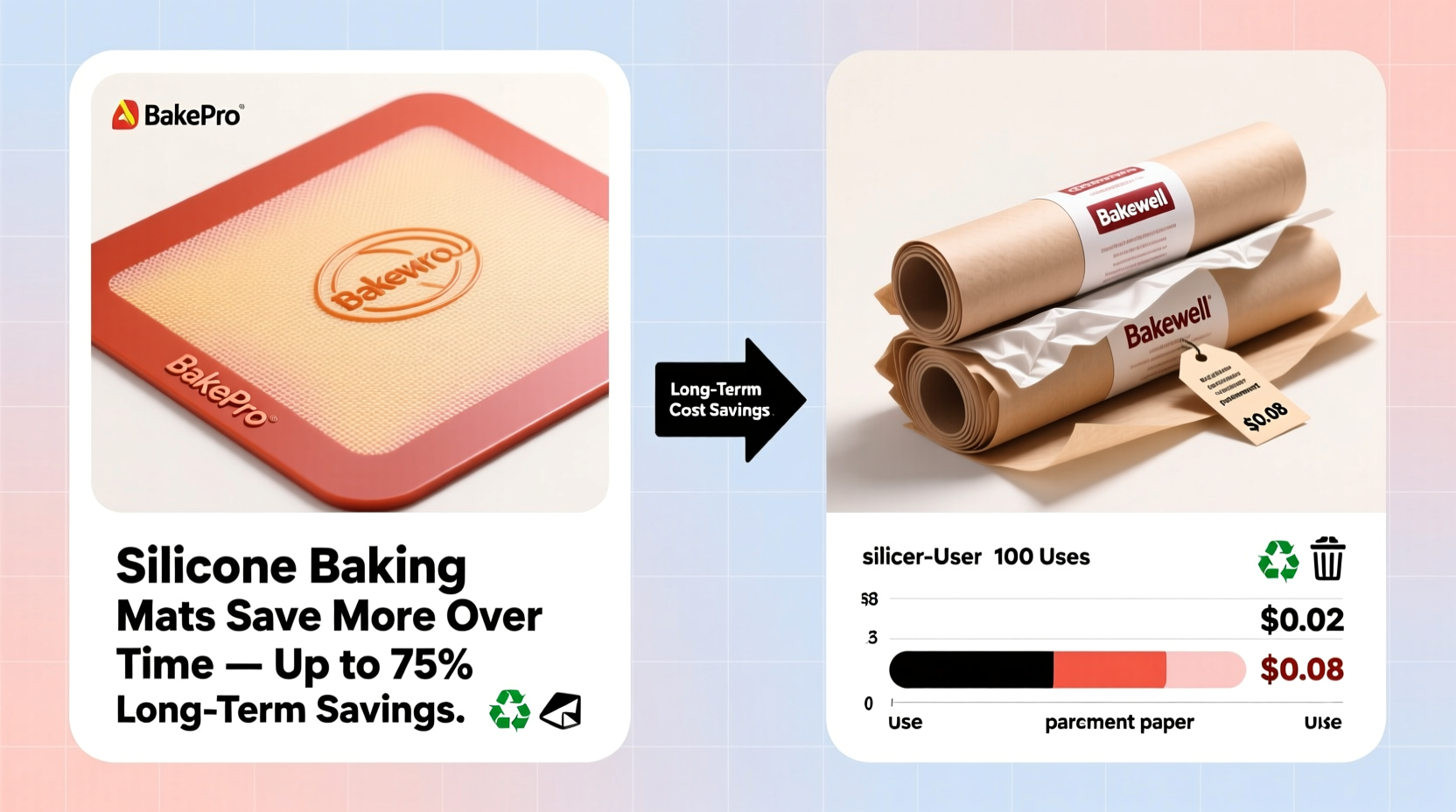
The most immediate difference between silicone baking mats and parchment paper is price at purchase. A standard roll of parchment paper typically costs $5–$8 and contains around 60–75 sheets, depending on size. That breaks down to roughly $0.07–$0.13 per sheet. In contrast, a high-quality silicone baking mat ranges from $12 to $25 each. Some sets include two or three mats and may reach $40.
At first glance, parchment seems unbeatable. But this comparison ignores frequency of use. If you bake several times a week—or roast vegetables daily—the cost of disposable parchment accumulates quickly. Someone using two sheets per session, four times a week, will go through 416 sheets annually. At $0.10 per sheet, that’s $41.60 per year—more than enough to cover a premium silicone mat set within 12 months.
Silicone mats are designed to last 2–5 years with proper care, meaning their effective cost per use can drop below $0.02. Over three years, even heavy users rarely exceed $0.03 per use. The tipping point where silicone becomes cheaper usually occurs after 100–150 uses. Once past that threshold, every additional use generates pure savings.
Durability and Real-World Lifespan
Not all silicone mats perform equally. Cheaper versions may discolor, warp, or develop surface cracks after 50–60 uses. Premium brands like Silpat, Kitzini, or Amazon Basics (silicone line) consistently report 500+ uses when hand-washed and stored flat. These mats resist temperatures up to 480°F (250°C), maintain non-stick properties, and resist staining from tomato-based sauces or sugary glazes.
Parchment paper has no lifespan beyond single use. Even if reused once (which some do cautiously), it risks tearing, sticking, or transferring residue. Its fiber structure degrades upon contact with moisture or fats, making second-use unreliable.
To assess true longevity, consider common failure points:
- Cutting: Never cut food directly on a silicone mat—knives create micro-scratches that harbor bacteria and weaken material.
- Folding: Storing mats folded leads to permanent creases and eventual cracking.
- Dishwasher exposure: While many mats claim dishwasher safety, prolonged high heat and detergent erosion shorten life expectancy.
“High-grade platinum-cured silicone resists degradation far better than cheaper alternatives. Look for FDA-approved, BPA-free labels.” — Dr. Lena Torres, Materials Scientist, Culinary Institute of America
Performance Comparison: Non-Stick Ability and Heat Distribution
Performance matters as much as cost. A product might be economical but ruin your cookies—if so, it’s not worth it.
Silicone mats provide even heat distribution due to their solid construction. They reduce hot spots on cookie sheets, leading to uniformly browned edges and consistent rise in baked goods. Their non-stick surface requires little to no greasing, preserving recipe integrity while simplifying cleanup.
Parchment paper also offers excellent release properties but behaves differently under heat. Thin parchment can curl at the edges when exposed to oven heat, potentially shifting pans or interfering with airflow. Thicker “quilted” parchment resists warping but costs more per sheet.
In blind baking or delicate pastry work (e.g., macarons), chefs often prefer silicone for stability. However, parchment wins in scenarios requiring shaping—like lining muffin tins or creating parchment packets for en papillote fish dishes—where flexibility is essential.
| Feature | Silicone Baking Mat | Parchment Paper |
|---|---|---|
| Non-stick reliability | Excellent (with wear resistance) | Excellent (first use only) |
| Heat tolerance | Up to 480°F | Up to 420–450°F |
| Reusability | 200–500+ uses | Single use (occasionally reused) |
| Cleanup effort | Wipe or rinse; occasional mild soap | Dispose after use |
| Versatility | Limited to flat baking sheets | Flexible for molds, packets, liners |
Hidden Costs and Environmental Impact
Money saved shouldn't come at an ethical or ecological cost. Parchment paper contributes significantly to household waste. An average user discards over 300 sheets annually—equivalent to nearly 10 full rolls. Most parchment is not recyclable due to grease contamination, and composting depends on unbleached, chlorine-free production.
Bleached parchment releases dioxins during decomposition and manufacturing. Unbleached options exist but cost more and still contribute to tree harvesting. According to EPA data, paper products make up 25% of landfill waste; kitchen disposables like parchment add to that burden.
Silicone mats, while petroleum-derived, are inert and non-toxic. They don’t leach chemicals when heated and can be recycled through specialized programs (e.g., TerraCycle) though access remains limited. Their long service life drastically reduces packaging waste—no cardboard tubes, plastic wrappers, or shipping materials repeated monthly.
Energy and water used to wash silicone mats represent minor trade-offs. Rinsing under running water for 20 seconds consumes about 1 gallon. Even weekly washing adds less than 50 gallons per year—negligible compared to other household uses.
Mini Case Study: The Weekly Baker’s Break-Even Point
Jamie, a home baker in Portland, used parchment paper exclusively for two years. She bakes cookies twice a week, roasts vegetables three times weekly, and occasionally makes candy or meringues. Her average usage: 3 sheets per week = 156 sheets per year.
She paid $7.50 for a roll of 75 sheets—so she needed three rolls annually, totaling $22.50. After learning about silicone alternatives, she invested $28 in a two-mat set rated for 500 uses.
Switching eliminated her parchment spending entirely. Within 14 months, she reached the break-even point (156 sheets × $0.10 = $15.60 saved). Now in her third year of use, she’s saved $31.50 and avoided discarding 468 sheets of paper.
Her only added effort: rinsing mats after use and laying them flat to dry. “I expected a learning curve,” she said, “but they work exactly like parchment—except I’m not constantly buying refills.”
When Each Option Makes Financial Sense
The best choice depends on how often and how you cook.
Choose Silicone Baking Mats If You:
- Bake or roast more than twice a week
- Value consistency in browning and texture
- Want to reduce kitchen waste
- Have storage space to keep mats flat
- Don’t cut directly on baking surfaces
Stick With Parchment Paper If You:
- Cook infrequently (once every few weeks)
- Need flexible liners for muffins, loaf pans, or fish packets
- Rent or lack cabinet space for rigid mats
- Prefer zero maintenance beyond disposal
- Already buy in bulk at deep discounts ($5 for 100 sheets)
Step-by-Step Guide to Maximizing Silicone Mat Value
- Invest in quality: Choose FDA-approved, platinum-cured silicone mats from reputable brands.
- Size correctly: Measure your baking sheets. Full coverage prevents shifting and ensures even heating.
- Use properly: Place on dry, clean pans. Avoid broiling above 500°F unless specified safe.
- Clean gently: Scrape off debris, wipe with damp cloth or sponge. Use mild dish soap only when necessary.
- Air dry fully: Lay flat or hang with a drying rack. Moisture trapped under folds breeds mold.
- Store flat or rolled: Never fold. Keep away from sharp objects and direct sunlight.
- Replace only when damaged: Small stains are normal. Replace only if cracked, peeling, or emitting odors.
“The key to cost savings isn’t just buying reusable gear—it’s maintaining it so it lasts. One well-cared silicone mat can replace hundreds of disposable sheets.” — Mark Rivera, Sustainable Kitchen Advocate, GreenHome Labs
FAQ
Can I use silicone mats for sourdough bread?
Yes, but place them on a sturdy baking sheet first. Do not slide dough directly onto the mat in a hot oven—use parchment to transfer if needed. Some bakers prefer parchment for easier peel-off during scoring and loading.
Do silicone mats affect baking time?
Slightly. Because they insulate slightly more than bare metal or parchment, cookies may take 1–2 minutes longer to brown. Adjust accordingly and monitor early batches.
Are silicone mats safe in the oven?
Yes, if used within temperature limits (typically 480°F). Avoid direct contact with heating elements or open flames. Ensure vents aren’t blocked if using convection settings.
Final Verdict: Which Saves More Money?
For frequent cooks, silicone baking mats clearly win in long-term savings. Though they cost more upfront, their ability to endure hundreds of uses slashes annual kitchen supply expenses. Even at $25, a single mat pays for itself within 12–18 months for moderate to heavy users. Beyond year two, every use is free.
Parchment paper remains practical for occasional bakers, specialty applications, or those unwilling to adopt new routines. But recurring purchases erode any short-term savings. At $20–$40 per year, the cumulative cost exceeds even premium silicone sets.
Ultimately, the most economical choice aligns with behavior. If you bake weekly, automate cleanup, and prioritize sustainability, silicone is the smarter investment. Pair it with occasional parchment for tasks requiring shape adaptability, and you get the best of both worlds.




 浙公网安备
33010002000092号
浙公网安备
33010002000092号 浙B2-20120091-4
Comments
No comments yet. Why don't you start the discussion?