
Improving sleep quality often begins with small changes to your bedroom environment. Two popular upgrades—silk pillowcases and memory foam mattress toppers—are frequently recommended for better rest. But when faced with limited budget or time, which delivers the greater impact? One enhances surface feel and skin health; the other transforms foundational support and spinal alignment. To determine which investment yields superior results, it’s essential to understand how each affects sleep physiology, comfort, and long-term wellness.
The Science of Sleep Surface Interaction
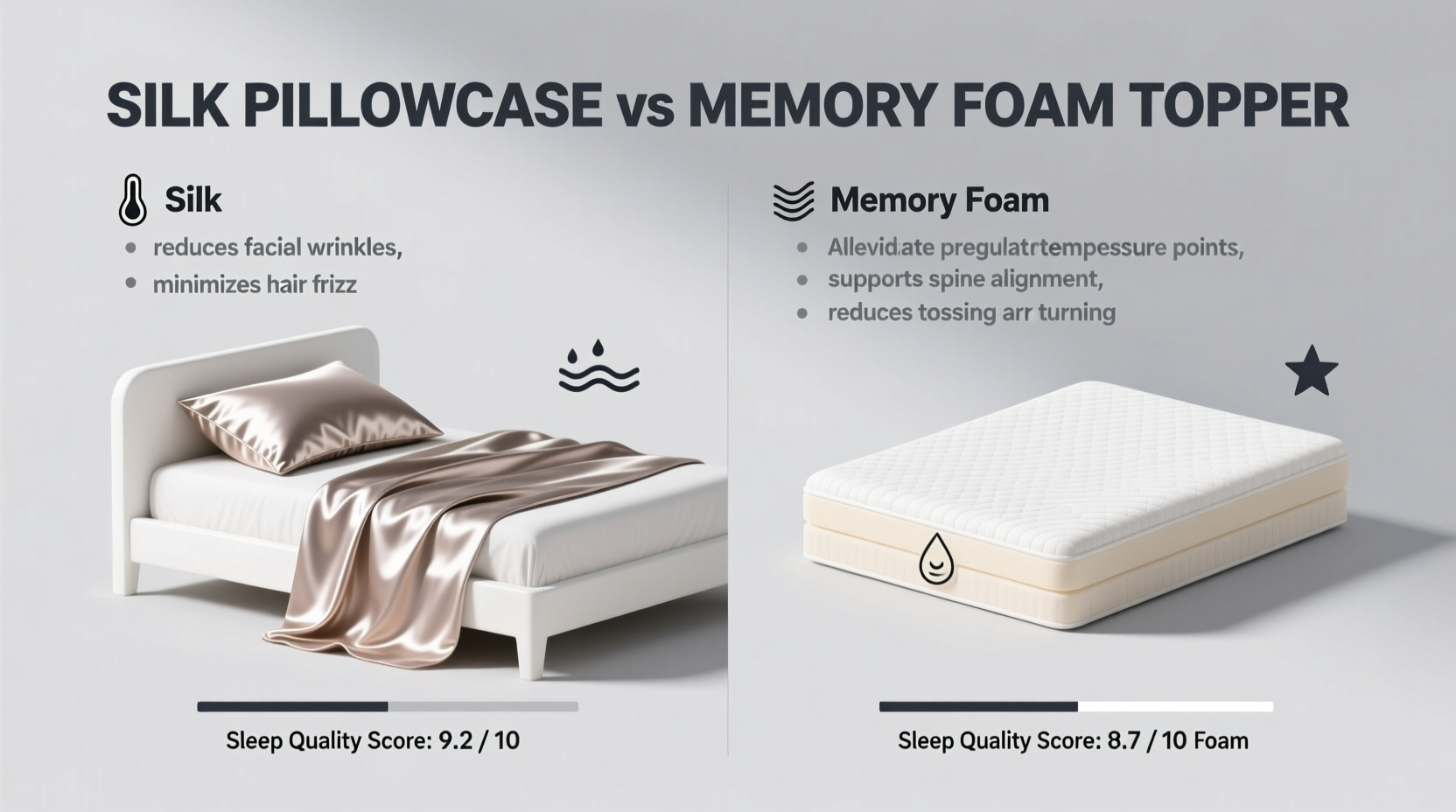
Sleep quality is influenced by multiple factors: temperature regulation, pressure distribution, skin friction, spinal alignment, and tactile comfort. Both silk pillowcases and memory foam toppers address these variables—but in fundamentally different ways.
A silk pillowcase primarily interacts with the uppermost layer of the sleep experience: facial skin, hair, and head movement during the night. Its smooth texture reduces friction, helping prevent creases, tangles, and moisture loss. Meanwhile, a memory foam topper alters the entire sleeping surface, adjusting firmness, motion isolation, and body contouring across the full torso and limbs.
While both contribute positively, their scope of influence varies dramatically. Silk affects localized comfort and cosmetic outcomes; memory foam impacts biomechanics and deep-tissue support. This distinction is critical when evaluating which upgrade offers broader improvements to restorative sleep.
Benefits of Silk Pillowcases
Silk has been used for centuries in luxury bedding due to its softness and natural properties. Modern 100% mulberry silk pillowcases (with momme weights between 19–25) offer several advantages:
- Reduced Skin Friction: Unlike cotton, silk creates minimal resistance against facial skin, potentially reducing sleep wrinkles over time.
- Hair Health Preservation: The low-friction surface helps prevent breakage and split ends, especially beneficial for curly or fragile hair types.
- Temperature Regulation: Silk wicks moisture and remains cool to the touch, making it ideal for hot sleepers.
- Hypoallergenic Properties: Natural silk resists dust mites and mold, offering relief for allergy sufferers.
However, these benefits are largely aesthetic and sensory. While improved skin and hair condition may enhance morning comfort, they don’t directly correct underlying issues like poor spinal alignment or pressure point pain.
Real User Experience: The Silk Transition
“I switched to a silk pillowcase after years of waking up with indented marks on my face. Within two weeks, those lines were less noticeable, and my hair felt smoother in the mornings. I love it—but honestly, I still wake up with back pain if my mattress is too firm.” — Sarah L., age 34, office worker and side sleeper
This sentiment echoes across user reviews: silk improves surface-level comfort but rarely resolves deeper discomfort related to support deficiencies.
Advantages of Memory Foam Toppers
A high-density memory foam topper (at least 3 inches thick, 3–5 lb/ft³ density) can significantly alter the feel and function of an aging or suboptimal mattress. Key benefits include:
- Pressure Relief: Memory foam conforms precisely to body contours, reducing stress on hips, shoulders, and lower back.
- Improved Spinal Alignment: By cushioning heavy points and supporting natural curves, toppers help maintain neutral spine posture.
- Motion Isolation: Ideal for couples, as movements on one side of the bed don’t transfer across the surface.
- Extended Mattress Lifespan: Acts as a protective layer, reducing wear on the original mattress.
Clinical research supports the role of supportive sleep surfaces in improving sleep efficiency. A 2020 study published in the *Journal of Chiropractic Medicine* found that participants using medium-firm memory foam toppers reported a 32% reduction in nighttime awakenings and a 27% improvement in perceived sleep quality after four weeks.
Expert Insight on Support and Recovery
“The foundation of good sleep starts with proper support. No amount of luxurious fabric can compensate for misaligned joints or compressed nerves. If your body isn’t properly supported, you’ll never achieve deep, restorative REM cycles.” — Dr. Alan Zhou, D.C., Board-Certified Sleep Posture Specialist
This underscores a fundamental principle: while comfort enhances sleep initiation, structural support governs sleep continuity and physical recovery.
Comparative Analysis: Impact on Sleep Quality Metrics
| Metric | Silk Pillowcase | Memory Foam Topper |
|---|---|---|
| Pressure Point Relief | Minimal (head only) | Significant (full-body) |
| Spinal Alignment Support | None | High |
| Skin & Hair Benefits | High | Low (unless cooling cover) |
| Temperature Regulation | Moderate (cool to touch) | Varies (gel-infused versions excel) |
| Impact on Deep Sleep Duration | Indirect (via comfort) | Direct (via reduced tossing) |
| Cost (Average) | $30–$80 | $80–$200 |
| Lifespan | 1–3 years (with care) | 3–5 years |
The data reveals a clear divergence: silk excels in personal care and tactile pleasure, while memory foam delivers measurable physiological improvements. For individuals with chronic pain, joint stiffness, or insomnia linked to physical discomfort, the latter provides a more transformative change.
When Each Upgrade Makes the Most Sense
Neither option is universally superior—it depends on individual needs and existing sleep conditions.
Silk Pillowcase: Ideal For
- Individuals focused on skincare and anti-aging
- People with fine or curly hair prone to breakage
- Hot sleepers who prefer cool, smooth textures
- Those already satisfied with their mattress but seeking minor refinements
Memory Foam Topper: Recommended For
- Side sleepers needing extra hip and shoulder cushioning
- People experiencing back, neck, or joint pain at night
- Owners of overly firm or sagging mattresses
- Couples dealing with motion disturbance
Step-by-Step Guide to Choosing Your Upgrade
- Assess Your Primary Sleep Complaint: Are you waking with pain, frequent tossing, or skin/hair concerns?
- Evaluate Your Current Mattress: Press down on it—if you feel springs or notice sagging, support is likely inadequate.
- Determine Budget and Longevity Goals: A topper is a longer-term investment; silk requires gentle maintenance.
- Test One Change at a Time: Introduce either the pillowcase or topper first, wait two weeks, then assess improvements.
- Combine Strategically: Once baseline comfort is optimized, consider adding the second upgrade for synergistic effects.
For example, pairing a breathable bamboo-based memory foam topper with a silk pillowcase creates a balanced environment: optimal support beneath, gentle glide on top.
Frequently Asked Questions
Can a silk pillowcase help with acne or breakouts?
Potentially. Silk is less absorbent than cotton and doesn’t trap oils, sweat, or bacteria as readily. While not a substitute for skincare, it may reduce irritation for acne-prone individuals. However, regular washing remains essential to prevent microbial buildup.
Do memory foam toppers get too hot?
Traditional memory foam retains heat, but newer models feature gel infusions, copper particles, or open-cell structures designed for breathability. Look for “cooling” or “temperature-regulating” labels, and pair with moisture-wicking sheets for best results.
Is it worth getting both a silk pillowcase and a memory foam topper?
Yes—if budget allows. They serve complementary roles: the topper addresses structural support, while the silk enhances surface comfort and personal care. Together, they create a holistic upgrade path from foundation to finish.
Checklist: Evaluate Your Sleep Upgrade Options
- ☐ Identify your main sleep issue (pain, heat, skin, etc.)
- ☐ Check mattress condition (sagging? too firm?)
- ☐ Set a realistic budget ($30–$200+)
- ☐ Research product certifications (CertiPUR-US®, OEKO-TEX®)
- ☐ Read verified customer reviews focusing on durability and comfort
- ☐ Start with the most impactful change based on your needs
- ☐ Allow 2–3 weeks to adjust before reassessing
Final Verdict: Which Upgrade Improves Sleep Quality More?
When measured by objective sleep quality indicators—reduced awakenings, increased deep sleep duration, decreased pain upon waking—a memory foam topper delivers a more significant improvement than a silk pillowcase. It addresses the root causes of disrupted rest: inadequate support, pressure concentration, and poor spinal alignment.
That said, dismissing silk pillowcases would overlook their value in enhancing subjective comfort and daily well-being. Waking with smoother hair and refreshed skin contributes to psychological satisfaction, which indirectly supports consistent sleep routines.
The key insight lies in prioritization. If your mattress is worn, too firm, or fails to cradle your body, no luxury fabric will fix the underlying problem. Support must come first. Once foundational comfort is achieved, surface enhancements like silk become meaningful finishing touches.
Conclusion: Make the Right Move for Your Sleep Health
Upgrading your sleep setup shouldn’t be about trends—it should be guided by evidence and personal need. For most adults, especially those experiencing physical discomfort, investing in a quality memory foam topper will yield deeper, more restorative sleep than switching to silk pillowcases alone. It’s a structural solution to a biomechanical challenge.
But don’t discount the power of layered improvements. Begin with what matters most: support. Then refine with comfort. Whether you start with a new topper or a sleek silk case, the goal remains the same—to create a sleep environment that honors both body and mind.




 浙公网安备
33010002000092号
浙公网安备
33010002000092号 浙B2-20120091-4
Comments
No comments yet. Why don't you start the discussion?