
Sending photos via email is part of everyday communication—whether sharing memories with family, sending work samples to clients, or submitting images for publication. But too often, the recipient opens the attachment only to find a blurry, pixelated version of the original. This degradation happens when email platforms automatically compress images to save bandwidth. The good news: you can prevent this. With the right techniques, it’s entirely possible to email a photo without sacrificing its quality.
This guide walks through practical, tested strategies that preserve image fidelity from sender to recipient. Whether you're using Gmail, Outlook, Apple Mail, or another platform, these methods ensure your photos arrive sharp, detailed, and true to their original form.
Why Photos Lose Quality When Emailed
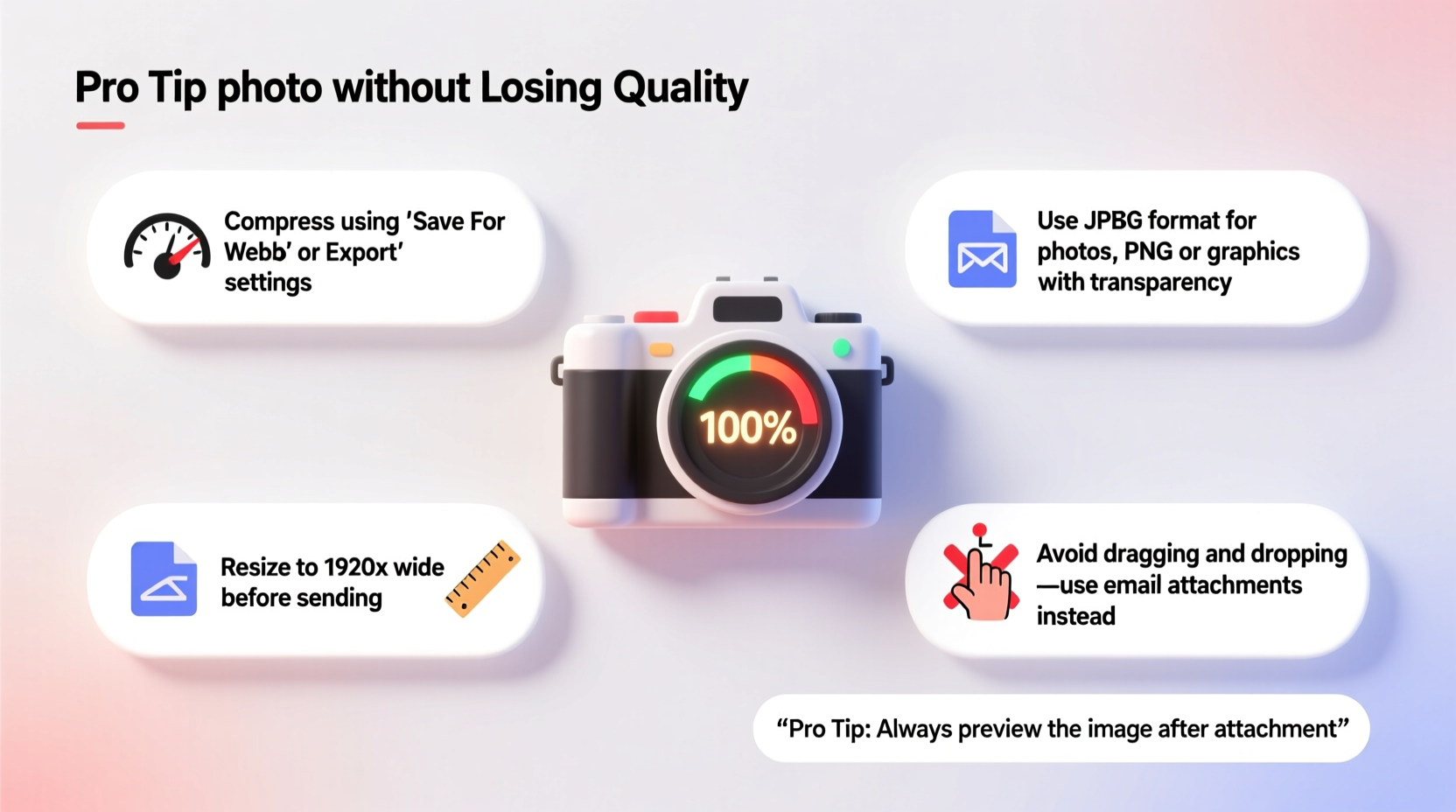
Email services are designed for efficiency, not high-fidelity media delivery. Most platforms—including Gmail, Yahoo, and Outlook—automatically compress image attachments above certain file sizes. For example, Gmail resizes images larger than 25MB by default, converting them into lower-resolution versions. Even smaller files may be subtly compressed, resulting in visible loss of detail, color shifts, or artifacts around edges.
The compression algorithms used (often JPEG-based) prioritize reducing file size over preserving visual accuracy. This means fine textures, subtle gradients, and intricate details suffer. Over multiple sends or conversions, the damage compounds.
“Every time a JPEG is recompressed, data is discarded. It’s like making a photocopy of a photocopy—the image degrades with each generation.” — Dr. Alan Reyes, Digital Imaging Specialist, MIT Media Lab
Understanding this process is the first step toward avoiding it. The goal isn’t just to send a photo—it’s to send it intact.
Step-by-Step Guide: How to Email a Photo Without Losing Quality
Follow this sequence to maintain full image integrity from upload to delivery:
- Use the original, unedited file: Always start with the highest-quality version available—preferably the RAW or full-resolution JPEG straight from your camera or phone.
- Avoid editing in low-quality formats: If adjustments are needed, use non-destructive editors like Adobe Lightroom or Capture One, and export at maximum quality settings.
- Compress the image into a ZIP file: Instead of attaching the photo directly, compress it into a .zip archive. This prevents most email clients from recognizing it as an image and triggering automatic compression.
- Send via secure file transfer if large: For very high-resolution images (e.g., over 20MB), use cloud links (Google Drive, Dropbox) with “no compression” settings enabled.
- Instruct the recipient to download, not view inline: Inline previews in email often use compressed thumbnails. Encourage downloading the attachment directly.
Do’s and Don’ts: Best Practices for Image Integrity
| Do | Don’t |
|---|---|
| Attach photos in ZIP or RAR format | Send high-res images as standalone JPEG/PNG attachments |
| Use cloud storage with “original quality” sharing | Assume all email platforms handle images the same way |
| Check file size before sending (aim under 25MB for direct email) | Edit and re-save JPEGs multiple times before sending |
| Use TIFF or PNG for critical detail (if file size allows) | Rely on email preview windows to judge image quality |
| Confirm receipt and ask recipient to verify quality | Forward compressed emails with photo attachments |
Real Example: Preserving Product Photography for Client Delivery
Jamie, a freelance product photographer, regularly sends high-resolution images to e-commerce clients. Early on, she noticed her carefully lit shots arrived looking dull and soft. After investigating, she realized her client was using Gmail, which was silently resizing her 5MB+ JPEGs.
Her solution? She began packaging images into password-protected ZIP files labeled with project names and resolution info. She uploaded them to a Google Drive folder set to “Original Quality,” shared the link via email, and included simple instructions: “Download the ZIP, extract the files, and view in full resolution.”
The result? Clients reported sharper images, faster load times outside email systems, and no more complaints about color accuracy. Jamie also reduced follow-up work caused by miscommunication over image quality.
Alternative Methods That Bypass Email Compression
If direct email fails to preserve quality, consider these reliable alternatives:
- Google Drive (with settings adjusted): Upload the photo, right-click to share, and ensure “General access” allows “Anyone with the link.” Crucially, disable “Compress high-resolution images” in Drive settings.
- Dropbox File Requests or Share Links: Dropbox does not recompress files uploaded via desktop sync. Shareable links deliver originals when downloaded.
- WeTransfer Pro: Allows sending up to 20GB per transfer with no compression. Free version limits to 2GB but still avoids image downscaling.
- Secure FTP or Client Portals: For professional workflows, tools like Pixieset, Hightail, or Frame.io provide branded galleries with full-resolution downloads.
Checklist: Ensuring Photo Quality Before Sending
Run through this checklist every time you prepare to send a high-quality photo:
- ✅ Confirm you’re using the original, highest-resolution file
- ✅ Avoid re-saving JPEGs unnecessarily
- ✅ Compress the image into a ZIP archive if attaching directly
- ✅ Verify total attachment size is under 25MB (for email safety)
- ✅ Use cloud storage for files over 20MB, with compression disabled
- ✅ Test by sending the file to yourself first
- ✅ Include clear instructions for the recipient on how to access the full-quality version
Frequently Asked Questions
Does resizing a photo before emailing help prevent quality loss?
No—resizing down reduces dimensions and discards pixels, which defeats the purpose of preserving quality. If you need the full detail, send the original size. Resizing should only be done if the recipient specifically requests a smaller version.
Can I send RAW files via email?
Yes, but only if they’re compressed in a ZIP or similar archive and within your email provider’s size limits. RAW files are typically large (20–50MB), so cloud sharing is often more reliable. Also, ensure the recipient has software capable of opening RAW formats (e.g., Adobe Photoshop, Lightroom).
Why does my iPhone photo look blurry when emailed?
iPhones capture high-resolution images, but iOS Mail may automatically reduce attachment quality in settings. Go to Settings > Mail > Messages > Large Attachments and ensure “Actual Size” is selected. Alternatively, use the Files app to zip the image before attaching.
Final Tips for Consistent Results
Preserving photo quality when emailing isn’t about one magic trick—it’s about combining smart formatting, the right tools, and awareness of how platforms behave. The key insight is that email wasn’t built for high-fidelity image transfer. Your job is to work around its limitations.
Always assume automatic compression will occur unless you take steps to prevent it. ZIP files, cloud links, and proper export settings are your best allies. And never underestimate the value of clear communication: telling your recipient how to properly access the image ensures your effort isn’t undone at the final step.
“The difference between a good photo and a great one often lies in the details—and those details vanish if the delivery method compromises quality.” — Lena Park, Professional Photographer & Workflow Consultant
Take Action Today
Next time you prepare to send a photo, pause and ask: Will this arrive the way I intend? Apply the methods in this guide—package your images wisely, use compression to your advantage, and choose delivery methods that respect image integrity. Whether it’s a personal memory or a professional asset, your photos deserve to be seen exactly as they were captured.




 浙公网安备
33010002000092号
浙公网安备
33010002000092号 浙B2-20120091-4
Comments
No comments yet. Why don't you start the discussion?