
Finding the width of a rectangle may seem like a basic task, but it becomes unexpectedly complex when tools are missing, measurements are incomplete, or real-world constraints interfere. Whether you're laying flooring, designing furniture, solving math problems, or estimating space in a small apartment, knowing how to determine width with precision is essential. This guide presents practical, reliable methods—ranging from direct measurement to mathematical deduction—that work across everyday and technical situations.
Understanding Rectangle Dimensions
A rectangle has two pairs of equal sides: length and width. While convention often assigns the longer side as length and the shorter as width, this isn’t always consistent—especially in architectural plans or digital design. The key is consistency in labeling. What matters most is identifying which dimension you’re solving for and ensuring your method aligns with that goal.
The width typically refers to the horizontal extent perpendicular to the length. But in rotated shapes or abstract applications (like pixel dimensions on a screen), orientation doesn’t define width—it’s context-dependent. Always clarify what “width” means in your specific use case before proceeding.
Why Accurate Width Measurement Matters
In construction, an error of even half an inch can lead to misaligned tiles or ill-fitting doors. In manufacturing, incorrect width calculations affect material usage and product quality. Even in school geometry, misunderstanding width versus length leads to incorrect area or perimeter results. Precision ensures efficiency, reduces waste, and improves outcomes across disciplines.
Method 1: Direct Measurement Using Tools
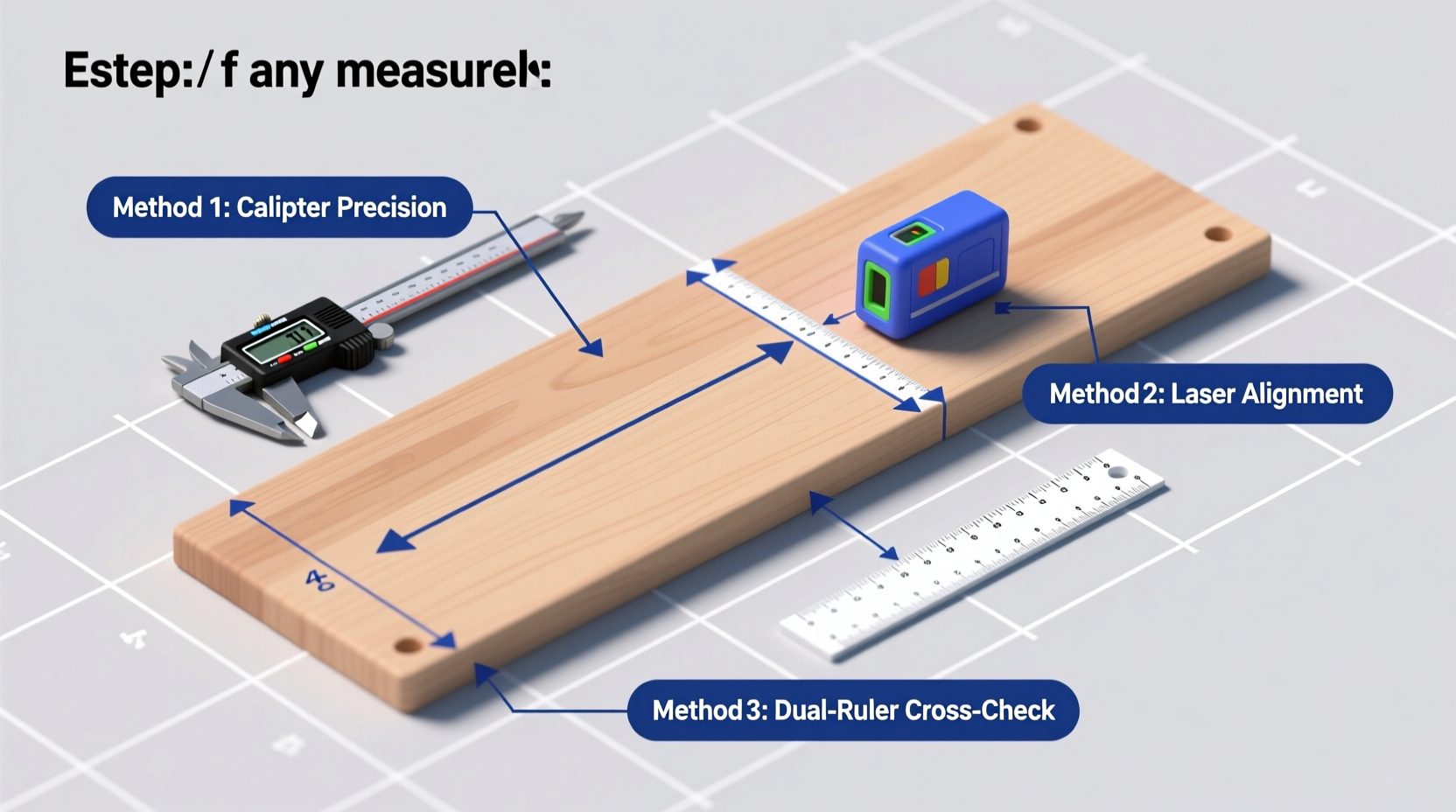
The most straightforward way to find the width of a rectangle is direct measurement using a ruler, tape measure, or laser distance meter. This method works best when physical access to the object is possible.
- Position the measuring tool at one edge of the rectangle, aligned perpendicularly to the length.
- Extend the tool straight across to the opposite parallel edge.
- Read the value where the tool meets the far edge.
- Ensure the tool lies flat and taut to avoid sagging or parallax errors.
Digital calipers offer high precision for small rectangles—such as electronic components or craft materials—measuring down to 0.01 mm accuracy. For large spaces like rooms or plots, a laser measure provides quick, accurate readings up to several hundred feet.
| Tool | Best For | Precision Level |
|---|---|---|
| Ruler | Small objects (paper, books) | ±1 mm |
| Tape Measure | Furniture, rooms | ±1/8 inch |
| Laser Distance Meter | Large areas, outdoor spaces | ±1/16 inch |
| Digital Caliper | Engineering parts, crafts | ±0.01 mm |
Common Pitfalls in Manual Measurement
- Measuring diagonally instead of perpendicularly.
- Using a stretched or worn tape measure.
- Not accounting for obstructions (e.g., baseboards).
- Parallax error due to viewing angle.
Method 2: Calculating Width from Area and Length
When direct measurement isn't feasible, use the formula:
Width = Area ÷ Length
This approach is common in mathematics, land surveying, and interior design. Suppose you know a room has an area of 180 square feet and a length of 15 feet. Dividing 180 by 15 gives a width of 12 feet.
Accuracy depends entirely on the reliability of the known values. If either area or length contains rounding errors or estimation inaccuracies, the resulting width will be off proportionally.
“Many DIYers assume all given dimensions are exact, but published floor plans often round numbers. Always verify critical measurements on-site.” — Daniel Reyes, Residential Architect
Method 3: Deriving Width from Perimeter and Length
If you have the total perimeter and the length, apply the rectangle perimeter formula:
Perimeter = 2 × (Length + Width)
Rearranged to solve for width:
Width = (Perimeter ÷ 2) – Length
For example, if a garden bed has a perimeter of 30 meters and a length of 10 meters:
Width = (30 ÷ 2) – 10 = 15 – 10 = 5 meters.
This method is particularly useful when fencing or edging must be ordered based on limited data. However, it assumes perfect rectangular geometry—any deviation into trapezoidal or irregular shapes invalidates the result.
Step-by-Step Guide: Finding Width Without Direct Access
- Determine what information you already have (area, perimeter, diagonal, etc.).
- Select the appropriate formula based on available data.
- Ensure all units are consistent (e.g., don’t mix feet and inches).
- Solve algebraically for width.
- Cross-validate using another method if possible.
Method 4: Using the Diagonal and Pythagorean Theorem
When only the length and diagonal are known, apply the Pythagorean Theorem:
Diagonal² = Length² + Width²
Then rearrange to isolate width:
Width = √(Diagonal² – Length²)
This technique is widely used in carpentry and screen sizing. For instance, a TV screen with a 50-inch diagonal and 43.6-inch length yields:
Width = √(50² – 43.6²) = √(2500 – 1900.96) = √599.04 ≈ 24.5 inches.
This confirms the aspect ratio (~16:9) commonly found in modern displays.
Mini Case Study: Renovating a Basement Room
Homeowner Maria needed to install pre-cut drywall panels in her basement but couldn’t reach one wall due to plumbing pipes. She had the room’s length (14 feet), diagonal (17.8 feet), and approximate area (150 sq ft). To verify the width without full access:
She applied the Pythagorean Theorem:
Width = √(17.8² – 14²) = √(316.84 – 196) = √120.84 ≈ 11 feet.
She cross-checked using area: 150 ÷ 14 ≈ 10.7 feet. The slight discrepancy prompted re-measurement of the diagonal, revealing a previous overestimate. Corrected to 17.5 feet, recalculated width became √(306.25 – 196) = √110.25 = 10.5 feet—matching closely with the area-based estimate. She ordered 10.5-foot-wide materials, avoiding costly returns.
Checklist: How to Accurately Determine Rectangle Width
- ✅ Identify whether you need physical or calculated width.
- ✅ Choose the correct formula based on available data (area, perimeter, diagonal).
- ✅ Use precise tools and proper alignment during measurement.
- ✅ Confirm units are consistent across all inputs.
- ✅ Cross-check results using a second method when possible.
- ✅ Account for environmental factors (e.g., warping, obstructions).
- ✅ Document your process for future reference or verification.
FAQ
Can I find the width of a rectangle if I only know the perimeter?
No—you also need the length. The perimeter alone gives the sum of all sides but cannot isolate width without additional data.
What if my rectangle isn’t perfectly shaped?
Irregular quadrilaterals require more advanced techniques like triangulation or CAD modeling. For rough estimates, average multiple width measurements taken at intervals.
Is there a difference between width and breadth?
No—width and breadth are synonymous in geometry and everyday language. Both refer to the shorter side or the horizontal extent, depending on context.
Conclusion: Apply the Right Method for Your Situation
Finding the width of a rectangle doesn’t require advanced tools or expertise—just the right method applied correctly. From simple rulers to geometric formulas, each approach serves a purpose. The key is matching the solution to your constraints: Is the object accessible? Are other dimensions known? How much precision do you need?
By understanding these methods and practicing them in real scenarios, you gain confidence in tackling measurement challenges—whether hanging a picture frame or planning a renovation. Accuracy builds trust in your decisions and saves time, money, and frustration.




 浙公网安备
33010002000092号
浙公网安备
33010002000092号 浙B2-20120091-4
Comments
No comments yet. Why don't you start the discussion?