
In a world where personal accessories double as self-expression, keychains have evolved from simple metal loops to miniature works of art. Among the most popular are simulation food keychains and enamel keychains—both praised for their charm, but which one truly delivers on style, durability, and long-term appeal? With social media flooded with pastel donut charms and retro enamel pins turned key fobs, it’s easy to get caught in the aesthetic whirlwind. But beyond the Instagrammable moments, do these trendy trinkets hold up in real life? Or will your keyring end up looking more kitschy than cool?
The Rise of the Keychain as Fashion Accessory
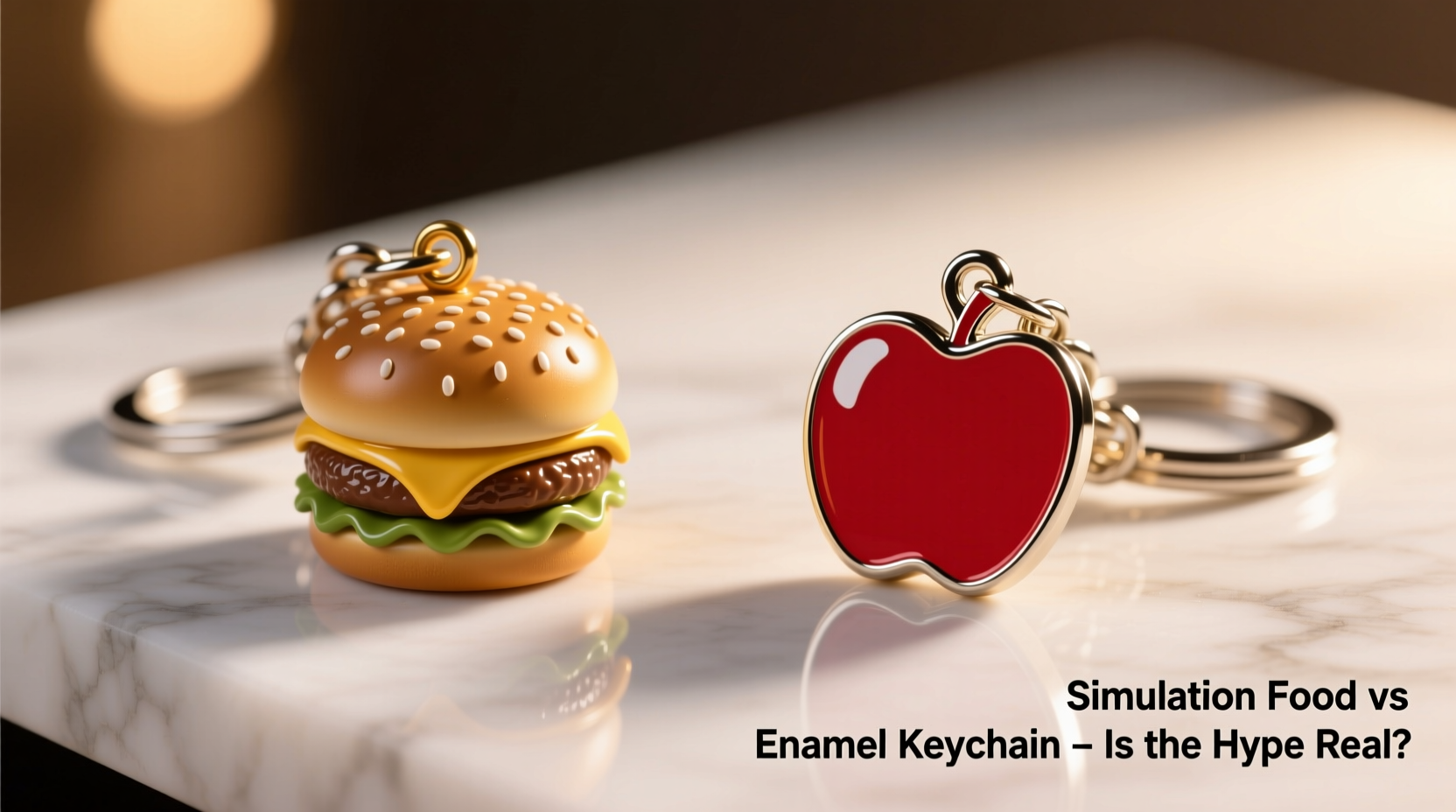
Gone are the days when keychains were purely functional. Today, they’re curated like jewelry—selected to match outfits, moods, or even seasonal aesthetics. The shift began with kawaii culture’s embrace of cute, food-themed items, which quickly spread through East Asian street fashion and into Western pop culture. Simulation food keychains—hyper-realistic miniatures of sushi, ramen bowls, or cupcakes—tapped into this trend with playful authenticity. Enamel keychains, often inspired by vintage pin designs, brought bold colors and crisp lines to everyday carryables.
But popularity doesn’t equal practicality. As more people attach these whimsical pieces to their daily drivers, questions arise: Are they durable? Do they age well? And most importantly—do they enhance your style, or make your keys look cluttered and childish?
Material Matters: Construction & Longevity Compared
Understanding how each keychain is made reveals a lot about its lifespan and performance under daily use.
Simulation food keychains are typically crafted from soft PVC or silicone. These materials allow for intricate detailing—like glossy sauce droplets on a tiny burger or translucent broth in a ramen cup. Manufacturers use multi-layer molding and hand-painting techniques to achieve lifelike textures. While visually impressive, the softness that enables realism also makes them prone to scratches, deformation, and dust accumulation. Over time, especially in hot environments (like a sunbaked car), they may warp or fade.
Enamel keychains, on the other hand, are usually made from metal (often zinc alloy) with a glass-like enamel coating baked into recessed areas. This process creates vibrant, scratch-resistant surfaces with sharp color contrast. The rigid structure holds up better against friction and impact. However, if dropped on a hard surface, the enamel can chip, revealing the base metal underneath—a flaw that’s both visible and irreversible.
Design & Aesthetic Appeal: Cute vs. Classic
This is where personal taste dominates. Simulation food keychains win on novelty and whimsy. They spark joy, conversation, and nostalgia—especially for fans of Japanese or Korean pop culture. A tiny bento box or melon pan pendant adds a touch of humor and warmth to an otherwise mundane object.
Yet, that same playfulness can cross into “too much” territory. When paired with multiple colorful accessories, a food keychain risks making your keyring appear chaotic or juvenile—particularly in professional settings. Imagine unclipping your keys during a client meeting only to reveal a neon-colored pizza slice swinging beside your office access card.
Enamel keychains offer a more restrained elegance. Their clean lines, metallic sheen, and often minimalist designs (think geometric shapes, brand logos, or abstract art) convey intentionality. They complement rather than dominate. Because many enamel pieces draw from established design traditions—like 90s punk pins or mid-century advertising—they carry cultural weight beyond mere cuteness.
“Accessories should reflect personality without shouting. Enamel strikes that balance; food charms are fun, but they rarely grow with you.” — Lila Chen, Product Designer & Lifestyle Curator
Comparison Table: Food vs. Enamel Keychains at a Glance
| Feature | Simulation Food Keychain | Enamel Keychain |
|---|---|---|
| Material | Soft PVC or silicone | Hard metal with enamel coating |
| Durability | Moderate – prone to scratches, heat damage | High – resistant to wear, but can chip |
| Aesthetic Style | Playful, kawaii, nostalgic | Classic, bold, artistic |
| Lifespan (with care) | 1–3 years | 5+ years |
| Style Flexibility | Low – niche appeal | High – fits casual to semi-formal |
| Maintenance | Wipe clean; avoid moisture buildup | Polish occasionally; avoid drops |
Real-World Test: A Year with Both Keychains
Sophie, a 28-year-old graphic designer in Seoul, decided to test both styles head-to-head. She attached a strawberry shortcake simulation keychain to her work bag and a minimalist enamel compass design to her house keys. After six months, the cake charm had lost some luster—dust collected in the crevices of the frosting swirls, and the red berry topping had faded slightly from exposure to her bag’s interior light. “It still looked cute,” she said, “but I had to clean it weekly with a cotton swab.”
The enamel compass, meanwhile, retained its shine despite frequent use. Only a small chip on the edge betrayed a fall onto tile. “I barely noticed it,” Sophie noted. “It just looks like character now.” By month ten, she had moved the food charm to a display case and kept the enamel piece on rotation. “The cake was fun for summer,” she concluded, “but the compass feels like part of my identity.”
How to Choose the Right Keychain for Your Lifestyle
Selecting between simulation food and enamel isn’t just about preference—it’s about alignment with your habits and image goals. Consider this step-by-step decision framework:
- Assess your daily environment: Do you commute in a crowded subway, drive frequently, or work in an office? High-friction environments favor durable enamel.
- Evaluate your style evolution: Are you drawn to ever-changing trends, or do you prefer timeless elements? Food keychains suit trend-driven personalities; enamel appeals to those building a cohesive personal aesthetic.
- Think about maintenance: Are you willing to clean and rotate accessories monthly? Soft material keychains demand more upkeep.
- Consider emotional value: Does a specific food charm remind you of a trip to Japan or a childhood memory? Sentiment can justify short-term use.
- Test compatibility: Attach both to separate keyrings for two weeks. Notice which one you reach for instinctively.
FAQ: Common Questions About Trendy Keychains
Can I wash a simulation food keychain?
Yes, but gently. Use lukewarm water and mild soap, then dry thoroughly with a soft cloth. Avoid submerging it for long periods, as moisture can seep into glued seams and cause cloudiness.
Do enamel keychains rust?
Not if well-made. Quality enamel keychains use corrosion-resistant alloys and sealed coatings. However, low-cost versions with porous metal bases may oxidize over time, especially in humid climates.
Are food keychains safe for kids?
Generally yes, but supervision is recommended. Small parts (like tiny chopsticks or toppings) can detach, posing choking hazards. Also, realistic designs might encourage mouthing behavior in young children.
Final Verdict: Hype or Lasting Value?
The hype around simulation food keychains is real—but fleeting. They thrive in moments: as gifts, souvenirs, or seasonal accents. Their charm lies in surprise and delight, not endurance. For long-term use, enamel keychains deliver superior resilience, versatility, and subtle sophistication. They adapt to evolving tastes without needing replacement.
That doesn’t mean banishing food keychains entirely. Like fashion, accessories should allow room for fun. The key is curation. Treat simulation pieces as limited-edition collectibles rather than permanent fixtures. Save enamel for staples—the ones you’ll still want to see dangling from your bag in five years.




 浙公网安备
33010002000092号
浙公网安备
33010002000092号 浙B2-20120091-4
Comments
No comments yet. Why don't you start the discussion?