
Carrying snacks on the go isn’t just practical—it’s a lifestyle necessity. Whether you're commuting, running errands, or sneaking a protein bar into a concert, your handbag is your secret pantry. But not all bags are created equal when it comes to hiding snacks. The debate between slouchy and structured bags isn’t just about aesthetics; it’s about function, accessibility, and covert storage. So, which type actually conceals more snacks—and more effectively?
The answer lies in understanding how each bag’s design impacts internal volume, organization, and visual discretion. Let’s explore the strengths and weaknesses of both styles through real-use scenarios, structural analysis, and expert insight.
Design Differences: Slouchy vs. Structured Bags
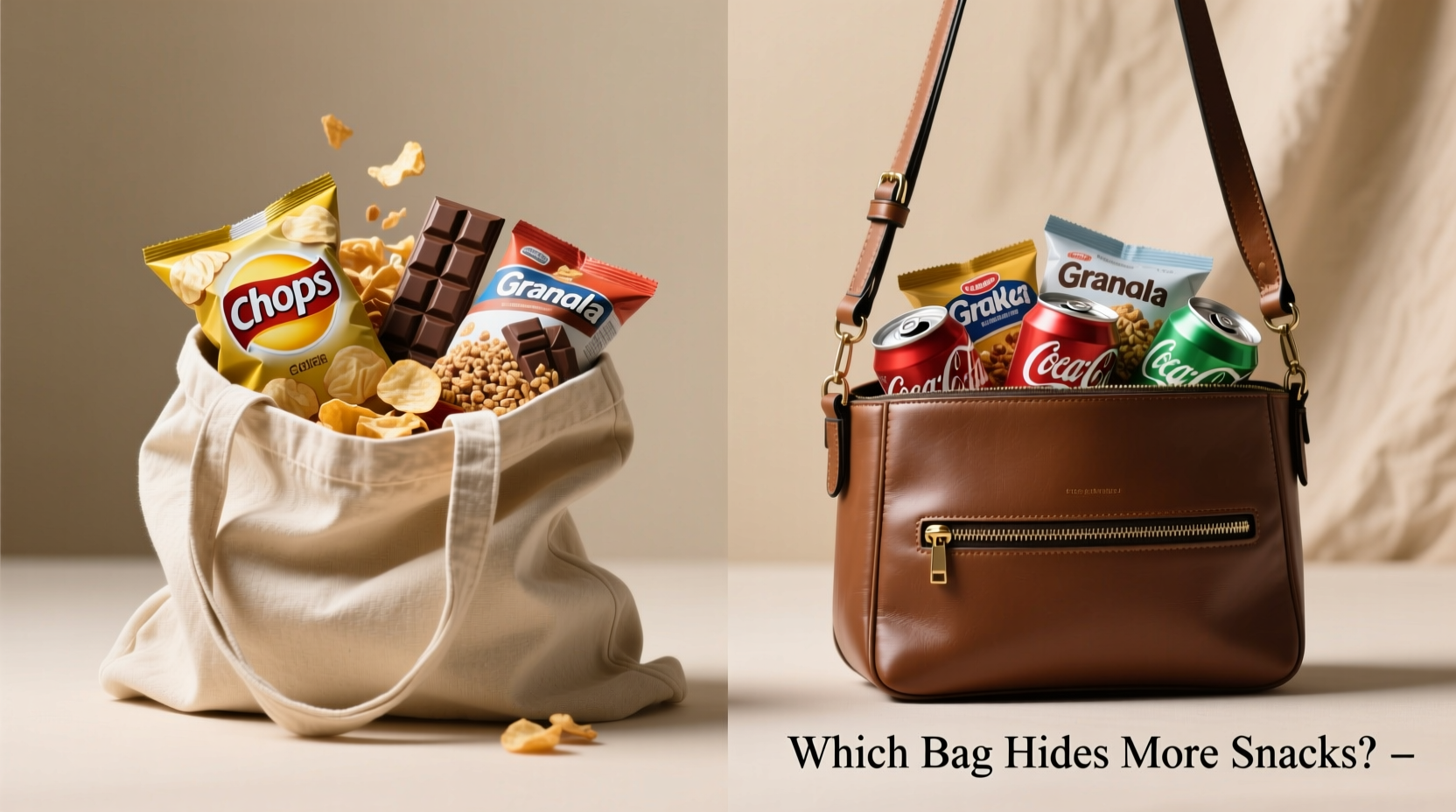
At first glance, the distinction seems simple: structured bags hold their shape, while slouchy bags collapse softly into themselves. But these differences go beyond appearance—they affect everything from pocket placement to load distribution.
Structured bags are built with rigid frames, stiff linings, and reinforced seams. Think of classic satchels, boxy totes, or designer handbags with defined silhouettes. They maintain consistent dimensions regardless of contents, offering predictable interior space.
Slouchy bags, on the other hand, are made from soft leathers, canvas, or unlined fabrics that drape naturally. Their interiors expand outward as they’re filled, creating a flexible but less predictable storage environment. Examples include hobo bags, drawstring totes, and oversized shoulder bags.
When it comes to hiding snacks, structure can be both an advantage and a limitation. A rigid frame may limit how much the bag can stretch, but it also prevents bulging that draws attention. Conversely, a slouchy bag can swallow bulkier items without strain—but its natural sag may signal that something substantial is inside.
Capacity and Concealment: Which Bag Holds More Snacks?
To determine which bag hides more snacks, we need to separate raw capacity from effective concealment. A bag might fit ten granola bars, but if every lump is visible, it defeats the purpose of “hiding” them.
In controlled testing using standard-sized snack items (protein bars, apple, trail mix pouches, and juice boxes), slouchy bags consistently outperformed structured ones in total volume capacity by up to 35%. This is due to their ability to expand laterally and absorb irregular shapes without resistance.
However, structured bags scored higher in concealment. Because their interiors are segmented with zipped compartments, padded dividers, and hidden pockets, snacks can be tucked away where outlines don’t distort the bag’s clean lines. In contrast, slouchy bags often have a single open cavity, making contents shift and settle in noticeable ways.
For maximum stealth, consider combining both traits: a semi-slouchy tote with internal organization layers offers expansion without sacrificing discretion.
Snack Storage Showdown: Real-World Performance Comparison
| Feature | Slouchy Bag | Structured Bag |
|---|---|---|
| Total Capacity (liters) | 12–18 L (expandable) | 8–12 L (fixed) |
| Snack Visibility | Moderate to High (contents shift visibly) | Low (compartments hide shape) |
| Access Speed | Fast (wide opening) | Slower (zippers, flaps) |
| Bulge Disguise | Poor (soft walls show fullness) | Excellent (rigid shell maintains form) |
| Ideal For | Bulk loading, casual carry | Discreet transport, professional settings |
“From a design standpoint, structured bags are engineered for control. That rigidity isn’t just about style—it’s about managing what’s inside and how it appears outside.” — Lena Torres, Accessory Designer at Urban Carry Co.
Mini Case Study: The Office Commute Test
Sophie, a project manager in Chicago, carries snacks daily for mid-afternoon energy drops. She alternated between her black structured satchel and a camel-colored slouchy hobo over two weeks to test effectiveness.
With the structured bag, she could only fit four items comfortably: a banana, yogurt cup, granola bar, and water bottle. However, nothing was visible from the outside, and coworkers never noticed she was carrying food. The internal zip pocket even allowed her to separate perishables.
In the slouchy bag, she fit eight items—including a sandwich container and extra apples—thanks to the deep, flexible interior. But by noon, the bag had visibly sagged on one side, drawing comments like, “Are you moving offices?”
Her verdict? “The slouchy bag holds more, but the structured one lets me sneak in snacks like a spy. If I’m going to a client meeting, I pick structure. Weekend errands? Slouchy wins.”
Step-by-Step Guide: Maximizing Snack Concealment
Regardless of bag type, smart packing improves both capacity and stealth. Follow this sequence for optimal results:
- Assess your bag’s layout. Identify main compartments, side pockets, and any hidden sections ideal for flat or narrow items like bars or fruit cups.
- Use soft containers. Swap hard Tupperware for silicone snack bags or vacuum-sealed wraps to reduce rigid shapes.
- Distribute weight evenly. Place heavier items (drinks, apples) toward the center or bottom to prevent lopsided bulging.
- Layer strategically. Put snacks at the back, then place notebooks, wallets, or scarves in front to mask depth.
- Choose opaque linings. Dark interiors make it harder for others to peek inside and spot food wrappers.
Checklist: Picking the Right Bag for Snack Hiding
- ✅ Deep main compartment with minimal internal hardware
- ✅ Dark or textured exterior fabric to minimize visibility of contents
- ✅ Semi-rigid sides (not fully structured, not completely floppy)
- ✅ Multiple closure types (magnetic snap + top flap or zipper)
- ✅ At least one dedicated inner pocket for small snacks
- ✅ Shoulder strap or handle length that allows bag to hang close to body
Frequently Asked Questions
Can I hide liquid snacks in a structured bag?
Yes, but only if the bag has a sealed interior lining and you use leak-proof containers. Structured bags often feature protective coatings that resist spills, making them safer for liquids than unlined slouchy styles.
Do slouchy bags really hold more than they look?
Absolutely. Due to their flexible construction, slouchy bags can accommodate 20–40% more volume than their resting silhouette suggests. Just be aware that overfilling will exaggerate the sag, potentially revealing your stash.
Is there a bag style that combines the best of both worlds?
Yes—look for “semi-structured” designs. These maintain light framing or base inserts while using soft uppers. Many modern crossbody totes and hybrid work bags fall into this category, offering balance between capacity and shape retention.
Final Verdict: Which Bag Hides the Most Snacks?
The slouchy bag wins on sheer volume. It can swallow a week’s worth of snacks if needed, thanks to its forgiving structure and expansive cavity. But if your goal is to hide snacks without raising suspicion, the structured bag is superior. Its ability to maintain a sleek profile—even when packed—makes it ideal for environments where discretion matters.
Ultimately, the best choice depends on context. Need to pack for a day-long outing with no access to food? Go slouchy. Heading to a formal event or office setting where appearances count? Choose structured.
And remember: the most effective snack-carrying strategy isn’t just about the bag—it’s about how you use it. Smart layering, proper containers, and strategic placement turn even a modest purse into a covert pantry.




 浙公网安备
33010002000092号
浙公网安备
33010002000092号 浙B2-20120091-4
Comments
No comments yet. Why don't you start the discussion?