
When winter winds bite and temperatures drop, how you accessorize your outerwear matters—both for comfort and confidence. Two of the most popular cold-weather accessories are the small square scarf and the neck gaiter. While both serve to protect your neck and upper chest from the cold, they differ significantly in function, fashion, and effectiveness. Choosing between them isn’t just about personal taste—it’s about understanding insulation, breathability, layering potential, and how each piece complements your wardrobe.
This comparison dives deep into thermal performance, material science, aesthetic versatility, and real-life usability to answer the core question: which one actually keeps you warmer—and which one makes you look better?
Understanding the Basics: What Each Accessory Is
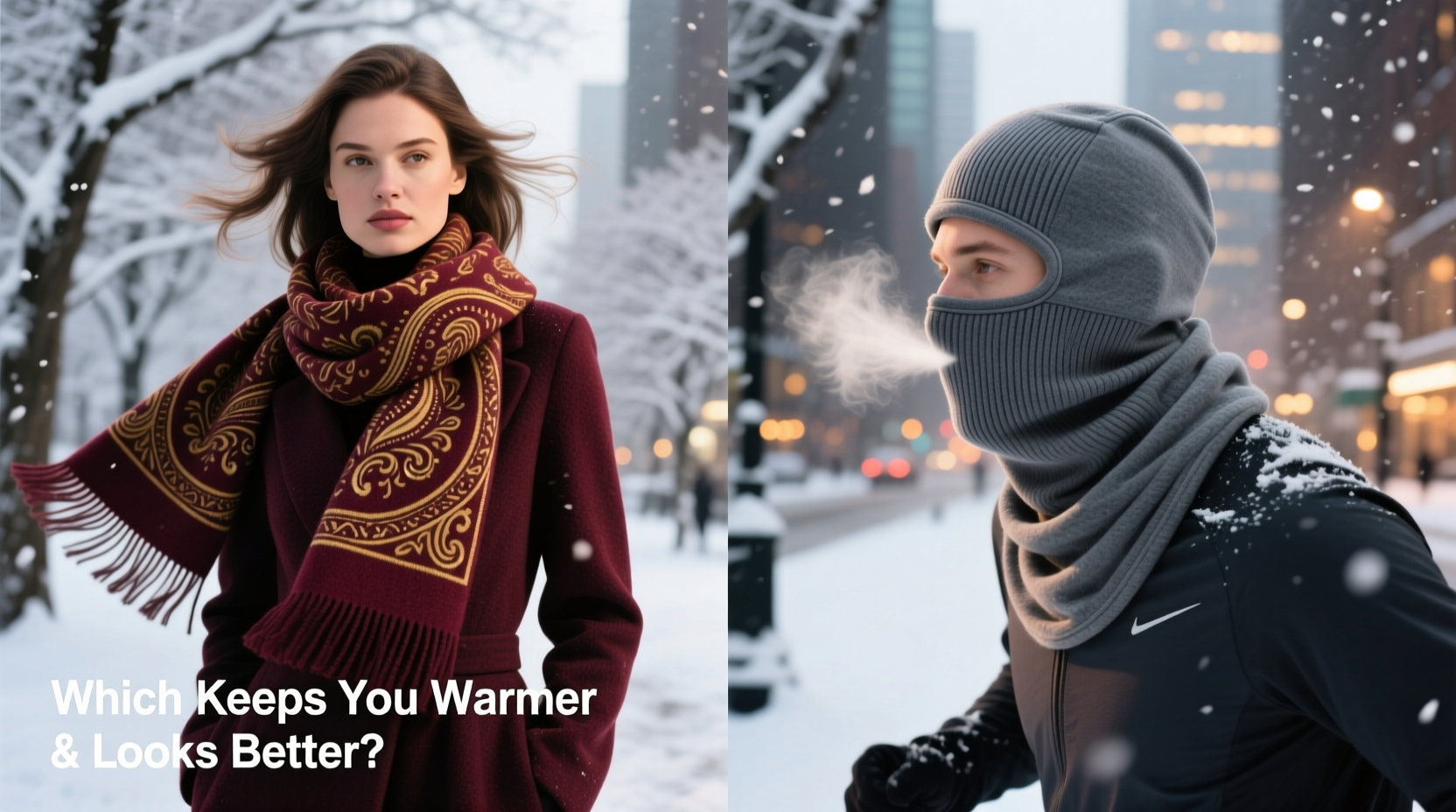
A **small square scarf**—often referred to as a pocket square when worn in a jacket lapel—is typically made from silk, cotton, wool, or blends. When used around the neck, it's folded diagonally into a triangle and tied loosely at the front or back. It's a classic accessory with roots in early 20th-century menswear, now embraced across genders and styles.
In contrast, a **neck gaiter** is a seamless tube of fabric—usually fleece, merino wool, or synthetic technical materials—designed to be pulled up over the lower face, ears, or worn snugly around the neck. Originally developed for athletes and outdoor workers, gaiters offer functional protection in extreme conditions.
Their purposes diverge: the square scarf leans toward fashion and light insulation; the gaiter prioritizes warmth, wind resistance, and moisture management.
Thermal Performance: Which One Keeps You Warmer?
When evaluating warmth, three factors matter most: coverage, material density, and fit.
- Coverage: Neck gaiters provide full circumferential coverage, often extending high enough to cover the chin and lower cheeks. This creates a microclimate that traps body heat effectively. Square scarves, by comparison, usually leave gaps at the front and sides unless tightly knotted and layered.
- Material: Gaiters are commonly made from insulating fabrics like brushed polyester fleece (up to 4x warmer than cotton) or merino wool, which retains heat even when damp. Square scarves, especially silk ones, offer minimal insulation despite their elegance.
- Fit: Gaiters are form-fitting and elasticized, minimizing air leakage. Scarves drape loosely, allowing cold air to circulate beneath.
“From a thermoregulation standpoint, a well-designed neck gaiter outperforms traditional scarves in sub-40°F environments.” — Dr. Lena Reyes, Outdoor Apparel Researcher, University of Colorado
In practical terms, if you're walking through a snowy city, commuting on a windy bike path, or hiking in alpine conditions, the gaiter will keep you noticeably warmer. The scarf might suffice indoors or during mild autumn chills but falls short when serious cold sets in.
Style & Aesthetic Appeal: Which One Looks Better?
Fashion is subjective, but certain principles apply universally: proportion, coordination, and context.
The **small square scarf** excels in formal and semi-formal settings. Paired with a wool coat or tailored jacket, it adds a refined touch—especially when tied in a Parisian knot or tucked neatly into a blazer. Its visual appeal lies in texture and pattern: paisley silks, herringbone wools, or vintage prints elevate an outfit instantly.
On the other hand, the **neck gaiter** has shed its purely utilitarian image. Modern designs come in sleek solids, subtle heathers, and minimalist patterns suitable for urban professionals. High-end versions made from Italian merino or recycled technical fibers blur the line between sportswear and streetwear. However, pulling a bulky fleece gaiter over a suit can disrupt clean lines and appear incongruous.
Ultimately, the scarf wins in elegance; the gaiter wins in adaptability. But the “better” choice depends on where and how you’re dressing.
| Scenario | Best Choice | Why |
|---|---|---|
| Business meeting in winter | Small square scarf | Polished, professional, complements tailoring |
| Morning run or ski trip | Neck gaiter | Windproof, breathable, protects face |
| Casual weekend errands | Either (depending on coat) | Gaiter for warmth, scarf for flair |
| Snowboarding or mountaineering | Neck gaiter | Essential for frostbite prevention |
Real-World Example: Commuter vs. Climber
Consider two individuals facing the same freezing morning but different needs.
Alex, a graphic designer, walks 15 minutes to work through downtown streets. He wears a camel overcoat and leather gloves. A lightweight wool square scarf in charcoal gray completes the look—warm enough for the commute, stylish enough for the office. No need for facial coverage; his concern is looking put-together.
Jamila, a trail maintenance worker, hikes uphill in sub-zero wind chill to inspect snow barriers. She wears a hardshell jacket, goggles, and a merino-blend neck gaiter. It shields her nose from ice particles, wicks sweat during exertion, and stays in place without adjustment. Style is secondary—survival and comfort are paramount.
Their choices reflect not just preference but purpose. Neither is wrong; both are optimized for their environment.
How to Choose Based on Your Lifestyle
Selecting the right accessory means aligning function with routine. Ask yourself these questions:
- Do I spend extended time outdoors in harsh weather?
- Am I dressing for professional or social settings?
- Do I need facial protection or just neck warmth?
- Is breathability important (e.g., cycling, running)?
- How much effort am I willing to invest in styling?
If you answered “yes” to 1 and 4, go with a gaiter. If 2 and 5 stand out, a scarf may suit you better. Many people benefit from owning both and switching based on the day’s demands.
Action Checklist: Choosing the Right Option for You
- ✔ Assess your daily exposure to cold and wind
- ✔ Evaluate your typical outfits—formal, casual, or active?
- ✔ Prioritize either warmth or aesthetics (or seek hybrid solutions)
- ✔ Test materials: Merino wool offers balance; silk is stylish but cold
- ✔ Consider layering: Gaiter underneath, scarf on top for dual benefits
Frequently Asked Questions
Can a small square scarf be warm enough for winter?
Only in mild conditions or when layered. A single silk or cotton scarf provides negligible insulation. Opt for thick wool or cashmere versions if using it as primary neckwear in cold climates.
Are neck gaiters outdated or too sporty for everyday wear?
Not anymore. Sleek, minimalist gaiters in neutral tones (charcoal, navy, oatmeal) pair well with puffer jackets, parkas, and even trench coats. Avoid bright logos or bulky textures in formal settings.
Can I wear a gaiter like a scarf?
Yes—some gaiters are long enough to be doubled and styled like a cowl. Pull it up high and let the excess drape loosely. Just ensure the fabric isn’t too tight or restrictive.
Final Verdict: Warmth vs. Style—And the Winner Is…
For pure warmth, the **neck gaiter** is the undisputed champion. Its design, materials, and fit make it far more effective at retaining heat and blocking wind than any small square scarf. In active or extreme conditions, nothing else compares.
For appearance and elegance, the **small square scarf** takes the lead. It’s a timeless accessory that enhances sophistication, adds color and texture, and integrates seamlessly into polished ensembles.
But here’s the truth: you don’t have to choose. The smartest approach is to own both and use them appropriately. Let the gaiter guard you against the elements when needed. Let the scarf express your personality when the moment calls for style.
And if you want the best of both worlds? Look for hybrid options: oversized scarves with stretchy knit cuffs, or gaiters with reversible printed sides that mimic scarf patterns.
Conclusion
Whether you prioritize staying warm or looking sharp, your choice between a small square scarf and a neck gaiter should reflect your lifestyle—not trends or assumptions. Understanding the strengths of each allows you to dress smarter, perform better, and feel confident no matter the temperature.




 浙公网安备
33010002000092号
浙公网安备
33010002000092号 浙B2-20120091-4
Comments
No comments yet. Why don't you start the discussion?