
In an era where nearly every household object is being reimagined with embedded technology, the humble bathroom mirror has not been spared. Once a simple reflective surface for checking appearance, the mirror now comes equipped with Wi-Fi, voice assistants, LED lighting, fitness tracking, and even weather forecasts. But beneath the sleek glass and glowing interfaces lies a pressing question: Is upgrading to a smart mirror genuinely useful, or is it merely a high-tech indulgence?
To answer this, we need to look beyond the novelty. The decision between a smart mirror and a regular mirror hinges on lifestyle needs, budget, long-term utility, and how much value you place on convenience versus minimalism. Let’s dissect both options to see where each excels—and where they fall short.
The Evolution of the Mirror: From Reflection to Interface
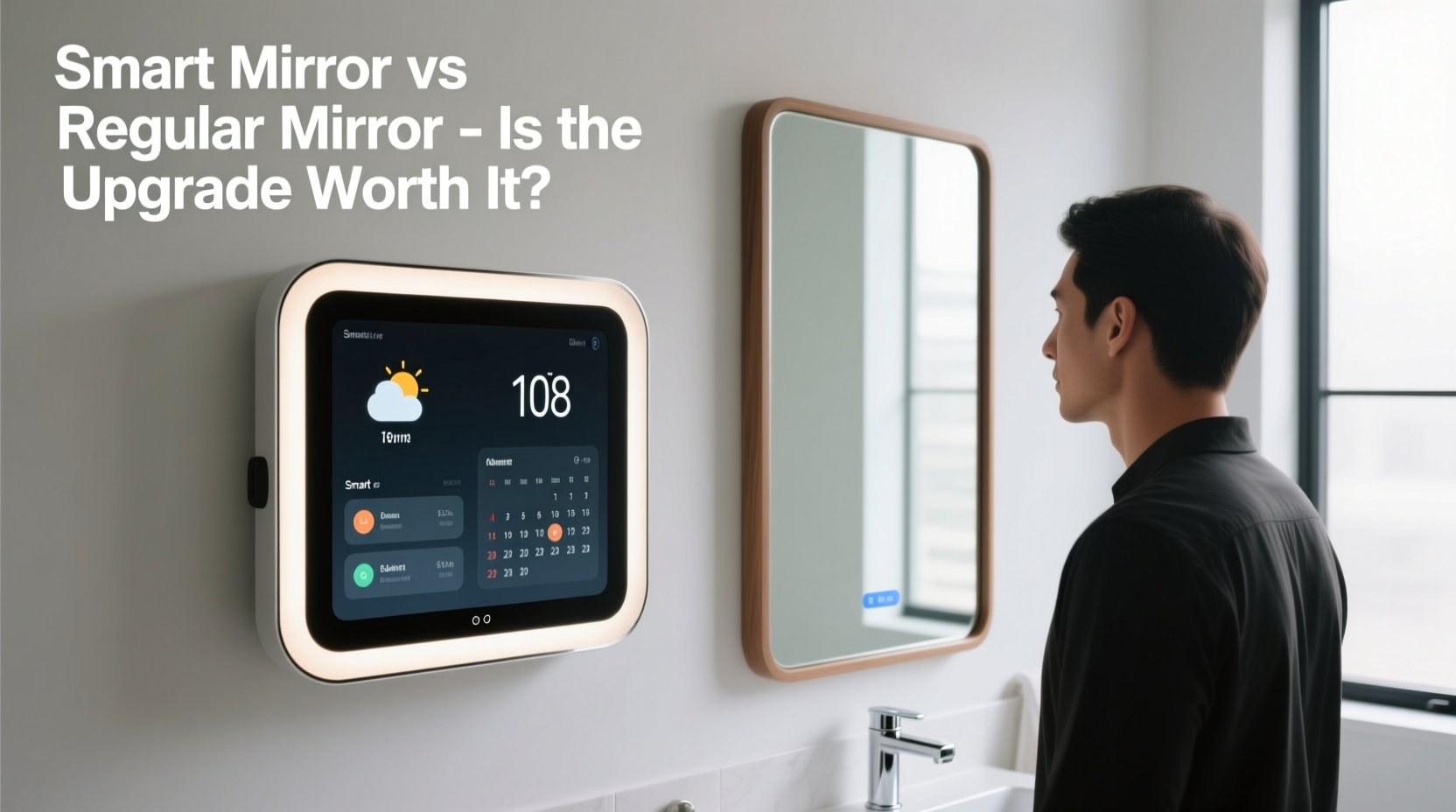
Mirrors have remained largely unchanged for centuries—polished metal, then silvered glass, offering a passive reflection. But in the last decade, advancements in display technology, sensors, and IoT (Internet of Things) integration have transformed mirrors into interactive hubs. Smart mirrors now function as hybrid devices: part display, part appliance, part personal assistant.
These mirrors embed transparent LCD screens behind one-way glass, allowing users to see their reflection while also viewing digital overlays such as time, calendar events, news headlines, or workout metrics. Some models integrate cameras, microphones, ambient lighting controls, and even skin analysis tools using AI-powered imaging.
While the innovation is impressive, it raises a critical concern: Does adding technology enhance the mirror’s core purpose, or does it distract from it?
Functional Comparison: What Each Mirror Offers
A direct comparison reveals fundamental differences in capability, design, and daily use. Below is a breakdown of key features across both types:
| Feature | Regular Mirror | Smart Mirror |
|---|---|---|
| Core Function | Reflection only | Reflection + digital interface |
| Cost | $10–$200 | $300–$2,500+ |
| Installation | Simple mounting | Electrical wiring, Wi-Fi setup |
| Lifespan | 10+ years (no moving parts) | 5–7 years (electronics degrade) |
| Maintenance | Wipe clean with glass cleaner | Dusting, software updates, screen calibration |
| Energy Use | None | 5–40 watts (continuous power needed) |
| Customization | Frame style only | Brightness, color temp, apps, voice commands |
| Privacy Risk | None | Cameras/mics may record data |
This table highlights a clear trade-off: smart mirrors offer enhanced functionality at the expense of simplicity, longevity, and privacy. For some users, the added features justify the complexity. For others, they represent unnecessary overhead.
Real-World Use Cases: Who Benefits Most?
Not all users will gain equal value from a smart mirror. Its usefulness depends heavily on daily routines and technological comfort.
Fitness Enthusiasts
For those who follow morning workout routines in front of the mirror, smart mirrors like Mirror by Lululemon or Tonal offer guided classes, real-time form feedback, and progress tracking. These are less about reflection and more about immersion in fitness programming. In this niche, the smart mirror acts as a trainer, not just a reflector.
Busy Professionals
Imagine getting dressed while your mirror displays the day’s agenda, traffic conditions, and weather—all without touching your phone. For time-pressed individuals, this seamless integration can reduce cognitive load and streamline mornings. Voice-controlled lighting adjustments also help achieve optimal visibility for grooming.
Home Automation Advocates
If your home runs on Alexa, Google Home, or Apple HomeKit, a smart mirror that integrates with these ecosystems adds a visual command center. You can check security camera feeds, control lights, or start your coffee maker—all reflected in the glass as you brush your teeth.
Minimalists & Privacy-Conscious Users
On the flip side, many find smart mirrors excessive. A regular mirror requires no updates, doesn’t collect data, and won’t become obsolete when the manufacturer discontinues support. For those who value simplicity and digital detox, the traditional mirror remains superior.
“Technology should serve human needs, not dictate them. A mirror’s job is to reflect clearly. When it starts dictating your schedule, ask: who’s really in control?” — Dr. Lena Patel, Human-Computer Interaction Researcher, MIT Media Lab
Mini Case Study: The Johnson Family’s Smart Mirror Experiment
The Johnsons, a family of four in Portland, installed a high-end smart mirror in their master bathroom six months ago. Initially excited by its capabilities—voice-activated news briefings, anti-fog coating, and LED mood lighting—they soon encountered unexpected drawbacks.
After three months, the touchscreen interface began lagging. Software updates disrupted functionality, and one morning, the mirror failed to boot entirely, leaving them staring at a black screen during a rushed school drop-off. They also discovered that the built-in camera, though disabled in settings, was still registering motion—a privacy red flag.
By month five, they reverted to using it primarily as a regular mirror. “We kept it because replacing it would be costly,” said Mark Johnson, “but we turn it on maybe twice a week now. It’s more hassle than help.”
Their experience reflects a growing trend: initial excitement fades when reliability and practicality are tested over time.
Step-by-Step Guide: Choosing the Right Mirror for Your Needs
Deciding between a smart and regular mirror doesn’t have to be overwhelming. Follow this logical sequence to make an informed choice:
- Assess Your Morning Routine: Do you spend time grooming, exercising, or planning your day in front of the mirror? If yes, consider whether digital assistance would save time or add distraction.
- Evaluate Your Tech Ecosystem: Do you already use smart speakers, wearables, or home automation systems? Integration potential increases the smart mirror’s value.
- Set a Realistic Budget: Smart mirrors range from $500 to over $2,000. Factor in installation costs if electrical work is needed.
- Research Reliability & Support: Check user reviews for software stability, customer service responsiveness, and update frequency. Avoid brands with discontinued models.
- Consider Long-Term Maintenance: Will you still want this device in five years? Can you repair it, or will obsolescence force replacement?
- Test Before Buying (If Possible): Visit showrooms or demo units. Experience the interface firsthand—latency, glare, and voice recognition quality vary widely.
- Make the Decision: If convenience and connectivity outweigh cost and complexity, go smart. If clarity, durability, and peace of mind matter more, stick with classic.
Checklist: Questions to Ask Before Buying a Smart Mirror
- Does it integrate with my existing smart home platform (Google, Alexa, Siri)?
- Is there a local data mode, or does it require constant cloud connection?
- What is the expected lifespan of the electronic components?
- Are software updates guaranteed for at least 5 years?
- Can I disable the camera and microphone permanently?
- Is the display readable in bright bathroom lighting?
- Does it have anti-fog or humidity resistance features?
- Is professional installation required?
FAQ: Common Questions About Smart Mirrors
Can a smart mirror work without Wi-Fi?
Limited functionality. Basic reflection works, but apps, updates, and voice features require internet. Some models allow offline use of preloaded content, but full utility depends on connectivity.
Are smart mirrors safe in humid environments like bathrooms?
High-quality models are sealed and moisture-resistant, but prolonged exposure to steam can damage internal electronics over time. Look for IP-rated (Ingress Protection) certification for water and dust resistance.
Do smart mirrors increase home resale value?
Currently, there’s no evidence that smart mirrors significantly boost property value. Unlike smart thermostats or security systems, they’re seen as niche upgrades with limited broad appeal.
Conclusion: Utility vs. Flash—Where Do You Stand?
The smart mirror isn’t inherently better or worse than its traditional counterpart—it’s different. It represents a shift from passive tools to active interfaces, from silence to interactivity. But progress isn’t always linear. Sometimes, simplicity outlasts sophistication.
For early adopters, fitness devotees, and tech-integrated households, a smart mirror can be a valuable addition—provided it’s reliable, secure, and well-maintained. For everyone else, the regular mirror remains a timeless, functional, and worry-free solution.
The true measure of any upgrade isn’t how advanced it is, but how meaningfully it improves your life. If a mirror tells you the weather but adds stress, slows your routine, or compromises privacy, it’s not smarter—it’s just louder.




 浙公网安备
33010002000092号
浙公网安备
33010002000092号 浙B2-20120091-4
Comments
No comments yet. Why don't you start the discussion?