
Audio technology has evolved rapidly over the past decade. What once began with simple wired speakers is now a landscape of wireless connectivity, voice assistants, and intelligent home integration. At the heart of this shift lies a common consumer dilemma: should you opt for a basic Bluetooth speaker or invest in a smart speaker with built-in AI and internet capabilities? While both deliver sound, their purposes, functionalities, and long-term value differ significantly. Understanding these differences can help determine whether the added cost of a smart speaker is justified by its advanced features.
Understanding the Core Differences
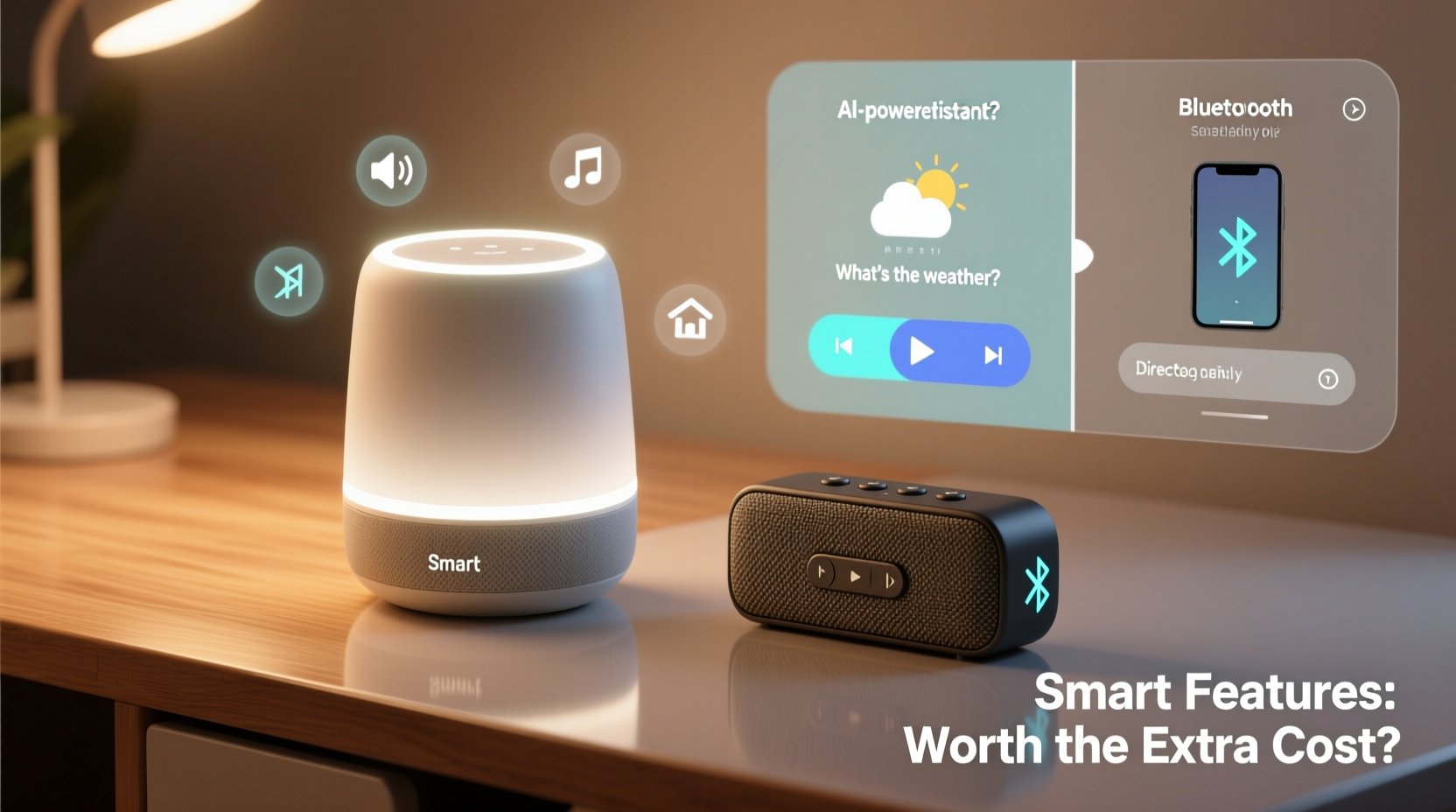
A Bluetooth speaker connects wirelessly to your phone, tablet, or laptop using short-range radio waves. It's designed primarily for portability and audio playback. Once paired, it streams music directly from your device without needing Wi-Fi. These speakers are often compact, battery-powered, and ideal for outdoor use or travel.
In contrast, a smart speaker integrates a virtual assistant—like Amazon Alexa, Google Assistant, or Apple Siri—into a standalone device. It connects to your home Wi-Fi network and can respond to voice commands, control other smart devices, answer questions, set timers, and stream music from online services such as Spotify, Pandora, or Apple Music—all without requiring a connected phone.
The fundamental difference lies in autonomy. A Bluetooth speaker depends on a host device; a smart speaker operates independently and interacts intelligently with its environment.
Functionality Comparison: What Each Can Do
| Feature | Bluetooth Speaker | Smart Speaker |
|---|---|---|
| Music Streaming | From paired mobile device only | Direct from cloud services (Spotify, etc.) |
| Voice Assistant | No | Yes (Alexa, Google Assistant, Siri) |
| Wi-Fi Required | No | Yes |
| Smart Home Control | No | Yes (lights, thermostats, plugs, etc.) |
| Battery Powered | Most models yes | Rarely (except portable variants) |
| Portability | High | Limited (mostly indoor use) |
| Price Range | $20–$150 | $40–$300+ |
The Real Value of Smart Features
Smart speakers offer more than just music—they act as digital hubs for modern living. Their ability to interpret natural language and execute complex tasks elevates them beyond mere audio devices.
Voice commands allow hands-free operation, which is particularly useful while cooking, driving, or multitasking. Need a timer while your hands are covered in flour? Say, “Set a timer for 15 minutes.” Want to know tomorrow’s weather forecast? Just ask. These conveniences accumulate over time, subtly improving daily efficiency.
Moreover, smart speakers integrate deeply with smart homes. With a single command like “Goodnight,” you can turn off lights, lock doors (if compatible), lower the thermostat, and silence notifications. This level of automation isn’t possible with Bluetooth speakers, no matter how high-end.
“Smart speakers have transitioned from novelty gadgets to essential home interfaces. They reduce friction in everyday routines through contextual awareness and seamless integration.” — Dr. Lena Patel, Human-Computer Interaction Researcher at MIT Media Lab
When a Bluetooth Speaker Is the Better Choice
Despite their limitations, Bluetooth speakers remain relevant—and often superior—for specific use cases. Their simplicity, affordability, and portability make them ideal for people who prioritize mobility over intelligence.
For example, if you frequently go camping, host beach parties, or travel, a rugged Bluetooth speaker with long battery life and water resistance makes far more sense than a plug-dependent smart speaker. Brands like JBL, Ultimate Ears, and Sony offer durable models that withstand harsh conditions.
Additionally, audiophiles may prefer high-end Bluetooth speakers for their superior sound quality. Many smart speakers sacrifice acoustic performance for compact design and microphone arrays. In contrast, premium Bluetooth models focus purely on delivering rich, balanced audio.
Cost-Benefit Analysis: Is the Premium Worth It?
Smart speakers typically start around $40 for entry-level models (e.g., Echo Dot) and go up to $300+ for premium options like the Sonos One or HomePod. Bluetooth speakers range from $20 for budget models to $200+ for audiophile-grade versions.
To assess value, consider how you intend to use the device:
- Primary use: Portable music outdoors? → Bluetooth speaker wins.
- Want voice-controlled home automation? → Smart speaker is necessary.
- Need multi-room audio synced across devices? → Smart ecosystem (e.g., Google Nest or Sonos) excels.
- Concerned about privacy? → Bluetooth speakers pose fewer data risks.
The \"extra cost\" of a smart speaker pays dividends only if you actively use its intelligent features. If you buy one solely for music but never engage with Alexa or Google Assistant, you're likely overpaying for unused capabilities.
Mini Case Study: Two Households, Two Choices
The Thompson Family: Parents with two young kids use an Amazon Echo in the kitchen. Mornings begin with, “Alexa, what’s on my calendar?” followed by “Play kids’ morning playlist.” The speaker reminds them of school pickups, controls nursery lighting, and answers endless “Why is the sky blue?” questions. For them, the $50 investment saves time and reduces mental load.
Jamal, the Backpacker: He travels three months a year and values minimalism. His $35 JBL Clip 4 attaches to his backpack, survives rainstorms, and plays podcasts during hikes. He doesn’t own any smart devices. A smart speaker would be useless without consistent Wi-Fi and adds unnecessary bulk.
Their choices reflect different lifestyles—not one being objectively better, but each being optimal for their context.
Step-by-Step Guide: Choosing the Right Option for You
- Assess Your Primary Use Case: Will it stay indoors or go with you on trips?
- List Desired Features: Voice assistant? Smart home control? Waterproofing? Long battery?
- Evaluate Your Tech Ecosystem: Do you use Google, Apple, or Amazon services regularly?
- Check Compatibility: Ensure the speaker works with your preferred music apps and smart devices.
- Test Before Buying (If Possible): Visit a retail store or read detailed user reviews focusing on real-world performance.
- Consider Future Needs: Are you planning to build a smart home? Start with a smart speaker. Prefer analog simplicity? Stick with Bluetooth.
FAQ
Can I use a smart speaker without a smartphone?
Yes, but setup requires a smartphone or tablet initially. Once configured, most functions work via voice alone. However, managing settings, adding devices, or changing preferences usually requires the companion app.
Do smart speakers always listen to me?
No. They only begin recording when activated by a wake word (e.g., “Hey Google”). Audio is not stored unless the command is processed. That said, privacy concerns exist—especially regarding accidental recordings or data collection. Users can review and delete voice history through account settings.
Can I connect a Bluetooth speaker to a smart speaker?
Yes, many smart speakers support Bluetooth pairing. For example, you can connect a portable Bluetooth speaker to your Echo to play audio through it—effectively turning the Bluetooth speaker into a secondary output. However, the reverse isn’t true: a Bluetooth speaker cannot gain smart features by connecting to a smart speaker.
Final Checklist Before Buying
- Choose a Bluetooth Speaker if:
- ✅ You need portability
- ✅ You’re on a tight budget
- ✅ You want longer battery life
- ✅ You don’t use smart home devices
- ✅ You prioritize sound quality over smarts
- Choose a Smart Speaker if:
- ✅ You want voice-activated assistance
- ✅ You own or plan to get smart home gadgets
- ✅ You stream music from online platforms
- ✅ You value automation and routine triggers
- ✅ You’re comfortable with always-on microphones
Conclusion
The debate between smart speakers and Bluetooth speakers isn't about which is universally better—it's about alignment with your lifestyle. The smart features of modern speakers bring undeniable convenience, especially in connected homes where voice control simplifies daily routines. But that sophistication comes at a higher price and reduced portability.
If you embrace digital assistants and smart automation, a smart speaker offers lasting value that justifies its cost. But if your needs are straightforward—playing music on the go, enjoying nature, or avoiding tech clutter—a Bluetooth speaker remains a smarter, simpler choice.




 浙公网安备
33010002000092号
浙公网安备
33010002000092号 浙B2-20120091-4
Comments
No comments yet. Why don't you start the discussion?