
Heating and cooling account for nearly half of the average home’s energy use. With utility costs rising, homeowners are looking for smarter ways to manage indoor comfort without overspending. Two popular solutions—programmable and smart thermostats—promise savings, but they work very differently. While both can reduce energy consumption, one offers significantly greater long-term efficiency. Understanding their differences, capabilities, and real-world impact is essential for making a cost-effective decision.
How Programmable Thermostats Work
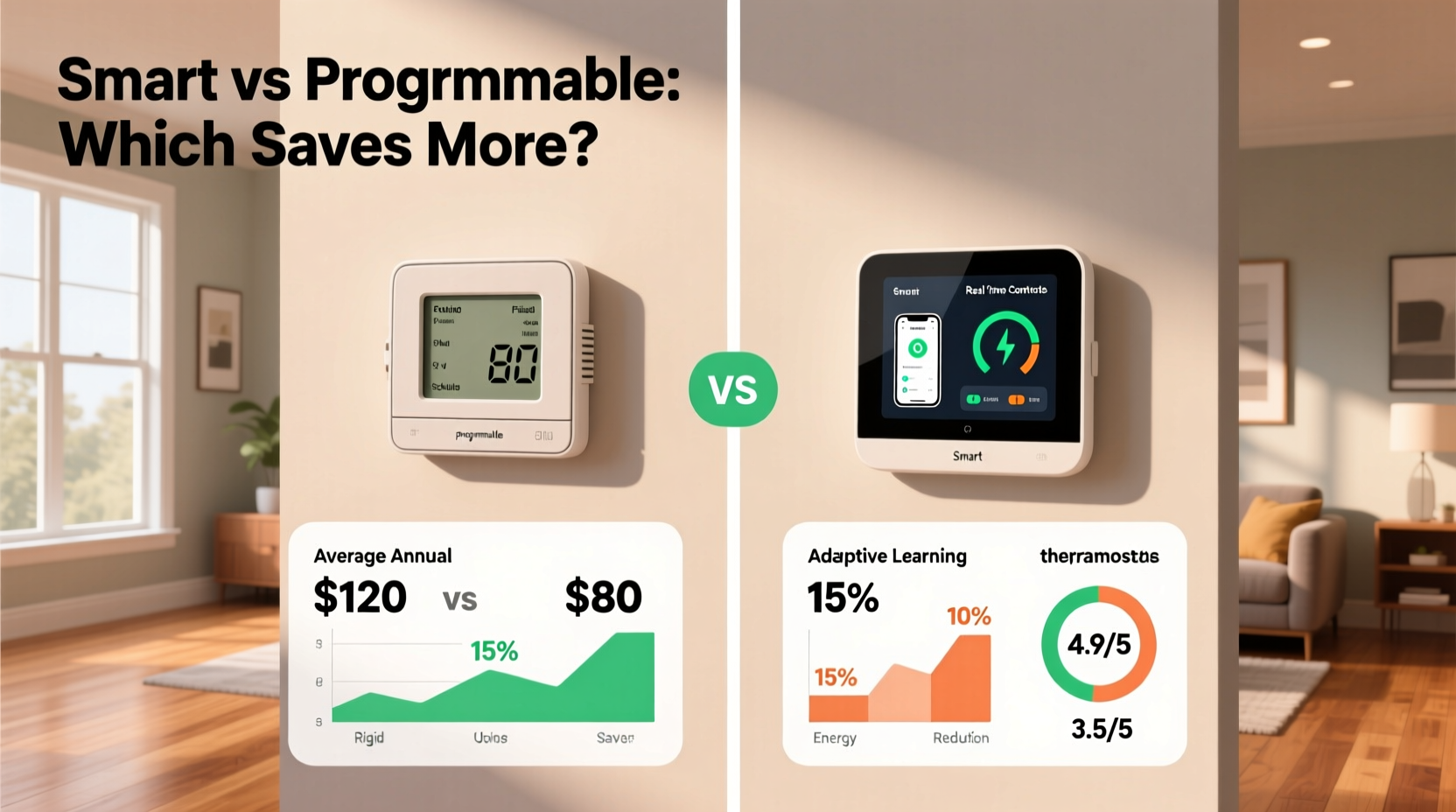
A programmable thermostat allows users to set temperature schedules in advance. For example, you can program it to lower the heat at night or when no one is home during the day, then return to a comfortable setting before occupants wake up or return. These devices rely entirely on user input and do not adapt to changes in routine or weather.
There are several types of programmable thermostats:
- 7-day models: Best for households with varying weekday and weekend schedules.
- 5-1-1 models: Separate settings for weekdays, Saturday, and Sunday.
- 5-2 models: One schedule for weekdays, another for weekends.
- 1-time-per-day models: Basic option that adjusts only once daily (least flexible).
Theoretically, a properly programmed model can save up to 10% annually on heating and cooling, according to the U.S. Department of Energy. However, studies show most users don’t set them correctly—or at all. A 2010 report by the National Renewable Energy Laboratory found that only 40% of homeowners with programmable thermostats used them as intended.
How Smart Thermostats Work
Smart thermostats go beyond scheduling by learning your habits, responding to environmental conditions, and integrating with other smart home systems. Devices like the Nest Learning Thermostat, Ecobee, and Honeywell Home T9 use sensors, Wi-Fi connectivity, and machine learning to optimize temperature control automatically.
Within a week or two of installation, many smart thermostats begin to recognize patterns—when you wake up, leave for work, come home, and go to bed. They adjust temperatures accordingly, even accounting for early returns or unexpected stays at home. Some models detect occupancy via motion sensors or geofencing (using smartphone location) to avoid heating or cooling empty homes.
Additional features include:
- Remote access via mobile app
- Voice control compatibility (Alexa, Google Assistant, Siri)
- Energy usage reports and efficiency tips
- Integration with HVAC diagnostics
- Weather adaptation (e.g., pre-cooling before a heatwave)
Unlike programmable models, smart thermostats require minimal ongoing input. Once installed and initially configured, they operate autonomously while continuously refining their behavior.
“Smart thermostats represent a shift from manual control to intelligent automation. The best models don’t just respond to schedules—they anticipate needs.” — Dr. Laura Simmons, Building Efficiency Researcher at Rocky Mountain Institute
Comparing Energy Savings: Data & Real-World Performance
While both thermostat types aim to reduce waste, their actual savings differ significantly due to usability and intelligence.
The U.S. Environmental Protection Agency (EPA) estimates that homeowners can save an average of $131–$145 per year using ENERGY STAR-certified smart thermostats. In contrast, programmable thermostats offer theoretical savings of about $180 per year—but only if used correctly. Given widespread misconfiguration, real-world savings often fall below $50.
A 2021 study by the American Council for an Energy-Efficient Economy (ACEEE) analyzed data from over 10,000 homes and found:
| Thermostat Type | Avg. Annual Savings (Actual) | User Engagement Required | Adaptability |
|---|---|---|---|
| Programmable (correctly used) | $130–$180 | High | None |
| Programmable (typical use) | $30–$60 | High | None |
| Smart Thermostat | $120–$155 | Low | High |
| Smart + Multi-Sensor Setup | $160–$200 | Low | Very High |
The data shows that while both technologies have similar peak savings potential, smart thermostats consistently deliver better results because they eliminate human error. Their ability to adapt to lifestyle changes—like working from home during winter months or going on vacation—ensures continued efficiency without manual reprogramming.
Mini Case Study: The Thompson Family’s Upgrade
The Thompsons, a family of four in Columbus, Ohio, had used a basic programmable thermostat for years. They intended to save money by lowering the heat overnight and during school/work hours. But inconsistent programming—often overridden due to late nights or schedule changes—meant the system rarely ran as planned.
In January, they installed a Nest Learning Thermostat. Over the next six weeks, the device learned their routines: kids waking at 6:45 a.m., parents leaving by 8:00 a.m., everyone returning between 5:30 and 6:30 p.m. It also detected when the basement playroom was occupied and adjusted zone temperatures accordingly using a remote sensor.
By April, their heating bill had dropped 18% compared to the same period the previous year—despite a colder-than-average winter. Their spring cooling costs were down 14% due to pre-cooling optimization and automatic fan shutoffs. The family reported no loss in comfort and appreciated the monthly energy reports showing exactly where savings came from.
They recouped the $249 device cost in just under 16 months through reduced energy spending and a $75 utility rebate.
Step-by-Step Guide to Choosing the Right Thermostat
Selecting the right thermostat depends on your lifestyle, technical comfort, and long-term goals. Follow this process to make an informed decision:
- Assess your current usage: Review 12 months of heating and cooling bills to establish a baseline.
- Evaluate your routine: Is it consistent (good for programmable) or variable (better for smart)?
- Check HVAC compatibility: Ensure the thermostat works with your system (e.g., heat pump, multi-stage furnace).
- Determine connectivity needs: Do you want remote access or voice control?
- Set a budget: Programmable models start at $30; smart thermostats range from $100–$250.
- Look for rebates: Many utilities offer discounts on ENERGY STAR models—check DSIREusa.org.
- Install and configure: Hire an electrician if wiring is unclear, especially for C-wire requirements.
- Monitor performance: Track energy bills and usage reports for 3–6 months to assess ROI.
Checklist: Features That Maximize Savings
Whether you choose programmable or smart, ensure your thermostat includes these key features:
- ✅ Accurate temperature sensing (±0.5°F)
- ✅ Scheduling flexibility (multiple periods per day)
- ✅ Vacation mode or hold override
- ✅ Compatibility with humidifiers or ventilation systems
- ✅ ENERGY STAR certification (for verified efficiency)
- ✅ Alerts for system maintenance (e.g., filter changes)
- ✅ Remote access via app (smart models only)
- ✅ Occupancy detection (motion or geofencing)
- ✅ Weather responsiveness (forecast-based adjustments)
- ✅ Detailed energy reporting and historical trends
Frequently Asked Questions
Do smart thermostats really save more than programmable ones?
Yes, in real-world conditions. While both can achieve similar theoretical savings, smart thermostats consistently outperform because they adapt automatically. Studies show that user error reduces programmable thermostat savings by 50–70%, whereas smart models maintain optimal performance with minimal input.
Can I save money with a programmable thermostat if I’m diligent?
Absolutely. If you’re highly disciplined about setting and maintaining an accurate schedule—and stick to a predictable routine—a programmable thermostat can deliver solid savings. However, any deviation (e.g., working late, weekend trips) can negate those gains unless manually adjusted.
Are smart thermostats worth the higher upfront cost?
For most households, yes. The average payback period is 12–24 months, depending on climate and energy rates. Additional benefits—remote control, maintenance alerts, integration with smart homes—add long-term value beyond energy savings.
Conclusion: Making the Smarter Investment
When comparing smart thermostats versus programmable ones, the evidence points clearly toward intelligent automation as the superior choice for saving on energy bills. Programmable models depend heavily on user discipline, and real-world data shows most people fail to use them effectively. Smart thermostats, by contrast, learn, adapt, and optimize with little effort, delivering consistent savings across diverse lifestyles.
The initial cost difference is narrowing, and with frequent utility rebates, the financial barrier is lower than ever. More importantly, smart thermostats offer peace of mind: you’re not just setting temperatures—you’re building a responsive, efficient home environment.




 浙公网安备
33010002000092号
浙公网安备
33010002000092号 浙B2-20120091-4
Comments
No comments yet. Why don't you start the discussion?