
Keys are among the most frequently used personal items, yet they’re often tossed into pockets, bags, or bowls in disarray. This not only leads to frustration when you're running late but also increases the risk of losing them. A growing number of people are turning to an elegant, compact solution: the coin purse keychain. Originally designed for holding spare change, modern coin purses—especially those with keyring attachments—are proving to be surprisingly effective tools for key organization. By merging functionality with minimalist design, this approach streamlines daily routines while enhancing both accessibility and security.
Why Traditional Keychains Fall Short
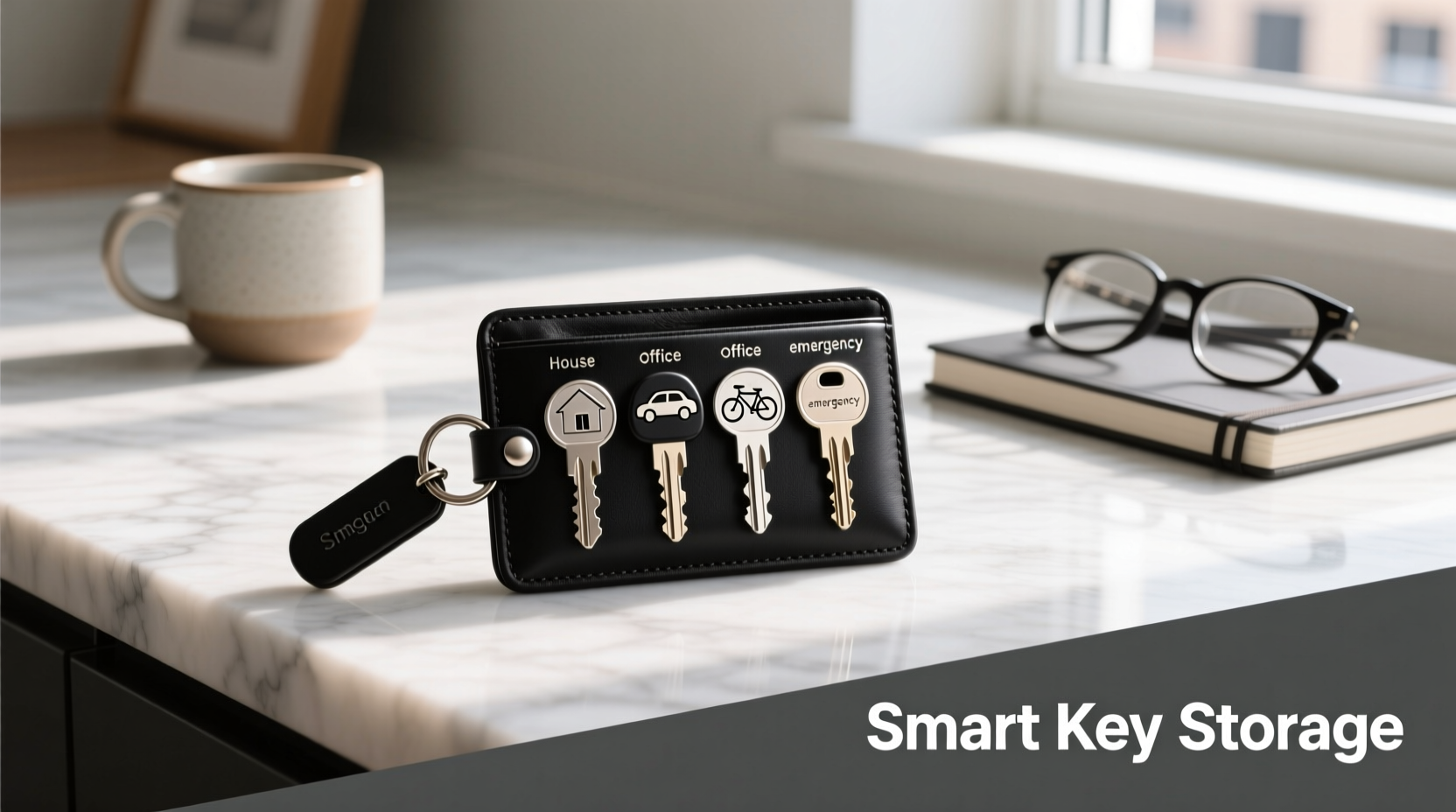
Most standard keychains involve stacking multiple keys on a single ring. Over time, this creates a bulky cluster that’s hard to manage. The jingling noise can be irritating, and sorting through keys at night or in dim lighting becomes a game of guesswork. Worse, exposed metal edges can scratch phones, wallets, or other valuables in your bag. Additionally, having all keys together means losing one ring could mean losing access to everything—from your front door to your car and office.
A coin purse keychain solves these problems by containing keys within a small, zippered compartment. This keeps them quiet, protected, and grouped intelligently. Unlike traditional rings, it allows for categorization and reduces visual and physical clutter.
How a Coin Purse Keychain Enhances Organization
The real advantage lies in intentional design. A well-used coin purse keychain isn’t just about storage—it’s about systematizing access. Here’s how it works:
- Compartmentalization: Most coin purses have at least one interior pocket, allowing you to separate house keys from car keys or office access cards.
- Protection: The zipper enclosure shields keys from dust, moisture, and accidental drops.
- Portability: Compact size makes it easy to slip into a jeans pocket or attach directly to a wallet or bag strap.
- Discreetness: No more noisy jingling or visible metal protrusions—ideal for professional settings or travel.
This method aligns with principles promoted by organizational experts who emphasize “containment zones” for high-use items. As Marie Kondo notes, “If you can see the clutter, you feel the clutter.” A sleek coin purse removes visual chaos while keeping essentials within reach.
“Small containers that group related items reduce decision fatigue and increase efficiency in everyday routines.” — David Parnell, Organizational Psychologist
Step-by-Step Guide to Optimizing Your Key System
Switching to a coin purse keychain requires more than just buying one—it demands thoughtful setup. Follow this sequence to maximize its potential:
- Inventory Your Keys: Lay out every key you carry. Remove duplicates, old apartment keys, or rarely used ones.
- Categorize by Use: Group keys into logical sets (e.g., home, work, vehicle, emergency).
- Select the Right Purse: Pick a coin purse with internal loops, elastic straps, or labeled sections if available.
- Attach Keys Strategically: Use split rings or mini key holders inside the purse to keep each set separate.
- Label If Needed: Use tiny colored tags or nail polish dots to distinguish similar-looking keys.
- Test Accessibility: Open the purse and retrieve each key quickly. Adjust layout until retrieval takes under 5 seconds.
Once configured, resist the urge to add random keys “just in case.” Stick to your categories to maintain order.
Do’s and Don’ts of Using a Coin Purse Keychain
| Do’s | Don’ts |
|---|---|
| Use a purse with a sturdy zipper and reinforced stitching | Overstuff the purse, making it hard to close |
| Include a backup house key wrapped in foil for emergencies | Store sharp objects like box cutters with keys |
| Attach the purse to your main wallet via a short chain | Forget to clean out lint and debris monthly |
| Choose neutral colors that match your everyday carry | Rely solely on it without digital backups (e.g., smart lock codes) |
Real-Life Example: Sarah’s Commute Upgrade
Sarah, a project manager in Chicago, used to carry six keys on a large chrome ring. She often fumbled during morning commutes, especially when rushing to unlock her bike, enter her building, and start her car—all before 8 a.m. After misplacing her entire set once (costing $180 in replacements), she switched to a slim leather coin purse keychain.
She divided her keys into three color-coded groups: red for home, blue for office, and black for her car. Inside the purse, she added a microfiber liner to prevent scratches. Now, she retrieves keys silently and confidently, even in freezing winter gloves. “It’s quieter, safer, and honestly makes me feel more put-together,” she says. “I didn’t realize how much mental energy I wasted digging for keys until it was gone.”
Maximizing Security Without Sacrificing Convenience
Security is where the coin purse keychain truly shines. Because keys are enclosed, they’re less likely to be snatched from pockets or accidentally left behind. Some models even feature RFID-blocking lining, which protects nearby credit cards or access fobs from digital theft.
For added safety, consider these practices:
- Keep a digital photo of your keys labeled with their purpose—useful for replacements.
- Store one backup set in a secure location (like a fireproof safe) rather than carrying extras.
- Avoid engraving personal information (e.g., “Home – 123 Oak St”) on key tags.
Frequently Asked Questions
Can I fit multiple keys in a small coin purse?
Yes, as long as you limit the number and use compact key organizers inside. Most standard coin purses comfortably hold 3–5 keys when arranged flat. Avoid stacking more than two thick keys (like older-style door keys) unless the purse is specifically designed for bulk.
What if I need quick access to a key in an emergency?
Practice retrieving your most critical key (e.g., house or car) until it becomes second nature. Opt for a purse with a smooth-gliding zipper and consider leaving the most-used key slightly protruding through the opening—if the design allows—while still maintaining security.
Are coin purse keychains suitable for travel?
Absolutely. They prevent lost keys in unfamiliar environments and make airport security checks smoother since you won’t need to dump loose keys into a bin. Many travelers appreciate the reduced noise and compact footprint in carry-ons.
Checklist: Setting Up Your Smart Key System
- ✔ Audit and remove unnecessary keys
- ✔ Purchase a durable coin purse with a secure closure
- ✔ Group keys by function (home, work, vehicle, etc.)
- ✔ Use small rings or clips to bundle each group
- ✔ Label keys subtly for fast identification
- ✔ Attach the purse to your wallet or daily bag
- ✔ Test retrieval speed and adjust layout as needed
- ✔ Add a digital tracker for peace of mind
Conclusion: Reclaim Control Over Your Daily Routine
Organizing your keys might seem trivial, but the cumulative effect of small efficiencies shapes your day. A coin purse keychain is more than a fashion accessory—it's a functional upgrade that reduces stress, enhances security, and reflects intentionality. In a world full of distractions, mastering the details matters. Take a few minutes today to streamline your keys. The result? Fewer missed trains, quieter mornings, and a subtle sense of control over your environment.




 浙公网安备
33010002000092号
浙公网安备
33010002000092号 浙B2-20120091-4
Comments
No comments yet. Why don't you start the discussion?