
Sweatpants have evolved from purely functional athletic wear into a staple of casual wardrobes worldwide. Whether lounging at home, running errands, or stepping into a hybrid work environment, sweatpants offer comfort and versatility. But when it comes to choosing between solid and patterned styles, does the design really make a difference? Beyond aesthetics, factors like durability, versatility, maintenance, and even psychological impact come into play. This guide explores how style influences real-world use and helps you decide which option aligns best with your lifestyle.
Functionality First: What Sweatpants Are Meant to Do
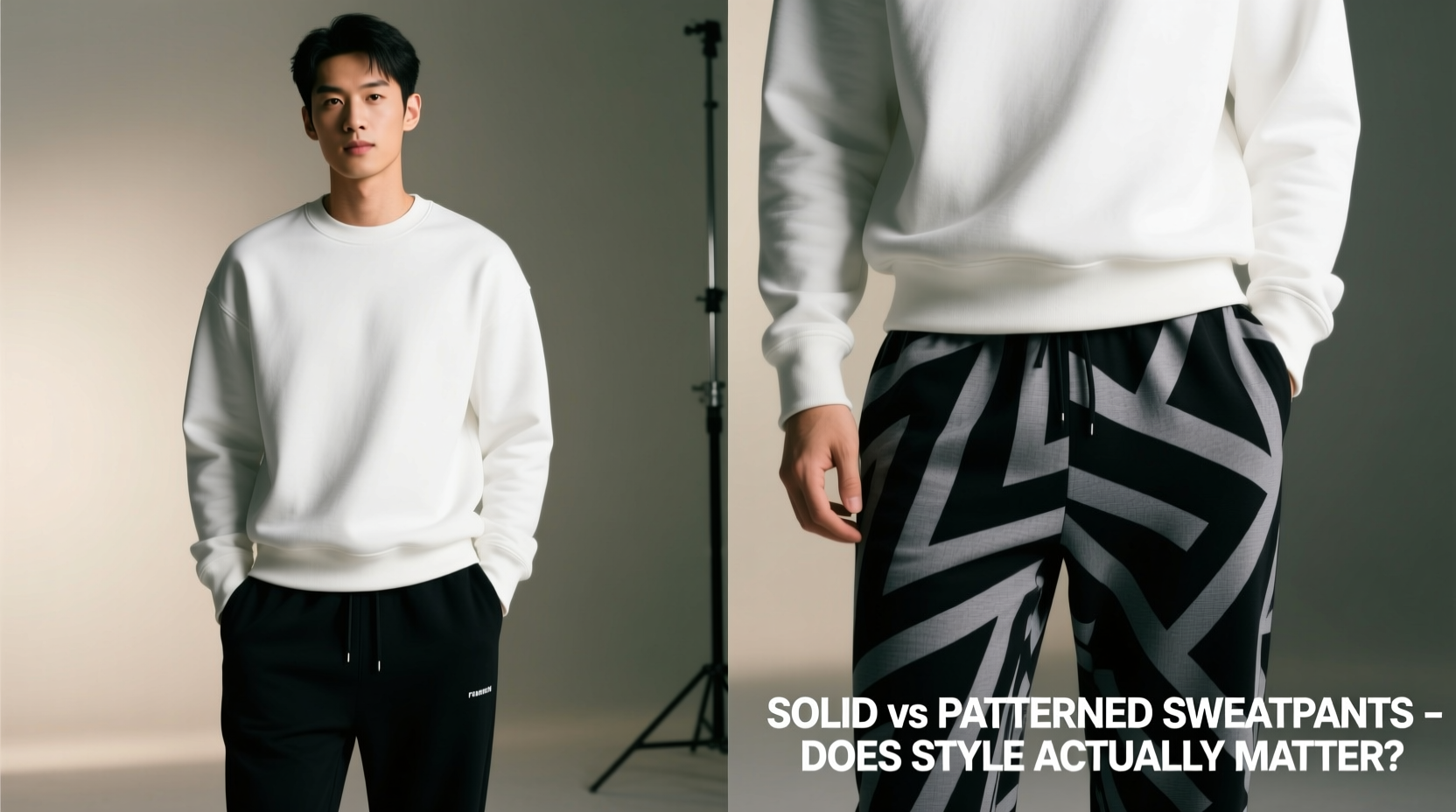
At their core, sweatpants were designed for performance—specifically, to wick moisture and provide warmth during physical activity. Modern versions maintain this purpose but are now just as likely to be worn off the track as on it. The material, cut, and construction affect comfort and mobility far more than color or print. However, patterns can influence fabric behavior. For example, large all-over prints may require additional layers of dye or coating, which can slightly stiffen the fabric or reduce breathability.
Solid-colored sweatpants typically use simpler dye processes, preserving the softness and stretch of cotton-blend or fleece materials. In contrast, patterned variants—especially those with digital sublimation prints—may alter the hand feel of the fabric, making them slightly less plush. While not a dealbreaker, this subtle difference matters for users prioritizing maximum comfort.
Versatility in Wardrobe Pairing
One of the most tangible differences between solid and patterned sweatpants lies in styling flexibility. Solid colors—particularly black, gray, navy, and beige—act as neutral bases that pair easily with nearly any top, jacket, or footwear. They integrate seamlessly into minimalist, monochrome, or athleisure looks without drawing excessive attention.
Patterned sweatpants, on the other hand, make a statement. Stripes, camo, tie-dye, or graphic motifs serve as focal points in an outfit. While this can elevate personal style, it also limits pairing options. A bold camo print might clash with a busy hoodie, while vertical stripes could visually conflict with a striped t-shirt.
“Simplicity in basics allows for creativity in layering. Solid sweatpants are the blank canvas of casual dressing.” — Jordan Lee, Menswear Stylist & Lifestyle Blogger
Styling Comparison: Solid vs Patterned
| Attribute | Solid Sweatpants | Patterned Sweatpants |
|---|---|---|
| Outfit Flexibility | High – pairs with any top or shoe | Moderate to Low – requires careful coordination |
| Fashion Statement | Subtle, understated | Bold, expressive |
| Daily Wear Suitability | Ideal for frequent rotation | Better for occasional or themed wear |
| Professional-Casual Transition | Easier (e.g., with blazer or clean sneakers) | Challenging unless pattern is minimal |
Durability and Maintenance Considerations
The longevity of sweatpants isn’t solely determined by fabric weight or stitching—it’s also influenced by design. Solid-colored garments generally hold up better over time. Repeated washing tends to fade dyes evenly, so minor discoloration is less noticeable. In contrast, patterned sweatpants may show uneven fading, especially if the print uses multiple ink types or sits atop a light base fabric.
Additionally, some patterned designs rely on screen printing or heat transfers, which can crack or peel after several washes. Sublimated prints are more durable but often come at a higher cost. Consumers who prioritize low-maintenance clothing may find solid options more practical in the long run.
Real Example: The College Student’s Dilemma
Alex, a university student balancing classes, part-time work, and social life, owned two pairs of sweatpants: black solids and camo-patterned. Over six months, both received similar wear and laundering. By semester’s end, the camo pair showed visible fading along the thighs and seat, with slight cracking near the pocket edges. The black pair retained its appearance despite more frequent use. Alex noted, “I reach for the black ones every time. They look cleaner, match everything, and survive my laundry habits.”
This scenario reflects a broader trend: high-use environments favor simplicity in design. When convenience and resilience are priorities, solid styles consistently outperform their patterned counterparts.
Psychological and Social Perception
Clothing choices subtly influence both self-perception and how others view us. Research in environmental psychology suggests that wearing neutral, cohesive outfits can enhance feelings of control and readiness. Solid sweatpants contribute to a put-together aesthetic, even in relaxed settings. They signal intentionality rather than mere comfort-seeking.
Patterned sweatpants, particularly loud or novelty prints, often evoke associations with leisure, rebellion, or youth culture. While this can be empowering in certain contexts—like music festivals or creative workplaces—it may undermine professionalism in others. A manager attending a casual Friday meeting in solid gray sweatpants will likely be perceived differently than one in neon tie-dye.
That said, personal expression matters. For individuals using fashion as a tool for identity, patterned sweatpants offer valuable creative freedom. The key is alignment with context and audience.
Checklist: Choosing the Right Style for Your Needs
- ✅ Assess your primary use: lounging, commuting, working from home?
- ✅ Evaluate your existing wardrobe: do you own many patterned tops?
- ✅ Consider laundry frequency: will they be washed weekly?
- ✅ Think about longevity: do you want a long-term staple or seasonal item?
- ✅ Reflect on self-expression: do you value standing out or blending in?
When Patterned Sweatpants Shine
Despite the advantages of solid styles, patterned sweatpants have legitimate strengths. They excel in situations where individuality takes precedence over subtlety. Limited-edition collaborations, holiday-themed designs, or artist-inspired prints turn sweatpants into collectible items. Athletes and fans often wear team-branded or national flag-patterned sweatpants to show allegiance.
Moreover, patterns can serve functional purposes. Camouflage prints, for instance, effectively hide dirt and stains—ideal for outdoor activities or travel. Subtle pinstripes or tonal geometric patterns add visual interest without overwhelming an outfit, offering a middle ground between plain and flashy.
“Patterned activewear has grown because people want comfort *and* identity. It’s not just about hiding in sweatpants anymore.” — Dr. Lena Patel, Fashion Psychologist at Royal College of Art
Frequently Asked Questions
Do patterned sweatpants shrink more than solid ones?
Not inherently. Shrinkage depends on fabric composition and care instructions, not the presence of a pattern. However, some printed fabrics may have blended fibers or coatings that react differently to heat, so always follow label guidelines.
Can I wear patterned sweatpants to a casual office?
It depends on workplace culture. In creative industries, subtle patterns like micro-checks or tonal jacquards may be acceptable. Bold graphics or neon prints are best reserved for outside work hours.
Are solid sweatpants more expensive?
Generally, no. Solid colors are often less costly to produce. Patterned versions, especially those with complex prints or licensing fees (e.g., branded designs), may carry a premium price.
Final Thoughts: Style Matters—But Context Matters More
The debate between solid and patterned sweatpants isn’t about declaring a universal winner. It’s about matching form to function. Solid styles win in versatility, durability, and adaptability—making them ideal for daily wear, multi-environment use, and long-term investment. Patterned options bring flair, personality, and cultural resonance, serving best as accent pieces or self-expression tools.
Ultimately, your choice should reflect your lifestyle, values, and how you want to feel in your clothes. You don’t need to pick one side permanently. A balanced wardrobe might include two solid pairs for reliability and one patterned pair for fun—a pragmatic yet expressive approach.




 浙公网安备
33010002000092号
浙公网安备
33010002000092号 浙B2-20120091-4
Comments
No comments yet. Why don't you start the discussion?