
Candles are more than just sources of light—they evoke mood, comfort, and ambiance. As consumers become increasingly conscious about indoor air quality and sustainability, the debate between soy wax and paraffin candles has intensified. One of the most frequently asked questions centers on whether a candle’s “clean burn” directly influences its ability to project fragrance—commonly known as scent throw. The answer isn’t straightforward, but understanding the chemistry, combustion behavior, and material properties of each wax type reveals important insights.
At first glance, soy wax is often marketed as the healthier, cleaner-burning alternative, while paraffin remains the dominant choice in commercial fragranced candles due to its superior scent-carrying capacity. But does choosing a cleaner-burning wax compromise your candle’s ability to fill a room with fragrance? Or can you have both purity and potency?
The Science Behind Scent Throw
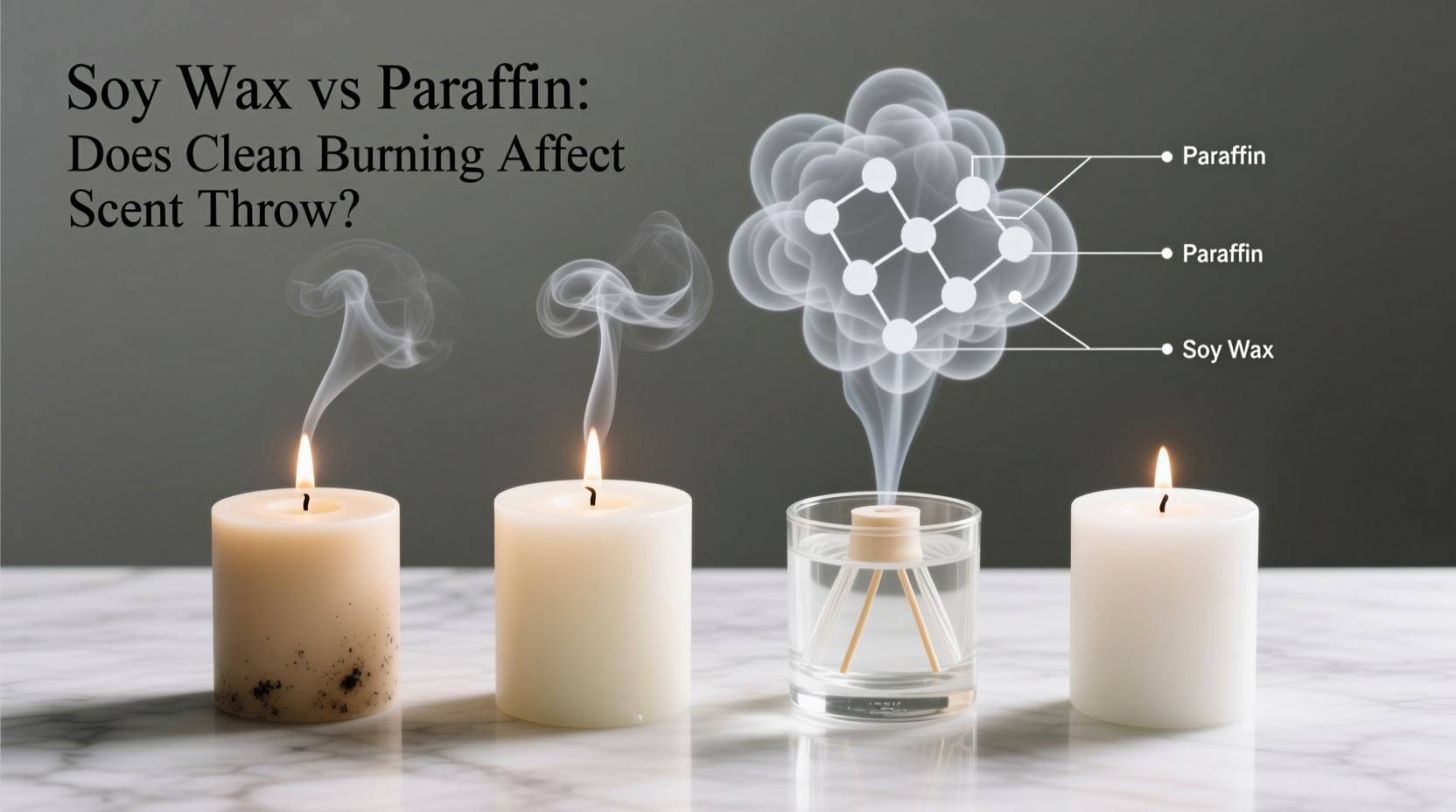
Scent throw refers to how effectively a candle disperses fragrance into the surrounding environment. It consists of two components: cold throw (the scent emitted when the candle is unlit) and hot throw (the strength and clarity of fragrance when the candle is burning).
Hot throw depends on several interrelated factors:
- Wax composition: Determines how well fragrance oils are retained and released.
- Melt pool depth: A deeper, consistent melt pool allows more fragrance oil to vaporize.
- Combustion efficiency: How completely the wax burns affects soot and odor interference.
- Fragrance load: The percentage of fragrance oil added to the wax (typically 6–10%).
- Wick selection: Influences flame temperature and fuel delivery rate.
Clean burning—defined as minimal soot, smoke, and volatile organic compound (VOC) emissions—plays a subtle but significant role in scent throw. While it doesn’t directly increase fragrance intensity, a cleaner burn reduces olfactory interference, allowing the true notes of the fragrance to shine through without being masked by acrid or chemical odors.
Soy Wax: Clean Burn Champion with Trade-offs
Derived from hydrogenated soybean oil, soy wax is a natural, renewable, and biodegradable material. It burns cooler and slower than paraffin, producing significantly less soot and fewer toxins. This makes it a favorite among eco-conscious consumers and those sensitive to indoor air pollutants.
However, soy wax has limitations when it comes to scent throw. Its lower melting point (around 120–130°F) means it releases fragrance more gradually. Additionally, soy wax tends to absorb fragrance oils rather than release them explosively, which can result in a softer hot throw compared to paraffin—especially in larger rooms or drafty spaces.
Another challenge is fragrance retention. Soy wax can sometimes \"sweat\" or \"leach\" fragrance oil if over-poured or stored improperly, leading to inconsistent performance. Yet, when properly formulated—with high-quality fragrance oils, correct wick sizing, and optimized pour temperatures—many soy candles achieve excellent scent projection.
“Soy wax offers a cleaner profile, but achieving strong scent throw requires precision in formulation. It’s not inherently weaker—it’s different.” — Dr. Lena Torres, Materials Chemist & Candle Formulation Consultant
Paraffin Wax: The Fragrance Powerhouse with Environmental Costs
Paraffin wax is a petroleum byproduct refined from crude oil. It has been the standard in candle making for over a century due to its excellent fragrance-holding capacity, consistent texture, and reliable performance across a wide range of conditions.
Paraffin’s higher melting point (130–170°F) allows for a hotter, more robust flame, which vaporizes fragrance oils more aggressively. This contributes to a stronger initial scent burst and broader diffusion. In blind tests, paraffin candles often outperform soy in terms of immediate hot throw, particularly with complex or heavy base-note fragrances like sandalwood, vanilla, or musk.
However, paraffin candles produce more soot and emit trace amounts of benzene, toluene, and other VOCs when burned—especially if low-quality wicks or dyes are used. While occasional use poses minimal risk to most people, continuous burning in poorly ventilated spaces can contribute to indoor air pollution.
That said, not all paraffin is created equal. Fully refined food-grade paraffin, used in premium candles, burns much cleaner than industrial-grade variants. When paired with cotton or wood wicks and phthalate-free fragrance oils, modern paraffin candles can offer a balance of performance and safety.
Comparative Analysis: Soy vs Paraffin
| Feature | Soy Wax | Paraffin Wax |
|---|---|---|
| Source | Renewable (soybeans) | Non-renewable (petroleum) |
| Burn Temperature | Lower (120–130°F) | Higher (130–170°F) |
| Soot Production | Minimal (when properly wicked) | Moderate to high (depends on refinement) |
| Scent Throw (Hot) | Gradual, moderate to good | Strong, immediate |
| Fragrance Load Capacity | Up to 10% (with stability issues at high loads) | Up to 12%, more stable |
| Burn Time | Longer (slower burn rate) | Shorter |
| Eco-Impact | Low (biodegradable, sustainable sourcing) | High (fossil fuel derivative) |
| Indoor Air Quality | Superior (fewer emissions) | Potentially compromised |
This table illustrates that neither wax is universally superior. The choice depends on priorities: performance versus environmental and health considerations.
Does Clean Burning Actually Affect Scent Throw?
The short answer: yes, but indirectly. A clean burn doesn’t amplify scent molecules, but it enhances the *perceived* quality and clarity of the fragrance.
When a candle produces excessive soot or emits off-gassing chemicals, these byproducts compete with the intended fragrance in your nasal receptors. This creates a muddled olfactory experience—even if the candle contains a high concentration of fragrance oil. In contrast, a clean-burning soy candle may release fragrance more subtly, but the scent is purer and more accurate to its intended profile.
Consider this analogy: two speakers playing the same song—one with clear audio, the other with static. The volume might be identical, but the clearer speaker delivers a better listening experience. Similarly, a clean-burning candle may not “blast” scent, but it allows you to detect top, middle, and base notes more distinctly.
Moreover, clean-burning candles are less likely to coat walls, furniture, or HVAC filters with soot, preserving the longevity of your home environment. Over time, accumulated soot from paraffin candles can subtly alter ambient odors, creating a background “candle smell” that interferes with fresh fragrance throws.
Mini Case Study: Home Fragrance Testing in Real Conditions
A small-scale test was conducted in a 400-square-foot living space with consistent ventilation. Two candles were evaluated: a premium soy-blend candle with 8% essential-oil-based fragrance and a high-end paraffin candle with 10% synthetic fragrance oil. Both used cotton wicks and were burned for four hours under identical conditions.
Results:
- The paraffin candle produced a noticeable scent within 15 minutes, filling the room quickly with a bold vanilla-amber aroma. However, a faint smoky aftertaste lingered post-extinguish, and a thin film of soot appeared on nearby glass surfaces.
- The soy candle took about 30 minutes to develop a noticeable scent, but once established, the fragrance was smooth, layered, and free of harsh undertones. No visible soot was detected, and the room smelled clean after extinguishing.
Participants preferred the soy candle for daily use due to comfort and air quality, while reserving the paraffin option for short-term, high-impact fragrance needs like masking cooking odors.
Optimizing Scent Throw Without Sacrificing Cleanliness
You don’t have to choose between clean burning and strong fragrance. With careful formulation and usage habits, it’s possible to maximize both. Here’s how:
- Choose blended waxes: Many premium brands use soy-paraffin blends (e.g., 70% soy, 30% paraffin) to balance clean burning with enhanced scent throw.
- Use high-quality fragrance oils: Well-cured, properly diluted oils perform better in any wax matrix.
- Select the right wick: A properly sized wick ensures a full melt pool without mushrooming or smoking.
- Cure your candles: Allow poured candles to cure for 5–7 days (soy) or 3–5 days (paraffin) before burning to improve scent throw.
- Burn in enclosed spaces: Smaller rooms amplify perceived scent strength regardless of wax type.
Checklist: Maximizing Performance from Any Candle
- ✅ Trim wick to ¼ inch before every burn
- ✅ Allow full melt pool (edge-to-edge) on first burn
- ✅ Burn for no more than 4 hours at a time
- ✅ Keep away from drafts to prevent tunneling
- ✅ Store unused candles in cool, dark place
- ✅ Choose candles with transparent ingredient labeling
Frequently Asked Questions
Can I get a strong scent throw with 100% soy candles?
Yes, but it depends on the formulation. High-quality soy wax, properly cured with premium fragrance oils and the correct wick, can deliver excellent scent throw. However, it may take longer to warm up and won’t project as aggressively as paraffin in large spaces.
Are soy candles really healthier?
Generally, yes. Soy wax produces little to no soot and emits fewer harmful compounds when burned with a clean wick. However, health benefits also depend on the fragrance oils used—opt for phthalate-free and non-synthetic options when possible.
Why do some soy candles tunnel or have poor scent throw?
Tunneling is usually caused by improper first burn—if the candle isn’t allowed to form a full melt pool initially, it will continue to burn down the center. Poor scent throw often results from underloading fragrance, using low-quality oils, or incorrect wicking.
Conclusion: Balancing Performance and Purity
The debate between soy wax and paraffin candles isn’t about declaring a single winner—it’s about aligning your choices with your values and environment. If maximum scent throw in a large space is your priority, paraffin may serve you best. But if you value indoor air quality, sustainability, and a truer fragrance experience over time, soy wax offers compelling advantages.
Clean burning doesn’t diminish scent throw; it refines it. By reducing olfactory noise, clean-burning candles allow fragrances to express themselves more authentically. Advances in wax blending and fragrance technology are narrowing the performance gap, making it easier than ever to enjoy both purity and potency.




 浙公网安备
33010002000092号
浙公网安备
33010002000092号 浙B2-20120091-4
Comments
No comments yet. Why don't you start the discussion?