
Choosing between a spreader bar hammock and a parachute hammock isn't just about preference—it's about understanding how each design affects comfort, portability, durability, and ease of setup. While spreader bar hammocks offer an open, bed-like lounging experience, parachute hammocks provide compactness and adaptability for outdoor adventures. The real question is whether the added complexity or limitations of either model justify their benefits in your lifestyle.
Understanding the Core Differences
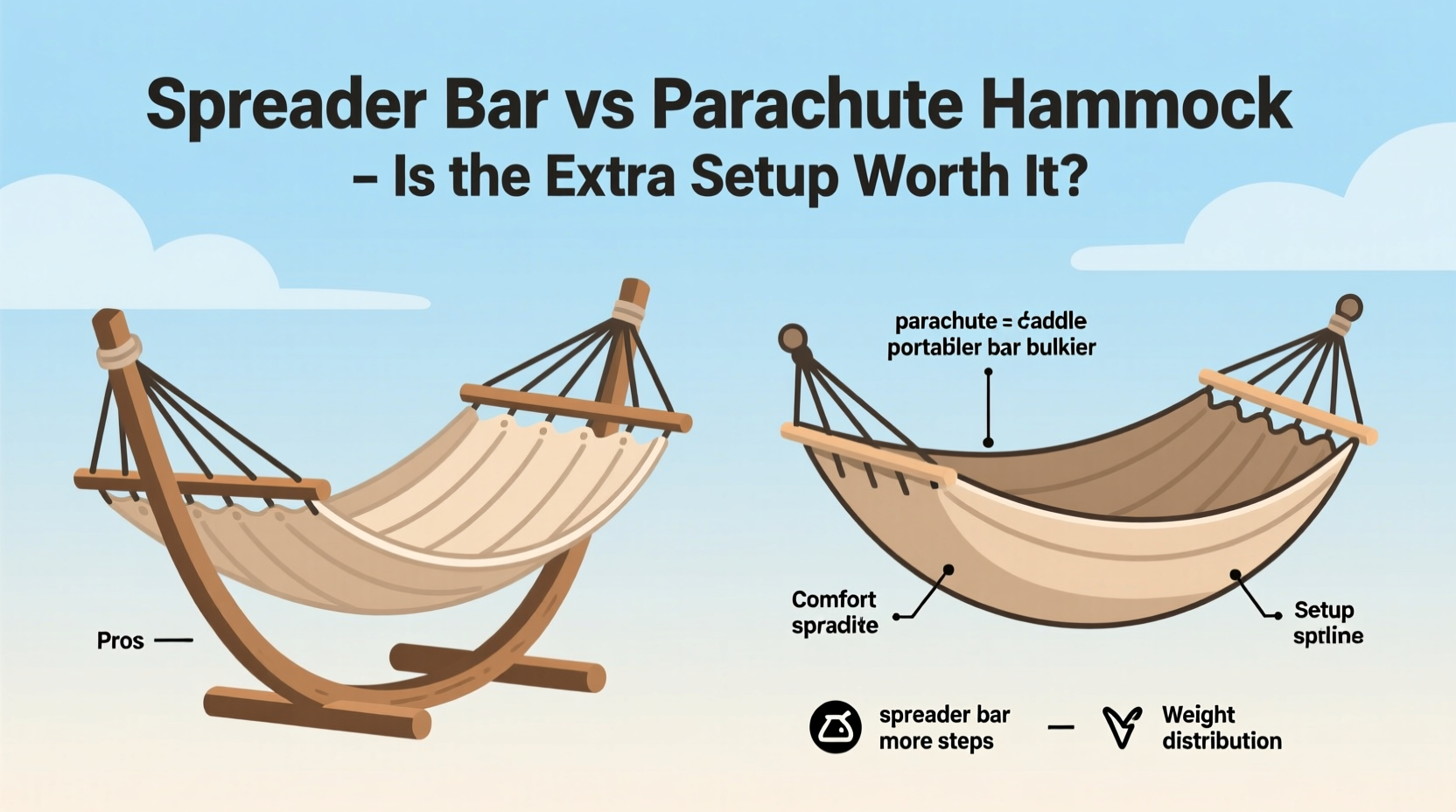
The fundamental distinction lies in structure. Spreader bar hammocks use rigid wooden or metal bars at each end to keep the fabric taut and wide open. This creates a flat, almost mattress-like surface that’s easy to get in and out of. In contrast, parachute hammocks—typically made from lightweight nylon ripstop fabric—lack spreader bars entirely. They rely on suspension systems like tree straps and carabiners, forming a gathered \"nest\" when occupied.
This structural difference influences everything from weight and pack size to stability and wind resistance. Spreader bar models are generally heavier and bulkier, making them better suited for backyard relaxation. Parachute hammocks, on the other hand, can pack down to the size of a grapefruit, ideal for backpackers or minimalist campers.
“Hammock performance isn’t just about comfort—it’s about context. A spreader bar might feel luxurious at home, but it’s nearly useless on a 3-day trail.” — Jordan Lang, Outdoor Gear Specialist
Comfort and Usability Compared
When it comes to lounging, few things beat the immediate accessibility of a spreader bar hammock. You can sit directly into it without sinking deeply, lie flat with minimal body contortion, and enjoy unobstructed views thanks to the elevated head and foot ends.
However, this convenience comes at a cost. Because the fabric is stretched tightly by the spreader bars, there’s less give and pressure distribution. Many users report developing shoulder or hip discomfort after extended use due to poor spinal alignment. The rigid frame also limits how you can position yourself—you can’t easily curl up diagonally as you would in a nest-style hammock.
Parachute hammocks require learning the “banana bend” entry technique: entering at a diagonal angle so your body fills the fabric evenly. Once properly positioned, they conform closely to your shape, distributing weight more uniformly and supporting natural spine curvature. This makes them surprisingly comfortable for long rests or even overnight sleeping—if paired with proper insulation and rain protection.
Portability and Setup: The Real Trade-Off
Here’s where the debate sharpens. Spreader bar hammocks often require two people to set up safely, especially if the bars are long or fragile. Their rigid components make them awkward to transport, and many aren’t designed for repeated assembly and disassembly. Some models come with stands, eliminating the need for trees but adding significant weight and space requirements.
Parachute hammocks shine in mobility. Most full kits—including hammock, straps, and carabiners—weigh under 2 pounds and fit in a small stuff sack. Setup takes under three minutes once practiced: wrap straps around trees, clip in, adjust tension, and go. They’re widely used by hikers, climbers, and festival-goers who value speed and compactness.
Yet, this simplicity has caveats. Finding two well-placed trees within range (typically 10–15 feet apart) is essential. Uneven terrain or sparse woods can complicate placement. Additionally, while parachute hammocks are quick to deploy, achieving optimal comfort requires fine-tuning the sag and height—something beginners often overlook.
Setup Comparison Table
| Feature | Spreader Bar Hammock | Parachute Hammock |
|---|---|---|
| Average Weight | 8–15 lbs | 1–2 lbs |
| Packed Size | 3–4 ft long, bulky | Fist-sized or smaller |
| Setup Time | 5–10 minutes (often two-person) | 2–4 minutes (one-person) |
| Tree Requirement | Specific spacing, sturdy anchors | Flexible range (10–15 ft) |
| Durability (with care) | Moderate (bar joints weaken over time) | High (ripstop resists tears) |
Real-World Use Case: Backpacking vs Backyard Lounging
Consider Sarah, a weekend hiker who also enjoys evening relaxation in her garden. She initially bought a classic spreader bar hammock because she loved how easy it was to lounge in after work. But during a weekend backpacking trip, she realized she couldn’t carry it—nor would it fit in her car alongside gear. After switching to a parachute hammock, she found it transformed her trail experience. It dried quickly after morning dew, weighed next to nothing, and allowed her to nap comfortably in remote spots without clear ground.
Still, at home, she missed the instant usability of her old model. Her solution? Owning both. She keeps the spreader bar version on her patio with a stand and uses the parachute hammock exclusively for travel. Her case illustrates a growing trend: rather than choosing one over the other, many enthusiasts maintain separate hammocks for different purposes.
Step-by-Step Guide: Choosing the Right Option for You
- Evaluate Your Primary Use: Will you mostly relax at home, or do you plan to take it hiking, camping, or traveling?
- Assess Space & Storage: Do you have room for a large, rigid hammock and possibly a stand? Or do you need something that fits in a closet or backpack?
- Consider Physical Ability: Are you able to lift and maneuver a heavier hammock? Can you manage climbing slightly off the ground to enter a suspended nest?
- Test Suspension Options: If going with a parachute hammock, practice setting up with tree-friendly straps. Ensure your local environment supports hanging (trees, beams, etc.).
- Budget for Accessories: Factor in costs for stands (for spreader bars) or insulation pads and tarps (for parachute models).
Common Misconceptions Debunked
- “Parachute hammocks are flimsy.” Modern ripstop nylon is highly durable and UV-resistant. With proper care, these hammocks last years.
- “Spreader bar hammocks are easier to sleep in.” Actually, their tight weave and lack of contouring often lead to back pain. Most experienced hammock campers prefer the diagonal lay of parachute models.
- “You need trees close together for a parachute hammock.” Adjustable straps allow flexibility in span, typically accommodating distances from 10 to 15 feet.
Frequently Asked Questions
Can I leave a parachute hammock outside permanently?
While possible, prolonged exposure to sun, moisture, and debris will shorten its lifespan. UV rays degrade nylon over time, and trapped moisture invites mold. For longevity, bring it indoors when not in use or invest in a protective tarp system.
Are spreader bar hammocks safe for children?
They can be, but caution is needed. The raised ends pose a tipping hazard if a child sits too high or swings aggressively. Supervision is recommended, and soft ground cover helps prevent injury from falls.
Do I need special hardware for a parachute hammock?
No permanent hardware is required. Most come with or pair perfectly with soft, tree-friendly straps that cause no damage. Avoid using rope or chains, which can strip bark and harm trees.
Final Verdict: Is the Extra Setup Worth It?
If your goal is effortless backyard lounging and you have the space, a spreader bar hammock delivers unmatched ease and aesthetic appeal. But if you value versatility, portability, and performance across environments—from forest trails to beach outings—the slight learning curve and extra attention to setup of a parachute hammock pay dividends.
The \"extra setup\" isn’t a drawback—it’s an investment in freedom. Once mastered, hanging a parachute hammock becomes second nature, unlocking access to places traditional models simply can’t go. And for those committed to outdoor living, that flexibility is absolutely worth it.




 浙公网安备
33010002000092号
浙公网安备
33010002000092号 浙B2-20120091-4
Comments
No comments yet. Why don't you start the discussion?