Bag charms have evolved from simple decorative trinkets into meaningful extensions of personal style. Once considered optional add-ons, they now play a central role in fashion storytelling—complementing seasonal wardrobes, reflecting moods, and even signaling trends. But with changing seasons come shifting aesthetics: pastel florals in spring, cozy knits in winter. So, does it actually matter whether your bag charm aligns with the time of year? Or is this just another arbitrary fashion rule waiting to be broken?
The short answer: it depends. While there’s no hard-and-fast law dictating which charm belongs when, understanding the subtle interplay between climate, color theory, materials, and cultural expectations can elevate your styling choices from random to intentional.
Seasonal Aesthetics: What Defines Spring and Winter Style?
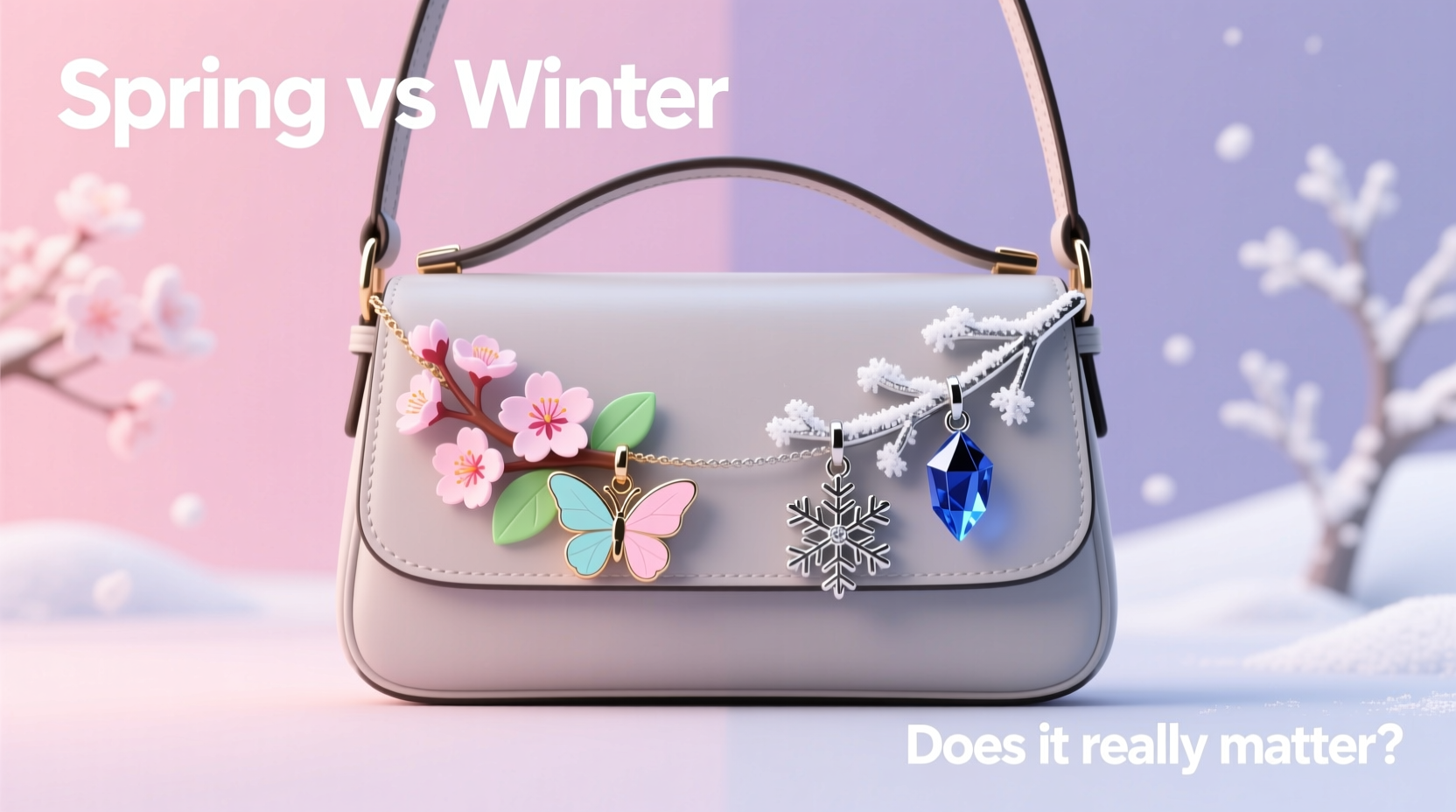
Each season carries its own visual language. These aren’t just marketing tropes—they’re rooted in natural cycles, psychological responses to light and temperature, and historical dressing practices.
- Spring leans toward renewal: soft pinks, mint greens, lilacs, and yellows dominate. Themes include blossoms, birds, butterflies, and raindrops. Lightweight fabrics and airy silhouettes translate into accessory design—think enamel daisies, resin fruit charms, or delicate metal leaves.
- Winter, by contrast, embraces warmth and contrast. Deep navies, burgundies, forest greens, and metallics like gold and silver prevail. Motifs shift to snowflakes, evergreens, reindeer, candles, and cozy textures such as faux fur or knitted pom-poms.
These distinctions influence not only clothing but also the accessories we pair with them. A charm isn't isolated—it interacts with your coat, scarf, handbag color, and overall vibe. Wearing a glittery snowman charm in May might feel out of sync, just as a bright sunflower could seem jarring against a black wool coat in December.
Material Considerations Across Seasons
Beyond appearance, the physical properties of charm materials respond differently to seasonal conditions. This is where practicality intersects with style.
| Material | Best Season | Why | Risks in Opposite Season |
|---|---|---|---|
| Resin / Enamel | Spring | Vibrant colors, glossy finish, lightweight | Fragile under freezing temps; may crack if dropped on ice |
| Faux Fur / Felt | Winter | Insulating texture, warm aesthetic | Can trap moisture in spring rains; prone to mildew |
| Stainless Steel / Metal Alloys | All-season (with care) | Durable, resists corrosion | May get very cold to touch in winter; can fade in prolonged UV exposure |
| Wood / Natural Fibers | Spring/Fall | Eco-friendly, organic look | Swells or cracks with humidity changes; avoid snow and slush |
For example, a wooden bee charm might beautifully complement a linen tote in April, but placing it on a bag exposed to sleet and sidewalk salt in January risks warping and discoloration. Similarly, a plush teddy bear charm feels comforting in winter but may become damp and musty during frequent spring showers.
“Accessories should enhance both your look and your lifestyle. If your charm can’t survive a drizzle or looks out of place at holiday events, it’s not working for you.” — Lena Park, Accessories Curator at Urban Style Lab
Psychological & Cultural Influences on Seasonal Choices
Humans are subconsciously drawn to symbols that mirror their surroundings. In spring, people report higher emotional resonance with growth-oriented imagery—flowers blooming, animals returning. Winter evokes introspection, celebration, and comfort. Bag charms act as micro-expressions of these feelings.
A 2023 consumer behavior study by the Fashion Psychology Institute found that 68% of participants felt more confident using seasonally appropriate accessories. One participant noted: “My cherry blossom charm makes me smile every time I see it in March. In November? It just feels… sad.”
Culturally, holidays amplify seasonal expectations. Christmas markets, Valentine’s Day promotions, and Easter displays reinforce themed charm availability and social acceptability. Retailers stock snow globes in December and ladybugs in May—not just because of demand, but because those items feel *right* in context.
Mini Case Study: Emma’s Cross-Seasonal Charm Experiment
Emma R., a graphic designer in Portland, tested the impact of off-season charms over six months. She wore her favorite winter fox charm—a fluffy orange piece with glass eyes—on her work bag throughout April and May. Despite loving the charm, she noticed colleagues frequently asked if she was “still in holiday mode.” She also found the fur collecting pollen and requiring weekly cleaning.
In contrast, switching to a minimalist seashell charm in June felt refreshing and aligned with local beach outings. Her takeaway: “Even if I love something, timing affects how others perceive it—and how much joy I actually get from it.”
When Season Doesn’t Matter: The Rise of Personal Signature Charms
Not everyone follows seasonal cues—and that’s valid. Many consumers now prioritize identity over tradition. A cat lover might keep a feline charm year-round. Someone recovering from illness might wear a healing crystal charm regardless of calendar month.
This shift reflects broader trends in fashion: individuality over conformity, emotional utility over rigid rules. Brands like Cult Gaia and Staud have responded by offering \"forever charms\"—timeless shapes like moons, initials, or abstract geometrics designed to transcend seasons.
If your charm holds sentimental value, represents a personal milestone, or simply brings daily joy, there’s no obligation to rotate it. Functionality matters more than fashion dogma.
Step-by-Step Guide: How to Choose the Right Charm for Any Season
- Assess your wardrobe palette. Pull out your most-worn coats and bags. Are they light or dark? Neutral or colorful? Choose a charm that complements dominant tones.
- Consider weather exposure. Will your bag face rain, snow, or intense sun? Avoid water-sensitive materials if you walk frequently outdoors.
- Align with upcoming events. Hosting a summer picnic? A pineapple charm adds fun. Attending a winter gala? Opt for something elegant like a crystal droplet.
- Evaluate maintenance needs. Can you clean the charm easily? Faux fur requires brushing; resin wipes clean. High-maintenance pieces may not suit busy seasons.
- Test for emotional resonance. Hold the charm. Does it make you feel uplifted, calm, or powerful? Trust your gut over trends.
Checklist: Season-Ready Charm Rotation
- ☐ Inventory all current charms by material and theme
- ☐ Identify 2–3 go-to pieces for each season
- ☐ Store off-season charms in labeled pouches to prevent damage
- ☐ Clean charms before storing (use mild soap + dry thoroughly)
- ☐ Mark seasonal switch dates on your calendar (e.g., March 1, December 1)
- ☐ Allow flexibility for signature or sentimental charms
Frequently Asked Questions
Can I wear the same charm all year?
Absolutely—if it fits your lifestyle and doesn’t degrade in certain conditions. Minimalist metal charms or engraved pendants often work across seasons. Just ensure they still feel relevant to your current aesthetic.
Are there universal charm themes?
Yes. Initials, moon phases, hearts, stars, and geometric shapes tend to feel timeless. They don’t scream a specific season, making them ideal for permanent attachment.
How do I store off-season charms safely?
Keep them in breathable fabric pouches, away from direct sunlight and moisture. Avoid plastic bags, which can trap humidity and cause tarnishing. For delicate pieces, use divided jewelry boxes.
Conclusion: Let Intention Guide Your Choice
Does it really matter what season it is when choosing a bag charm? Only if you want it to. There’s beauty in harmony—with nature, with fashion cycles, with cultural rhythms. But there’s equal power in defiance, consistency, and personal meaning.
The most thoughtful accessorizing isn’t about following rules—it’s about asking why you choose what you do. Is it habit? Trend pressure? Emotional connection? When you approach your charm selection with intention, the season becomes one factor among many, not a dictator.




 浙公网安备
33010002000092号
浙公网安备
33010002000092号 浙B2-20120091-4
Comments
No comments yet. Why don't you start the discussion?