
In recent years, standing desks have surged in popularity as professionals seek healthier alternatives to prolonged sitting. With growing awareness of sedentary lifestyle risks—such as obesity, cardiovascular disease, and metabolic syndrome—many are turning to standing workstations. But beyond posture and comfort, one question persists: Does standing actually burn more calories than sitting? The answer is yes—but the real story is more nuanced than a simple calorie count.
This article breaks down the metabolic differences between standing and sitting, examines how much energy each posture uses, and provides actionable strategies to make the most of your workspace—whether you're on your feet or in a chair.
The Science Behind Calorie Expenditure
Calories measure the energy your body uses to sustain basic functions and perform physical activity. Even at rest, your body burns calories through processes like breathing, circulation, and cell production—collectively known as your basal metabolic rate (BMR). When you add movement or change posture, that number increases slightly.
Standing requires more muscular engagement than sitting. Your core, leg muscles, and lower back actively stabilize your body against gravity. While this effort is subtle, it demands additional energy compared to sitting, where support comes from the chair.
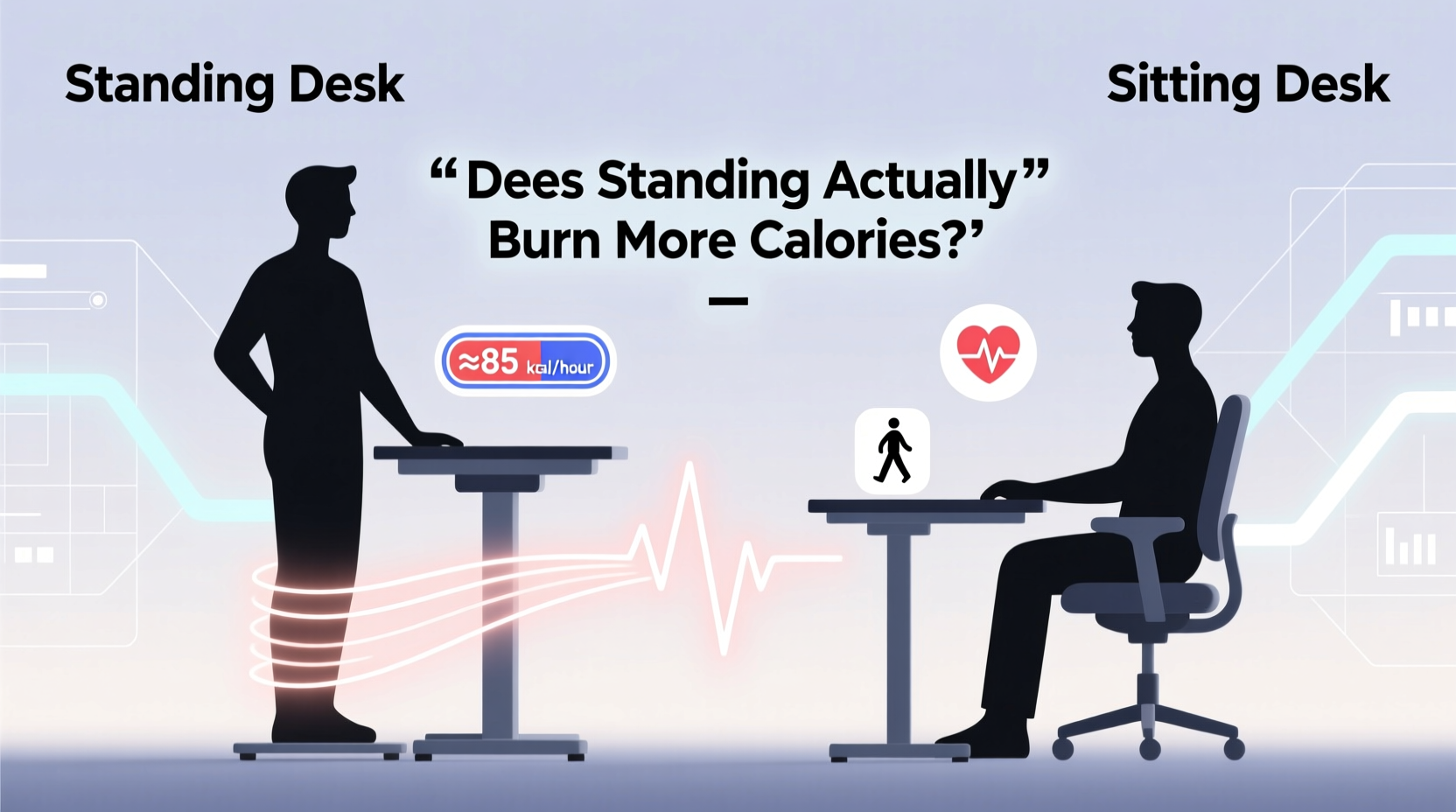
According to research published in the British Journal of Sports Medicine, standing burns approximately 0.15 more calories per minute than sitting. For an average adult weighing around 155 pounds (70 kg), that translates to roughly:
- Sitting: 70–80 calories per hour
- Standing: 85–100 calories per hour
That’s about 15 extra calories burned per hour while standing—a modest gain, but not negligible over time.
Comparing Standing and Sitting: A Data Breakdown
To better understand the long-term impact, consider a typical 8-hour workday under different scenarios:
| Workstation Type | Calories/Hour | Total (8 Hours) | Daily Difference vs. Sitting |
|---|---|---|---|
| Sitting Desk | 75 | 600 | — |
| Standing Desk (static) | 90 | 720 | +120 |
| Standing + Light Movement | 105 | 840 | +240 |
| Treadmill Desk (slow walk) | 150 | 1,200 | +600 |
Over five days, standing instead of sitting could lead to burning an extra 600 calories weekly—equivalent to a 30-minute brisk walk. While this may seem minor, consistent small deficits contribute to long-term weight management.
“Replacing prolonged sitting with light-intensity activities like standing can reduce cardiometabolic risk factors, even if the calorie burn is modest.” — Dr. James Levine, Mayo Clinic researcher and co-inventor of the treadmill desk
Real-World Impact: A Mini Case Study
Consider Sarah, a 32-year-old software developer who spent nearly 10 hours a day seated before developing chronic lower back pain and gaining 12 pounds over two years. Her doctor advised reducing sedentary time. She transitioned to a sit-stand desk, alternating every 30–45 minutes.
Initially, she stood for only two hours daily. Over three months, she gradually increased to four hours, incorporated short walks during calls, and began doing calf raises while reviewing code. She didn’t change her diet, but within six months, she lost 7 pounds and reported improved focus and reduced back discomfort.
Her estimated additional calorie burn? About 200 extra calories per day from standing and micro-movements—totaling roughly 6,000 monthly. While not the sole factor, this shift played a measurable role in her progress.
Maximizing Calorie Burn Without Overexertion
Standing alone isn't a fitness solution, but it can be part of a broader strategy to reduce sedentary behavior. Here’s how to optimize your setup for both health and energy expenditure:
1. Use a Sit-Stand Schedule
Alternate between sitting and standing throughout the day. A common rhythm is 30–45 minutes standing followed by an equal time sitting. This prevents fatigue while maintaining elevated energy use.
2. Add Micro-Movements
Even subtle motions increase calorie burn. Try:
- Gently rocking on your toes
- Shifting weight from one leg to the other
- Performing discreet leg lifts or heel raises
- Stretching arms overhead periodically
3. Pair Standing with Walking Tasks
Use phone calls, brainstorming sessions, or reading time as opportunities to stand or pace. Walking at a slow pace (1–2 mph) while on a call can double your hourly calorie burn compared to sitting.
4. Invest in Anti-Fatigue Mats
These mats encourage subtle muscle activation and improve comfort, making longer standing periods sustainable. Some studies suggest they can increase muscle engagement by up to 15%, indirectly supporting metabolism.
5. Monitor Posture and Fatigue
Poor standing posture—locking knees, slouching, or leaning—reduces benefits and may cause joint strain. Keep your spine neutral, shoulders relaxed, and knees slightly bent.
Actionable Checklist: Optimize Your Standing Desk Routine
Follow this checklist to ensure you’re getting the most out of your standing desk without compromising comfort or productivity:
- ✅ Start with 1–2 hours of standing per day, gradually increasing to 4 hours
- ✅ Alternate between sitting and standing every 30–60 minutes
- ✅ Use an anti-fatigue mat to support foot and leg comfort
- ✅ Position monitor at eye level to avoid neck strain
- ✅ Wear supportive footwear or go barefoot on a cushioned surface
- ✅ Incorporate light movements: shifts, stretches, or mini-squats
- ✅ Take walking breaks during calls or after completing tasks
- ✅ Track your standing time using a smartwatch or app
- ✅ Stay hydrated—water supports metabolic function and reduces false fatigue
- ✅ Listen to your body; stop standing if you experience swelling, dizziness, or pain
Common Myths About Standing Desks Debunked
Despite their popularity, misconceptions persist. Let’s clarify a few:
- Myth: Standing all day helps you lose weight quickly.
Reality: Standing burns only slightly more than sitting. Significant weight loss requires dietary changes and structured exercise. - Myth: Standing desks eliminate the risks of sitting.
Reality: Prolonged standing has its own risks—varicose veins, lower back pain, and foot problems. Balance is key. - Myth: You need expensive equipment to benefit.
Reality: Even a DIY riser or countertop setup can support short standing intervals.
Expert Insight: Rethinking Sedentary Behavior
Dr. Joan Vernikos, former director of NASA’s Life Sciences Division and author of *Sitting Kills, Moving Heals*, emphasizes that it's not just sitting versus standing—it's the lack of movement that matters most.
“The problem isn’t sitting itself, but the uninterrupted duration. Gravity plays a crucial role in circulatory and musculoskeletal health. Frequent transitions—sit to stand, stand to walk—are what stimulate the body.” — Dr. Joan Vernikos
Her research shows that people who frequently change posture throughout the day exhibit better insulin sensitivity, blood pressure regulation, and mental alertness—even if total calorie burn remains modest.
Frequently Asked Questions
How many more calories do you burn standing vs. sitting?
On average, standing burns about 10–15% more calories than sitting. For most adults, that’s roughly 10–15 extra calories per hour. While not dramatic, consistent use over weeks can contribute to energy balance.
Can I lose weight using a standing desk?
Not significantly on its own. Weight loss requires a sustained calorie deficit. However, a standing desk can support weight management when combined with healthy eating and regular physical activity. It also helps prevent weight gain associated with sedentary jobs.
Is it bad to stand all day at work?
Yes. Prolonged standing without breaks can lead to lower limb swelling, varicose veins, and musculoskeletal strain. Experts recommend a balanced approach—no more than 2–4 hours of cumulative standing during an 8-hour day, with frequent shifts in posture and movement.
Conclusion: Small Changes, Meaningful Gains
So, does standing at a desk burn more calories than sitting? Yes—but the true value lies not in the scale, but in the cumulative effect on your health. Standing engages your body in ways sitting simply doesn’t. It encourages better circulation, reduces spinal compression, and fosters a mindset of movement over stagnation.
The goal isn’t to replace sitting entirely, nor to turn your office into a gym. It’s to break the cycle of inactivity that dominates modern work life. Whether you invest in a high-end adjustable desk or improvise with books and a countertop, the principle remains the same: move more, sit less, stand wisely.




 浙公网安备
33010002000092号
浙公网安备
33010002000092号 浙B2-20120091-4
Comments
No comments yet. Why don't you start the discussion?