
The modern office environment has evolved dramatically over the past two decades, yet one constant remains: the standard seated workstation. However, mounting evidence suggests that prolonged sitting may be one of the most insidious habits in today’s work culture. As sedentary behavior is increasingly linked to cardiovascular disease, metabolic dysfunction, and musculoskeletal decline, many professionals are turning to standing desks as a healthier alternative. But do standing desks truly offer measurable long-term advantages over traditional sitting desks? And what does the science actually say?
This article examines the physiological, cognitive, and psychological impacts of standing versus sitting at work, drawing from peer-reviewed studies, longitudinal data, and expert insights. The goal is not to advocate for one extreme over another but to present a balanced, evidence-based comparison that helps individuals make informed decisions about their workspace setup.
The Hidden Cost of Prolonged Sitting
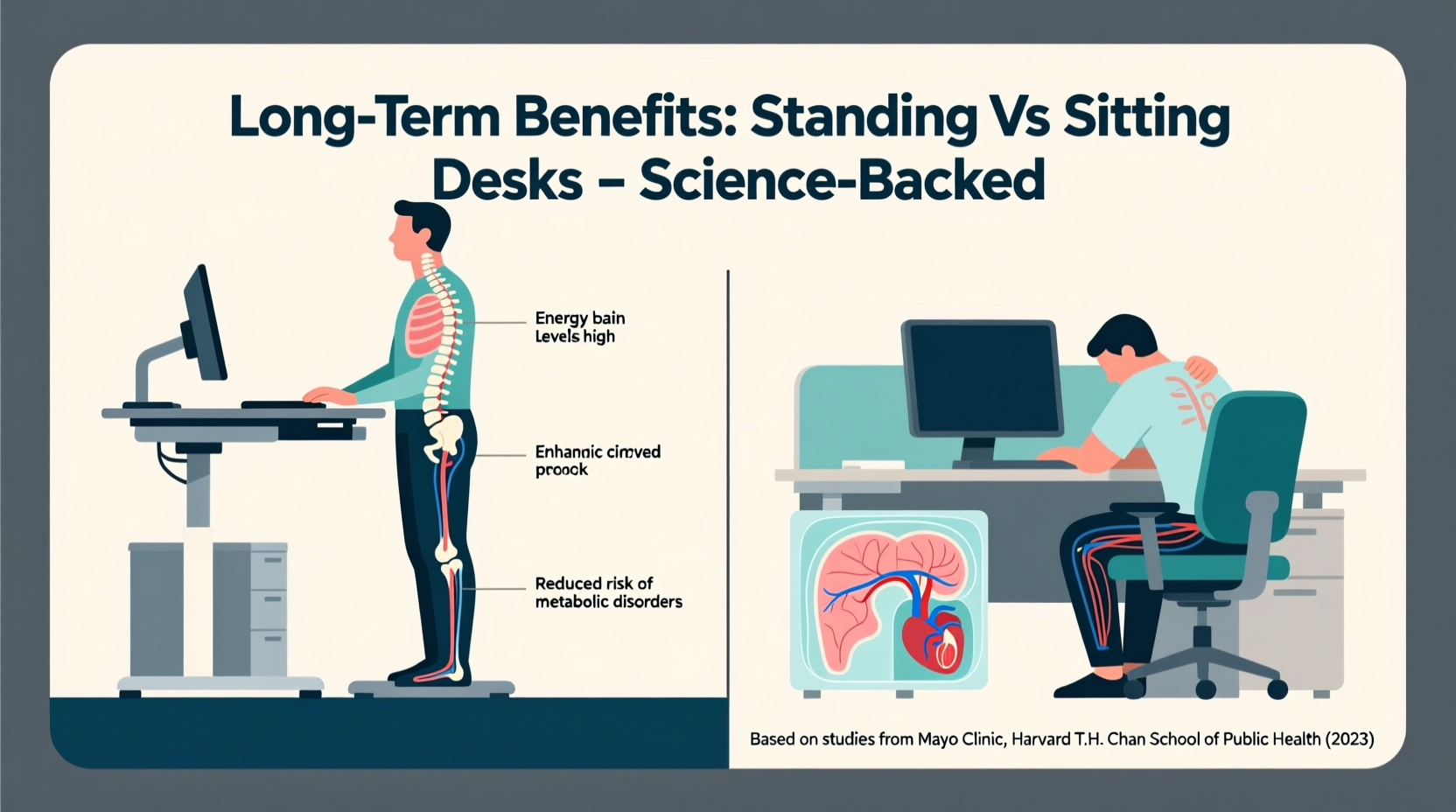
Sitting for extended periods—particularly without breaks—has been labeled “the new smoking” by some health experts, though the comparison is more metaphorical than literal. What is clear, however, is that excessive sitting disrupts normal metabolic function. When muscles remain inactive for hours, they burn fewer calories and exhibit reduced insulin sensitivity. A 2015 meta-analysis published in Annals of Internal Medicine reviewed 47 studies involving over 1 million participants and found that prolonged sedentary time significantly increases the risk of all-cause mortality, cardiovascular disease, cancer, and type 2 diabetes—even among individuals who exercise regularly outside of work.
The human body is designed for movement. Blood circulation slows during prolonged sitting, and lipid processing decreases by up to 90% compared to standing or walking. This contributes to elevated triglyceride levels and increased abdominal fat accumulation over time. Additionally, sustained spinal compression in a seated position can accelerate disc degeneration, especially when ergonomics are poor.
“Sitting is more dangerous than smoking, kills more people than HIV, and is on par with physical inactivity as a leading cause of death.” — Dr. James Levine, Director of Obesity Solutions, Mayo Clinic
Standing Desks: Health Benefits Supported by Research
Standing desks have gained popularity due to their potential to mitigate the harms of sedentary behavior. Multiple clinical trials have demonstrated tangible health improvements associated with regular use of standing workstations.
A 2018 study conducted at the University of Chester followed office workers using standing desks for three consecutive weeks. Participants experienced an average reduction of 43 mmHg in systolic blood pressure, a significant improvement for cardiovascular health. Another trial published in the Journal of Physical Activity and Health showed that alternating between sitting and standing throughout the day increased calorie expenditure by approximately 0.15 kcal per minute—amounting to roughly 50 extra calories burned during an eight-hour shift. While modest, this incremental increase can prevent gradual weight gain over years.
Perhaps more compelling are findings related to musculoskeletal health. A randomized controlled trial in BMC Public Health (2020) reported that employees using sit-stand desks for six months experienced a 54% reduction in upper back and neck pain compared to controls. Furthermore, participants reported improved energy levels and concentration.
Comparative Analysis: Standing Desk vs Sitting Desk
To better understand the long-term trade-offs, consider the following comparison based on key health and performance metrics.
| Metric | Sitting Desk (Prolonged Use) | Standing Desk (Properly Used) |
|---|---|---|
| Cardiovascular Risk | Increased risk of hypertension, heart disease, stroke | Moderate reduction in blood pressure and improved circulation |
| Metabolic Function | Reduced insulin sensitivity, higher risk of type 2 diabetes | Improved glucose regulation and modest calorie burn |
| Musculoskeletal Health | Higher incidence of lower back pain, neck strain | Reduced discomfort, especially when posture is maintained |
| Cognitive Performance | Decline in focus after prolonged static sitting | Enhanced alertness and short-term concentration |
| Long-Term Sustainability | Widely adopted but linked to chronic disease | Requires behavioral adaptation; best used intermittently |
It’s important to note that standing all day is not a solution—it introduces its own risks, including varicose veins, foot pain, and joint stress. The optimal approach lies in dynamic movement rather than static postures, whether sitting or standing.
Real-World Example: A Tech Company's Workplace Intervention
In 2019, a mid-sized software development firm in Austin, Texas, introduced adjustable sit-stand desks across its entire office as part of a wellness initiative. Employees received training on proper usage, including recommended transition schedules and ergonomic alignment. Over 18 months, HR tracked absenteeism, self-reported pain levels, and productivity metrics through anonymous surveys and performance reviews.
The results were notable: employee reports of chronic back pain dropped by 62%, sick days decreased by 17%, and 78% of staff said they felt more energized during afternoon work sessions. Productivity, measured by completed sprint tasks and code review turnaround times, improved marginally but consistently. One developer noted, “I used to crash hard around 3 p.m. Now I switch to standing mode, take a quick lap around the floor, and stay sharp until 5.”
This case illustrates that while equipment matters, education and habit formation are equally critical to realizing long-term benefits.
Best Practices for Sustainable Desk Use
Neither sitting nor standing is inherently superior—the key is variability. Here is a practical checklist to maximize long-term well-being regardless of desk type:
- Alternate between sitting and standing every 30–60 minutes
- Set reminders or use apps to prompt posture changes
- Ensure your monitor is at eye level and arms are at 90 degrees
- Wear supportive footwear if using a standing desk frequently
- Incorporate micro-movements: shift weight, perform calf raises, or stretch lightly
- Avoid locking knees or slouching while standing
- Use an anti-fatigue mat to reduce lower limb strain
Step-by-Step Guide to Transitioning to a Sit-Stand Routine
- Week 1: Begin with two 30-minute standing sessions per day (e.g., mid-morning and mid-afternoon).
- Week 2: Increase to three 45-minute sessions, ensuring proper posture and comfort.
- Week 3: Integrate movement—add a five-minute walk after each standing session.
- Week 4 and beyond: Aim for a 1:1 ratio of sitting to standing during work hours, adjusting based on comfort and workload.
- Ongoing: Evaluate monthly for pain, fatigue, or improvements in energy and focus.
Expert Consensus: Movement Is the Real Solution
While standing desks offer advantages over purely sedentary setups, experts emphasize that movement—not just standing—is the cornerstone of long-term health. Dr. Bethany Barone Gibbs, a lifestyle epidemiologist at the University of Pittsburgh, explains:
“The benefit of a standing desk isn’t just from standing—it’s from breaking up sedentary time. Even small movements like shifting your weight, stepping side to side, or doing a few squats during calls can activate muscles and improve metabolic health.”
Similarly, the American Heart Association recommends reducing sedentary time and incorporating frequent activity bursts throughout the day. Their 2023 advisory states that replacing just 30 minutes of sitting with light activity lowers mortality risk by 14%.
Frequently Asked Questions
Can standing desks help with weight loss?
Standing desks alone are not a weight-loss tool, but they contribute to non-exercise activity thermogenesis (NEAT), which influences daily calorie balance. Over time, burning an extra 50–100 calories per day can prevent gradual weight gain. For meaningful fat loss, combine desk adjustments with structured exercise and nutrition.
Are standing desks bad for your legs or feet?
Prolonged standing without support or variation can lead to discomfort, swelling, or plantar fasciitis. To minimize risk, wear supportive shoes, use an anti-fatigue mat, and alternate with sitting. Individuals with circulatory issues or joint conditions should consult a healthcare provider before making major changes.
How much standing is too much?
There’s no universal threshold, but most experts recommend limiting continuous standing to 30–60 minutes at a time. Total standing during an eight-hour workday should ideally not exceed four hours unless complemented by walking or movement. Listen to your body: persistent pain or numbness signals overuse.
Conclusion: Rethinking the Modern Workstation
The debate between standing and sitting desks ultimately misses a deeper truth: the healthiest posture is the next one. Long-term well-being at work depends less on any single piece of furniture and more on how often you move. Standing desks serve as valuable tools to interrupt sedentary patterns, improve posture, and support metabolic function—but only when used mindfully and in conjunction with active behaviors.
Science clearly shows that uninterrupted sitting carries significant health risks, and even minor changes can yield measurable benefits. Whether you invest in an adjustable desk or simply commit to standing during phone calls and walking during lunch, the power lies in consistency and awareness. Your future self will thank you for the small choices made today.




 浙公网安备
33010002000092号
浙公网安备
33010002000092号 浙B2-20120091-4
Comments
No comments yet. Why don't you start the discussion?