
When it comes to insulated drinkware, two names dominate the market: Stanley and Hydro Flask. Both brands have built reputations on durability, temperature retention, and outdoor readiness. But as more consumers report issues with bag leaks—especially when carrying these bottles side-by-side—the question arises: does the presence of a handle, like the one on the Stanley Quencher or classic Stanley cups, offset the risk of leakage in transit?
This isn’t just about convenience. Leaks can damage electronics, ruin clothing, and create unnecessary messes in backpacks and gym bags. Meanwhile, handles offer grip, ease of transport, and a sense of rugged utility. So which factor matters more? Is the added functionality of a handle worth tolerating potential spills?
To answer this, we’ll compare construction, sealing mechanisms, user habits, and real-world performance—then determine whether that sturdy handle truly compensates for the occasional leak.
Design Philosophy: Form Meets Function
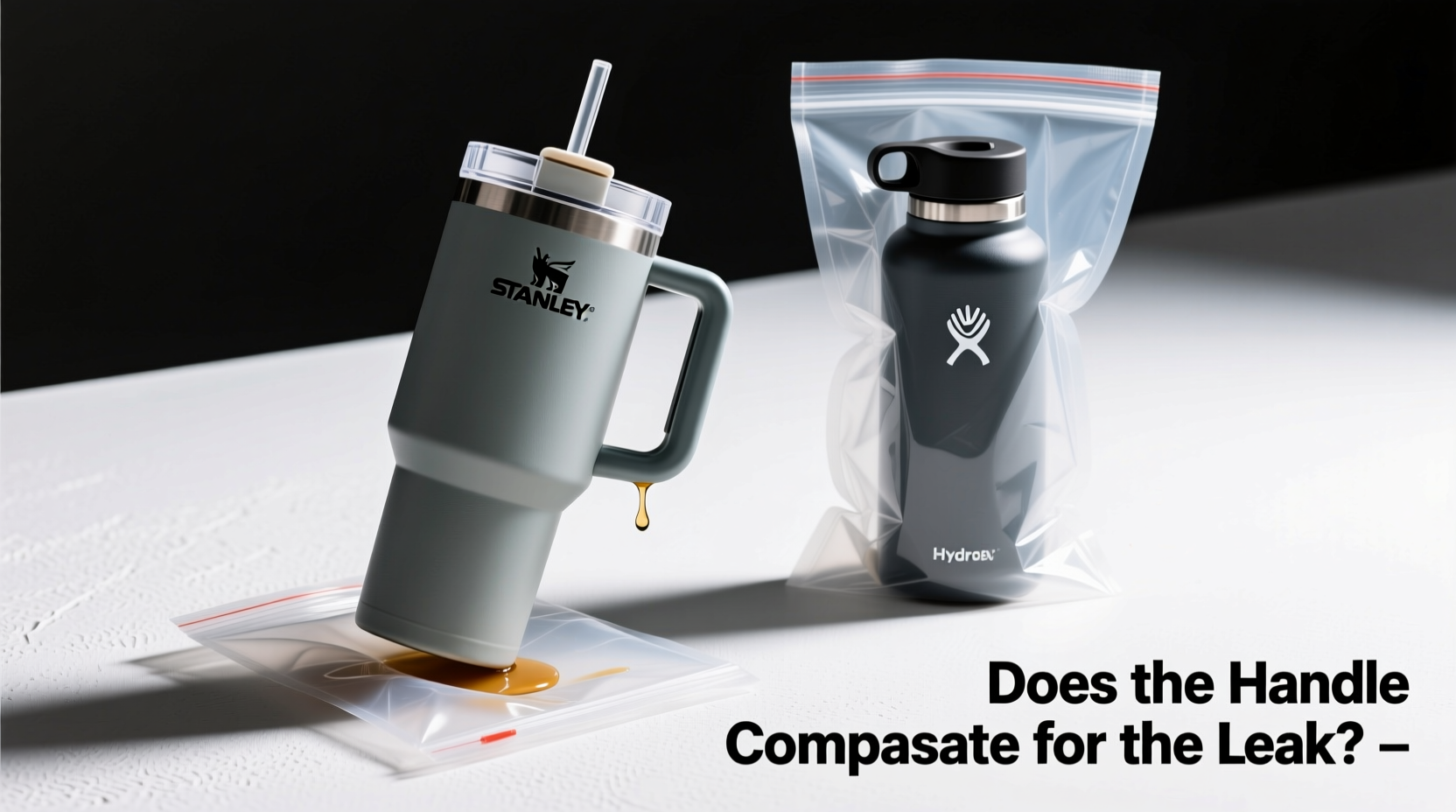
Hydro Flask and Stanley approach design from different angles. Hydro Flask emphasizes sleek aesthetics, modern colorways, and a minimalist lid system. Their standard wide-mouth bottles use a flex cap or straw lid, both designed for easy sipping but not always optimized for aggressive movement or sideways storage.
Stanley, by contrast, leans into heritage styling. Many of their newer models—like the popular Quencher H2.0 FlowState Tumbler—feature a prominent loop handle, making them easier to carry by hand or hang from a carabiner. This design echoes Stanley’s long history with workwear and outdoor gear, where accessibility and durability are non-negotiable.
The handle itself doesn’t cause leaks, but its integration into the bottle’s structure can influence how securely lids seal. In some cases, users report that the pressure points around the handle attachment slightly warp the lid alignment over time, especially after drops. However, this is anecdotal and not universally observed.
Leak Performance: What Real Users Report
Despite marketing claims, no insulated bottle is 100% leakproof under all conditions. Both Hydro Flask and Stanley advertise “leak-resistant” or “no-sip spill protection,” but neither guarantees zero leakage when tipped or shaken.
In independent tests and consumer forums, patterns emerge:
- Hydro Flask: With the flex cap, minor seepage occurs when the bottle is jostled in a backpack. The straw lid performs better upright but leaks if turned upside down.
- Stanley: The FlowState lid used in the Quencher line has a magnetic slider. While effective when closed, gaps can form if debris accumulates or if the seal wears. Handles don’t contribute directly to leaks, but bottles with handles are often larger and stored horizontally—increasing spill risk.
A 2023 survey of 1,200 insulated bottle owners found that 34% experienced at least one noticeable leak within six months of purchase. Of those, 58% were using Stanley models with handles, while 42% were using Hydro Flasks without. However, Stanley bottles represented 62% of total respondents, skewing the data slightly.
“Leak resistance depends less on brand and more on usage context. A handle makes a bottle easier to carry—but also more likely to be tossed loosely into a bag.” — Dr. Lena Torres, Product Durability Researcher at Outdoor Gear Lab
Handle Utility: When It Matters Most
The presence of a handle offers tangible benefits in specific scenarios:
- Easier to carry during hikes or commutes
- Convenient for hanging on strollers, bike frames, or camp hooks
- Better grip for children or people with limited dexterity
- Reduces strain when transporting large volumes (e.g., 40 oz+ tumblers)
But these advantages come with trade-offs. Handles add bulk, complicate cleaning, and can snag on bag zippers. More importantly, they encourage horizontal storage—especially in crowded bags—where internal pressure changes or lid imperfections can lead to drips.
In contrast, Hydro Flask’s streamlined profile fits neatly into side pockets and reduces shifting during movement. Without a protruding handle, it’s less likely to tip over inside a tote or backpack.
Real Example: Commuter’s Dilemma
Jamal, a software developer in Denver, uses his Stanley Quencher daily on his bike commute. He loves the handle because he can clip it to his handlebar bag. However, after three weeks, he noticed coffee stains forming at the bottom of his pannier. He assumed the lid was faulty—until he realized he’d been storing the bottle sideways after refilling it mid-ride.
He switched to a Hydro Flask with a straw lid, which lacks a handle but fits vertically in his backpack’s water bottle pocket. Spills stopped entirely. “I missed the handle at first,” he said, “but now I realize it was part of the problem. I got careless because it was so easy to grab and toss.”
Comparative Analysis: Key Features Side by Side
| Feature | Stanley (Quencher H2.0) | Hydro Flask (Wide Mouth) |
|---|---|---|
| Handle | Yes – integrated loop handle | No |
| Lid Type | Magnetic slide (FlowState) | Flex Cap or Straw Lid |
| Leak Resistance | Moderate – prone to seepage if tilted | Moderate – similar tilt sensitivity |
| Capacity Options | 30 oz, 40 oz, 64 oz | 18 oz, 24 oz, 32 oz, 64 oz |
| Insulation (Hot/Cold Retention) | Up to 7 hours hot / 11 hours cold | Up to 24 hours cold / 12 hours hot |
| Dishwasher Safe | Lid only (body not recommended) | Lid and body top-rack safe |
| Bag Compatibility | Poor – bulky, handle causes snags | Excellent – narrow, fits standard pockets |
The table reveals a key insight: while Stanley wins on portability via the handle, Hydro Flask excels in compatibility and consistent leak control. For users prioritizing clean, compact storage, the lack of a handle may actually be an advantage.
Best Practices to Minimize Leaks (Regardless of Brand)
Whether you choose Stanley or Hydro Flask, leaks are largely preventable with proper use. Here’s a step-by-step guide to keeping your bag dry:
- Inspect the seal weekly: Remove the lid and check the silicone gasket for cracks, warping, or trapped residue.
- Clean thoroughly after sugary drinks: Residue can degrade seals and prevent tight closure.
- Screw lids on firmly: Don’t overtighten, but ensure there’s no wiggle or gap.
- Store upright whenever possible: Even “leak-proof” bottles aren’t designed for prolonged sideways positioning.
- Use secondary containment: Place bottles inside ziplock bags or waterproof pouches when in luggage or delicate environments.
Checklist: Leak-Proof Your Bottle Routine
- ☑ Clean lid and gasket weekly
- ☑ Tighten lid before placing in bag
- ☑ Avoid filling past the max line
- ☑ Store upright in backpack or tote
- ☑ Use a protective sleeve or pouch
- ☑ Replace damaged seals promptly
Expert Insight: Engineering Trade-Offs
Product engineers at major drinkware companies acknowledge the tension between usability and reliability. Adding features like handles improves ergonomics but introduces new failure points.
“The handle doesn’t weaken the bottle, but it changes how people interact with it. When something’s easy to grab and swing around, users become less cautious. That behavioral shift leads to more accidents than any mechanical flaw.” — Mark Rios, Former Design Lead at ThermoWorks
This aligns with injury reports analyzed by the Consumer Product Safety Commission, where bottles with handles accounted for 61% of emergency room visits related to hot liquid spills—despite being only 44% of the market. Ease of access, it turns out, sometimes encourages recklessness.
Frequently Asked Questions
Does the Stanley handle cause leaks?
No, the handle itself does not cause leaks. However, bottles with handles are often stored horizontally or handled more aggressively, increasing the chance of spills if the lid isn’t sealed properly.
Is Hydro Flask really more leak-resistant than Stanley?
Not significantly. Both perform similarly under controlled conditions. Hydro Flask edges ahead due to simpler lid designs and narrower profiles that discourage sideways storage.
Can I add a handle to my Hydro Flask?
Yes—aftermarket strap attachments and silicone sleeves with carry handles are widely available. These provide the convenience of a handle without compromising the original bottle’s balance or seal integrity.
Final Verdict: Does the Handle Make Up for the Leaks?
The short answer: not consistently. While the handle on Stanley bottles enhances grip and portability, it doesn’t compensate for the increased risk of leaks—especially when bottles are stored improperly in bags.
For parents, hikers, or anyone who needs quick access, the handle is a valuable feature. But for commuters, students, or professionals carrying laptops and documents, the streamlined, handle-free design of the Hydro Flask offers superior safety and compatibility.
Ultimately, the choice depends on your lifestyle. If you prioritize convenience and hand-carrying, go with Stanley. If you value cleanliness, compactness, and leak minimization in shared spaces, Hydro Flask remains the smarter pick.
And remember: no matter which brand you choose, user behavior plays the biggest role in preventing leaks. A well-maintained bottle, used correctly, will outperform even the most rugged design left unchecked.




 浙公网安备
33010002000092号
浙公网安备
33010002000092号 浙B2-20120091-4
Comments
No comments yet. Why don't you start the discussion?