
For PC gamers, the choice between Steam and the Epic Games Store isn't just about where to buy a game today—it's about what kind of value they're locking in for years to come. While both platforms offer compelling reasons to invest time and money, their approaches to exclusivity, pricing, community features, and developer support shape very different long-term experiences. Steam has spent nearly two decades building trust through reliability and openness, while Epic has disrupted the market with aggressive giveaways and high-profile exclusives. But when it comes to lasting value—ownership rights, resale potential, cross-platform compatibility, and ecosystem stability—one platform holds clear advantages.
The Evolution of Digital Game Ownership
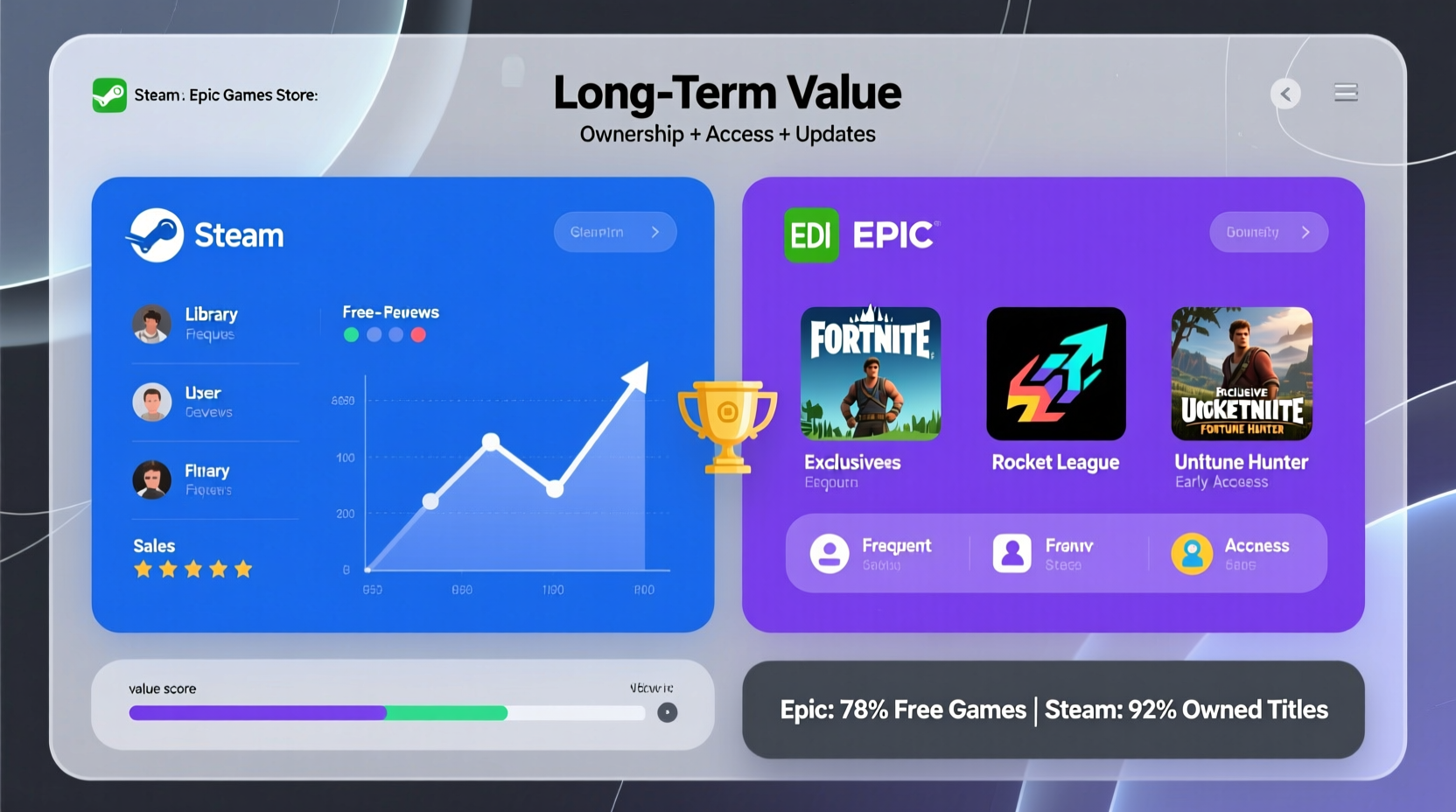
Digital storefronts have transformed how players access games, but they’ve also redefined what \"owning\" a game means. Unlike physical discs or cartridges, digital purchases are tied to accounts, licenses, and platform-specific ecosystems. This shift raises critical questions: Can you resell your copy? Will your library remain accessible if the service shuts down? Are your achievements and progress portable?
Steam, launched in 2003, pioneered this model by offering convenience, cloud saves, and social integration. Over time, it became the de facto standard for PC gaming, hosting over 50,000 titles and serving hundreds of millions of users. Its infrastructure is mature, stable, and deeply integrated into the broader gaming culture.
In contrast, the Epic Games Store (EGS) entered the scene in 2018 as a challenger brand backed by Fortnite’s massive revenue. Rather than compete on selection, Epic focused on financial incentives—offering developers an 88/12 revenue split (compared to Steam’s 70/30) and securing exclusive publishing deals for major titles like Hades, Deathloop, and Alan Wake 2. These moves disrupted the status quo but raised concerns about fragmentation and consumer lock-in.
“Digital exclusivity isn’t just about marketing—it reshapes player behavior and influences how long a platform remains relevant.” — Dr. Lena Torres, Digital Media Researcher at MIT
Exclusivity Models and Their Impact on Long-Term Access
Epic’s strategy hinges on timed and permanent exclusives. Timed exclusives appear only on EGS for six to twelve months before launching elsewhere; permanent exclusives never leave the platform. While these deals bring visibility to indie darlings and fund ambitious AAA projects, they fragment the market and force players into difficult decisions.
Consider Suicide Squad: Kill the Justice League, a title initially announced as an Epic exclusive before shifting to multiplatform release after backlash. Or take Palworld, which gained explosive popularity but remained EGS-exclusive for months, limiting its audience and creating friction among Steam-centric communities.
This exclusivity model creates artificial scarcity, but it doesn’t necessarily enhance long-term value. In fact, it often diminishes it:
- Reduced resale potential: Digital games cannot be sold or transferred.
- Platform dependency: If Epic discontinues support or alters its policies, access could be compromised.
- Limited modding and customization: Steam Workshop integration enables rich user-generated content, whereas EGS lags behind in community tools.
Comparative Value: Features, Pricing, and Ecosystem Stability
To assess long-term value, we must look beyond initial price tags and examine the full ecosystem each platform supports. The following table compares key factors influencing sustained usability and enjoyment:
| Feature | Steam | Epic Games Store |
|---|---|---|
| Library Size | Over 50,000 titles | ~2,000 curated titles |
| Revenue Split (Dev/Publisher) | 70%/30% | 88%/12% |
| User Reviews & Ratings | Extensive, community-driven | Limited, less transparent |
| Cloud Saves | Yes, robust sync | Yes, basic implementation |
| Mod Support / Workshop | Integrated Steam Workshop | No native mod browser |
| Family Sharing | Yes (up to 5 accounts) | No |
| Free Weekly Games | Rare promotions | Two free games weekly |
| Cross-Platform Sync | Strong (mobile app, web) | Moderate (limited third-party links) |
| Longevity & Track Record | 20+ years, proven stability | 6 years, dependent on Fortnite funding |
While Epic offers more frequent discounts and free games, many of these are lower-tier titles or older releases. Steam’s larger library, superior discovery algorithms, and active community forums provide greater utility over time. Additionally, Steam’s Remote Play and Big Picture Mode make it ideal for living-room setups, further increasing its versatility.
A Real-World Example: The Case of Hades
When Supergiant Games released Hades in 2020, it launched as a timed exclusive on the Epic Games Store. At the time, this decision sparked debate. Fans praised the game’s quality but lamented being locked out if they didn’t want to create a new account or use a competing launcher.
One player, Mark R., a longtime Steam user, described his frustration: “I love Supergiant’s work, but I wasn’t going to install another client just for one game. I waited nine months until it came to Steam. By then, most of the community discussion had moved on.”
His experience highlights a real cost of exclusivity: delayed engagement, reduced social connectivity, and fragmented player bases. Even though Hades eventually launched on Steam—and even included all previous updates and DLC—the delay diminished its momentum and limited early multiplayer synergy (through shared guides, mods, and co-op play).
From a long-term perspective, the game itself retained its value, but the platform choice affected how deeply players could engage during its cultural peak. Steam’s open availability ensured broader, more sustained participation once the title arrived.
Ownership, Resale, and Future-Proofing Your Collection
True long-term value depends on permanence. Can you pass down your library? What happens if the company folds? While neither platform allows traditional resale, Steam’s history suggests stronger institutional resilience.
Valve operates multiple revenue streams—hardware (Steam Deck), software (games, subscriptions), and services (marketplace, workshop). This diversification insulates it from sudden collapse. Meanwhile, Epic relies heavily on Fortnite and Unreal Engine licensing. While profitable, this concentration poses risks should either underperform.
Additionally, Steam supports:
- Community Market: Trade skins, cards, and in-game items across supported titles.
- Trading Cards & Badges: Gamified collection system that rewards engagement with cosmetic flair.
- Backward Compatibility: Nearly every game purchased since 2003 still works via updated launchers or Proton compatibility layers.
Epic lacks equivalent systems. There’s no marketplace, no trading mechanics, and minimal incentive to maintain older accounts beyond personal access. Free games claimed during promotions remain yours indefinitely—if the service stays online—but there’s no mechanism to transfer or monetize them.
Checklist: Evaluating Platform Longevity Before Purchase
- ✅ Does the game offer cross-save or cloud sync across devices?
- ✅ Is there a plan for multiplatform release after exclusivity ends?
- ✅ Does the developer have a track record of post-launch support?
- ✅ Is the platform financially stable and diversified?
- ✅ Are community tools (mods, forums, guides) available?
- ✅ Can you access your library without constant internet verification?
FAQ: Common Questions About Platform Long-Term Value
Can I lose access to my Epic or Steam games if the service shuts down?
If either platform ceases operations, users would likely lose access to downloaded games unless offline modes are enabled and DRM servers remain active. However, Steam’s integration with local files and third-party launchers (like LaunchBox) offers slightly better contingency options. No formal legal right guarantees indefinite access to digitally purchased games.
Are Epic’s free games truly “free forever”?
Yes—with caveats. Once you claim a free game on Epic, it remains in your library permanently, assuming the service continues to operate. You can redownload it anytime. However, if Epic shuts down, those games may become inaccessible due to authentication requirements.
Does Steam sell my data?
No. Valve does not sell personal data to third parties. However, it uses behavioral analytics to personalize recommendations and ads within the client. Users can adjust privacy settings to limit data sharing.
Conclusion: Where Should You Invest Your Gaming Future?
When evaluating long-term value, Steam emerges as the more sustainable, flexible, and community-rich platform. Its vast library, robust feature set, and proven endurance give it an edge that goes beyond temporary price cuts or flashy exclusives. While the Epic Games Store delivers short-term wins—especially through its generous free game program—its reliance on exclusivity and centralized control introduces uncertainty.
Gamers seeking lasting access, moddability, social interaction, and cross-device flexibility will find Steam better aligned with enduring ownership. That said, maintaining both accounts allows strategic advantage: claim Epic’s freebies, enjoy exclusives temporarily, but keep your core collection on the platform built for the long haul.




 浙公网安备
33010002000092号
浙公网安备
33010002000092号 浙B2-20120091-4
Comments
No comments yet. Why don't you start the discussion?