
A secure front door is the first line of defense in protecting your home and family. While modern homes often come with basic locks, many can be easily compromised. Upgrading or replacing your door lock is one of the most cost-effective ways to significantly improve your home’s security. Whether you're replacing an aging mechanism, upgrading after a move, or simply want better peace of mind, doing it yourself saves money and gives you control over the quality of components used. This comprehensive guide walks you through every stage—from choosing the right hardware to final testing—with real-world insights and professional tips.
Why Replacing Your Door Lock Matters
Many homeowners assume that as long as a lock turns, it's secure. However, older or low-grade locks may lack resistance to picking, bumping, or forced entry. According to the National Insurance Crime Bureau, nearly 30% of burglaries involve forced entry through doors, and substandard locks are a contributing factor. Replacing outdated or weak locks enhances both physical and psychological security.
Modern deadbolts and smart locks offer features like reinforced strike plates, anti-drill shields, and even remote monitoring. Even a simple upgrade from a single-cylinder to a double-cylinder deadbolt—or installing a Grade 1 lock—can dramatically increase resistance to break-ins.
“Upgrading your door hardware is more impactful than most people realize. A high-quality deadbolt can delay forced entry by up to five minutes—more than enough time for a burglar to abandon the attempt.” — James Ralston, Certified Security Professional (CPP), Former Law Enforcement Officer
Choosing the Right Lock Type
Not all locks are created equal. The best choice depends on your door type, existing hardware, and security needs. Below is a comparison of common residential door locks:
| Lock Type | Security Level | Best For | Lifespan |
|---|---|---|---|
| Single-Cylinder Deadbolt | High | Main entry doors with sidelights or glass panels | 7–10 years |
| Double-Cylinder Deadbolt | Very High | Solid doors; caution needed near windows | 8–12 years |
| Smart Lock | Moderate to High* | Convenience-focused users; pair with mechanical backup | 5–7 years |
| Keyed Entry Lever | Low to Moderate | Interior doors or secondary entries | 5–8 years |
*Smart lock security depends on encryption, firmware updates, and physical build quality.
For maximum security, choose a lock certified by the American National Standards Institute (ANSI) at Grade 1—the highest rating for residential use. Look for models with hardened steel bolts, anti-pick pins, and reinforced housings.
Tools and Materials Checklist
Before starting, gather the necessary tools. Having everything ready prevents interruptions and keeps the job efficient.
- Replacement deadbolt or door lock kit
- Tape measure
- Screwdrivers (Phillips and flathead)
- Drill with 1-inch spade bit (if modifying hole size)
- Chisel and hammer (for adjusting strike plate recess)
- Utility knife
- Pencil for marking
- Level (to ensure straight alignment)
- Masking tape (prevents wood splintering)
Step-by-Step Installation Guide
Replacing a door lock is a manageable DIY project that typically takes under two hours. Follow these steps carefully for a secure, properly aligned installation.
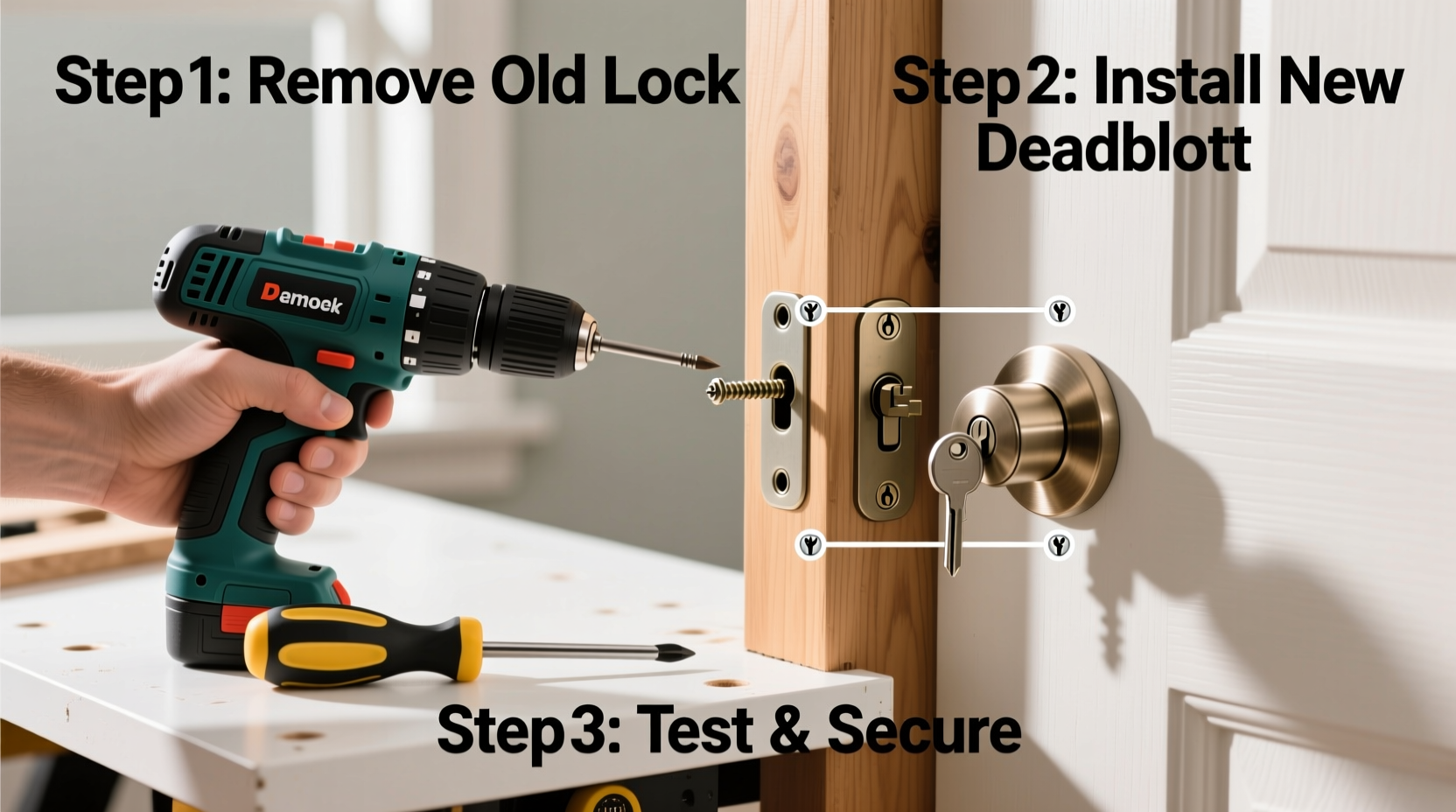
- Remove the Old Lock
Use a screwdriver to unscrew the interior faceplate. Once detached, pull out both sides of the lock cylinder. Remove the latch mechanism from the edge of the door by unscrewing the two mounting screws. - Inspect and Clean the Boreholes
Check the existing holes for damage or warping. Most modern locks fit standard 2-1/8 inch boreholes and 1-inch cross bores. If your new lock doesn’t align, minor adjustments may be needed using a drill or chisel. - Install the New Latch Mechanism
Insert the new latch into the edge of the door with the curved side facing the door jamb (so it retracts when closing). Ensure it sits flush. Mark screw holes, pre-drill if needed, then secure with screws. - Attach the Exterior Assembly
Slide the exterior portion (with key cylinder) through the borehole. Align it with the latch body inside the door. - Mount the Interior Assembly
Place the interior side onto the cylinder, ensuring the connecting tailpiece is properly engaged. Tighten the mounting screws evenly to avoid misalignment. - Test the Mechanism
Turn the lock manually and with the key. The bolt should extend and retract smoothly without scraping. If it binds, slightly loosen screws and realign before retightening. - Install the Strike Plate
Close the door gently and mark where the bolt hits the door jamb. Chisel out a shallow recess so the strike plate sits flush. Secure with screws—use longer 3-inch screws for added strength. - Reinforce the Frame (Optional but Recommended)
Replace short strike plate screws with longer ones that anchor into the wall stud. This prevents “kick-in” attacks, a common burglary method.
“Over 60% of forced entry cases involve broken strike plates. Just upgrading the screws can prevent this.” — Urban Safety Task Force, 2023 Residential Break-In Report
Real-World Example: Securing a Rental Property Upgrade
When Maria rented a historic home in Portland, she noticed the front door had a worn, wobbly knob lock and no deadbolt. Concerned about safety, she consulted her landlord, who approved a $120 budget for upgrades. Maria purchased an ANSI Grade 1 single-cylinder deadbolt and reinforced strike plate. Over a weekend afternoon, she replaced the hardware herself, reinforcing the jamb with 3-inch screws anchored into the stud. Not only did the new lock operate smoothly, but her renters insurance provider offered a 5% discount for documented security improvements. Six months later, a neighbor reported a suspicious person trying doors on the street—Maria’s remained untouched.
Frequently Asked Questions
Can I replace a door lock without drilling new holes?
In most cases, yes. Standard residential locks follow uniform sizing (2-1/8 inch borehole, 1-inch latch bore). As long as your new lock matches these dimensions, it will fit the existing cutouts. Always verify specifications before purchase.
Should I install a smart lock or a traditional deadbolt?
Smart locks offer convenience—keyless entry, access logs, remote locking—but rely on power and software. For primary security, experts recommend pairing a smart lock with a high-grade mechanical deadbolt or choosing a hybrid model with a keyed backup. Avoid relying solely on smart technology for critical entry points.
How often should door locks be replaced?
Every 7–10 years, or sooner if you notice stiffness, key jamming, or visible wear. Also replace locks immediately after moving into a new home or if keys have been lost or duplicated without your knowledge.
Final Steps for Long-Term Security
After installation, test the lock multiple times from both inside and outside. Check alignment with the strike plate—gaps cause wear and reduce effectiveness. Lubricate the keyway and bolt mechanism annually with graphite powder (not oil, which attracts dust).
Consider adding complementary security measures: motion-sensor lighting, peepholes, door reinforcement kits, or a video doorbell. Remember, a lock is just one part of a layered defense strategy.
Take Action Today
Your front door shouldn’t be the weakest link in your home’s security. Replacing a door lock is a straightforward, affordable upgrade that delivers lasting peace of mind. With the right tools, a few hours, and attention to detail, you can significantly reduce vulnerability to break-ins. Start by evaluating your current locks—then take the next step. Install a stronger mechanism, reinforce the frame, and enjoy knowing your home is better protected.




 浙公网安备
33010002000092号
浙公网安备
33010002000092号 浙B2-20120091-4
Comments
No comments yet. Why don't you start the discussion?